I remember the first time we walked into a bar to order coffee in Italy. I was like a deer in headlights, not knowing what to do and how to do it. Even if you are not comfortable ordering in Italian, knowing a handful of tips on how to order coffee in Italy can help. After 20 years of traveling to Italy, we drank a lot of coffee to put together this guide to Italian coffee menus.
Ordering coffee in Italy (ordinare un caffè) is a rapid, ritualized cultural art governed by unwritten bar customs, distinct pricing tiers, and strict time-of-day etiquette. Rather than ordering complex, customized drinks to-go in giant paper cups, traditional Italian coffee bars (il bar) serve concentrated espresso shots and milk beverages designed to be sipped standing up (al banco) in under three minutes.
*This post contains compensated links. Find more info in my DISCLAIMER. As an Amazon Associate, I earn from qualifying purchases.
Quick Decoder: Italian Coffee Menu & Ordering Guide
| Italian Menu Name | What It Actually Is | Milk / Espresso Ratio | Best Time of Day & Etiquette |
| Un Caffè (Espresso) | Single concentrated shot of rich espresso with natural golden crema. | 100% Espresso (No milk). | Anytime: Morning, afternoon, or immediately post-lunch/dinner. |
| Caffè Macchiato | A single shot of espresso “stained” (macchiato) with a splash of warm frothed milk. | 85% Espresso / 15% Milk foam. | Morning, midday, or afternoon; a lighter alternative to cappuccino. |
| Cappuccino | Equal parts espresso, steamed milk, and velvety thick milk foam. | 1/3 Espresso, 1/3 Milk, 1/3 Foam. | Strictly morning (before 11:00 AM); never ordered after a heavy meal. |
| Caffè Latte | A shot of espresso topped with hot steamed milk and minimal foam. | 1/4 Espresso / 3/4 Steamed milk. | Morning only; asking for just “latte” gets you a glass of plain cold milk. |
| Caffè Doppio | A double shot of espresso. | 100% Double espresso. | Anytime (though locals usually prefer ordering two separate single coffees). |
| Caffè Ristretto | A short, ultra-concentrated espresso shot pulled with half the normal water. | 100% Concentrated espresso. | Anytime; intensely bold, sweet, and low in bitterness. |
| Caffè Lungo | A “long” espresso pulled with more water passing through the grounds. | 100% Extended espresso. | Morning or afternoon; stronger than an Americano. |
| Caffè Americano | A shot of espresso diluted with a cup of hot water. | 1 Part Espresso / 2 Parts Hot water. | Anytime; served in a larger cup for travelers wanting a longer sip. |
| Caffè Corretto | An espresso shot “corrected” with a splash of high-proof grappa, sambuca, or brandy. | Espresso + Splash of regional spirit. | Mid-afternoon, evening, or digestivo post-dinner. |
| Caffè Shakerato | Fresh espresso shaken vigorously with ice cubes and simple syrup until frothy. | Chilled, frothy iced espresso. | Summer afternoon refreshment; served in a cocktail coupe or flute. |
| Caffè Freddo | Pre-sweetened chilled espresso kept cold or shaken over ice. | Cold sweetened espresso. | Summer morning or afternoon heat. |
Table of Contents
What You Will See On An Italian Coffee Menu
At many coffee bars in Italy, there often is no actual menu placed on the table, bar, or on the wall in the back. Most Italians know what they serve at a coffee shop in Italy. That’s why I wanted to put together this list of coffee names to help you when traveling to Italy.
Even without an actual menu, there are always prices listed somewhere. Sometimes it is on a single sheet of white paper hung on the wall. There are often two prices. The lower price will be for standing at the bar. The higher price will be for sitting at a table, either in the bar or outside.
It was always traditional to have these two different pricing schemes for Italian coffee, although I find this to be less common in most cities. It will still often apply, though, at more touristy cafes in major cities.
Traveling to Italy? Check out our Italian Drinks Guide
Italian Coffee “Rules”
Ordering coffee at an Italian bar follows a distinct two-step ritual: pay first at the cash register (la cassa) to receive your paper receipt (lo scontrino), then step to the counter (il banco) to place your order with the barista.
Most Italians drink their coffee at a bar or a cafeteria. Although more recently boutique Italian coffee houses are popping up that are more like cafes found elsewhere, the bar is where Italians drink coffee.
There are other differences between visiting an Italian espresso bar versus visiting the local Starbucks back home. There is generally no line at the register. Instead, just walk up and find a space at the bar. The server will generally get to you. Eventually. When the coffee arrives, you usually get a receipt for the cost. You can pay immediately, or if standing at the bar, it’s okay to pay after you finish.
The biggest rule is that even if you speak perfect Italian, if you try to order coffee in Italy like you do at your local Starbucks you probably will be met with a blank stare. This is not the time to order a venti double hot, half foam, soy, decaf, blah blah blah.
The most popular coffee in Italy is probably the coffee that’s been served for generations. Italians drink coffee a certain way at certain times at certain places. For example, it’s okay to have a morning cappuccino, but not one after dinner. And, coffee in Italy is rarely served to go.
Italian Cappuccino
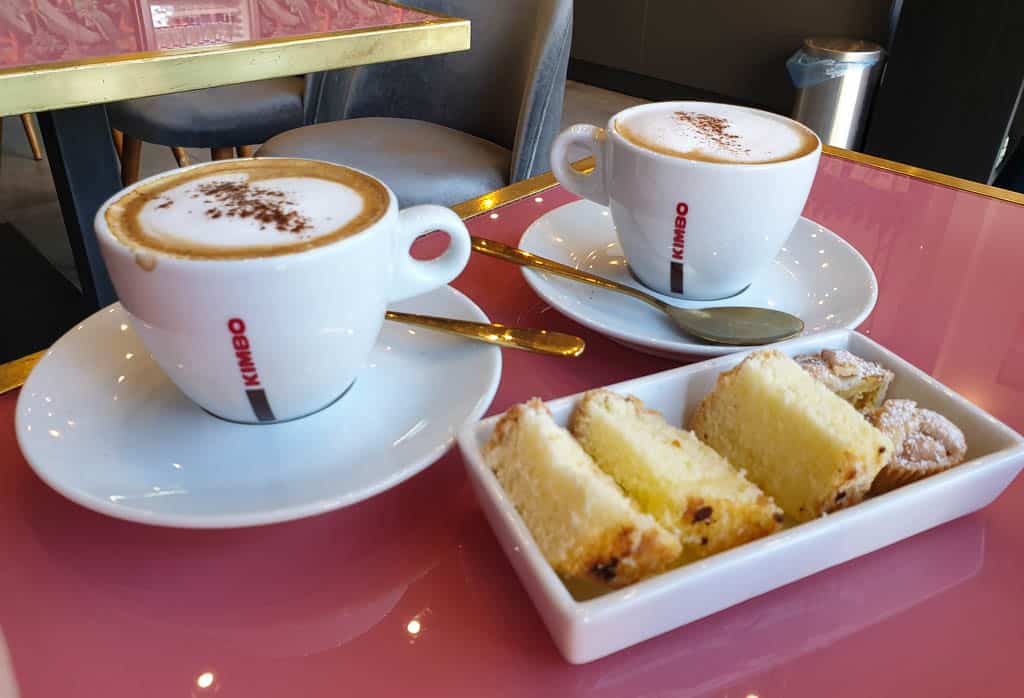
A cappuccino is Italy’s most famous morning coffee, made with equal parts rich espresso, hot steamed milk, and a thick crown of velvety foam.
There is probably no other coffee word that exudes Italy like a cappuccino. It is probably one of the Italian coffee names most used by coffee drinkers worldwide. At its most basic, a cappuccino is equal parts espresso, steamed milk, and foam.
One of the things many people don’t know about ordering coffee in Italy, though, is that the Italians think there is a time and a place for everything food and drink-related. To Italians, a cappuccino is a heavy drink, with all of the foam and drink. In fact, many think of a cappuccino as a meal in itself. This is why it is only ordered first thing in the morning.
This means, to live like a local in Italy, don’t order a cappuccino after around 11 am. Of course, this is really just custom and you won’t be refused service. For us, though, we try to stick with the norm and order this coffee in Italy only in the morning.
While many will enjoy a cappuccino with an Italian pastry, if you want to get a little crazy, try dunking focaccia into your cappuccino. Somehow the salt from the bread works with the milk. This is common when eating in Genoa. And, traditional Italian snacks like this are so tasty.

Coffee In Italy Pro Tip
Travelers who are more used to speaking Spanish than Italian often make an error when ordering in Italian. Whereas in Spanish, a plural is made by adding an “s” sound at the end of the sentence, that is just not the case when traveling in Italy. In Italy, a word that ends in O will become an I when it is plural. When order two cups of cappuccino in Italy, don’t order two “cappucicnos.” Ask for “due cappuccini” instead!

Caffè Latte
A Caffè Latte consists of a shot of espresso combined with a large glass of warm steamed milk, distinct from a cappuccino because it has very little to no foam on top.
For people who are used to grabbing a latte at their local Starbucks, this is another of the Italian coffee types that requires a bit of an explanation.
The word latte in Italian translates to milk. If you just head into a bar and ask for a latte you will receive a hot or warm cup of milk. I am not kidding, this has happened to us. In more touristy areas, the bartender might correct you, but elsewhere maybe not. There is nothing more disappointing than wanting a coffee and receiving milk instead.
So, how do you order this coffee in Italy? This is called a caffè latte in Italian. It is made of ⅓ espresso and ⅔ warmed milk, with just a bit of foam on the top. It is less foamy than a cappuccino. Similar to a cappuccino, this traditional Italian coffee is normally served in the morning.
Caffè In Italian
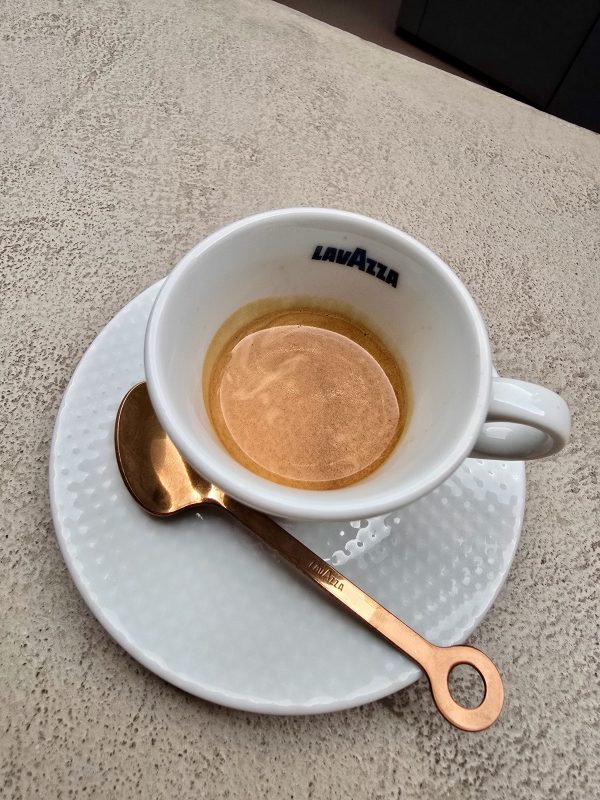
In Italy, a standard shot of espresso is simply called un caffè (or caffè normale), served in a small porcelain cup with a glass of water to cleanse your palate beforehand.
The king of Italian-style coffee has to be a caffè, which is what many Americans would call a shot of espresso. When ordering at an Italian coffee bar don’t order an espresso, but ask for un caffè instead (or due caffè for two, don’t add an “s” on the end). Sometimes this will be called a caffè normale, but caffè is certainly sufficient.
Unlike the world of heavily milked drinks, like a cappuccino or a latte, you can order a caffè any time of day, particularly after a meal. This is true for both lunch and dinner.
When visiting a casual coffee bar, it’s also very common to order a caffè at the bar and to drink it quickly at the bar. Some bars will charge you more for sitting at a table, and even more for sitting outside.
It is possible to order a double, which would be called a doppio. But, it is more likely that Italians would just order a second round, or stop for another at a different bar in about an hour.

Italian Macchiato
A Caffè Macchiato (meaning “stained” or “spotted” coffee) is a single shot of hot espresso topped with just a teaspoon of warm frothed milk to soften the espresso’s intensity without filling your stomach.
Now this is one of the best Italian coffee drinks in my mind and it is the coffee in Italy we drink most often. A macchiato is like a mix of an Italian espresso and cappuccino. It is like a miniature cappuccino, made with a shot of espresso and just a few drops of hot milk. Sometimes there is just a little bit of froth on the top as well.
The reason why I think this is the best coffee in Italy is because the milk cuts down on the bitterness of the coffee. But it doesn’t fill the belly as much as a cappuccino or caffe latte.
We will order this before lunch, after lunch, and in the afternoon. We don’t generally order a coffee after dinner, which is too late for us to take in caffeine. And, much like cappuccino, if you want two order “due macchiati.”
Other Types Of Coffee In Italy
Italy for foodies has to mean coffee daily. But, there are a lot of varieties of coffee in Italy beyond the basics above.
There are other coffee styles in Italy, but we don’t generally order these. Purely out of preference. We all have the coffee style we prefer, right? Here are a few other drinks you may find on an Italian coffee menu.
Caffè Americano: A Caffè Americano is an espresso shot diluted with hot water, created in Italy during WWII for American soldiers accustomed to drip filter coffee. This is probably most similar to what a coffee is in the US, at least because it is a full-sized coffee. In the end, it is just a shot of espresso mixed with hot water. Eric always wonders why a weak, watered-down coffee is called an Americano. He tries not to take it personally.
Caffè Lungo: A Caffè Lungo is a “long” espresso made by allowing the machine to extract twice as much water through the coffee grounds, resulting in a more bitter, highly caffeinated cup. This translates to long coffee, but it is a smaller version of the Americano. It’s a shot of espresso with only about a splash of hot water.
Caffè Corretto: IA Caffè Corretto is an espresso shot “corrected” with a generous splash of Italian liquor, most commonly grappa, Sambuca, or anise liqueur. am not sure why we never order this type of coffee. Perhaps it is because we are always focused on an aperitivo before dinner. A caffè corretto is a shot of Italian espresso mixed with a splash of Italian liquor, normally grappa or sambuca.
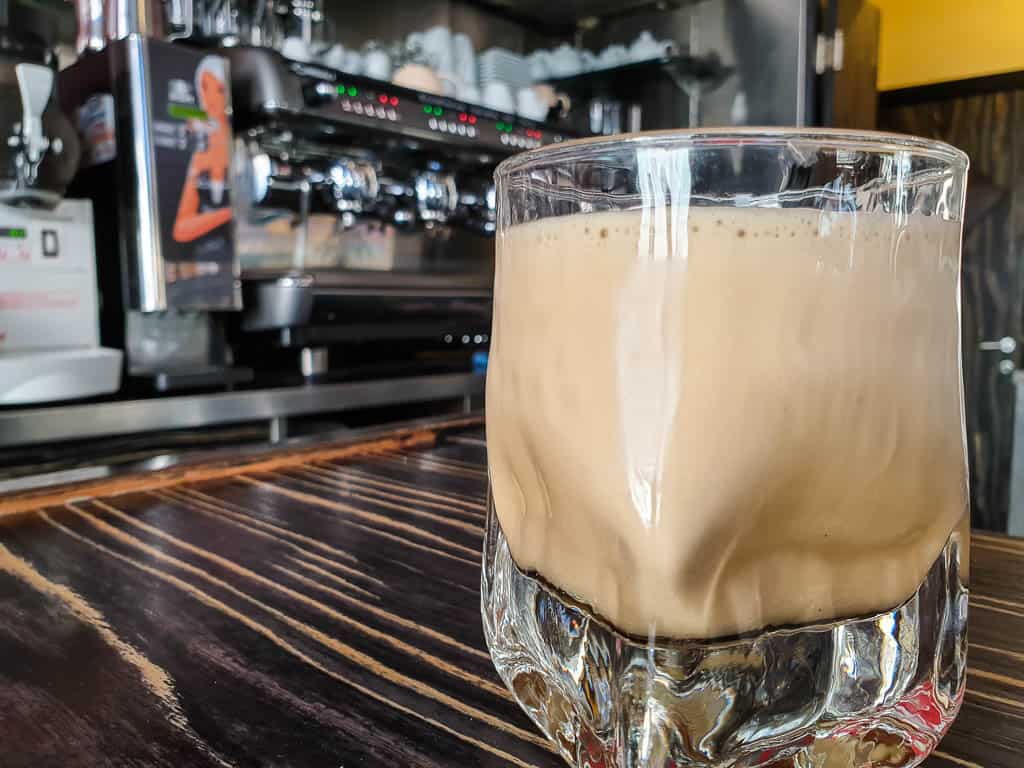
Iced Coffee In Italian
There are two types of iced coffee that you can order at an Italian cafe, particularly when traveling to Italy in summer. You might get some stares if ordering it during the winter months.
Caffè Freddo: Caffè Freddo is pre-made sweetened espresso chilled in the refrigerator, poured straight over ice for a fast summer cool-down. I don’t generally use sugar in my coffee, so this is a little too sweet for me, but can be refreshing on a hot day.
Shakerato: A Caffè Shakerato is an elegant summer drink made by shaking freshly pulled espresso, ice cubes, and simple syrup in a cocktail shaker until ice-cold and crowned with a thick, frothy crema.
Traveling to Italy to drink coffee? Get our top packing tips for Italy.
FAQs – Ordering Coffee In Italy
How do you order a regular coffee in Italy?
To order a standard coffee in Italy, simply ask for “un caffè” (pronounced oon kahf-FEH). This will get you a single shot of hot, concentrated espresso with golden crema.
Why can’t you order a cappuccino in the afternoon in Italy?
In Italian culinary culture, hot milk and heavy dairy are believed to disrupt digestion after substantial meals. Italians strictly enjoy milk-heavy coffees like cappuccinos and caffè lattes in the morning before 11:00 AM, switching to straight espresso or caffè macchiato for the rest of the day.
What is the price difference between standing at the bar vs. sitting at a table in Italy?
In most Italian bars, drinking your coffee standing at the counter (al banco) costs around €1.10 to €1.50 for an espresso. If you sit down at a table (al tavolo)—especially in outdoor tourist piazzas—a table service fee (coperto / service charge) is added, which can raise the price to €3.00 to €6.00.
What happens if you order just a “latte” in Italy?
In Italian, latte literally translates to “milk.” If you ask a barista for a latte, you will be handed a glass of plain cold or warm milk. To get coffee with milk, you must specifically ask for a “caffè latte” or a “latte macchiato”.
Do you tip at an Italian coffee bar?
Tipping is not mandatory or expected at Italian coffee bars. However, when drinking at the counter (al banco), it is customary to leave a small spare coin (like 10, 20, or 50 euro cents) on the saucer or receipt as a polite gesture to the barista.
Culinary Travel To Italy

Our Italy Travel Experience
Check out Food & Drink Destinations original founder Amber Hoffman’s book, the Food Traveler’s Guide To Emilia Romagna, which is available on Amazon. In addition to being a culinary travel guide to the region, it walks through how many of the typical Italian food products are made, like mortadella, prosciutto, and Parmigiano Reggiano.