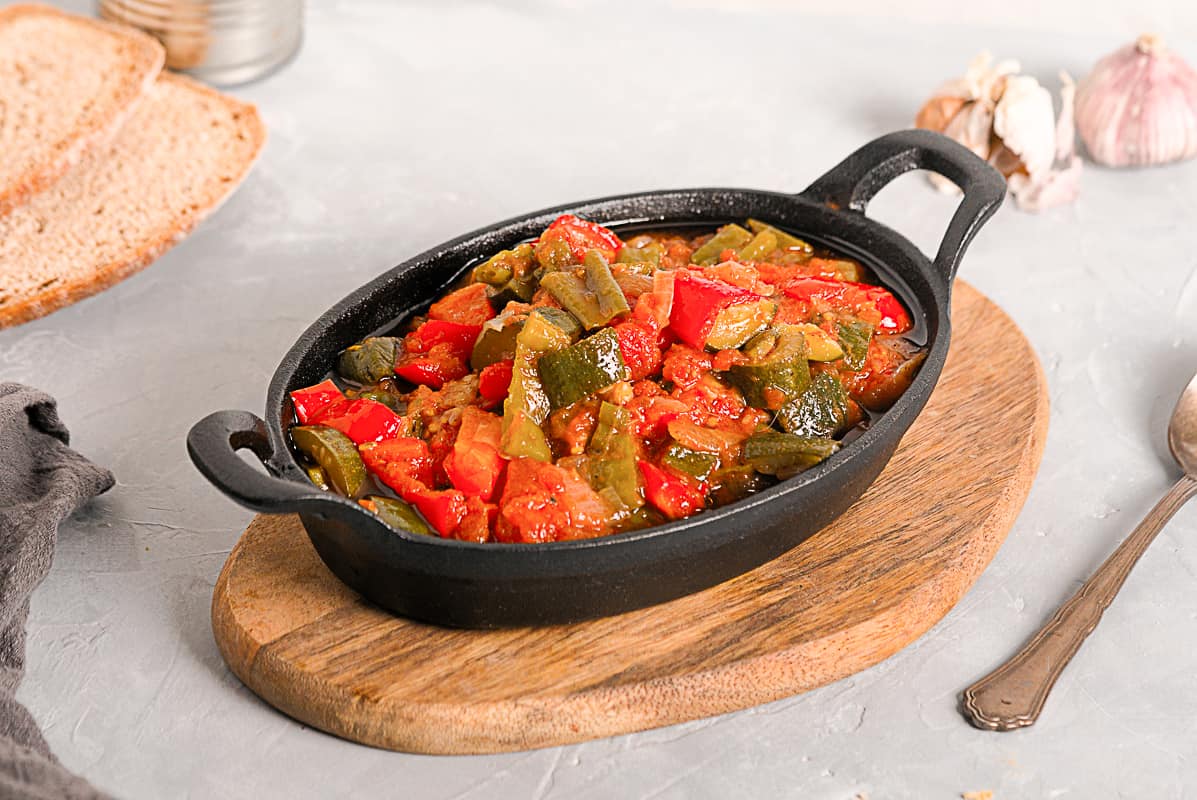
This Spanish pisto recipe is a fresh and tasty vegan tapas recipe. It can be prepared as a main course, lunch, or side dish. It’s most often called Spanish ratatouille because it’s made with various vegetables seasoned and cooked in olive oil.
*This post contains compensated links. Find more info in my DISCLAIMER. As an Amazon Associate, I earn from qualifying purchases.
What Is Spanish Pisto
I always shy away from defining a dish by reference to another, a similar dish from a different country. But it is one of the easiest ways to give a reference point to someone who might not be as familiar with a cuisine from a country, not their home.
With that, I will say that pisto is a Spanish ratatouille at its most basic. It’s a great Spanish vegetable recipe (it’s even vegan). If you are not a vegetarian, Spanish pisto makes a great authentic Spanish side dish for grilled meat or fish dishes. It can also be served as a snack or tapa dish, spread onto fresh or toasted bread.
It is similar to a ratatouille because various vegetables are seasoned and cooked in olive oil. Although there are variations using different vegetables, it’s also a great recipe to use up leftover vegetables in the fridge. And, by using olive oil and cumin to season it’s a perfect example of a Mediterranean vegetable stew.
Check out some of our other Spanish vegetable recipes:
There are regional variations of pisto. The version in Andalusia normally includes Spanish eggplant and potatoes. This version is from La Mancha, in central Spain. It’s Spanish Pisto Manchego, meaning from La Mancha (just like manchego cheese!). It’s also popular in other Spanish regions, including Extremadura and Murcia, which is along the coast.
Like almost every Spanish recipe, this one starts with good, quality olive oil. All of the tasty vegetables are sauteed in olive oil. The dish starts with a base on diced yellow onions, and diced or minced garlic. Then, I like to use green peppers, and red peppers for sweetness (yellow peppers work too). I like using zucchini, although you can also use eggplant. The vegetables are then cooked in crushed tomatoes (you can use fresh as well, but it’s best to peel them) and seasoned with salt, black pepper, cumin, and a touch of sugar. The cumin adds an earthiness to the dish, which is then offset by a bit of sugar to balance.
How To Make This Spanish Pisto Recipe – Spanish Ratatouille
A traditional Spanish pisto recipe normally involves cooking the vegetables separately. This is particularly the case when using eggplant because it is a bit more difficult to properly cook eggplant. That is another reason why I skip the eggplant in this version to make it an easier recipe to cook.
After prepping all of the vegetables, place a large skillet over low to medium-high heat. Add the olive oil. Once the olive oil is warm, add the onion and garlic and cook for 2-3 minutes or until they start to soften. Add the peppers and zucchini. Coat the vegetables in the olive oil, season with salt, pepper, and cumin, and allow to cook for about 15 minutes or until they soften. Add the tomatoes and sugar and allow to cook another 20-25 minutes or until the sauce has thickened.
This Spanish pisto recipe is a fresh and tasty vegan tapas recipe. It can be prepared as a main course, lunch, or side dish. It’s most often called Spanish ratatouille, because it’s made with various vegetables seasoned and cooked in olive oil.
Prep Time10 minutes
Cook Time45 minutes
Total Time55 minutes
Ingredients
1/2 cup olive oil
1 large onion, diced
2 garlic cloves, minced or pressed
2 Italian green peppers, cut into chunks
1 medium red bell pepper, cut into chunks
1 large zucchini, cut into chunks
2 teaspoons salt
1 teaspoon freshly ground black pepper
1/4 teaspoon ground cumin
1 15 ounce can of crushed tomatoes
1 teaspoon of sugar
Instructions
After prepping all of the vegetables, place a large skillet over low to medium-high heat. Add the olive oil.
Once the olive oil is warm, add the onion and garlic and cook for 2-3 minutes or until they start to soften.
Add the peppers and zucchini. Coat the vegetables in the olive oil, season with salt, pepper, and cumin, and allow to cook for about 15 minutes or until they soften.
Add the tomatoes and sugar and allow to cook another 20-25 minutes or until the sauce has thickened.
Notes
This recipe is for a Spanish Manchego Pisto, the more popular version of Pisto. There’s another version that is common in Andalucía that includes vegetables like potatoes and eggplant. Feel free to add these to your recipe if you want.
Pisto is normally used as a side meal to accompany fried eggs, meat, etc. It can be eaten on its own as well, though, with some sourdough bread.
Pisto can be prepared in advance since it will taste even better the next day.
Feel free to double or triple the proportions and freeze part of it!
This nutritional data is provided by a third-party source and should not be relied on if you are on a strict diet.
Did you make this recipe?
Please leave a comment on the blog or share a photo on Pinterest
How To Serve Pisto
If you are not vegan, there are a few fun ways to prepare and serve pisto to make it a bit more of a meal. For example, you can also top it with a fried egg to make pisto con huevo. Or, top it with a few thin slices of jamon, Spanish cured meat. You can even embrace the manchego in pisto manchego and add some slices of manchego cheese on top, allowing it to melt into the vegetable dish.
FAQs – Spanish Pisto Recipe
What does pisto receta translate to?
Pisto receta translates from Spanish to a ratatouille recipe in English. In Spanish, the word receta means recipes.
What are typical Spanish vegetables?
Spain’s mild Mediterranean climate makes it ideal for growing a wide range of vegetables. Some of the most typical Spanish vegetables you’ll find include peppers, potatoes, tomatoes, and onions.
Are there any Spanish vegetarian soups?
Spanish cuisine is full of delicious and healthy vegetarian dishes including soups and stews. One of our favorites is this vegetarian white bean stew that’s super easy to make. Best of all, this soup is high in fiber thanks to the use of white beans. We both are trying to maintain the proper daily recommended amount of fiber and often make a big batch of this soup. We store it in the freezer and warm it up for a quick and easy lunch.
Amber Hoffman
Amber Hoffman, food and travel writer behind With Husband In Tow, is a recovering attorney and professional eater, with a passion for finding new food and drink destinations. She lives with her husband, Eric, in Girona, Catalonia, Spain. Together over the last 20 years, they have traveled to over 70 countries. Amber is the author of the Food Traveler’s Guide to Emilia Romagna. She regularly lectures on social media marketing to travel professionals throughout Europe.
2 thoughts on “Spanish Pisto Recipe – Vegan Spanish Ratatouille”
Bill logansays:
I have made this recipe a few times and it is simple and so tasty. Recently my partner has come off tomatoes due to acid reflux. to replace I got a jar of roasted peppers and blitzed them with basil. makes a great alternative sauce.
We use cookies to ensure that we give you the best experience on our website. If you continue to use this site we will assume that you are happy with it.
Variations of Spanish Pisto include adding ingredients like zucchini, eggplant, or bell peppers, and some recipes incorporate chickpeas or serve it with a fried egg on top for added richness.
How do you prepare Spanish Pisto?
Preparing Spanish Pisto involves sautéing diced onions, bell peppers, zucchini, and eggplant in olive oil, then adding ripe tomatoes and seasoning with salt and pepper. Simmer until tender, and serve warm as a delicious vegan dish or tapas.
What ingredients are needed for Spanish Pisto?
The ingredients needed for Spanish Pisto include ripe tomatoes, bell peppers, zucchini, eggplant, onions, garlic, olive oil, and seasoning such as salt and pepper. These fresh vegetables create a flavorful and vibrant dish.
What are the best serving suggestions for Spanish Pisto?
The best serving suggestions for Spanish Pisto include pairing it with crusty bread, serving it alongside a fresh green salad, or topping it with a fried egg for added richness. It also makes a delightful tapas dish when shared with friends.
Can Spanish Pisto be made ahead of time?
Spanish Pisto can be made ahead of time. Simply prepare the dish, allow it to cool, and store it in the refrigerator for up to three days. Reheat before serving for a delicious meal.
What are common side dishes for Spanish Pisto?
Common side dishes for Spanish Pisto include crusty bread, rice, or a fresh green salad, all of which complement the dish's rich flavors and enhance the dining experience.
How does Spanish Pisto differ from ratatouille?
Spanish Pisto differs from ratatouille primarily in its ingredients and preparation. While both are vegetable-based dishes, Pisto typically includes tomatoes, peppers, zucchini, and eggplant, often served with a fried egg on top, reflecting its Spanish origins.
What is the history behind Spanish Pisto?
The history behind Spanish Pisto is rooted in traditional Spanish cuisine, particularly from the La Mancha region, where it originated as a way to utilize seasonal vegetables. This dish reflects the agricultural heritage of Spain and has evolved into a beloved staple in various culinary traditions.
Are there any traditional spices used in Spanish Pisto?
The traditional spices used in Spanish Pisto include paprika and black pepper, which enhance the dish's flavor. Additionally, fresh herbs like parsley or thyme may be added for extra aroma and taste.
How can I make Spanish Pisto spicier?
To make Spanish Pisto spicier, you can add chopped fresh chili peppers, such as jalapeños or serranos, during the cooking process. Alternatively, include a pinch of cayenne pepper or smoked paprika for an extra kick.
What vegetables are essential for Spanish Pisto?
The essential vegetables for Spanish Pisto include tomatoes, bell peppers, zucchini, and eggplant. These ingredients create a flavorful base, showcasing the vibrant tastes of this traditional Spanish dish.
Can I substitute ingredients in Spanish Pisto?
You can substitute ingredients in Spanish Pisto. Feel free to swap vegetables based on your preference or availability, such as using zucchini instead of eggplant or adding bell peppers for extra flavor.
How long does Spanish Pisto last in the fridge?
Spanish Pisto lasts in the fridge for about 3 to 5 days when stored in an airtight container. For the best flavor and quality, it's recommended to consume it within this timeframe.
What are the nutritional benefits of Spanish Pisto?
The nutritional benefits of Spanish Pisto include a rich supply of vitamins, minerals, and antioxidants from its vegetables, making it a low-calorie, high-fiber dish that supports heart health and aids in digestion while being entirely plant-based.
Is Spanish Pisto suitable for meal prep?
Spanish Pisto is indeed suitable for meal prep. Its robust flavors and ingredients allow it to be stored in the refrigerator for several days, making it a convenient and delicious option for quick meals throughout the week.
How can I enhance the flavor of Spanish Pisto?
Enhancing the flavor of Spanish Pisto can be achieved by incorporating fresh herbs like basil or parsley, adding a splash of quality olive oil, and using roasted vegetables for a deeper taste. A pinch of smoked paprika also elevates its richness.
What are popular variations of Spanish Pisto?
Popular variations of Spanish Pisto include the addition of ingredients like zucchini, eggplant, or bell peppers, and some recipes incorporate chickpeas or tofu for extra protein. Each variation enhances the dish's flavor and nutritional profile.
Can Spanish Pisto be frozen for later use?
Spanish Pisto can be frozen for later use. Ensure it is stored in an airtight container, and it will maintain its flavor and texture for up to three months in the freezer.
What type of oil is best for cooking Spanish Pisto?
The best oil for cooking Spanish Pisto is extra virgin olive oil. Its rich flavor complements the vegetables perfectly and is a staple in traditional Spanish cuisine, enhancing both taste and authenticity.
How do I serve Spanish Pisto as a tapas dish?
Serving Spanish Pisto as a tapas dish involves presenting it in small portions, either warm or at room temperature, alongside crusty bread or pita. Garnish with fresh herbs for added flavor and color.
What are the key steps in preparing Spanish Pisto?
The key steps in preparing Spanish Pisto include chopping vegetables like bell peppers, zucchini, and tomatoes, sautéing them in olive oil, seasoning with salt and pepper, and simmering until tender, creating a flavorful vegan dish.
How can I make Spanish Pisto more filling?
To make Spanish Pisto more filling, consider adding protein-rich ingredients like chickpeas or lentils, or serve it alongside crusty bread or quinoa for a heartier meal. This enhances both texture and nutritional value.
What is the ideal cooking time for Spanish Pisto?
The ideal cooking time for Spanish Pisto is approximately 30 to 40 minutes. This allows the vegetables to soften and meld their flavors, creating a delicious and hearty dish.
Are there any regional differences in Spanish Pisto recipes?
Regional differences in Spanish Pisto recipes do exist, with variations in ingredients and preparation methods reflecting local produce and culinary traditions. For instance, some regions might include specific vegetables or spices, creating unique flavors and textures.
How can I incorporate Spanish Pisto into other dishes?
Incorporating Spanish Pisto into other dishes is simple and versatile. Use it as a flavorful topping for grilled bread, mix it into pasta for a hearty meal, or serve it as a filling for tacos or omelets.
What is the best way to store leftover Spanish Pisto?
The best way to store leftover Spanish Pisto is to place it in an airtight container and refrigerate it. This will help maintain its freshness for up to three days.
Can I add protein to Spanish Pisto?
You can add protein to Spanish Pisto. Consider incorporating ingredients like chickpeas, lentils, or tofu to enhance its nutritional value while keeping it vegan. These additions complement the dish's flavors and make it more satisfying.
What are the most common mistakes when making Spanish Pisto?
Common mistakes when making Spanish Pisto include using too many or too few vegetables, not allowing the ingredients to cook down properly, and skipping the essential step of seasoning to taste.
How do I adjust Spanish Pisto for dietary restrictions?
Adjusting Spanish Pisto for dietary restrictions involves substituting or omitting ingredients. For gluten-free options, ensure no wheat-based products are used, and for nut allergies, avoid any nuts or nut oils. You can also modify the vegetables based on personal preferences or availability.
What garnishes pair well with Spanish Pisto?
The garnishes that pair well with Spanish Pisto include fresh parsley, a drizzle of olive oil, and a sprinkle of smoked paprika. Additionally, serving it with crusty bread or a dollop of vegan yogurt enhances its flavors.
Variations of Spanish Pisto include adding ingredients like zucchini, eggplant, or bell peppers, and some recipes incorporate chickpeas or serve it with a fried egg on top for added richness.
How do you prepare Spanish Pisto?
Preparing Spanish Pisto involves sautéing diced onions, bell peppers, zucchini, and eggplant in olive oil, then adding ripe tomatoes and seasoning with salt and pepper. Simmer until tender, and serve warm as a delicious vegan dish or tapas.
What ingredients are needed for Spanish Pisto?
The ingredients needed for Spanish Pisto include ripe tomatoes, bell peppers, zucchini, eggplant, onions, garlic, olive oil, and seasoning such as salt and pepper. These fresh vegetables create a flavorful and vibrant dish.
What are the best serving suggestions for Spanish Pisto?
The best serving suggestions for Spanish Pisto include pairing it with crusty bread, serving it alongside a fresh green salad, or topping it with a fried egg for added richness. It also makes a delightful tapas dish when shared with friends.
Can Spanish Pisto be made ahead of time?
Spanish Pisto can be made ahead of time. Simply prepare the dish, allow it to cool, and store it in the refrigerator for up to three days. Reheat before serving for a delicious meal.
What are common side dishes for Spanish Pisto?
Common side dishes for Spanish Pisto include crusty bread, rice, or a fresh green salad, all of which complement the dish's rich flavors and enhance the dining experience.
How does Spanish Pisto differ from ratatouille?
Spanish Pisto differs from ratatouille primarily in its ingredients and preparation. While both are vegetable-based dishes, Pisto typically includes tomatoes, peppers, zucchini, and eggplant, often served with a fried egg on top, reflecting its Spanish origins.
What is the history behind Spanish Pisto?
The history behind Spanish Pisto is rooted in traditional Spanish cuisine, particularly from the La Mancha region, where it originated as a way to utilize seasonal vegetables. This dish reflects the agricultural heritage of Spain and has evolved into a beloved staple in various culinary traditions.
Are there any traditional spices used in Spanish Pisto?
The traditional spices used in Spanish Pisto include paprika and black pepper, which enhance the dish's flavor. Additionally, fresh herbs like parsley or thyme may be added for extra aroma and taste.
How can I make Spanish Pisto spicier?
To make Spanish Pisto spicier, you can add chopped fresh chili peppers, such as jalapeños or serranos, during the cooking process. Alternatively, include a pinch of cayenne pepper or smoked paprika for an extra kick.
What vegetables are essential for Spanish Pisto?
The essential vegetables for Spanish Pisto include tomatoes, bell peppers, zucchini, and eggplant. These ingredients create a flavorful base, showcasing the vibrant tastes of this traditional Spanish dish.
Can I substitute ingredients in Spanish Pisto?
You can substitute ingredients in Spanish Pisto. Feel free to swap vegetables based on your preference or availability, such as using zucchini instead of eggplant or adding bell peppers for extra flavor.
How long does Spanish Pisto last in the fridge?
Spanish Pisto lasts in the fridge for about 3 to 5 days when stored in an airtight container. For the best flavor and quality, it's recommended to consume it within this timeframe.
What are the nutritional benefits of Spanish Pisto?
The nutritional benefits of Spanish Pisto include a rich supply of vitamins, minerals, and antioxidants from its vegetables, making it a low-calorie, high-fiber dish that supports heart health and aids in digestion while being entirely plant-based.
Is Spanish Pisto suitable for meal prep?
Spanish Pisto is indeed suitable for meal prep. Its robust flavors and ingredients allow it to be stored in the refrigerator for several days, making it a convenient and delicious option for quick meals throughout the week.
How can I enhance the flavor of Spanish Pisto?
Enhancing the flavor of Spanish Pisto can be achieved by incorporating fresh herbs like basil or parsley, adding a splash of quality olive oil, and using roasted vegetables for a deeper taste. A pinch of smoked paprika also elevates its richness.
What are popular variations of Spanish Pisto?
Popular variations of Spanish Pisto include the addition of ingredients like zucchini, eggplant, or bell peppers, and some recipes incorporate chickpeas or tofu for extra protein. Each variation enhances the dish's flavor and nutritional profile.
Can Spanish Pisto be frozen for later use?
Spanish Pisto can be frozen for later use. Ensure it is stored in an airtight container, and it will maintain its flavor and texture for up to three months in the freezer.
What type of oil is best for cooking Spanish Pisto?
The best oil for cooking Spanish Pisto is extra virgin olive oil. Its rich flavor complements the vegetables perfectly and is a staple in traditional Spanish cuisine, enhancing both taste and authenticity.
How do I serve Spanish Pisto as a tapas dish?
Serving Spanish Pisto as a tapas dish involves presenting it in small portions, either warm or at room temperature, alongside crusty bread or pita. Garnish with fresh herbs for added flavor and color.
What are the key steps in preparing Spanish Pisto?
The key steps in preparing Spanish Pisto include chopping vegetables like bell peppers, zucchini, and tomatoes, sautéing them in olive oil, seasoning with salt and pepper, and simmering until tender, creating a flavorful vegan dish.
How can I make Spanish Pisto more filling?
To make Spanish Pisto more filling, consider adding protein-rich ingredients like chickpeas or lentils, or serve it alongside crusty bread or quinoa for a heartier meal. This enhances both texture and nutritional value.
What is the ideal cooking time for Spanish Pisto?
The ideal cooking time for Spanish Pisto is approximately 30 to 40 minutes. This allows the vegetables to soften and meld their flavors, creating a delicious and hearty dish.
Are there any regional differences in Spanish Pisto recipes?
Regional differences in Spanish Pisto recipes do exist, with variations in ingredients and preparation methods reflecting local produce and culinary traditions. For instance, some regions might include specific vegetables or spices, creating unique flavors and textures.
How can I incorporate Spanish Pisto into other dishes?
Incorporating Spanish Pisto into other dishes is simple and versatile. Use it as a flavorful topping for grilled bread, mix it into pasta for a hearty meal, or serve it as a filling for tacos or omelets.
What is the best way to store leftover Spanish Pisto?
The best way to store leftover Spanish Pisto is to place it in an airtight container and refrigerate it. This will help maintain its freshness for up to three days.
Can I add protein to Spanish Pisto?
You can add protein to Spanish Pisto. Consider incorporating ingredients like chickpeas, lentils, or tofu to enhance its nutritional value while keeping it vegan. These additions complement the dish's flavors and make it more satisfying.
What are the most common mistakes when making Spanish Pisto?
Common mistakes when making Spanish Pisto include using too many or too few vegetables, not allowing the ingredients to cook down properly, and skipping the essential step of seasoning to taste.
How do I adjust Spanish Pisto for dietary restrictions?
Adjusting Spanish Pisto for dietary restrictions involves substituting or omitting ingredients. For gluten-free options, ensure no wheat-based products are used, and for nut allergies, avoid any nuts or nut oils. You can also modify the vegetables based on personal preferences or availability.
What garnishes pair well with Spanish Pisto?
The garnishes that pair well with Spanish Pisto include fresh parsley, a drizzle of olive oil, and a sprinkle of smoked paprika. Additionally, serving it with crusty bread or a dollop of vegan yogurt enhances its flavors.
I have made this recipe a few times and it is simple and so tasty. Recently my partner has come off tomatoes due to acid reflux. to replace I got a jar of roasted peppers and blitzed them with basil. makes a great alternative sauce.
Oh this is great to hear. And we are going to try your roasted peppers versions. Thanks for telling us.