When you visit Thailand, you’ll notice quickly that this Southeast Asian country definitely has a sweet tooth! From condensed milk drinks in grocery stores to sugar-coated dumplings, there’s no shortage of delicious sweet treats for every occasion! Whether you prefer to live large or travel on a budget, Thai desserts are incredibly cheap, so there is no excuse not to try some!
We spent almost two years living in Bangkok and have traveled to Thailand so many times I’ve lost track. Even though we don’t have a sweet tooth, we both admit that Thai sweets are tasty and often so bright and colorful. Here’s the list we put together for must-try desserts in Thailand.
*This post contains compensated links. Find more info in my DISCLAIMER. As an Amazon Associate, I earn from qualifying purchases.
Traditional Thai desserts (Khanom Wan Thai) are celebrated for their delicate balance of sweet coconut milk, fragrant pandan leaf infusions, palm sugar, and subtle pinches of sea salt. While modern street stalls offer everything from Nutella rotis to shaved ice mountains, authentic Thai sweet-making is rooted in centuries-old royal culinary traditions—showcasing glutinous sticky rice, heritage fruits, steamed custards, and Portuguese-influenced golden egg yolk confections.
Quick Facts About Authentic Thai Desserts
| Iconic Thai Dessert | Thai Script & Name | Base Ingredients & Flavor Profile | Texture & Traditional Serving Style |
| Mango Sticky Rice | ข้าวเหนียวมะม่วง (Khao Niew Mamuang) | Glutinous sticky rice, coconut cream, ripe yellow mango, salted mung beans. | Chewy, rich, and sweet; served warm or room temperature with chilled mango slices. |
| Tub Tim Krob (Red Rubies) | ทับทิมกรอบ (Tub Tim Krob) | Diced water chestnuts coated in tapioca starch, sweetened coconut milk, crushed ice. | Intensely crunchy center with a chewy jelly coating, served ice-cold in a bowl. |
| Lod Chong | ลอดช่อง (Lod Chong) | Pandan rice flour droplets, smoked sweet coconut milk (nam kati), palm sugar, ice. | Smooth, slippery pandan noodles served ice-cold in a glass or bowl with crushed ice. |
| Khanom Krok | ขนมครก (Khanom Krok) | Rice flour, thick coconut cream, sugar, scallions or sweet corn kernels. | Crisp outer shell with a warm, molten, custard-like coconut center; eaten hot from the griddle. |
| Foi Thong (Golden Threads) | ฝอยทอง (Foi Thong) | Egg yolks (duck and chicken) drizzled into boiling sugar-pandan syrup. | Silky, sweet, thread-like strands; served at room temperature at celebrations and markets. |
| Sangkhaya Fak Thong | สังขยาฟักทอง (Sangkhaya Fak Thong) | Whole kabocha pumpkin hollowed and steamed with rich coconut-egg custard. | Dense, velvety, and naturally sweet; sliced into thick wedges like cake. |
| Luk Chup | ลูกชุบ (Luk Chup) | Sweetened mung bean paste, coconut milk, hand-painted food dye, agar-agar glaze. | Grainy, soft, marzipan-like interior with a glossy, gelatinous outer sheen. |
| Bua Loy | บัวลอย (Bua Loy) | Glutinous rice flour dumplings (colored with pandan, taro, pumpkin) in warm sweet coconut milk. | Soft, chewy, pillowy dough spheres served warm in a soothing coconut broth. |
| Khao Mao Tod | ข้าวเม่าทอด (Khao Mao Tod) | Whole ripe bananas wrapped in shredded young green rice batter and deep-fried. | Shatteringly crisp exterior with a sweet, molten, caramelized banana center. |
| Thai Banana Roti | โรตีกล้วย (Roti Kluai) | Stretched wheat dough pan-fried in butter/oil, stuffed with banana, condensed milk, chocolate. | Flaky, crispy, layered street pancake sliced into bite-sized squares. |
Table of Contents
Thai Sweets And Desserts To Eat In Thailand
In Thailand, sweets are known as khanom wan Thai, or ‘desserts from Thailand,’ and are a standard way to finish a meal. Most Thai food is designed to be shared, so desserts of Thailand are exactly the same. Think bite-sized pancakes, sticky rolls, and freshly chopped fruits covered in syrup served in paper cups with multiple forks.
Thai desserts reflect how certain ingredients are important to the culture and history of this beautiful country. As such, many desserts will feature fresh fruit like mangoes and guava, and sticky rice as their main star. The best Thai desserts are the simplest – complicated isn’t in the vocabulary for most Thai cuisine!

Learn more about eating in Thailand:
Thai Drinks To Try – What To Drink In Thailand
Thai Fruits To Eat When Traveling To Thailand
Thai Breakfast Dishes You Must Try In Thailand
Iconic Coconut & Sticky Rice Desserts

Mango Sticky Rice (Khao Niew Mamuang)
Mango Sticky Rice is Thailand’s undisputed national dessert, pairing warm glutinous rice soaked in salted coconut cream with chilled, floral slices of ripe yellow Nam Dok Mai or Ok Rong mangoes.
The magic of authentic mango sticky rice lies in the contrast: the warm, rich, slightly salted sticky rice cuts through the natural sweetness and acidity of the fragrant chilled mango. It is finished with a drizzle of thick salted coconut cream and a spoonful of toasted yellow mung beans for a crunchy textural contrast.

Khanom Krok: Crispy Coconut Griddle Custards
Khanom Krok are two-layer coconut griddle bites prepared in heavy dimpled cast-iron pans, combining a crisp rice-flour outer crust with a rich, molten coconut custard interior.
Vendors pour a light rice flour batter to form the crispy cup, followed immediately by a sweetened, rich coconut cream custard. Often topped with chopped scallions, sweet corn, or taro before two half-spheres are clamped together, these are served warm in banana leaf trays at morning street stalls and night markets.
Sangkhaya Fak Thong: Steamed Coconut Custard in Pumpkin
Sangkhaya Fak Thong is a classic Thai dessert made by hollowing out a whole small pumpkin (kabocha squash), filling it with a rich batter of coconut milk, palm sugar, and duck eggs, and steaming the entire pumpkin until tender.
Once chilled, the pumpkin is sliced into thick wedges revealing a golden, velvety custard center. The earthy, mild sweetness of the tender pumpkin shell perfectly balances the rich, fragrant coconut custard.
Refreshing Iced Desserts & Jellies

Tub Tim Krob: Red Rubies in Chilled Coconut Milk
Tub Tim Krob (literally “crispy rubies”) is a refreshing iced Thai dessert featuring crunchy diced water chestnuts dyed vibrant pink with grenadine or sala syrup, rolled in tapioca flour, and boiled until jelly-coated.
The cooked “rubies” develop a chewy, translucent outer layer while maintaining an intensely crisp, watery crunch inside. They are served over shaved ice in a bowl of sweet, jasmine-scented coconut milk and topped with strips of tender young coconut flesh or jackfruit.

Lod Chong: Pandan Rice Droplets in Smoked Coconut Milk
Lod Chong consists of bright green teardrop noodles made from rice flour scented with fresh pandan juice, served swimming in a bowl of sweet, candle-smoked coconut milk (nam kati) and crushed ice.
The green droplets are formed by pressing warm pandan batter through a perforated metal press directly into an ice bath. The dessert is celebrated for its soothing, floral aroma and the contrast between the slippery, tender pandan noodles and the rich, caramel notes of palm sugar.

Bua Loy: Chewy Rice Dumplings in Warm Sweet Coconut Broth
Bua Loy (literally “floating lotus”) is a comforting bowl of tiny, colorful glutinous rice pearls simmered in a warm, sweet, and lightly salted coconut milk broth.
The pastel pearls are naturally colored using vegetable infusions—green from pandan, yellow from pumpkin, purple from butterfly pea flowers, and white from taro. For an invigorating spiced alternative, look for Bua Loy Nam Khing, which features larger black sesame-stuffed dumplings swimming in a piping-hot, fiery ginger broth.
Royal Heritage & Golden Egg Yolk Sweets
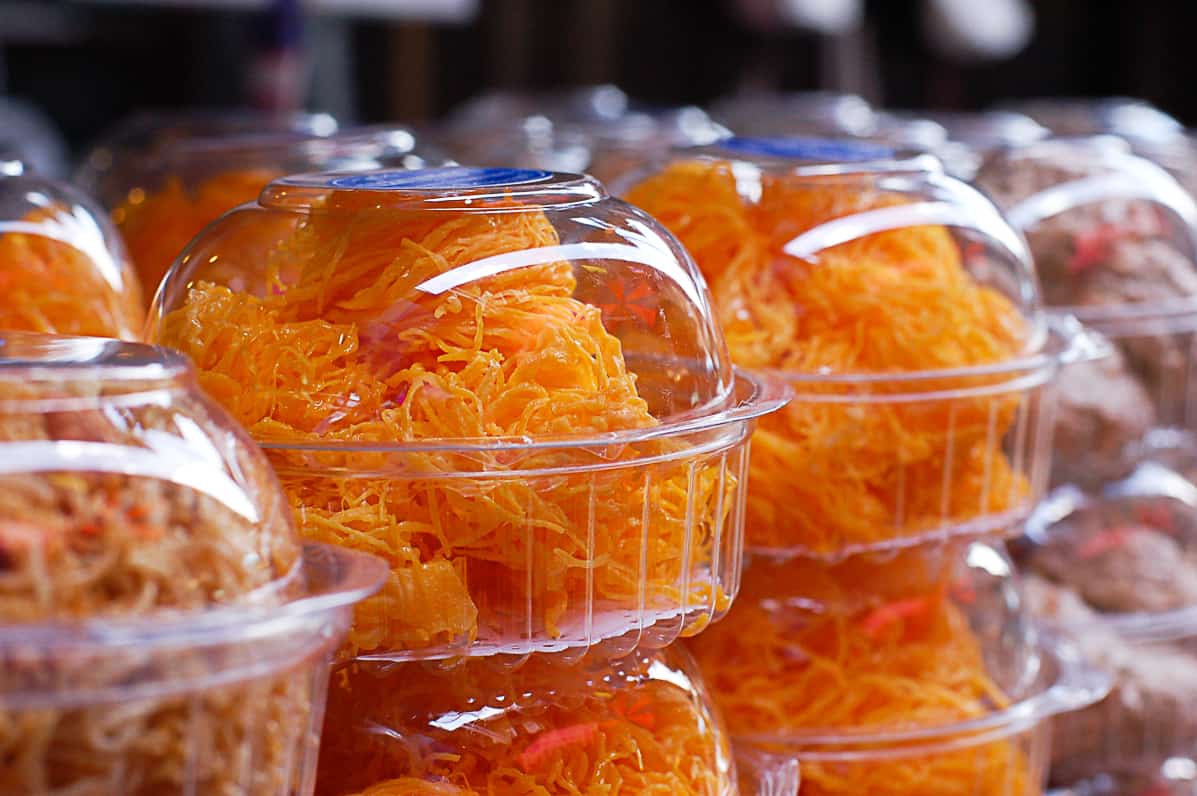
Foi Thong: Royal Thai Golden Egg Threads
Foi Thong (Golden Threads) is an exquisite royal Thai confection created by drizzling rich duck and chicken egg yolks through a fine brass funnel into a vigorously boiling pandan-infused sugar syrup.
Originating in the 17th century through Portuguese influence introduced to the Siamese royal court by Maria Guyomar de Pinha, Foi Thong is prized for its silky, delicate texture. The golden color symbolizes good fortune, prosperity, and longevity, making it a staple at Thai weddings and celebratory banquets.
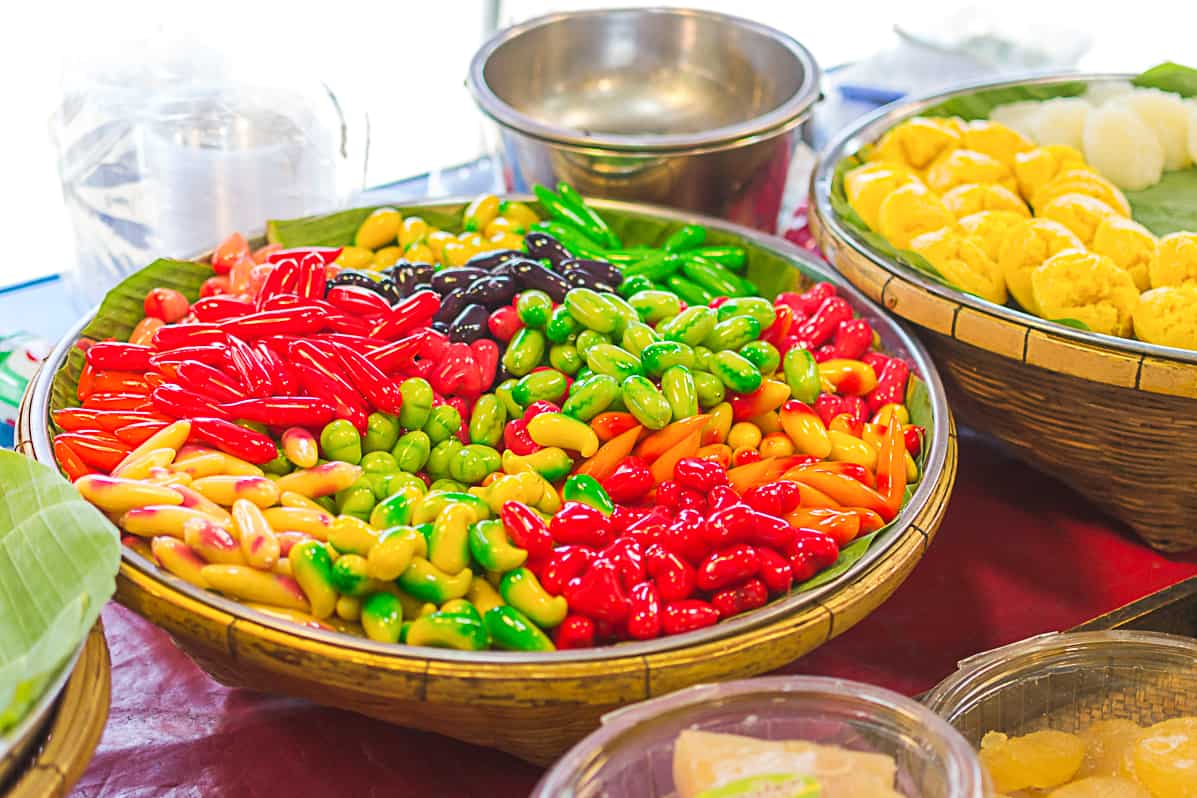
Luk Chup: Handcrafted Glazed Mung Bean Marzipan
Luk Chup is an intricate royal Thai treat made by mashing sweetened mung bean paste with rich coconut milk, sculpting the paste into miniature fruits and vegetables, and hand-painting each piece before dipping them in glossy agar-agar jelly.
Adapted from traditional European almond marzipan during the Ayutthaya period, Thai court confectioners substituted locally abundant mung beans for almonds. The glossy outer agar layer provides a smooth bite that gives way to a soft, nutty, and sweet interior.
Crispy Deep-Fried Street Sweets

Khao Mao Tod: Fried Bananas in Shredded Young Green Rice
Khao Mao Tod is a heritage street snack made by encasing whole ripe ladyfinger bananas (Kluai Khai) in a sweet mixture of grated coconut and pounded unripe green rice grains (khao mao), then deep-frying until shatteringly crisp.
The exterior develops a golden, crunchy, lacy bird’s nest texture, while the banana inside caramelizes into a soft, honeyed cream. Look for them at specialized deep-fry street carts along morning and evening markets.
Thai Banana Roti: Pan-Crisped Street Pancakes
Thai Roti is an immensely popular street sweet consisting of an ultra-thin, hand-stretched wheat dough pan-fried on a flat iron griddle in butter and oil, folded around sliced bananas and drizzled with sweetened condensed milk and chocolate.
Cooked until golden and flaky, the vendor chops the square roti into bite-sized grid pieces, serving it piping hot with toothpicks. It is the ultimate late-night sweet treat found across tourist walking streets, island beach stalls, and night bazaars.
Try Delicious Thai Sweets During Your Trip!
Whether you like something fresh and fruity or rich and creamy, Thai desserts have something for everything. The best Thai desserts are found in bustling, busy street markets, but if you’re in a rush, you can often source some of these unique sweets in convenience stores located on every corner. No matter what your tastes, budget, or personal preference, these Thai sweets will delight your tastebuds and warm your heart.
Where to Stay in Thailand for Dessert Lovers & Night Markets
Staying within walking distance of famous night bazaars and riverside culinary lanes ensures immediate access to Thailand’s best evening dessert carts:
| Hotel Name | Location & Destination | Category | Dessert & Culinary Highlights |
| The Siam Hotel | Bangkok (Riverside / Dusit) | 5-Star Luxury Urban Resort | Features traditional Thai afternoon teas with handcrafted Luk Chup and private market tastings. |
| W Koh Samui | Koh Samui (Mae Nam Beach) | 5-Star Luxury Resort | Steps from beach lounges and weekly walking street food markets along the north shore. |
| Rachamankha Hotel | Chiang Mai (Old City) | Boutique Luxury Heritage | Walkable to the famous Sunday Walking Street Night Market and traditional northern food stalls. |
| The Slate | Phuket (Nai Yang Beach) | Design Luxury Resort | Walkable to authentic local seafood night markets and casual beachside satay stalls. |
FAQs – Thai Desserts And Sweets
What is the most famous dessert in Thailand?
The most famous dessert in Thailand is Mango Sticky Rice (Khao Niew Mamuang), made from warm glutinous rice soaked in sweet coconut cream, served with chilled ripe yellow mango slices and crispy fried mung beans.
Are traditional Thai desserts very sweet?
Traditional Thai desserts balance sweetness with rich coconut cream, natural herbal aromas (like pandan and jasmine), and a distinct pinch of sea salt to prevent dishes from tasting cloying.
What are the main ingredients used in Thai desserts?
The core ingredients of authentic Thai sweets are coconut milk/cream, palm sugar, glutinous rice/rice flour, pandan leaves, fresh tropical fruits, and duck/chicken egg yolks.
What is the difference between Tub Tim Krob and Lod Chong?
Tub Tim Krob features crunchy diced water chestnuts coated in tapioca jelly served in sweetened coconut milk with shaved ice, while Lod Chong consists of soft, tender pandan rice-flour drops served in a smoked palm sugar and coconut milk broth.
Why are many traditional Thai desserts golden?
Golden desserts (like Foi Thong and Thong Yip) use egg yolks and are historically associated with royal ceremonies and Buddhist merit-making, where the gold color symbolizes prosperity, wealth, and good fortune.