For more than a decade, we made our living writing about where to eat and drink around the world. We worked with tourism boards, sat in the kitchens of chefs we now call friends, and visited well over a hundred wineries across Europe. And then, around 2022 and 2023, we walked away from it.
The reason was AI.
We could see what was coming. We were already being outranked by websites churning out a hundred listicles a day, written by people who had never set foot in the places they described. We knew we couldn’t compete with a machine that could spit out “the top 10 things to eat in Bordeaux” in seconds while we spent a full day on a single, properly researched piece. So we stepped back from travel content for about three years and built businesses in other industries.
Now we’re trying to figure out what the future of travel content actually looks like. And to do that, we figured we should stop theorizing and run an honest experiment. So on a recent trip, we let AI plan the whole thing — the country, the cities, the hotels, the restaurants, the markets.
Here’s what happened.
How Do You Actually Let AI Plan a Trip?
First, an important distinction: we did not type “plan me a trip to France” and book whatever it spat out. That’s not planning, that’s gambling.
What we did was closer to a long conversation. Amber worked mostly in Gemini, Eric mostly in Perplexity, and over what was probably a hundred separate queries we talked the tools through everything — where we’d lived, where we’d traveled, what we actually wanted out of this trip. We pushed back constantly. “No, not that. We want this instead.”
The starting constraint was real-world: we’d booked flights to and from Amsterdam on miles, but we didn’t want to spend two weeks in the Netherlands. From Amsterdam we could fly almost anywhere in Europe for the nine or ten nights we had.
We told the AI the truth about ourselves. We know Spain and Italy like the backs of our hands. We’ve lived in Spain and in Ireland. Going somewhere familiar would be easy — but we wanted to be surprised. We also needed to keep running two businesses while traveling, so we couldn’t be in a new place every single night. We needed reliable internet and somewhere comfortable enough to take a video call.
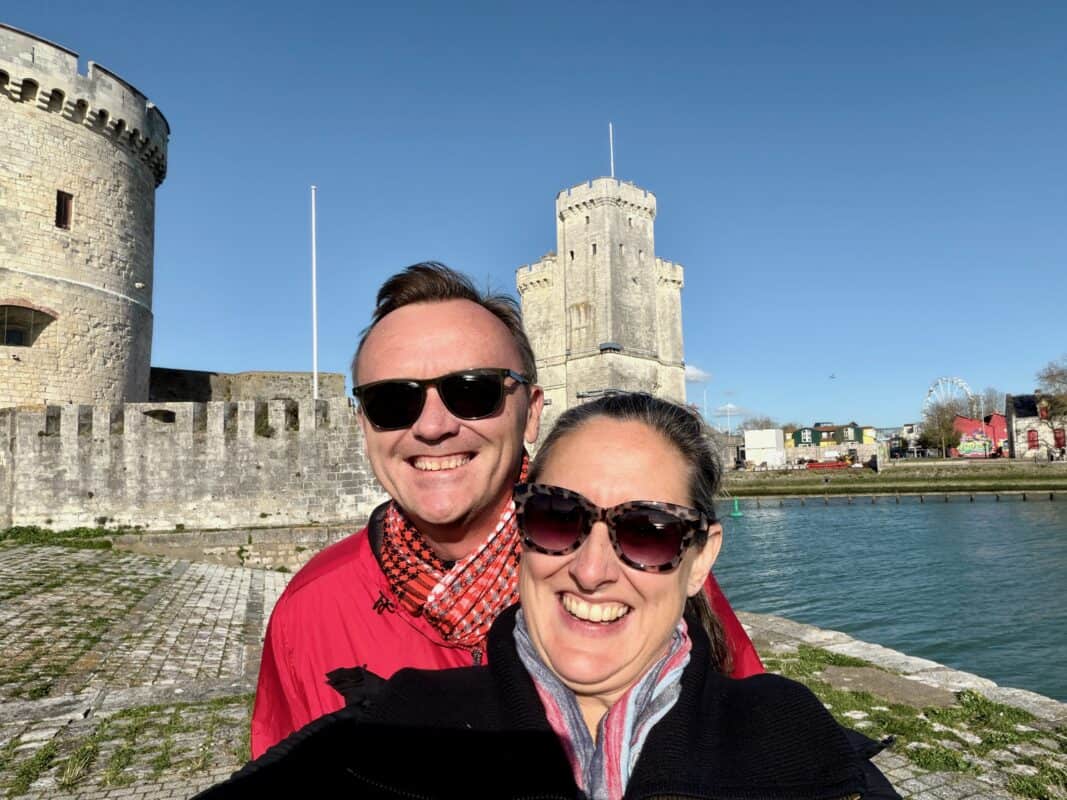
After all that back-and-forth, both tools landed on the same answer: France. Specifically, fly to Bordeaux, take the train to La Rochelle on the coast, then continue north to Nantes.
Two of those three, we’d never have chosen on our own.
What Did AI Get Right?
This is where it genuinely impressed us — and as former travel professionals, we don’t impress easily.
The big decisions were excellent. Choosing France over the countries we already knew. Picking three cities that fit exactly what we’d described. Routing us by train in a way that actually worked. We stayed in three hotels it recommended, and all three met our needs. We took the trains it said we could take. The skeleton of the trip was sound.
It sent us somewhere no one we knew had been. We had never heard of La Rochelle. When we asked friends who travel France often — and even French chefs we know — not one of them had been there. We arrived a little nervous, especially because we don’t speak French and this clearly wasn’t a town built for international tourists.
We fell in love within hours.
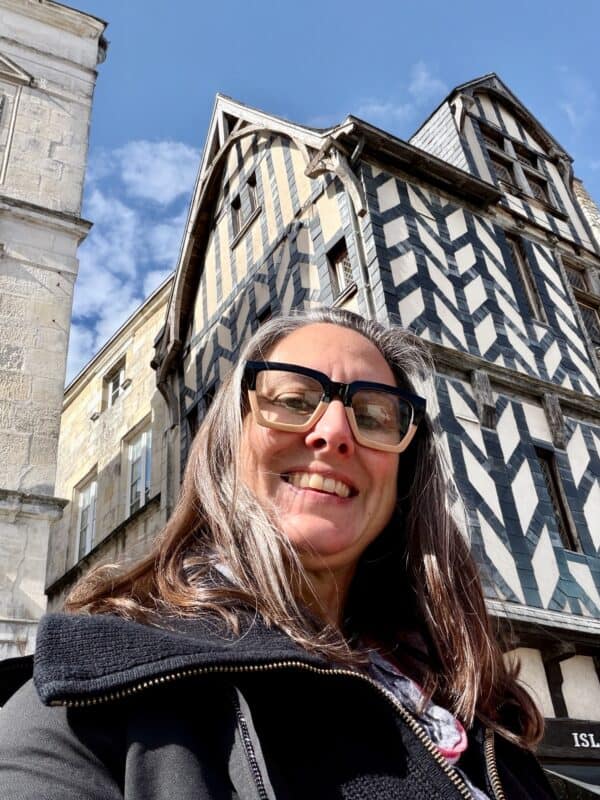
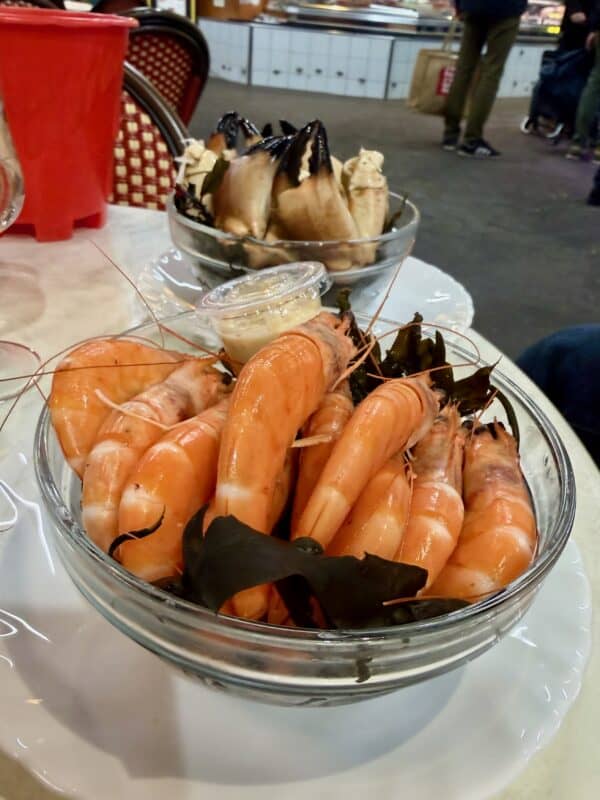
La Rochelle is a port town on the water, and we live in landlocked Colorado where the seafood is frozen, so a little harbor city full of fresh oysters and prawns hit us hard. The architecture was beautiful. On the Sunday we arrived, everyone was outside eating and drinking, and there was a buzz to the place. We were looking up the price of apartments before dinner. An AI recommended a town that the actual humans in our life, including professional chefs, had never thought to mention.
The restaurant recommendations landed about 80% of the time. For food people, this is the real test, and it mostly passed. We were specifically hunting the things we can’t get at home — proper seafood, duck, foie, rabbit, escargot — and roughly four out of five recommendations were genuinely good. That’s a better hit rate than we expected, and honestly not far off what we’d manage ourselves in an unfamiliar city.
It found us a market we’d return to three times. More on that below, because it deserves its own moment.
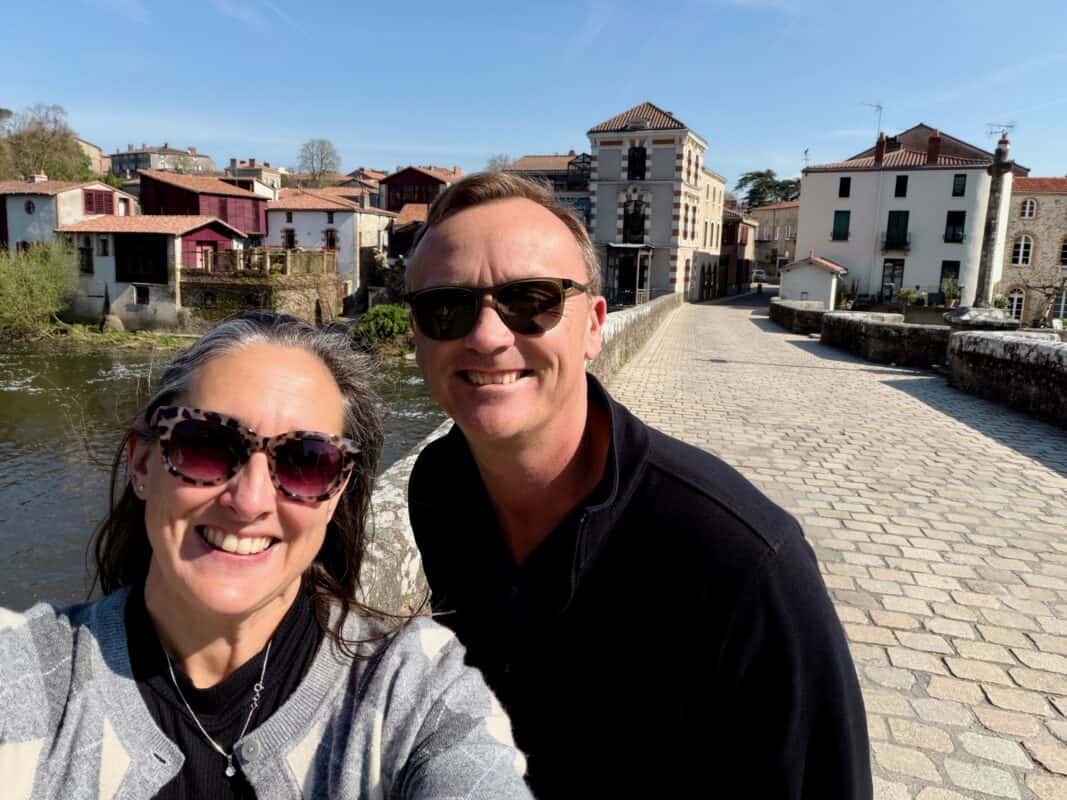
It found us a day trip we’d never have discovered. From Nantes — which, to be fair, was the weakest of the three cities, a university town so young we kept ending up surrounded by 200 people under 25 — the AI sent us to a small town called Clisson. It described it as a Tuscan-style village in the local wine country, and it was exactly that. We caught the Friday morning market, which we’d never have known about otherwise, walked along the river, and had a slow four- or five-course lunch right on the water. Without AI, Clisson would simply never have been on our radar.
The Bordeaux Market: The Best Thing AI Did
We tend to seek out local food markets wherever we go. It’s one of the things we miss most about having lived in Europe. So when the AI described a particular market in Bordeaux, we went the very first morning of our first day.
We went back the second day. And the third.
It reminded us, immediately, of the market we used to shop at when we lived in Girona, in Catalunya — a real, local market, not a polished tourist version like La Boqueria has become in Barcelona. The difference here was that the Bordeaux market was full of places to actually eat and drink: little coffee spots, a wine and cheese bar, a crepe stand, a place doing nothing but mussels, stalls serving cold seafood platters with local oysters and prawns.
That’s the magic of eating inside a market — you know the food is fresh because it came from two stalls over. At one point we watched the woman running the crepe stand walk over to a produce vendor, grab a banana, and head back to make a banana crepe. You can’t fake that.
Would we have found this market on our own? Maybe. But the way the AI described it sent us there on morning one instead of stumbling onto it the day before we left. And that changed the whole trip.
What Did AI Get Wrong?
Here’s the honest other half. If the big picture was the strength, the details were the weakness. Consistently.
Markets don’t transfer. Because we loved the Bordeaux market so much, we asked the AI to find us the same experience in La Rochelle and Nantes. It tried — but the markets there simply weren’t built the same way. There was nowhere to sit and eat or have a drink inside them. The tool understood “market,” but it didn’t understand the specific eat-in experience we were actually chasing. That’s a nuance gap.
Hours and menus were unreliable. This was the recurring frustration. We’d ask about opening and closing times or whether a restaurant served a specific dish, and the information was often just off. We showed up 30 minutes early or too late more than once. We quickly learned to double-check everything against Google — and even Google was frequently wrong, because the restaurants themselves don’t keep their hours and menus updated online. The AI can only be as accurate as the information businesses bother to publish, and most don’t.
It invented a wine tasting that didn’t exist. In Clisson, we wanted to do a tasting of the local Muscadet. The AI told us we could taste at the tourism office — we couldn’t — and pointed us to a winery we could supposedly reach on foot, which we couldn’t confirm in time. (We did, happily, find a wonderful little Muscadet wine bar in Nantes on our own.)
None of this is surprising if you remember where this technology was just a couple of years ago. Back in early 2023, we tested ChatGPT on Bologna — a city we’ve visited a dozen times and a region Amber has literally written a book about. It cheerfully suggested we “pop in” to what was then ranked the number one restaurant in the world, which is in nearby Modena and has a yearlong waitlist. It told us to cap the night around 11 with a scoop of gelato at a shop we love that closes at 9.
So the details still aren’t there. But the leap from “pop into the world’s most exclusive restaurant tonight” to “here’s a genuinely great 80%-accurate two-week itinerary” is enormous, and it happened fast.
So, Is AI a Good Travel Planner? Our 80% Verdict
If we had to put a number on it — and as former travel writers, we’ve thought about this more than most — we’d say AI planned this trip with about 80% accuracy.
The framing that stuck with us is this: AI is excellent at the big decisions and unreliable on the details. It chose the right country, the right cities, the right route, and a market and a day trip we’ll remember for years. It fumbled the hours, the menus, and a wine tasting that wasn’t real.
That 80% was more than enough for us to call the trip a success. We’d happily do it again. We still adore Bordeaux, we’re quietly serious about La Rochelle, and we ate extraordinarily well the entire time.
What This Means for the Future of Travel Content
We didn’t run this experiment just to grade a chatbot. We ran it because we’re trying to understand what’s left for people like us.
Here’s where we’ve landed, at least for now. The logistics layer of travel — the “top 10 things to do,” the “best neighborhood to stay in,” the efficient routing between cities — AI is going to handle that, and increasingly handle it well. The listicle, which is what travel content became over the last decade, is finished. We won’t miss writing it.
But the AI couldn’t tell us why a banana crepe made fresh at a market stall would stick with us, or why a port town no one had heard of would have us pricing apartments by dinner. It got us to the door. It couldn’t tell us what it felt like to walk through.
That’s the part we think travelers will start to crave again — the story, the texture, the lived experience. The thing a hundred-listicles-an-hour machine can’t fake because it was never there. After three years away, that’s the future of travel content we’re actually interested in building.
The genie isn’t going back in the bottle. We’re just figuring out where the humans still belong. And after France, we’re more optimistic about that than we’ve been in years.
Key Takeaways
- We used Gemini and Perplexity to plan an entire trip across France — country, cities, hotels, restaurants, and markets — through roughly a hundred back-and-forth queries, not a single “plan my trip” prompt.
- AI excelled at the big decisions: it chose France over places we already knew, routed us through Bordeaux, La Rochelle, and Nantes, and surfaced a day trip and a market we’d never have found.
- AI struggled with the details: restaurant hours, specific menu items, and one wine tasting that simply didn’t exist.
- Our overall verdict: about 80% accurate — enough to make the trip a genuine success.
- The takeaway for travel content: AI will own the logistics, but storytelling and real lived experience are becoming more valuable, not less.
FAQ
Can AI plan an entire trip by itself?
In our experience, AI can plan the structure of a trip very well — choosing a destination, sequencing cities, and recommending hotels and restaurants — if you treat it as a conversation rather than a one-line command. We worked through about a hundred queries and pushed back often. It got us roughly 80% of the way there, but the fine details still need human double-checking.
What is AI good at when planning travel?
The big-picture decisions. It chose a country that suited us, picked three cities that fit our exact preferences, planned a workable train route, and recommended a market and a day trip we’d never have discovered on our own.
What does AI get wrong when planning travel?
The details. Opening and closing hours, specific menu items, and the existence of certain experiences (it invented a wine tasting that wasn’t real). Always verify hours and bookings independently — though be aware that even Google is often out of date, because businesses don’t keep their information current.
Which AI tools did you use to plan your France trip?
We used Gemini and Perplexity in parallel, and interestingly, they largely agreed on the major recommendations.
Is it still worth reading travel blogs if AI can plan trips?
We think so — more than ever, actually, just for different reasons. AI handles the logistics now. What it can’t replicate is the lived experience, the storytelling, and the texture of a place from someone who was actually there. That’s the kind of travel content we believe is coming back.