Earlier this year, we did something we’d been quietly skeptical about for a long time: we let AI plan an entire trip across France. Not a loose suggestion or two, but the whole thing — the country, the cities, the route, the restaurants, the day trips. We ran roughly a hundred queries through Gemini and Perplexity, then went and lived the result on the ground. Our verdict was that AI got us about 80% of the way there. It was excellent at the big decisions and consistently unreliable on the details.
What we didn’t know at the time was whether our experience was a fluke — two former travel writers with unusually high standards being hard to please — or whether we’d stumbled onto a pattern. So we went looking at the data. After reading through the 2026 industry research, we can say it plainly: our 80% wasn’t a fluke. It’s almost exactly what the numbers describe. And the 20% that AI keeps getting wrong is the 20% that food-and-drink travelers care about most.

The AI Travel Boom is Real, and it Happened Fast
There’s no longer any argument about whether travelers are using AI. They are, in numbers that have surprised even the analysts tracking it.
Phocuswright reported that 56% of U.S. leisure travelers used AI for at least one trip in 2026, up from 43% just nine months earlier — a jump the firm called the fastest behavioral shift the travel industry has seen in more than a decade. Simon-Kucher’s 2026 Travel Trends report found that nearly two-thirds of travelers under 45 would use AI for recommendations on their next trip, with adoption tapering but still meaningful among older travelers — around 44% of Gen X and 29% of boomers.
Dig into what people actually do with it and the picture sharpens. In the Simon-Kucher data, 42% had used generative AI to build an itinerary, 31% to search for flights and hotels, and 28% had used chatbots directly on booking sites. AI has moved from novelty to default for the planning phase in the space of about two years.
So the headline is settled. The interesting part — and the part almost nobody with real travel credibility is writing about — is what happens after people use it.

Where the Data Aays AI Travel Planning Falls Short
Adoption is not the same as satisfaction, and this is where the 2026 research gets honest in a way the breathless adoption headlines don’t.
Among travelers who came away dissatisfied with AI’s answers, Simon-Kucher found that 52% said the responses were simply incorrect, and 47% said the results were too generic and didn’t appeal to them. Roughly a third gave up on the tool entirely and called a human for help. Those aren’t fringe complaints. Inaccuracy and blandness are the two dominant failure modes, and they show up across study after study.
Skift’s reporting on the 2026 outlook lands on the same fault line: AI is genuinely useful for logistics, but travelers still want the experience itself to feel human. The satisfaction people do report is almost entirely about speed — instant answers, faster planning, the occasional suggestion they wouldn’t have found on their own. The frustration is about substance: the recommendations are often wrong, and they rarely feel like they were made for you.
That distinction matters enormously, because it tells you exactly what AI is and isn’t good for. It’s a fast, tireless research assistant. It is not, in 2026, a trustworthy source of specifics.
The Part the Data Confirmed About our own AI Planned Trip
Here’s why we found the numbers so striking: they describe our France trip almost line by line.
Where AI excelled for us was the big picture — precisely the work that rewards synthesizing huge amounts of information. It picked a country we didn’t already know intimately, sequenced a sensible route between cities, and surfaced La Rochelle, a coastal town not one of our well-traveled friends — or even the French chefs we know — had ever mentioned. That’s the “saves you hours, finds things you’d miss” value that the satisfied half of every survey is pointing at. Real, and not to be dismissed.
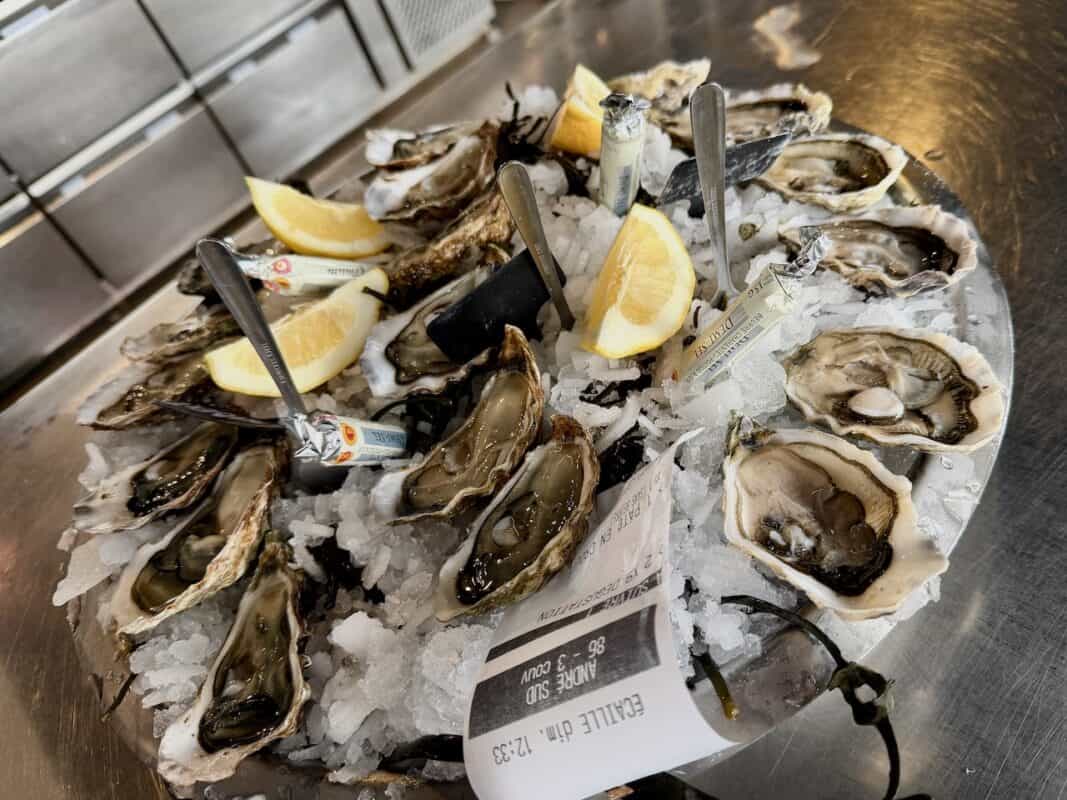
Where it fell apart was everything granular and sensory. Restaurant hours were wrong. Menus were wrong. When we asked it to find us the equivalent of the eat-in market we loved in Bordeaux — the kind of place where you buy oysters and a glass of wine and stand at a counter with locals — it couldn’t grasp the nuance and sent us to generic spots that missed the entire point. At one stage it confidently recommended a wine tasting that did not exist.
Map that against the data: 52% citing incorrect answers, 47% citing generic recommendations that didn’t fit them. We are, statistically, completely ordinary. The difference is only that we knew enough to catch the errors in real time rather than discovering them at a locked restaurant door.
And, to be fair, this is not an AI hallucination problem, it’s a data source problem. Most of the time it’s because the restaurant’s own information is not accurate.
Why Food and Drink is AI’s Hardest Assignment
This is the heart of it, and it’s where we think we can add something the survey firms can’t.
Food-and-drink travel lives almost entirely in the 20% that AI gets wrong. A good meal abroad depends on details that are hyper-local, frequently changing, and deeply personal: whether the market hall is open on a Monday, whether the natural-wine bar two streets over is worth leaving your neighborhood for, whether a dish is actually the regional specialty or a tourist-menu imitation of it. These are exactly the things that go stale fastest in an AI model’s training data and that resist being generalized into a confident answer.
The broader research backs this up. The features travelers say they trust AI least for are the impersonal, easily-outdated specifics — and those specifics are the whole game in culinary travel. AI can tell you that Bordeaux is a wine city. It cannot reliably tell you which counter to stand at, which producer to ask for, or that the place everyone online recommends closed last spring. The wider the gap between “technically correct” and “actually good,” the worse AI performs — and food is nothing but that gap.

What This Means for How to Actually Travel in an AI World
We’re not anti-AI. We used it to plan a trip we genuinely enjoyed, and we’d do it again. But the data and our own experience point to the same practical rule, and it’s worth stating clearly because it’s more useful than either the hype or the backlash:
Use AI for the scaffolding, never the finishing. Let it pick the region, rough out the route, compare the logistics, and surface places you’d never have found. That’s the work it does well, and it does save real hours. Then verify everything specific against a primary source — the restaurant’s own page, a recent local review, a human who was actually there. Treat every hour, every menu, every “hidden gem” as a hypothesis, not a fact.
There’s a bigger implication here too, one we keep circling back to. If AI now handles the logistics and the listicles competently, the value of travel content shifts decisively toward the things it can’t fake: lived experience, real local knowledge, and the judgment to know when a confident answer is quietly wrong. The 20% AI misses isn’t a temporary bug to be patched away. For now, it’s the entire reason human travel writing still matters — and, increasingly, the only part worth reading.
Do travelers really trust AI to plan trips in 2026?
Adoption is high, but trust is selective. As of 2026, 56% of U.S. leisure travelers had used AI for at least one trip, according to Phocuswright — yet most still verify what it tells them, and only a small minority consider AI answers sufficient on their own. Travelers treat AI as a fast research assistant, not a final authority.
What does AI get wrong when planning a trip?
AI is reliable for big-picture decisions and weak on specifics. In Simon-Kucher’s 2026 Global Travel Trends study, 52% of dissatisfied users said the answers were inaccurate and 47% found them too generic. The typical failures are wrong restaurant hours, places that have closed, and generic recommendations. When Food & Drink Destinations tested AI on a complete France trip, it scored about 80% accuracy — excellent on routing and destination choices, unreliable on details.
Should I use AI to find restaurants when I travel?
Use AI for ideas, then verify before you go. Food and drink is where AI struggles most, because the details that matter — opening hours, whether a spot is still worth it, what’s an authentic regional dish versus a tourist imitation — change quickly and resist being generalized. In our own testing, AI recommended a wine tasting that didn’t exist and missed the local markets we valued most. Always confirm a food recommendation against a primary source or a recent local review.