
Singapore’s savory snacks reflect the rich collision of Malay, Chinese, Peranakan, and South Indian culinary traditions. A single afternoon crawl can take you from dipping freshly flipped, flaky roti prata into aromatic curry gravy at a neighborhood kopitiam to cracking into a blistered, piping-hot spiral curry puff straight from a glass warming case. Whether you are grabbing a quick handheld bite between sightseeing stops or assembling an afternoon spread with an iced milk tea, here are twelve essential Singaporean snacks you must try on your next trip.
One of our favorite things about visiting Singapore is that your eating schedule rarely conforms to three structured meals a day. Over more than a dozen trips spanning the last fifteen years, Eric and I have spent countless afternoons wandering through shaded five-foot-ways, air-conditioned MRT concourses, and bustling hawker aisles, constantly getting sidetracked by the aroma of fresh bakes and sizzling griddles. In a city that treats grazing as an art form, snacking is where you discover the heart of everyday food culture.
*This post contains compensated links. Find more info in my DISCLAIMER. As an Amazon Associate, I earn from qualifying purchases.
Quick Facts: Essential Singaporean Snacks
| Snack Name (Local Term) | Cultural Origin | Typical Price (SGD / USD) | Primary Flavor Profile | Where to Find It |
| Curry Puff (Karipap) | Malay / Peranakan | 1.80–2.50 SGD (~1.35–1.90 USD) | Spiced curried potato, chicken, boiled egg in flaky crust | J2 Crispy Curry Puff, Old Chang Kee, Tip Top |
| Roti Prata | South Indian-Muslim | 1.50–3.50 SGD (~1.15–2.65 USD) | Crispy, buttery griddled flatbread with savory curry dips | Tekka Centre, Mr and Mrs Mohgan, neighborhood prata stalls |
| Fried Carrot Cake (Chai Tow Kway) | Teochew / Chinese | 3.50–6.00 SGD (~2.65–4.55 USD) | Savory radish cake fried with eggs, preserved radish, garlic | Hawker centres islandwide (Zion Riverside, Newton) |
| Popiah | Hokkien / Chinese | 2.50–4.00 SGD (~1.90–3.00 USD) | Soft thin crepe roll filled with sweet-braised jicama and crushed peanuts | Ann Chin Popiah, Old Long House Popiah |
| Otah-Otah (Otak-Otak) | Malay / Peranakan | 1.20–2.00 SGD (~0.90–1.50 USD) | Char-grilled spicy mackerel fish paste wrapped in banana leaves | Lee Wee & Brothers, hawker drink and satay stalls |
| Satay Skewers | Malay / Javanese | 0.90–1.20 SGD (~0.70–0.90 USD) per skewer | Charcoal-grilled spiced meats with warm peanut sauce | Lau Pa Sat Satay Street, Newton Food Centre |
| Pan-Fried Pork Buns (Sheng Jian Bao) | Shanghainese | 4.50–6.50 SGD (~3.40–4.90 USD) for 4 | Juicy pork filling, savory broth, shatteringly crisp bottom | Chinatown Complex, People’s Park Complex food halls |
| Fuzhou Oyster Cake | Min / Fuzhou | 3.00–4.00 SGD (~2.30–3.00 USD) | Deep-fried batter filled with minced pork, oysters, prawns, peanuts | Maxwell Food Centre (Fu Zhou Poh Hwa) |
| Chwee Kueh | Teochew / Chinese | 2.00–3.50 SGD (~1.50–2.65 USD) for 4 | Steamed silky rice cakes topped with savory preserved radish (chai poh) | Jian Bo Shui Kueh (Tiong Bahru Market) |
| Soon Kueh | Teochew / Chinese | 1.50–2.20 SGD (~1.15–1.65 USD) | Chewy translucent rice skin stuffed with jicama, dried shrimp, bamboo shoots | Ah Yer Soon Kueh, traditional Teochew kueh stalls |
| Kaya Toast Fingers | Hainanese | 2.50–4.00 SGD (~1.90–3.00 USD) set | Crisp charcoal toast with sweet pandan coconut jam and cold butter | Ya Kun Kaya Toast, Killiney Kopitiam |
| Tau Huay (Soya Beancurd) | Chinese | 1.50–2.50 SGD (~1.15–1.90 USD) | Silky smooth warm or chilled soybean pudding with sweet syrup | Rochor Original Beancurd, Whampoa Soya Bean |
Table of Contents
Traveling to Singapore? Check out our Singapore Travel Guide to get our insider tips!
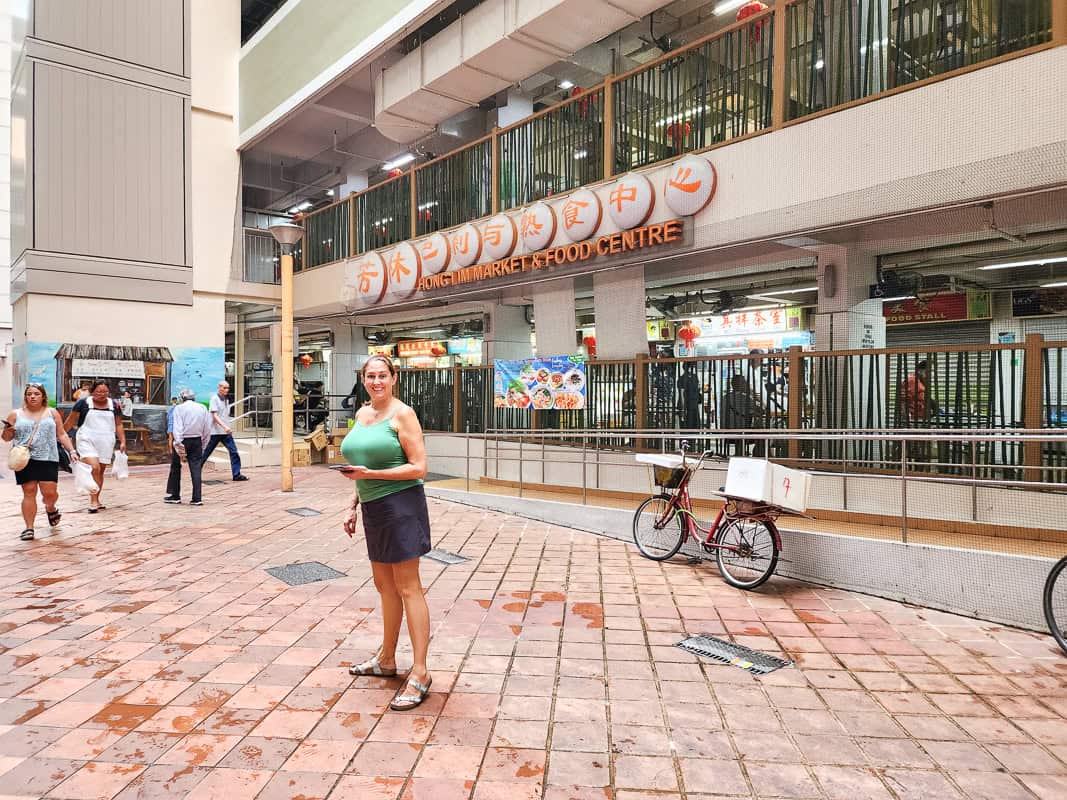
What Are the Best Savory Snacks in Singapore?
One of the first things Eric and I noticed during our earliest trips to Singapore is that the conventional concept of three distinct meals a day completely dissolves here. Locals seem to graze continuously from early morning until well past midnight. Step into any neighborhood kopitiam or hawker centre at 10:30 AM or 3:30 PM, and you will never find an empty room—you’ll find retirees catching up over coffee, office workers sneaking out for a mid-shift pick-me-up, and families sharing small plates under the ceiling fans.
Snacking isn’t just an afterthought or a way to kill time between reservations; it is an essential pillar of Singaporean culture. Handheld bites and small savory plates provide the perfect excuse to socialize, pause during a humid afternoon, or simply savor a single flavor craving without committing to a massive feast. The sheer variety is astonishing, spanning Malay, Peranakan, South Indian, and regional Chinese culinary traditions.
Because portions at snack counters and street stalls are typically small and inexpensive, you never have to choose just one thing. It is completely normal to order a single flaky pastry from one counter, grab a skewer or two from another, and pair them with an icy glass of fresh juice. Over years of exploring, grazing our way across the island one small bite at a time has consistently delivered our most memorable eating experiences.
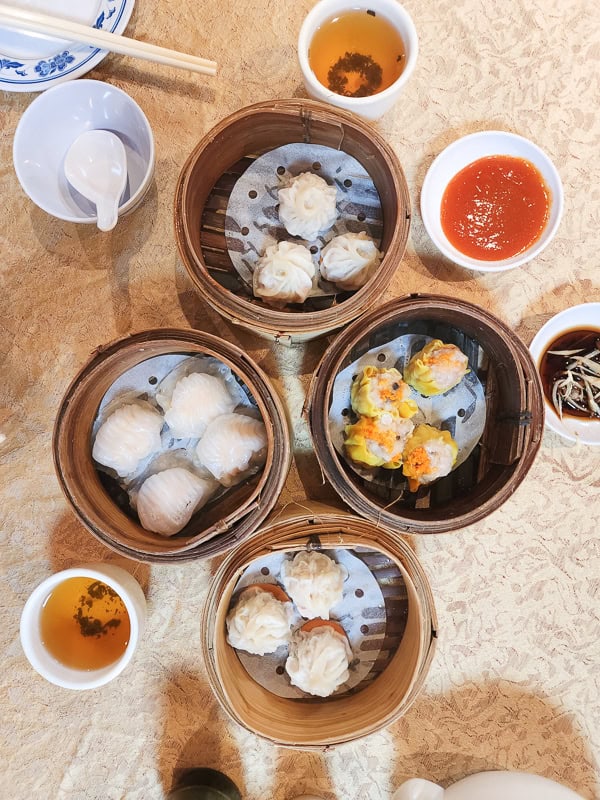
Learn more about eating in Singapore with our Singapore Food Guide – What and Where to Eat.
Curry Puff (Karipap)
The curry puff is Singapore’s quintessential handheld snack. Inspired by British Cornish pasties and Portuguese empanadas, this local adaptation features a buttery, deep-fried pastry shell—often rolled with multi-layered, spiral laminations—stuffed to the brim with curried potatoes, tender chunks of chicken, and a slice of hard-boiled egg.
- How to eat it: Pick one up fresh from a warming cabinet when the crust is blistered and flaky; eat it warm so the spiced potato steam hits you on the first bite.
- Where to try it: J2 Famous Crispy Curry Puff at Amoy Street Food Centre (acclaimed for its flaky spiral layers) or any ubiquitous Old Chang Kee kiosk for a reliable grab-and-go fix.
Roti Prata
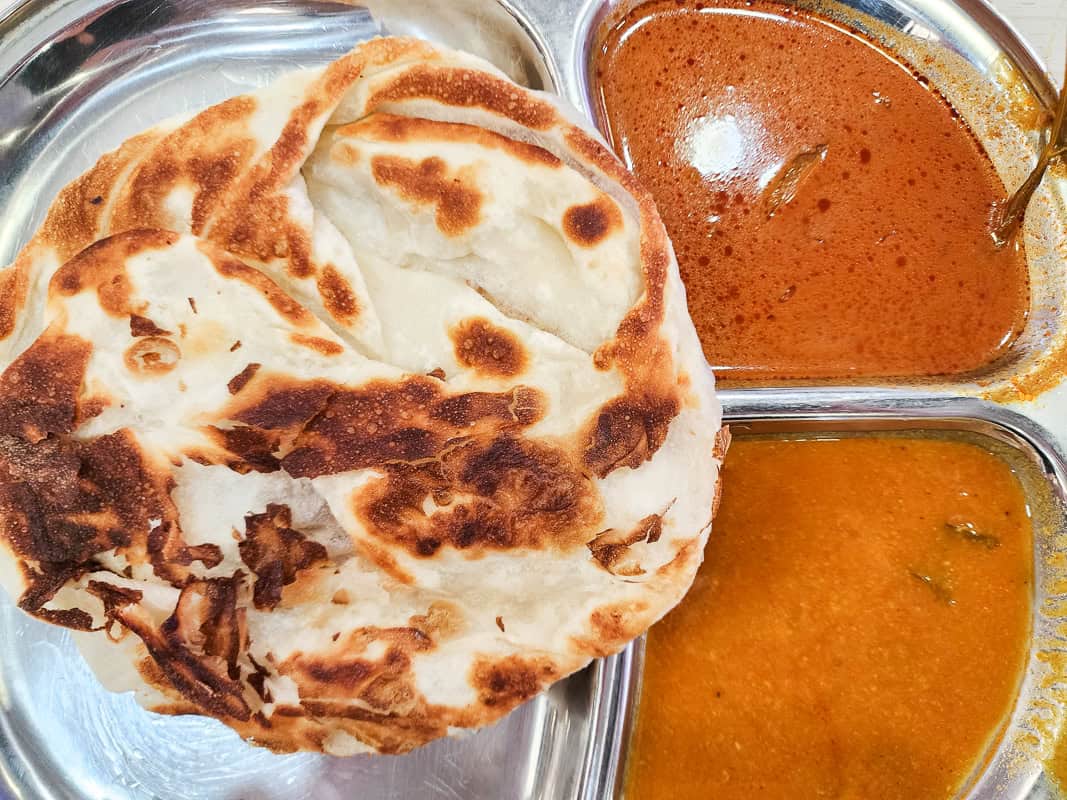
Watching a prata master stretch, flip, and slap oily dough across a stainless steel counter until it is paper-thin is pure culinary theater. Griddled over high heat with a touch of ghee, these South Indian-Muslim flatbreads emerge crisp and golden on the outside while maintaining soft, chewy layers within.
- How to eat it: Order a “Plaster” (prata with an egg cooked on the outside) or a plain crisp prata; tear off pieces by hand and drag them through the accompanying compartmented stainless tray filled with spicy fish curry or yellow dhal.
- Where to try it: Tekka Centre in Little India or dedicated neighborhood joints like Springleaf Prata Place.
Fried Carrot Cake (Chai Tow Kway)
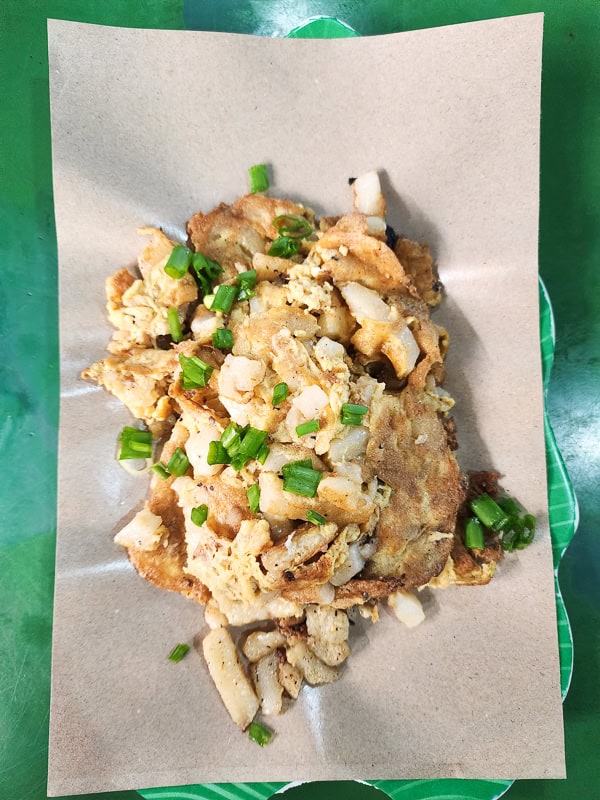
Despite the name, there are no orange carrots in this dish. Chai tow kway is made from steamed cubes of grated white radish (daikon) and rice flour, wok-fried vigorously on a giant flat-top griddle with minced garlic, eggs, and salty preserved radish (chai poh).
- White vs. Black: “White” carrot cake is pan-fried with beaten egg into a crisp, savory omelet-style cake. “Black” carrot cake is doused generously in thick, sweet dark molasses soy sauce, creating a caramelized, sticky chew.
- Where to try it: Look for stalls with steady queues at Old Airport Road Food Centre or Newton Food Centre.
Popiah
Popiah is a fresh, non-fried spring roll of Hokkien origin that balances complex textures and fresh aromas. The vendor lays out a paper-thin wheat crepe, coats it with sweet bean sauce and spicy chili paste, and piles on warm, slow-braised jicama (yam bean), shredded carrots, crispy fried batter bits, chopped peanuts, and boiled egg before tightly rolling and slicing it into bite-sized cylinders.
- How to eat it: Eat it immediately with chopsticks while the wrapper is tender and the peanut crumbs are still crunchy.
- Where to try it: Ann Chin Popiah (multiple hawker locations, including Chinatown Complex).
Otah-Otah (Otak-Otak)
You will smell otah long before you see it: vendors grill narrow bundles of banana leaves or attap leaves over glowing charcoal grills along hawker corridors. Inside lies a paste of minced mackerel fillets whipped with coconut milk, lemongrass, galangal, turmeric, and chili, which firms into a fragrant, smoky fish custard as it cooks over the coals.
- How to eat it: Unwrap the charred staple-bound leaf wrapper and eat the warm, spicy orange patty straight off the leaf, or tuck it inside a warm bread roll.
- Where to try it: Any evening satay stall at Lau Pa Sat or grab-and-go specialist counters like Lee Wee & Brothers.
Satay Skewers
While commonly ordered as a shared dinner starter, skewers of satay make the ultimate late-afternoon or late-night street snack. Strips of marinated chicken, beef, or mutton are skewered on bamboo sticks and fanned over long open charcoal troughs until the exterior edges are charred, smoky, and caramelized.
- How to eat it: Swirl each skewer through a bowl of warm, chunky peanut sauce (often topped with a dollop of pureed pineapple) and use the remaining sauce to dip dense cubes of compressed rice cake (ketupat).
- Where to try it: Satay Street at Lau Pa Sat (Boon Tat Street) after 7:00 PM every evening.
Pan-Fried Pork Buns (Sheng Jian Bao)
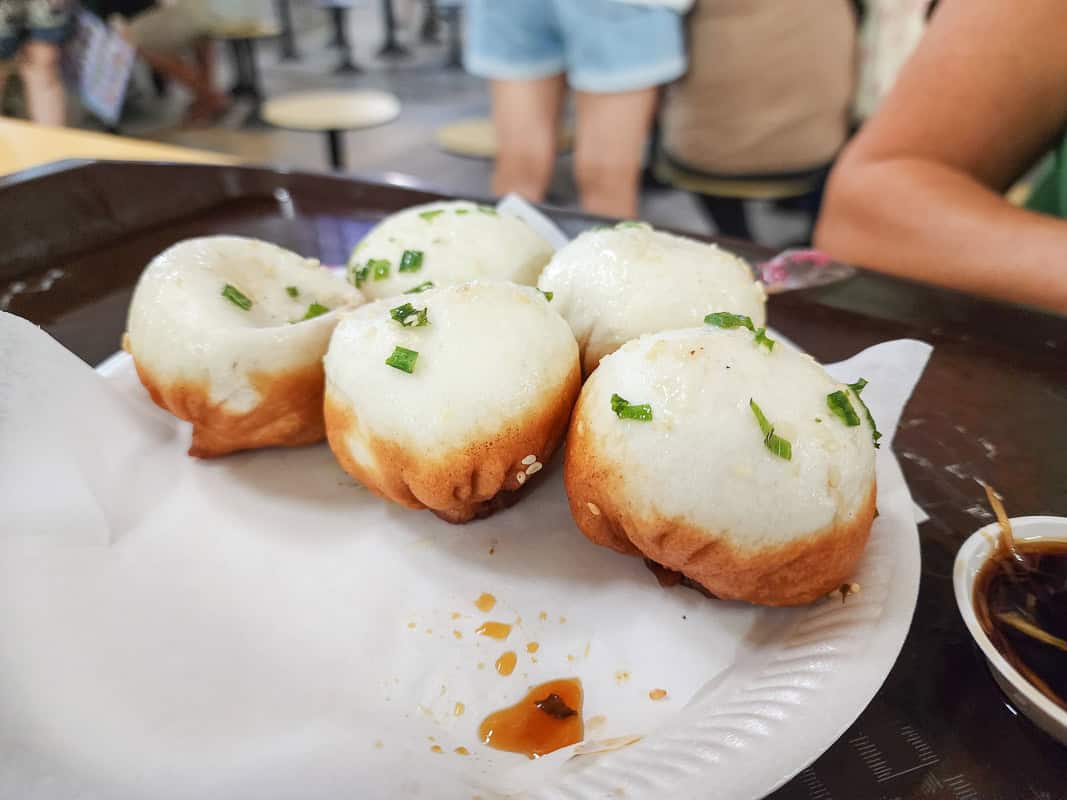
While a Shanghainese specialty, these plump, yeast-dough dumplings have become a beloved fixture inside Singapore’s dense Chinese food halls. The buns are arranged tightly in giant, heavy cast-iron skillets, water-steamed to puff the dough, and fried in oil until the bottoms develop a deep golden, crackling crust.
- How to eat it: Beware of scalding broth! Nibble a small vent into the top edge to sip out the rich savory pork soup before dipping the crispy bottom into black vinegar and slivered ginger.
- Where to try it: Hawker counters on the second floor of Chinatown Complex or People’s Park Complex Food Centre.
Fuzhou Oyster Cake
Instantly recognizable by its saucer-like, puffed UFO shape, this rare traditional snack is deep-fried to order in a curved ladle. A thick rice and soybean flour batter encases a hearty filling of minced pork, savory oysters, small prawns, and chopped coriander, crowned with whole crunchy peanuts on top before being lowered into boiling oil.
- How to eat it: Let it cool for two minutes so the shell crisps up, then bite into the crunchy exterior to reach the juicy, briny seafood center.
- Where to try it:Fu Zhou Poh Hwa Oyster Cake inside Maxwell Food Centre.
Chwee Kueh
Chwee kueh is a beloved morning and afternoon bite originating from Teochew cuisine. Small, bowl-shaped cakes made from steamed rice flour and water are popped out of miniature tin molds, yielding a silky, wobbly texture. They are then buried under a generous spoonful of dark, fragrant preserved radish (chai poh) fried slowly with shallots, garlic, and lard.
- How to eat it: Use the provided plastic toothpick or fork to cut each cake into quarters, making sure every bite carries a heavy coat of salty-sweet preserved radish and a swipe of red sambal.
- Where to try it: Jian Bo Shui Kueh at Tiong Bahru Market.
Soon Kueh
Another Teochew delicacy, soon kueh resembles a translucent white teardrop-shaped dumpling. The chewy, semi-translucent skin is crafted from rice and tapioca flour, stuffed generously with finely julienned jicama, dried shrimp, dried mushrooms, and tender bamboo shoots.
- How to eat it: Drizzle with thick sweet dark soy sauce and a spoonful of sharp chili paste before slicing into the chewy dumpling skin.
- Where to try it: Heritage kueh stalls in Katong or traditional pastry counters in Chinatown.
Kaya Toast Fingers
While widely celebrated as Singapore’s national breakfast, kaya toast is just as popular as an afternoon pick-me-up at local kopitiams. Thin sandwich bread is toasted over charcoal embers until shatteringly crisp, then slathered with rich, fragrant kaya (a jam made from coconut milk, pandan leaves, and eggs) and sandwiched with thick, cold slabs of salted butter.
- How to eat it: Pair your toast fingers with a hot mug of Kopi or Teh (pulled milk tea); dip the toast into a saucer of soft-boiled eggs splashed with dark soy sauce and white pepper.
- Where to try it: Ya Kun Kaya Toast (the original branch on Far East Square) or Killiney Kopitiam.
Tau Huay (Soya Beancurd)
When you need a light, refreshing pause in the middle of a hot afternoon, tau huay hits the spot. This traditional Chinese snack consists of ultra-smooth, wobbly beancurd made from fresh soybeans, served either warm straight from a wooden bucket or chilled in a plastic bowl, drizzled with clear sugar syrup infused with pandan.
- How to eat it: Do not stir or smash the curds; spoon up thin, delicate layers so the silky beancurd melts effortlessly across your tongue.
- Where to try it: Rochor Original Beancurd along Short Street or local dessert stalls in Whampoa.
Frequently Asked Questions: Singaporean Snacks
What Is the Most Famous Street Snack in Singapore?
The curry puff is widely considered the most iconic everyday handheld snack in Singapore, closely followed by savory street bites like roti prata, satay skewers, and fried carrot cake.
What Is the Difference Between White and Black Carrot Cake?
White carrot cake (chai tow kway) is pan-fried with egg into a firm, savory, golden omelet-style cake seasoned with garlic and preserved radish. Black carrot cake includes a generous ladle of dark, sweet molasses soy sauce, making the radish cake sweet, savory, and caramelized.
Where Can You Buy Snacks on the Go in Singapore?
Beyond open-air hawker centres, fantastic savory snacks can be found in the basement concourses of major MRT stations and shopping malls, where heritage snack kiosks like Old Chang Kee, Tip Top, and Polar Puffs operate.
Are Street Snacks in Singapore Safe to Eat?
Yes. All street food kiosks, hawker stalls, and snack counters in Singapore are strictly regulated, licensed, and graded by the Singapore Food Agency. Stalls follow rigorous food safety standards and display their hygiene grade (A, B, or C) clearly.
Can You Pay for Street Snacks with Credit Cards?
Most independent hawker snack counters and traditional kopitiams operate strictly on cash (Singapore Dollars) or local digital QR payments (PayNow/NETS). However, branded commercial snack kiosks in shopping malls and transit stations generally accept contactless credit cards and mobile wallets.