
To help you navigate the aisles and skip the tourist traps, here is our first-hand guide to the best Singapore hawker centres, complete with what to order and the unwritten etiquette you must know before you go.
Singapore hawker culture is inscribed on the UNESCO Representative List of the Intangible Cultural Heritage of Humanity, and for good reason. Underneath high, whirring ceiling fans, dozens of multi-generational cooks dedicate their lives to mastering a single specialty: simmering chicken stock for fragrant rice, charring flat rice noodles over breath-of-the-wok heat, or ladling fiery curry gravy over bowls of noodles.
Eating at a hawker centre in Singapore is one of our absolute favorite rituals in the world. Over more than a dozen visits spanning the last fifteen years—whether flying in for a conference, stopping over for 24 hours between flights, or spending weeks house-sitting—Eric and I always map our daily footsteps around these famous open-air dining halls.
*This post contains compensated links. Find more info in my DISCLAIMER. As an Amazon Associate, I earn from qualifying purchases.
Quick Facts: Singapore Hawker Centre Guide
| Category | Key Detail / Local Norm | Practical Foodie Takeaway |
|---|---|---|
| Cultural Status | UNESCO Intangible Cultural Heritage | Over 110 government-regulated centres house thousands of family-run food stalls across the island. |
| Essential Table Etiquette | “Choping” with Pocket Tissues | Leave an inexpensive packet of tissues flat on an empty table to reserve your seat before ordering. |
| Tray Return Mandate | Strictly Enforced Clean Tables Law | Clearing your food tray, crockery, and drink glasses to designated drop-off racks is legally required. |
| Average Cost per Dish | 4 to 9 SGD (~3.00 to 6.80 USD) | Covers a plate of chicken rice, a bowl of laksa, or a loaded tray of char kway teow; seafood dishes cost more. |
| Payment Reality | Cash & PayNow / NETS QR | While locals pay via local banking QR codes, international visitors should always carry physical cash in small notes. |
| Peak Crowd Windows | 12:00 PM – 1:30 PM & 6:30 PM – 8:00 PM | Lunch rushes in the CBD are intense; visiting at 11:15 AM or 2:00 PM ensures shorter lines and easy seating. |
| Singapore Drinks Culture | Dedicated Beverage Stalls | Drink stalls are separate from food counters; order fresh sugarcane juice, iced calamansi, or cold Tiger Beer. |
| Cleaning Closures | Scheduled Quarterly Deep Cleans | Hawker centres close completely for 2 to 3 days for periodic washdowns; always check the NEA schedule online. |
Table of Contents
Traveling to Singapore? Check out our Singapore Travel Guide to get our insider tips!
What Is a Singapore Hawker Centre?
If you have never visited Singapore, picture a cross between a bustling municipal market hall and an open-air cafeteria, lined with dozens—sometimes hundreds—of tiny, independent food stalls operating side by side.
During the mid-20th century, street food vendors pushed wooden carts and cooked over open braziers along city sidewalks and canals. To improve hygiene without erasing affordable food culture, the Singapore government relocated street hawkers into purpose-built, sheltered dining complexes starting in the 1970s. Today, there are approximately 120 official government-regulated hawker centres scattered across the island, housing thousands of individual culinary entrepreneurs.
Check out our 3-Day Singapore itinerary to make the most of your time.
What To Expect at a Hawker Centre in Singapore
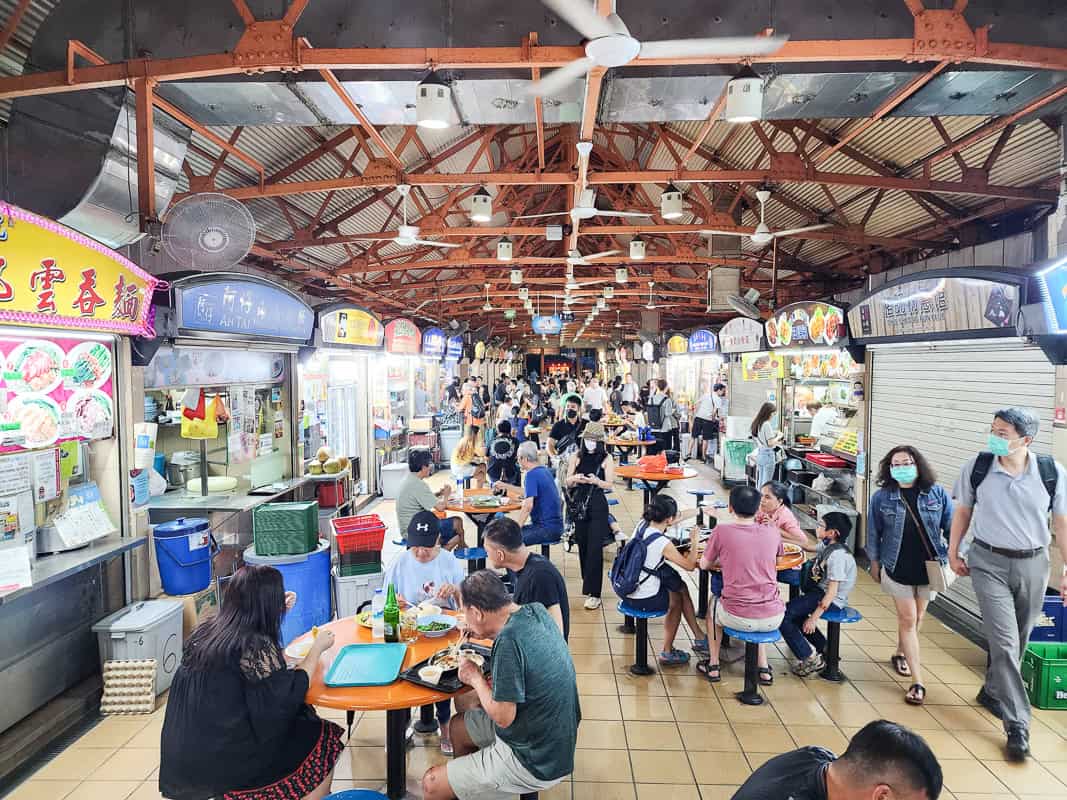
Stepping into a Singapore hawker centre for the first time is an assault on the senses. High above, banks of industrial ceiling fans churn the tropical air, competing with the rhythmic clatter of cleavers on wooden chopping blocks, sizzling flat-top griddles, and roaring wok burners venting aromatics of garlic, ginger, and charred soy sauce.
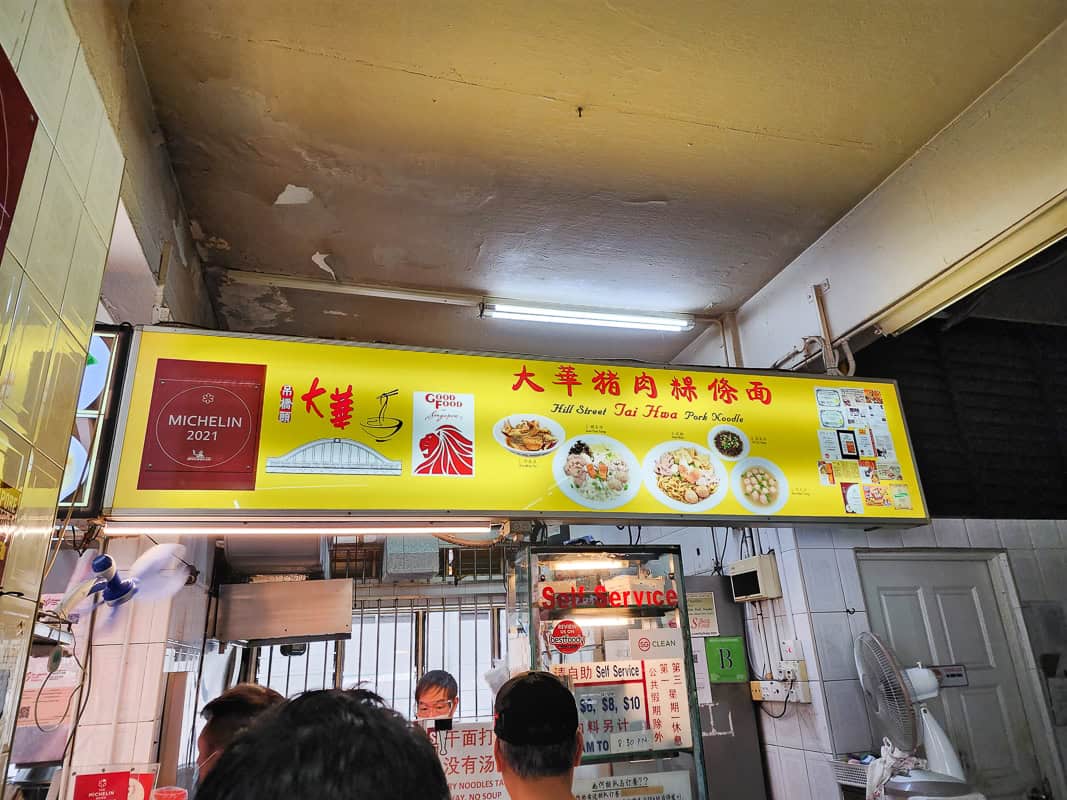
Seating consists of fixed communal plastic tables and stools, often arranged in long rows between color-coded stall aisles. Despite the energetic hum and crowds, the environment is remarkably organized, spotless, and safe, with every vendor required to prominently post their official government hygiene rating (A, B, or C) right beside their menu board.
What makes hawker centres truly extraordinary is hyper-specialization. Rather than cooking fifty dishes decently, most stallholders spend decades—often across two or three generations—perfecting just one or two regional recipes.
You might find an elderly uncle who wakes before dawn to simmer chicken stock for Hainanese rice, next to an auntie ladling spicy coconut curry broth over thick rice noodles, next to a cook tossing dark noodles over blistering wok fire. Eating here isn’t just about grabbing a cheap, filling lunch; it is the beating heart of Singapore’s social fabric and everyday food identity. This specialization is also why there are actually Michelin-starred Singapore hawker centers.
When traveling to Singapore, check out our list of the best places to stay in Singapore for food lovers!
Essential Hawker Centre Etiquette: How to Chope and Order
Before you step up to your first stall, you need to understand how a Singapore hawker centre operates. Unlike Western food courts where you grab food first and look for an open seat while balancing a heavy tray, Singaporeans do the exact opposite.
The Art of the “Chope”
Finding an open table during the height of the lunch rush can feel overwhelming. Locating and claiming your seat happens first using the art of choping:
- Place your marker: Drop a simple, inexpensive pocket pack of paper tissues flat on the table or bench. An umbrella, a business card, or a tote bag also works, but the tissue pack is the universal sign across Singapore that the seat is occupied.
- Respect the claim: If you see a tissue pack sitting on an otherwise empty table, that table is spoken for. Move on to the next one.
- Join communal tables: If you are dining solo or as a couple, locals will often ask to share a large circular table. Nod, say yes, and enjoy the communal energy.
Learn more about eating in Singapore with our Singapore Food Guide – What and Where to Eat.
Ordering, Drinks, and Tray Return
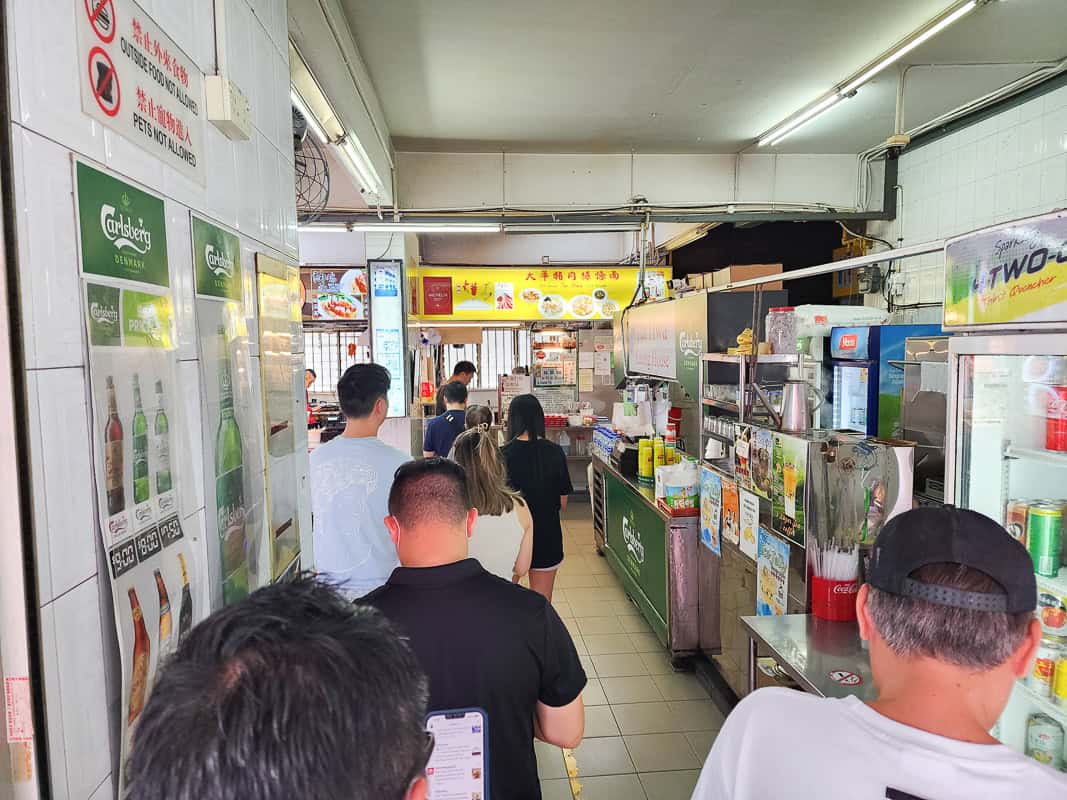
It can certainly be intimidating making that first trip to a hawker centre in Singapore. Take your time, there is no rush! Walk the food hall, check out what looks good. Look for a long line and get in it! It’s not particularly common for food and drinks to be sold by the same vendor, like an American food court.
- Queueing and Collection: Once your table is choped, join the line at your chosen stall. Stalls operate on self-service; you order, pay on the spot, and wait on the tray for your food to be handed to you.
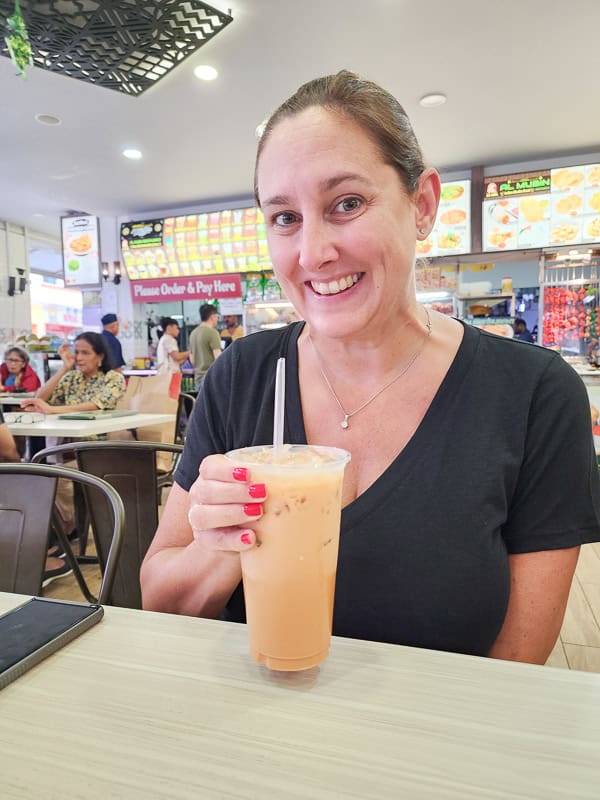
- Separate Drink Stalls: Food stalls sell food; beverage stalls sell drinks. Send one person to the drinks stall to order fresh lime juice, sugarcane pressed with lemon, or a cold beer while the other queues for food.
- Return Your Trays: By law, leaving used plates, bowls, or tissues on the table is illegal and subject to fines. Always carry your tray and crockery to the designated tray-return racks marked with green or blue signage before leaving.
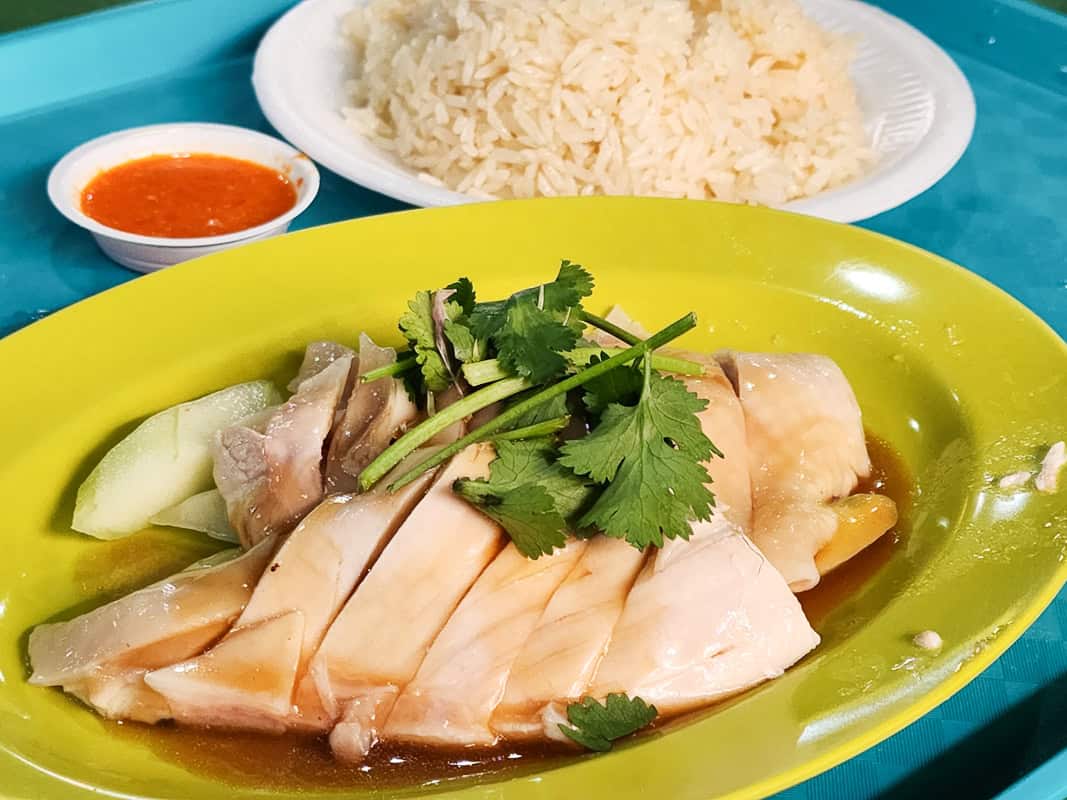
Maxwell Food Centre: The Iconic Chinatown Staple
Located along South Bridge Road right on the edge of Chinatown, Maxwell Food Centre is often the first stop for culinary travelers, and it remains one of our absolute favorite places to grab a cold beer and lunch or a quick Singaporean snack. The breezy, single-story brick pavilion features long communal rows of tables beneath high pitched roofs and whirring ceiling fans.
While tourists famously flock here for Tian Tian Hainanese Chicken Rice, the neighboring Maxwell Hainanese Chicken Rice stall offers an equally silky, fragrant plate with a significantly shorter queue. Beyond chicken rice, head to Zhen Zhen Porridge for dense, slow-cooked congee, or pick up a savory, deep-fried oyster cake from the heritage stall near the center aisle.
- Nearest MRT: Maxwell MRT (Thomson-East Coast Line) or Chinatown MRT (Downtown/North East Line).
- Must-Try Dishes: Hainanese chicken rice, Cantonese pork and century egg congee, Fuzhou oyster cake.
- Insider Tip: Pair your meal with an ice-cold large bottle of Tiger Beer poured into chilled mugs from the drink stalls along the outer corridor.
Chinatown Complex Food Centre: Singapore’s Largest Hawker Hall
Situated on the second floor of a sprawling concrete building on Smith Street, Chinatown Complex is the largest hawker centre in Singapore, housing more than 260 individual stalls. It feels raw, vibrant, and delightfully labyrinthine, divided into color-coded zones serving traditional regional Chinese specialties.
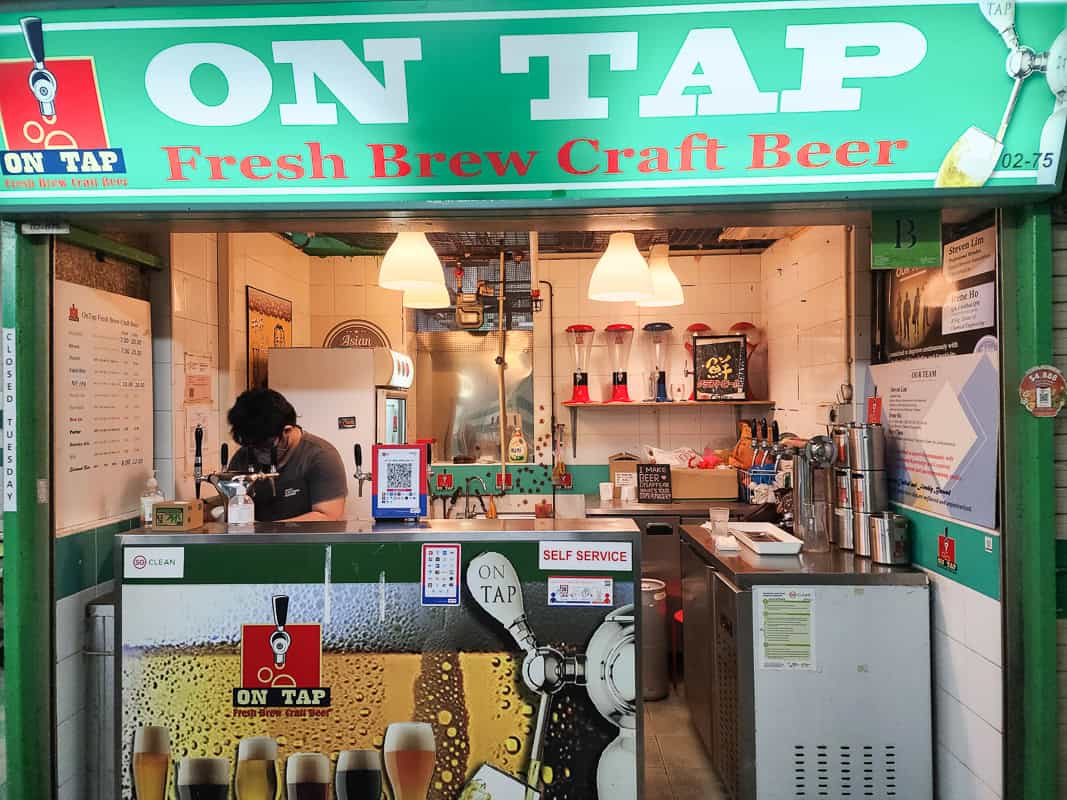
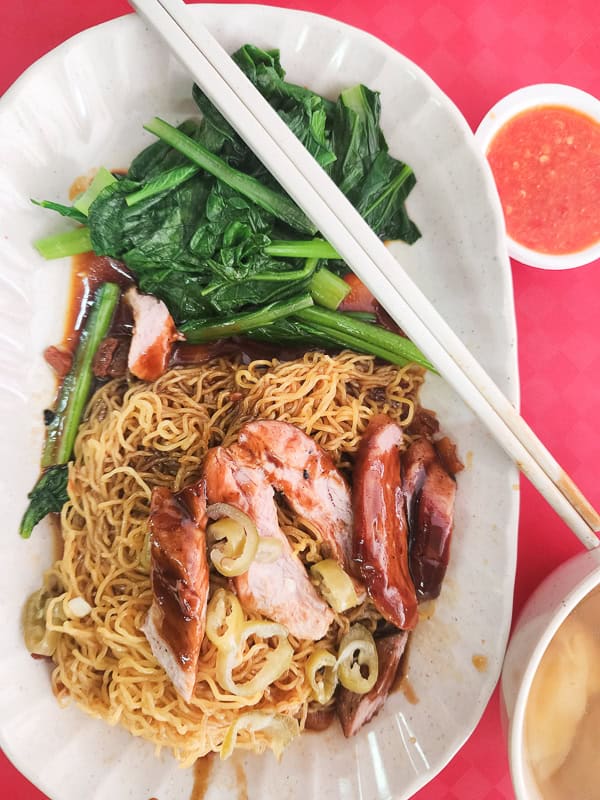
This is the historic home of Liao Fan Hong Kong Soya Sauce Chicken Rice & Noodle (the original stall that earned a Michelin star), but our favorite discovery here is On Tap Fresh Brew Craft Beer (Stall #02-75), which pours affordable, small-batch local craft beers on tap right in the middle of a hawker aisle.
- Nearest MRT: Chinatown MRT (Exit A).
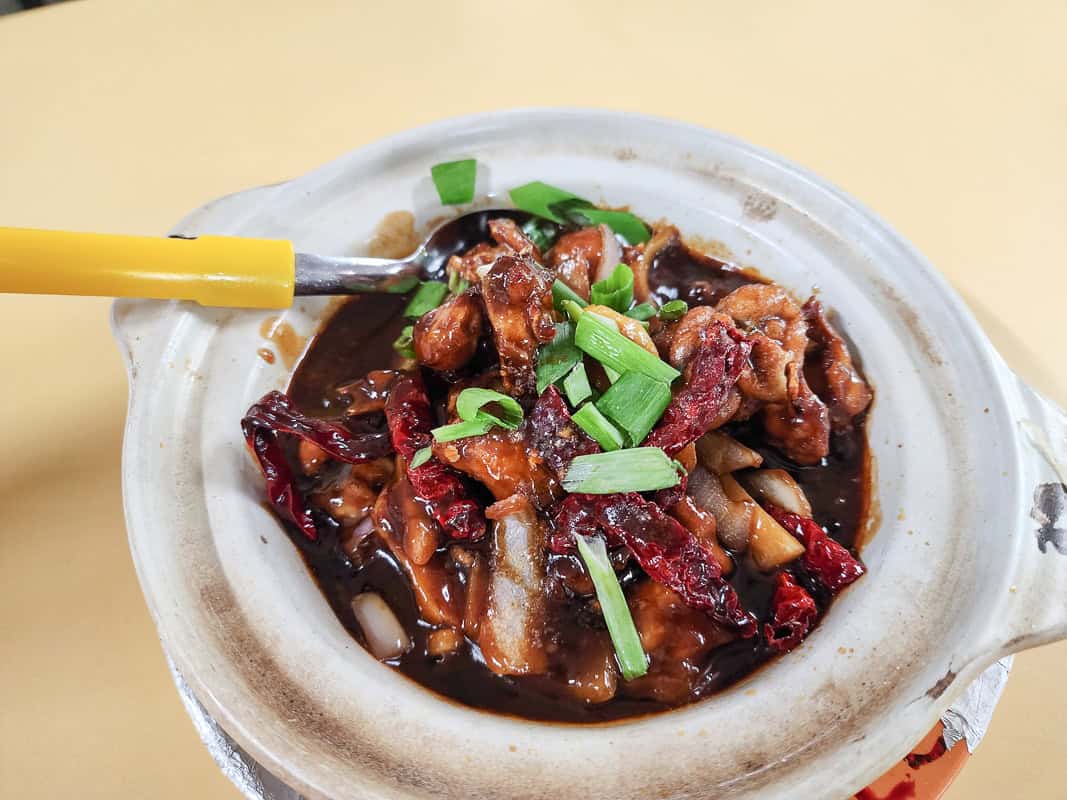
- Must-Try Dishes: Soya sauce chicken noodles, claypot rice, handmade steamed rice rolls (cheong fun), and local craft beer.
- Insider Tip: Avoid peak lunch hours between 12:00 PM and 1:15 PM when office workers from the nearby financial district pack the aisles.
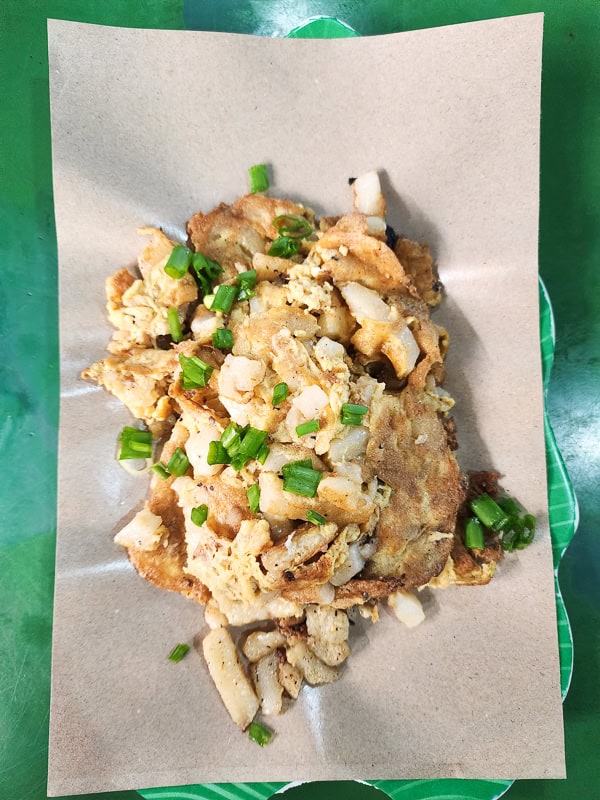
Old Airport Road Food Centre: The Local Food Lover’s Benchmark
If you ask long-time Singapore residents to name the single best all-around eating destination on the island, Old Airport Road consistently tops the list. Built on the runway grounds of the former Kallang Airport, this massive two-story food complex gathers decades-old hawker legends under one roof.
We found Old Airport Road while house sitting for friends, which took us off the typical tourist track for hawker centres. When we tell Singaporeans it’s one of our favorites, we get some street cred!
The wok-fried noodles here are legendary. You can watch chefs blister plates of dark, sweet char kway teow laden with cockles and lap cheong over roaring open flames, or queue for fragrant Hokkien mee cooked in rich prawn broth. It is also an exceptional evening destination for zi char (cook-and-fry stalls) turning out plates of wok-tossed lala clams and salted egg prawns.
- Nearest MRT: Dakota MRT (Circle Line), a short three-minute walk away.
- Must-Try Dishes: Char kway teow, Hokkien prawn mee, soya beancurd, and curry puffs.
- Insider Tip: The ground level is purely food; the upper level houses local retail shops. Grab your table on the ground floor near the central fan banks to stay cool.
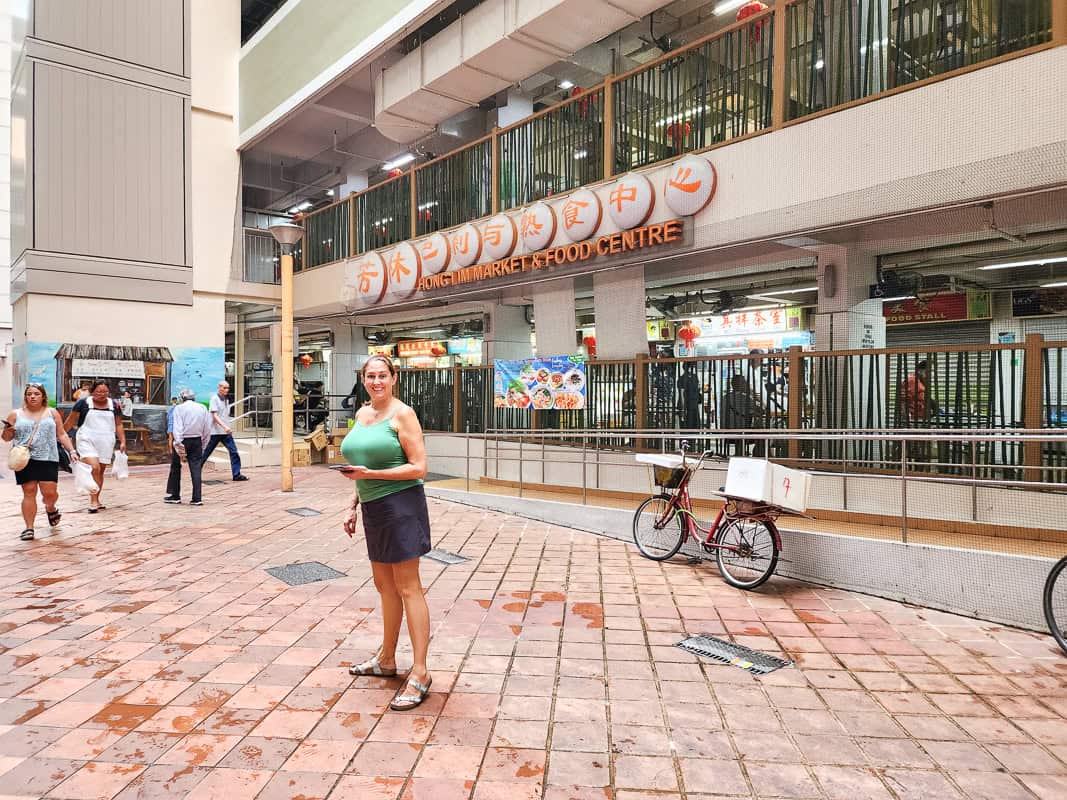
Hong Lim Market & Food Centre: Michelin Bib Gourmand Powerhouse
Tucked just behind Chinatown Point, Hong Lim Market is a bi-level culinary institution famous for housing an incredible density of Michelin Bib Gourmand recipients and legacy hawker families.
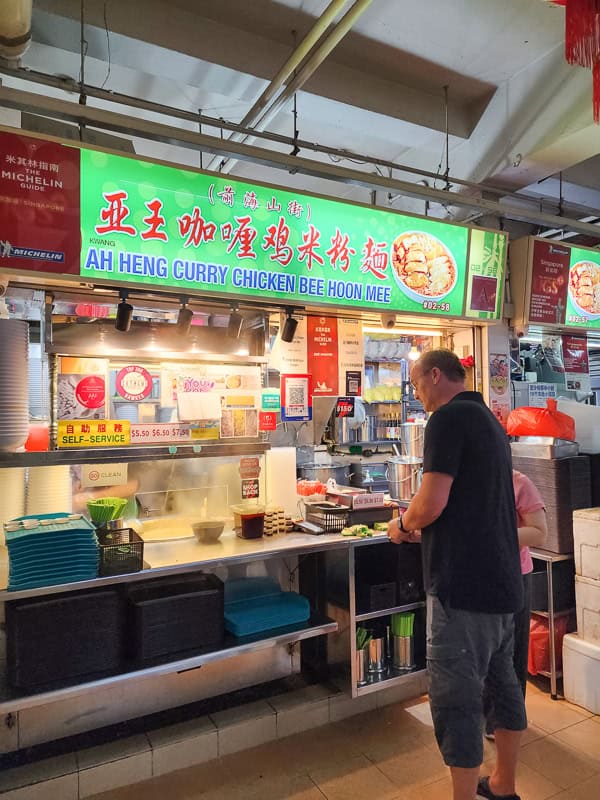
Head to the second floor for Ah Heng Curry Chicken Bee Hoon Mee (Stall #02-58), where tender poached chicken and spongy tofu puffs soak in a thick, deeply spiced, coconut-rich curry gravy ladled over egg noodles. The lines here move quickly, and the rich, comforting broth is worth every minute of the wait. Other standout stalls include Outram Park Fried Kway Teow and Famous Sungei Road Trishaw Laksa.
- Nearest MRT: Chinatown MRT (Exit E).
- Must-Try Dishes: Curry chicken noodle soup, Hokkien char kway teow, crayfish laksa.
- Insider Tip: Most of the premier stalls at Hong Lim cater to morning and lunch crowds; many run out of their signature broths and close by 2:30 PM.
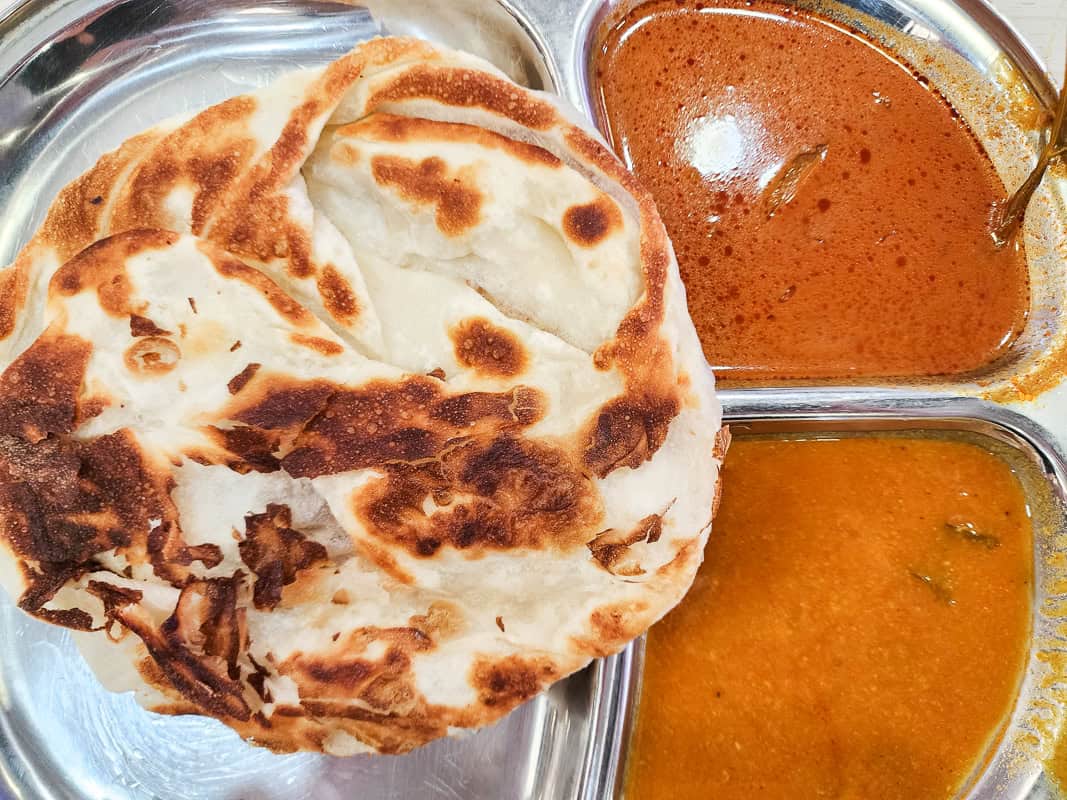
Tekka Centre: The Vibrant Culinary Anchor of Little India
Occupying the ground floor of a massive orange-and-yellow complex directly above Little India MRT, Tekka Centre is an exhilarating sensory experience. It integrates a bustling wet market, tailor shops, and one of the finest Indian-Muslim and South Asian food halls anywhere in Asia.
The star here is freshly griddled roti prata—crispy, flaky flatbread served with savory dhal and spicy fish curry—alongside fragrant plates of mutton biryani served on banana-leaf-lined trays. Pair your breakfast or lunch with a frothy glass of hot teh tarik (pulled milk tea) pulled from metal pitchers to create a thick crown of foam.
- Nearest MRT: Little India MRT (Exit C).
- Must-Try Dishes: Roti prata with fish curry, mutton biryani, chicken murtabak, and teh tarik.
- Insider Tip: Tekka can get hot and humid due to the adjacent wet market. Wear lightweight clothing and look for tables situated near the open exterior walkways.
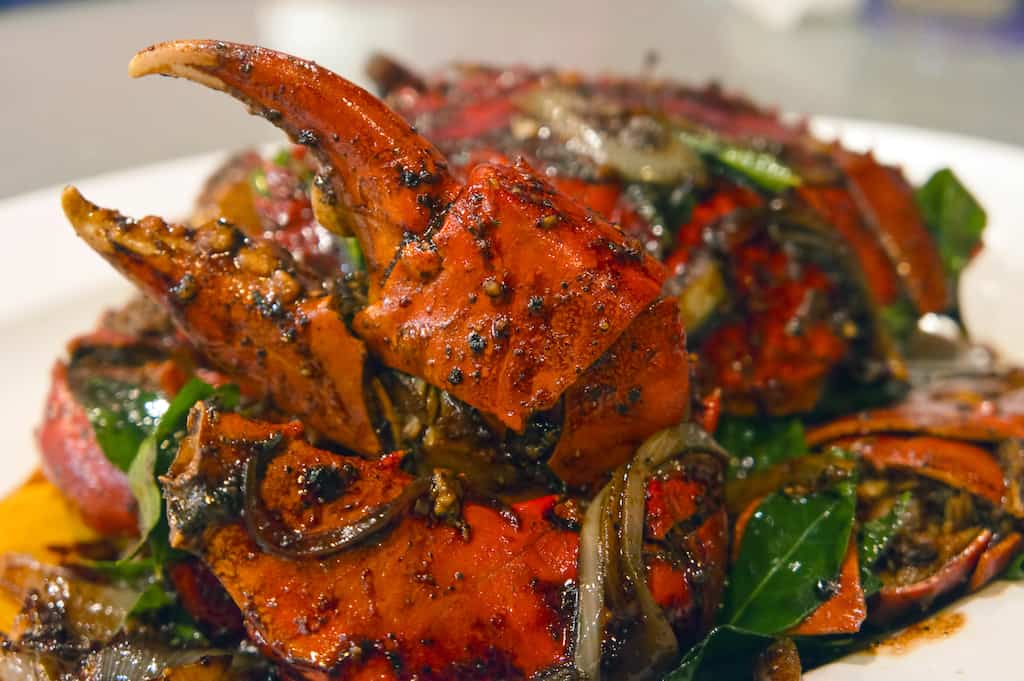
Newton Food Centre: Outdoor Atmosphere and Late-Night Seafood
While Newton Food Centre has a reputation for catering to visitors—partly due to its starring role in Crazy Rich Asians—it remains an unbeatable evening destination if you want to dine outdoors under the stars with cold beer and sizzling seafood.
And, we’ve been going to Newton since well before the movie! It’s the Singapore hawker centre that introduced us to BBQ stingray! This is all due to our friend Mei Ling, who runs marketing at the nearby Sheraton Singapore Towers!
Unlike the dense daytime market buildings, Newton is arranged around a central open-air courtyard surrounded by greenery. Stalls here specialize in classic evening sharing platters: barbecued stingray slathered in spicy sambal on banana leaves, charcoal-grilled chicken wings with spicy lime dip, and cereal butter prawns.
- Nearest MRT: Newton MRT (Downtown/North-South Line), just a two-minute walk.
- Must-Try Dishes: Sambal stingray, barbecued chicken wings, satay skewers with peanut sauce, and chili crab.
- Insider Tip: Because stalls compete heavily for diners, clarify portions and prices before ordering large whole seafood dishes like crab or fish.
Lau Pa Sat: Victorian Architecture and Evening Satay Street
Lau Pa Sat (Telok Ayer Market) sits right in the core of the financial district, housed inside a magnificent 19th-century Victorian cast-iron pavilion with an octagonal design and a central clock tower. Inside, you will find modern hawker stalls representing every corner of Southeast Asia.
However, the real magic happens at 7:00 PM every evening, when Boon Tat Street alongside the pavilion is completely closed to vehicle traffic. Vendors wheel out charcoal braziers, unfold plastic tables and chairs right across the tarmac, and transform the road into Satay Street. Smoke billows into the night air as skewers of chicken, beef, and mutton caramelize over open coals.
- Nearest MRT: Telok Ayer MRT or Raffles Place MRT.
- Must-Try Dishes: Charcoal-grilled satay with chunky peanut gravy, butter chicken with naan, Hainanese chicken rice.
- Insider Tip: Head straight to Stalls 7 and 8 on Satay Street for fast service, freshly charred skewers, and warm rice cakes (ketupat).
Tiong Bahru Market: Heritage Art Deco and Morning Bites
Located in one of the most charming heritage Singapore neighborhoods, Tiong Bahru Market sits inside an Art Deco-inspired structure surrounded by curved 1930s residential blocks. The second-floor food centre is bright, well-ventilated, and clean, making it an ideal, unhurried stop for breakfast.
The definitive dish here is Chwee Kueh from Jian Bo Shui Kueh: silky, steamed bowl-shaped rice cakes topped with a savory mound of fried preserved radish (chai poh) and spicy sambal. It is also an exceptional spot to pick up bowls of comforting fish ball noodles or traditional roasted pork belly (sio bak) with crackling skin.
- Nearest MRT: Tiong Bahru MRT (East-West Line) or Havelock MRT (Thomson-East Coast Line).
- Must-Try Dishes: Chwee kueh (steamed rice cakes), lor mee (braised noodle soup), and roasted pork.
- Insider Tip: After breakfast, spend an hour exploring the neighborhood’s indie bookstores, record shops, and specialty cafes tucked along the surrounding streets.
Amoy Street Food Centre: The CBD’s Weekday Lunch Haven
Spread across two breezy levels on Maxwell Road, Amoy Street Food Centre bridges traditional street vendors with modern culinary creators. Because it sits directly between Tanjong Pagar and Telok Ayer, it serves as the culinary engine room for the surrounding business district.
Standouts include J2 Famous Crispy Curry Puff (known for layered, flaky pastry shells stuffed with curried potatoes and chicken), Michelin Bib Gourmand noodle counters like A Noodle Story (serving innovative Singapore-style ramen with wontons and sous-vide pork), and comforting bowls of sliced fish soup.
- Nearest MRT: Tanjong Pagar MRT or Telok Ayer MRT.
- Must-Try Dishes: Crispy curry puffs, sliced fish bee hoon, Singapore-style ramen noodles.
- Insider Tip: Amoy Street is primarily a weekday lunch market. Many stalls close by 3:00 PM and remain shut over the weekend.
How Much Does It Cost to Eat at a Singapore Hawker Centre?
Budgeting for hawker centres comes down to what kind of meal you are ordering and which centre you visit. Everyday single-portion staples remain one of the world’s great dining bargains: a hearty plate of Hainanese chicken rice, char kway teow, or a bowl of laksa typically costs between 4.50 and 8.50 SGD (~3.40 to 6.50 USD). Breakfast bites like roti prata with curry gravy or chwee kueh cost even less, often running just 2.00 to 4.00 SGD (~1.50 to 3.00 USD), while fresh tropical fruit juices cost 2.50 to 4.50 SGD (~1.90 to 3.40 USD). If you stick to classic daytime noodle, rice, and breakfast stalls, you can comfortably eat two generous meals for well under 20.00 SGD (~15.00 USD) per person.
Prices jump significantly when transitioning from solo daytime dishes to evening shared seafood feasts. Cook-and-fry (zi char) stalls and barbecue seafood counters sell premium proteins that command higher price tags. A small or medium platter of sambal stingray barbecued on a banana leaf typically runs 16.00 to 26.00 SGD (~12.00 to 19.50 USD), while salted egg prawns, wok-tossed lala clams, or a dozen satay skewers will add another 12.00 to 20.00 SGD (~9.00 to 15.00 USD) to your table. Whole mud crabs—whether prepared as chili crab or black pepper crab—are sold by weight rather than fixed portions, typically ranging from 80.00 to 120.00+ SGD (~60.00 to 90.00+ USD) per kilogram. Pair that with two large 640ml sharing bottles of cold Tiger Beer at 7.50 to 9.50 SGD (~5.65 to 7.15 USD) each, and a communal seafood dinner for two can easily total 70.00 to 120.00 SGD (~53.00 to 90.00 USD).
Location also creates noticeable price tiers. Neighborhood and suburban food halls like Old Airport Road, Hong Lim, and Tekka Centre cater primarily to local residents and market shoppers, keeping their everyday portion prices firmly at the lower end of the spectrum. In contrast, centres with heavy tourist footprints or premium real estate—such as Newton Food Centre, Lau Pa Sat, and Makansutra Gluttons Bay—generally price their seafood, satay sets, and specialty items 15% to 30% higher. Always confirm portions and ask for the exact weight price before committing to whole fish or crabs at evening seafood stalls to avoid any surprises when the bill arrives.
Frequently Asked Questions: Best Hawker Centres in Singapore
Which Hawker Centre in Singapore Has the Best Food?
Old Airport Road Food Centre is widely considered by local food lovers to have the highest overall concentration of quality stalls, while Maxwell Food Centre and Hong Lim Market offer the best centralized options for first-time visitors exploring downtown.
Do Singapore Hawker Stalls Take Credit Cards?
Most traditional hawker stalls do not accept international credit cards. While local residents pay via Singapore QR codes (like PayNow or NETS), overseas travelers should carry physical cash in small denominations (2, 5, and 10 SGD bills).
Is It Safe to Eat at Hawker Centres in Singapore?
Yes, hawker centres in Singapore are exceptionally clean and safe. The Singapore Food Agency inspects all stalls regularly and requires them to display their hygiene grade (A, B, or C) prominently on the front window.
What Time Do Singapore Hawker Centres Open and Close?
Operating hours vary by stall rather than by centre. Breakfast stalls (serving kaya toast, congee, and chwee kueh) open as early as 6:30 AM, while lunch stalls run from 11:00 AM to 2:30 PM. Evening seafood and satay stalls typically operate from 5:00 PM until 11:00 PM or midnight.
Why Do People Leave Tissues on Tables at Hawker Centres?
Leaving a packet of pocket tissues on a table is known as “choping.” It is a respected local custom used to reserve a table while diners browse stalls and queue for their food.
Do Hawker Centres in Singapore Serve Alcohol?
Yes, most hawker centres sell alcohol, but it is sold from separate, dedicated beverage kiosks rather than food counters. You will find drink vendors chilling large 640ml sharing bottles of Tiger Beer, Heineken, or Carlsberg in ice chests, which they serve alongside small plastic or glass mugs filled with ice cubes. A few modern hawker centres, like Chinatown Complex, even feature dedicated craft beer stalls with local microbrews on tap. Note that Muslim-owned or halal-certified food and beverage stalls do not sell or permit alcohol.
How Many Hawker Centres Are There in Singapore?
There are approximately 120 government-regulated public hawker centres managed by the National Environment Agency (NEA) across Singapore, housing more than 6,000 individual food stalls. In addition to these official hawker centres, the island is home to hundreds of privately operated neighborhood kopitiams (traditional coffee shops) and modern air-conditioned food courts in shopping malls.
How Much Should I Budget to Eat at Hawker Centres in Singapore?
For individual single-dish meals (like chicken rice, noodle soups, or roti prata sets) paired with a fresh fruit juice, budget 8.00 to 12.00 SGD (~6.00 to 9.00 USD) per person. For evening family-style seafood feasts featuring sambal stingray, satay skewers, wok-fried vegetables, and large bottles of beer, budget roughly 35.00 to 60.00 SGD (~26.00 to 45.00 USD) per person. Suburban centres like Old Airport Road are generally cheaper than tourist hubs like Newton Food Centre or Lau Pa Sat.