
Across more than a dozen visits to Singapore over the last fifteen years—staying everywhere from serene high-rise suites along Scotts Road to boutique shophouses in Chinatown and business hotels near the river—Eric and I have found that your choice of neighborhood completely shapes your daily rhythm. Singapore is compact, spotless, and hyper-connected by the MRT, but Singapore neighborhoods operate with their own distinct personality, architectural energy, and pace.
Orchard Road anchors the island’s retail and luxury hotel core, offering towering five-star sanctuaries and seamless subway connections. South of the Singapore River, Tanjong Pagar and Chinatown immerse travelers in preserved 19th-century Peranakan shophouse culture, buzzing craft cocktail lounges, and historic hawker centres.
Along the water, Marina Bay and the Civic District deliver postcard-worthy colonial architecture and futuristic waterfront skylines, while Clarke Quay and Robertson Quay balance conference or business transit with tranquil riverside dining. To help you choose the right base for your travel style, here is our comprehensive first-hand guide to the best neighborhoods to stay in Singapore.
*This post contains compensated links. Find more info in my DISCLAIMER. As an Amazon Associate, I earn from qualifying purchases.
Quick Facts: Choosing Where to Stay in Singapore
| Consideration | District Detail & Hubs | Key Recommendation & Takeaway |
| Best Area for First-Timers | Marina Bay & Civic District | Panoramic skyline views, Gardens by the Bay, historic grand hotels, and pedestrian promenades. |
| Best Base for Food Lovers | Tanjong Pagar & Chinatown | Immediate walking access to Maxwell and Amoy hawker centres, Korean dining, and world-class cocktail bars. |
| Best for Luxury & Retail | Orchard Road & Scotts Road | Flagship high-rise towers, multi-level luxury shopping arcades, and award-winning Cantonese dining rooms. |
| Best for Business & Conferences | Clarke Quay & Robertson Quay | Direct transit to convention centers (Suntec and Marina Bay Sands) and relaxed open-air riverfront dining. |
| Best for Culture & Extended Stays | Bugis & Bras Basah | Serviced boutique apartments, Malay-Arab heritage along Kampong Glam, and independent cafes. |
| MRT Transit Accessibility | Tap-and-Go Across All Hubs | All recommended districts sit within a 2- to 5-minute walk of major MRT interchange stations. |
| Baseline Upscale Pricing | 280 to 650+ SGD (~210 to 490+ USD) | Standard nightly rate for 4- and 5-star boutique properties, excluding the 10% service charge and 9% GST (“++”). |
Table of Contents
Orchard Road: Best for Luxury High-Rises, Shopping, and Central Island Connectivity
Orchard Road is Singapore’s world-famous retail spine, lined with multi-story designer shops and makks, sprawling subterranean food courts, and flagship international department stores. Beyond the retail glitz, it serves as an exceptionally comfortable and central residential base, offering spacious full-service hotel towers with resort-style swimming pools and private executive club lounges.
We have stayed in the Orchard and Scotts Road corridor more times than any other part of Singapore. It functions as an effortless urban retreat: after a full day of humid street wandering or meetings, returning to an elevated club room with high-floor skyline views, evening hors d’oeuvres, and quiet service is hard to beat.
- Getting there from Changi Airport: A direct 20- to 25-minute taxi or Grab ride (approx. 28 to 36 SGD), or 45 minutes on the MRT via the East-West Line connecting to the North-South Line at City Hall.
- Getting around: Connected by Orchard MRT (North-South and Thomson-East Coast Lines) and Newton MRT (Downtown and North-South Lines), providing straight-line transit to every corner of the island.
- Neighborhood highlights: High-end dim sum lunches at Din Tai Fung (inside Paragon or Takashimaya), evening seafood feasts at nearby Singapore hawker Newton Food Centre, and quiet morning walks through the nearby Singapore Botanic Gardens.
Traveling to Singapore? Check out our Singapore Travel Guide to get our insider tips!
Sheraton Towers Singapore
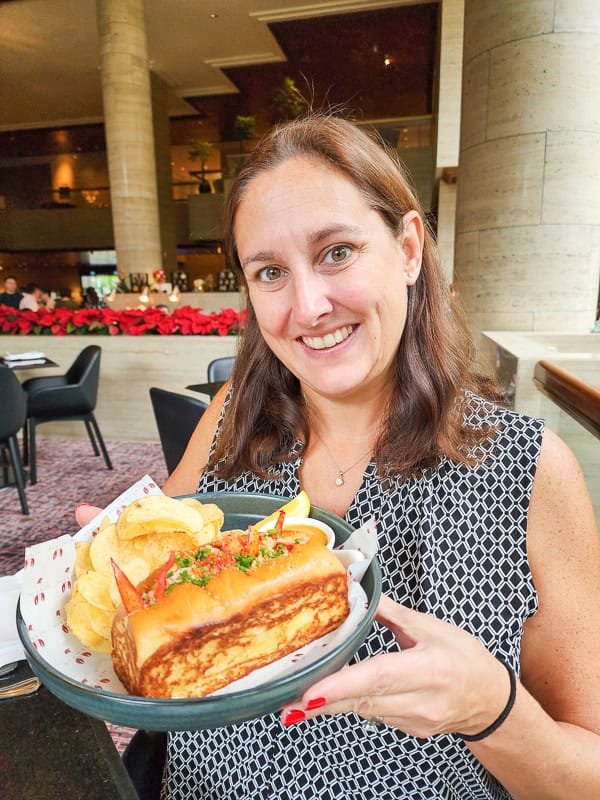
Positioned along quiet Scotts Road just a short stroll from the primary Orchard retail rush, Sheraton Towers has long been our dependable home away from home. It strikes the perfect balance between classic five-star hospitality and tranquil relaxation, featuring lush outdoor waterfall gardens and refined Cantonese dining at Li Bai. We’ve also experienced their annual lobster menu and ate a pretty tasty lobster roll in their lobby restaurant!
- Why it earns a place: Direct two-minute sheltered walk to Newton MRT Station, placing you one stop from Orchard shopping and a five-minute stroll from Newton Food Centre.
- Best room to book: Executive Club King Room on the higher floors for dedicated lounge breakfast, afternoon tea, and evening cocktail hours. We love booking a hotel with a lounge in Singapore because it gives us a little happy hour option in a city with expensive alcohol!
- One honest drawback: The property is very classic high rise Sheraton. Although well appointed, if you are looking for charm, it might not be the best property!
Learn more about eating in Singapore with our Singapore Food Guide – What and Where to Eat.
Singapore Marriott Tang Plaza Hotel
Instantly recognizable by its distinctive green-tiled Chinese-style pagoda roof, this landmark luxury tower anchors the central crossroads of Orchard and Scotts Road. It sits directly above Orchard MRT Station, giving you completely sheltered underground access to transit and premier shopping concourses.
- Why it earns a place: Unbeatable central location with an elevated fifth-floor resort pool and award-winning Cantonese dining at Wan Hao.
- Best room to book: Executive Floor King Room for sweeping urban views and access to the modern, full-service M Club lounge.
- One honest drawback: The street-level intersection outside the lobby is one of the busiest pedestrian and traffic thoroughfares on the island. It also sits at a higher price point than the Sheraton up the road due to its location.
Tanjong Pagar and Chinatown: Best for Heritage Boutiques, Food Lovers, and Nightlife
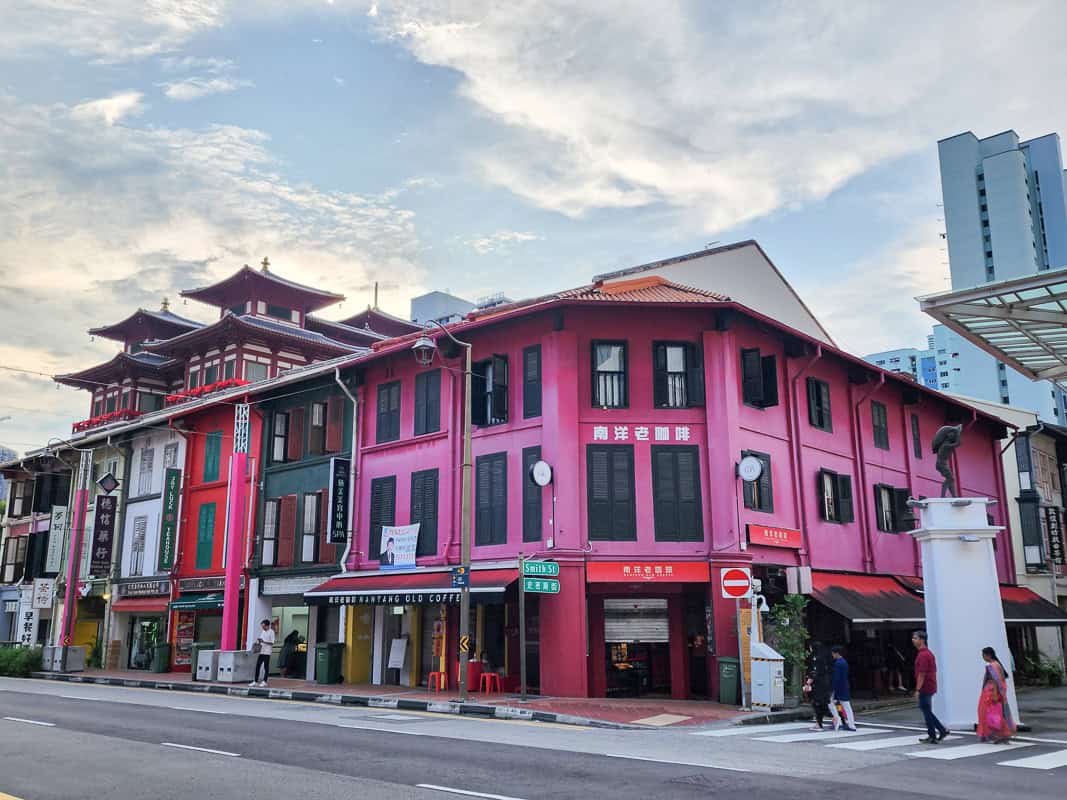
Tanjong Pagar and neighboring Chinatown form the culinary and creative heartbeat of central Singapore. Here, meticulously conserved 19th-century shophouses with ornate pastel plasterwork sit framed against the gleaming glass skyscrapers of the central business district.
If your travel itinerary revolves around food and craft cocktails, this is the premier neighborhood to drop your bags. Step outside your hotel lobby and you are within a two-minute walk of historic hawker centres, third-wave espresso bars, traditional Chinese medicine apothecaries, and hidden speakeasies.
- Getting there from Changi Airport: Roughly 20 minutes by taxi (approx. 26 to 32 SGD), or 40 minutes via the MRT East-West Line directly into Tanjong Pagar Station without changing trains.
- Getting around: Anchored by Maxwell MRT (Thomson-East Coast Line), Chinatown MRT (Downtown and North East Lines), and Tanjong Pagar MRT (East-West Line).
- Neighborhood highlights: Silky plates of chicken rice at Maxwell Food Centre, street-level craft beer at Chinatown Complex, and evening cocktail flights along Tras Street and Amoy Street.
Maxwell Reserve Singapore, Autograph Collection
Set inside a grand, restored heritage building along Cook Street, Maxwell Reserve is a masterclass in boutique hospitality conceived by French designer Jacques Garcia. The property blends European sophistication with Straits-Chinese accents, featuring rich ruby velvets, curated antiques, and an exceptional cocktail lounge.
- Why it earns a place: Located directly opposite Maxwell Food Centre, letting you bounce effortlessly between authentic street food crawls and boutique five-star luxury.
- Best room to book: Heritage King Room or Junior Suite for soaring ceilings, custom millwork, and deep soaking tubs.
- One honest drawback: Due to historic architectural preservation guidelines, room layouts vary considerably, and certain inward-facing rooms feature limited exterior daylight. But, it definitely has the charm!
Doing a quick trip to Singapore? Check out our Singapore Layover Guide to make the most of your time.
Marina Bay and the Civic District: Best for First-Timers, Landmark Luxury, and Skyline Views
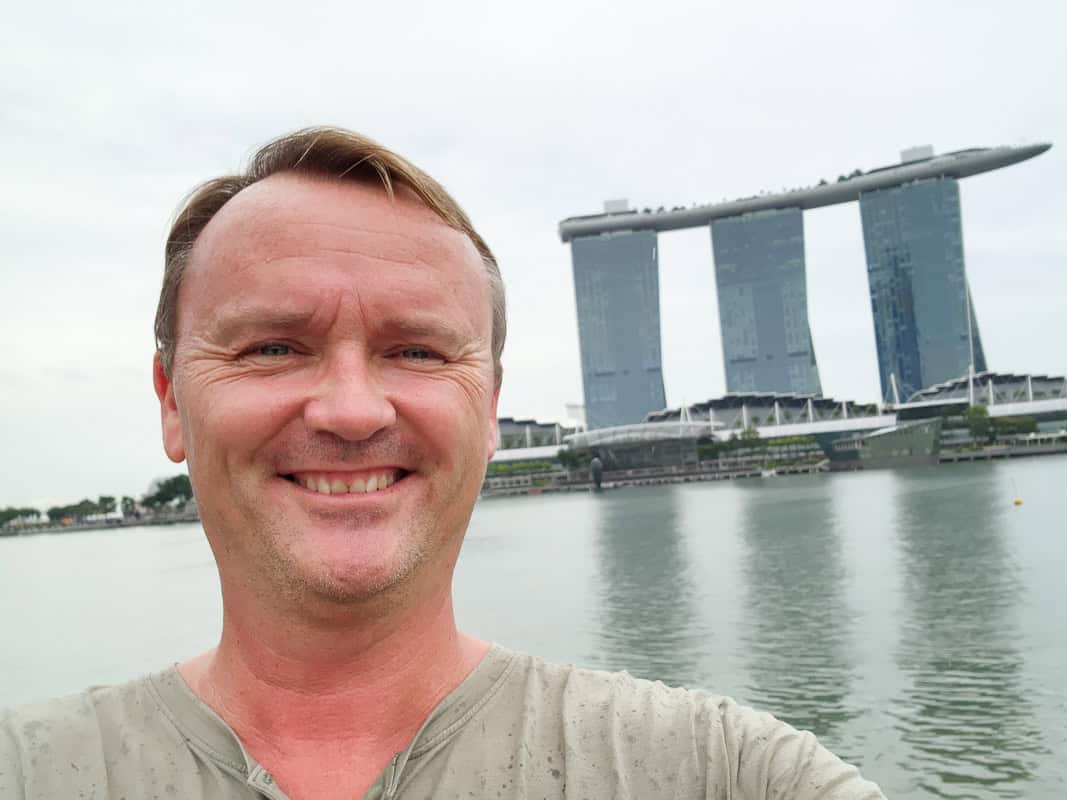
Marina Bay and the surrounding Civic District represent the cinematic, postcard vision of modern Singapore. The district wraps around a vast freshwater reservoir, connecting monumental architecture like the Marina Bay Sands towers, the lotus-shaped ArtScience Museum, and the colonial-era civic core.
This is the ideal base for first-time visitors who want wide, flat walking promenades, scenic water views, and immediate proximity to major cultural monuments, national museums, and Gardens by the Bay. That said, this Singapore neighborhood offers probably the priciest options for where to stay in Singapore.
- Getting there from Changi Airport: Approximately 20 minutes by taxi (28 to 35 SGD), or 40 minutes by MRT via the Downtown Line directly to Bayfront or Promenade Stations.
- Getting around: Served by City Hall MRT (North-South and East-West interchange), Raffles Place MRT, and Bayfront MRT.
- Neighborhood highlights: Watching the nightly Spectra light and water show across the bay, morning runs through Gardens by the Bay, and evening satay street feasts at Lau Pa Sat hawker centre.
Raffles Hotel Singapore
The undisputed crown jewel of Southeast Asian grand dame hotels, Raffles has welcomed discerning travelers since 1887. Following a comprehensive multi-year restoration, the all-suite property stands as an immaculate sanctuary of colonial architecture, polished teak verandas, private butler service, and lush tropical courtyards.
- Why it earns a place: An unmatched slice of living history featuring Michelin-caliber dining rooms and the historic Long Bar, the birthplace of the Singapore Sling.
- Best room to book: Palm Court Suite or Courtyard Suite for direct access to the breezy exterior verandas and tranquil garden walks.
- One honest drawback: The hotel’s historic fame draws steady crowds of day visitors to its retail arcades and public verandas.
The Fullerton Hotel Singapore
Occupying the magnificent 1928 neoclassical landmark that once housed Singapore’s General Post Office, The Fullerton sits proudly at the mouth of the Singapore River. With a soaring sunlit atrium lobby and an infinity pool overlooking historic riverside quays, it offers a dramatic blend of heritage and luxury.
- Why it earns a place: Prime waterfront positioning with direct, sheltered pedestrian subways leading straight to Raffles Place MRT and Marina Bay promenades.
- Best room to book: Straits Club Quay Room for sweeping river views and exclusive access to the Straits Club lounge for champagne breakfasts and evening cocktails.
- One honest drawback: Courtyard-category rooms face inward toward the hotel’s central atrium rather than outward toward the skyline or water.
Check out our 3-Day Singapore itinerary to make the most of your time.
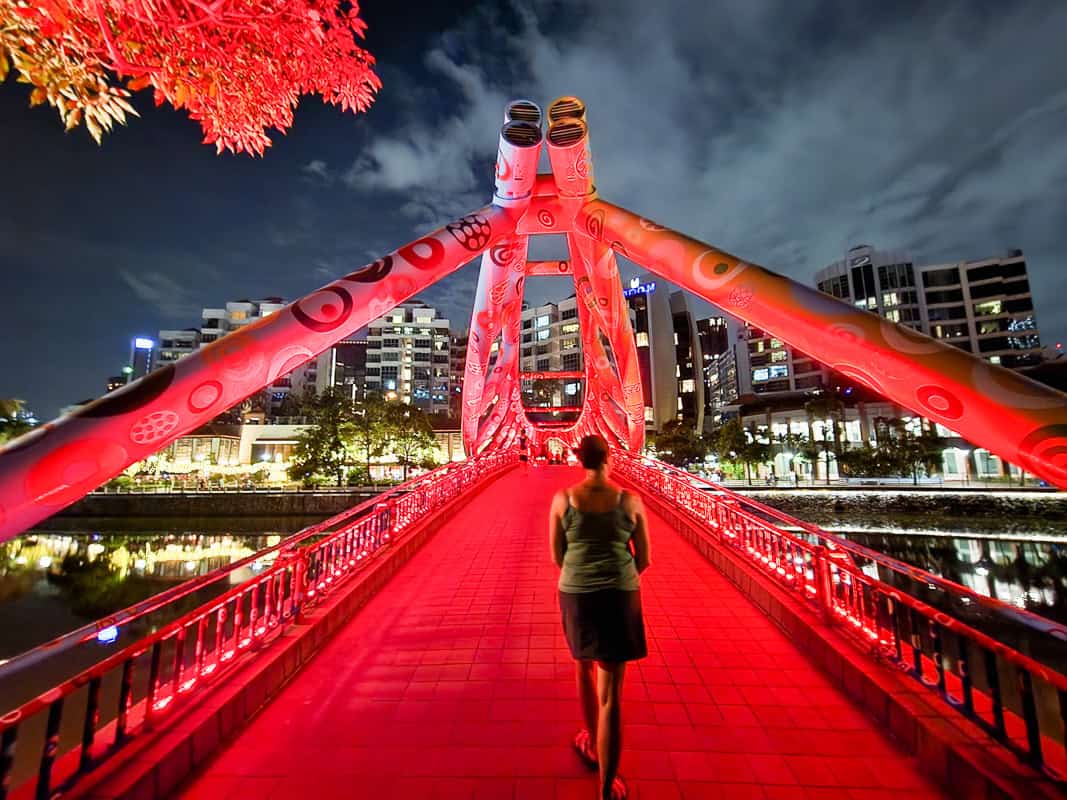
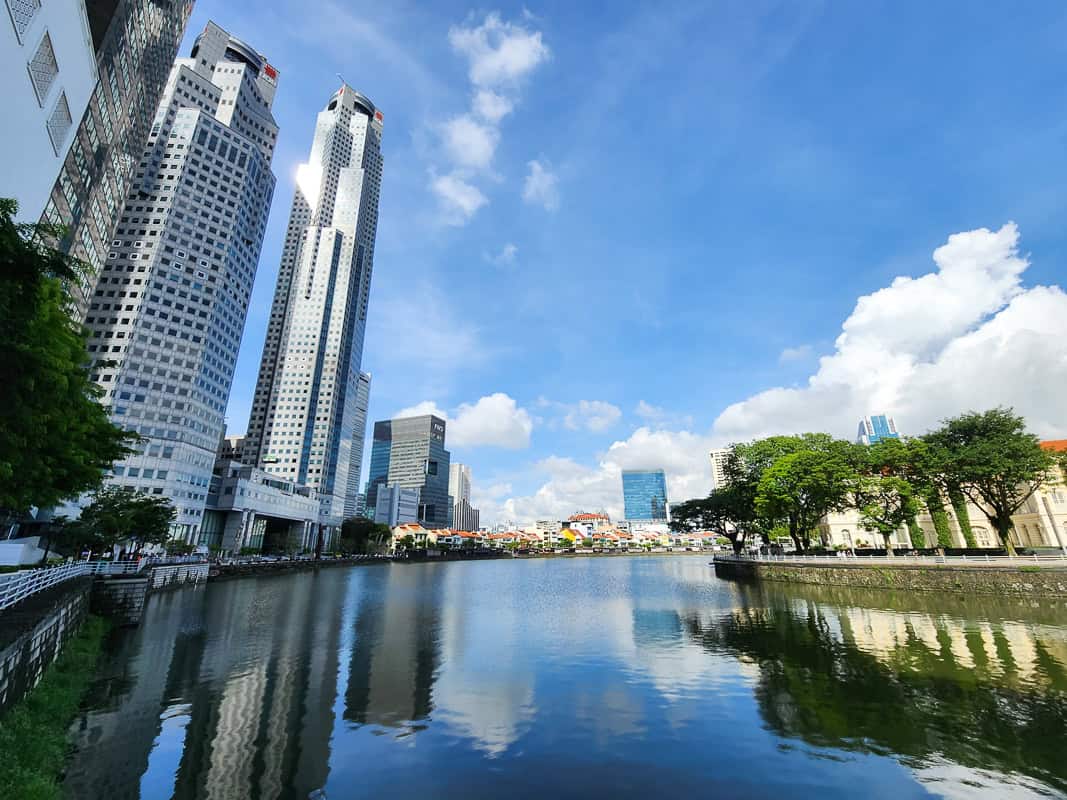
Clarke Quay and Robertson Quay: Best for Business, Conferences, and Riverside Leisure
Stretching along the winding Singapore River, Clarke Quay and Robertson Quay offer an appealing, pedestrian-friendly waterfront environment. While central Clarke Quay is famous for its vibrant evening entertainment, moving slightly upriver toward Robertson Quay reveals a relaxed, leafy neighborhood filled with open-air bistro terraces, wine bars, and scenic cycling paths.
This area is our go-to recommendation for business travelers attending trade conferences, who want convenient transit to both the Marina Bay Sands convention complex and Suntec City while enjoying a relaxed riverside base.
- Getting there from Changi Airport: 20 to 25 minutes by taxi (25 to 32 SGD), or 45 minutes via the East-West MRT Line connecting through Chinatown.
- Getting around: Anchored by Clarke Quay MRT (North East Line) and Fort Canning MRT (Downtown Line), along with scenic electric river taxi ferries.
- Neighborhood highlights: Scenic sunset walks along the river promenades to Marina Bay, outdoor morning espresso at Robertson Quay cafes, and craft beers along the water.
Holiday Inn Express Singapore Clarke Quay
When attending multi-day trade conferences, this modern hotel has served as our trusted, reliable go-to multiple times. It delivers an efficient, stress-free stay with spotless guest rooms, comfortable bedding, high-speed Wi-Fi, and a stunning 40-meter rooftop infinity pool with panoramic city views. And, rooms come with free breakfast.
- Why it earns a place: Exceptional value, contemporary design, and a quiet location set just two blocks back from the waterfront dining fray.
- Best room to book: Standard Room on a high floor for quiet evenings and sweeping views across the urban skyline.
- One honest drawback: Entry-level rooms are compact and optimized for transit efficiency, best suited for solo business travelers or active couples.
Bugis and Bras Basah: Best for Arts, Extended Stays, and Cultural Exploration
Bordering the historic Malay-Arab quarter of Kampong Glam and the downtown arts district, Bugis and Bras Basah represent the cultural crossroads of Singapore. It is a walkable, vibrant neighborhood where historic shophouses, Middle Eastern perfumeries, textile bazaars, and independent contemporary art galleries sit side by side.
This is an exceptional choice for longer stays, independent culinary explorers, and travelers seeking serviced apartments with full residential amenities within walking distance of the central business district.
- Getting there from Changi Airport: Direct 30-minute ride on the MRT East-West Line straight into Bugis MRT Station without changing trains.
- Getting around: Connected by Bugis MRT (East-West and Downtown Lines) and Bras Basah MRT (Circle Line).
- Neighborhood highlights: Exploring the vibrant boutiques of Haji Lane, photographing the golden dome of Sultan Mosque, and enjoying modern Japanese-influenced cocktails at Last Word on Purvis Street.
Fraser Suites and Frasers Hospitality Properties
For travelers who prefer the comfort, space, and privacy of extended-stay luxury, Frasers properties around the central core (including Fraser Residence River Promenade and Fraser Place) deliver beautifully appointed serviced apartments. These suites feature dedicated living spaces, full kitchenettes, and washer-dryers.
- Why it earns a place: Spacious, apartment-style living with five-star amenities, making it ideal for trips lasting five nights or longer.
- Best room to book: One-Bedroom Executive Apartment for a separate living room layout and full kitchen facilities.
- One honest drawback: Operates with a private residential atmosphere rather than a full-service, buzzing hotel lobby scene.
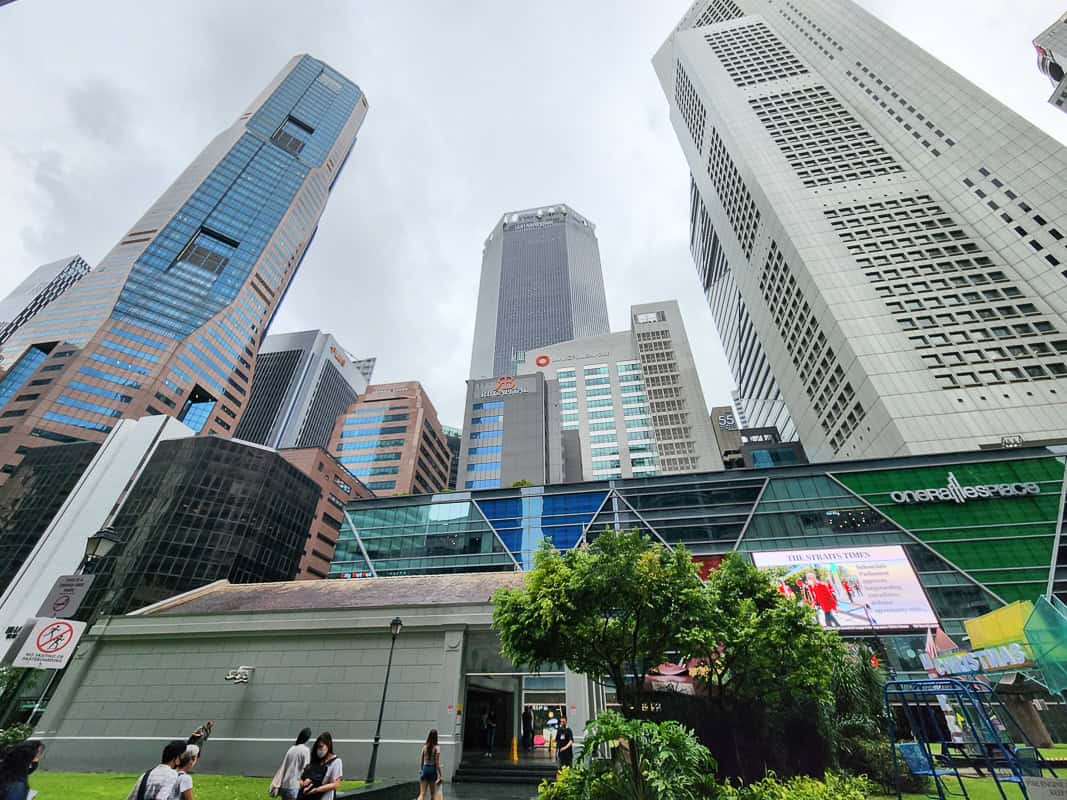
Which Singapore Neighborhood Is Right For You?
| Neighborhood | Best Traveler Fit | Average Nightly Baseline | Primary Neighborhood Appeal |
| Marina Bay & Civic District | First-Timers, Landmark Luxury, Skyline Views | 550–900+ SGD (~410–675+ USD) | Postcard-worthy skyline views, historic verandas, and luxury waterfront walks. |
| Tanjong Pagar & Chinatown | Food Lovers, Heritage Seekers, Boutique Lovers | 340–520 SGD (~255–390 USD) | Immediate walking access to Maxwell hawker centre and craft cocktail bars. |
| Orchard Road & Scotts Road | Luxury High-Rises, Retailers, Club Floor Seekers | 360–580 SGD (~270–435 USD) | Central island connectivity, full-service hotel towers, and high-end dining. |
| Clarke Quay & Robertson Quay | Conference Attendees, Business Travelers, Strollers | 220–380 SGD (~165–285 USD) | Relaxed riverfront dining, convention transit, and evening outdoor walks. |
| Bugis & Bras Basah | Extended Stays, Arts Lovers, Independent Foodies | 280–460 SGD (~210–345 USD) | Serviced apartment living, cultural diversity, and independent cafes. |
What to Expect on Accommodation Costs in Singapore
When planning your Singapore hotel budget, it is important to adjust expectations: hotel rooms here are priced similarly to top-tier financial capitals like New York, London, or Tokyo, rather than the low-cost resort rates found elsewhere in Southeast Asia.
For a solid, comfortable mid-tier brand hotel or clean business property (such as a Holiday Inn Express), baseline rates generally start between 220 and 320 SGD (~165 to 240 USD) per night. If you are looking for upscale four- and five-star properties along Orchard Road, Marina Bay, or heritage boutique conversions in Chinatown—like the Singapore Marriott Tang Plaza, Sheraton Towers, or Maxwell Reserve—expect typical nightly rates to fall between 350 and 580 SGD (~265 to 435 USD). Milestone luxury stays like Raffles Hotel regularly command 1,100 SGD (~830 USD) or more per night.
Just as crucial as the base price is accounting for the local “plus-plus” (++) surcharge system. Advertised hotel rates rarely include the mandatory 10% service charge and 9% Goods and Services Tax (GST), which together tack an additional 19.9% onto your final bill.
Space is also at a strict premium across the island: entry-level rooms in modern high-rises and conserved shophouses can feel compact compared to Western standards. If you want room to stretch out or unpack for a multi-night stay, budgeting for an upgraded category or an executive club room is often well worth the extra spend for the included lounge breakfast, evening drinks, and additional square footage.
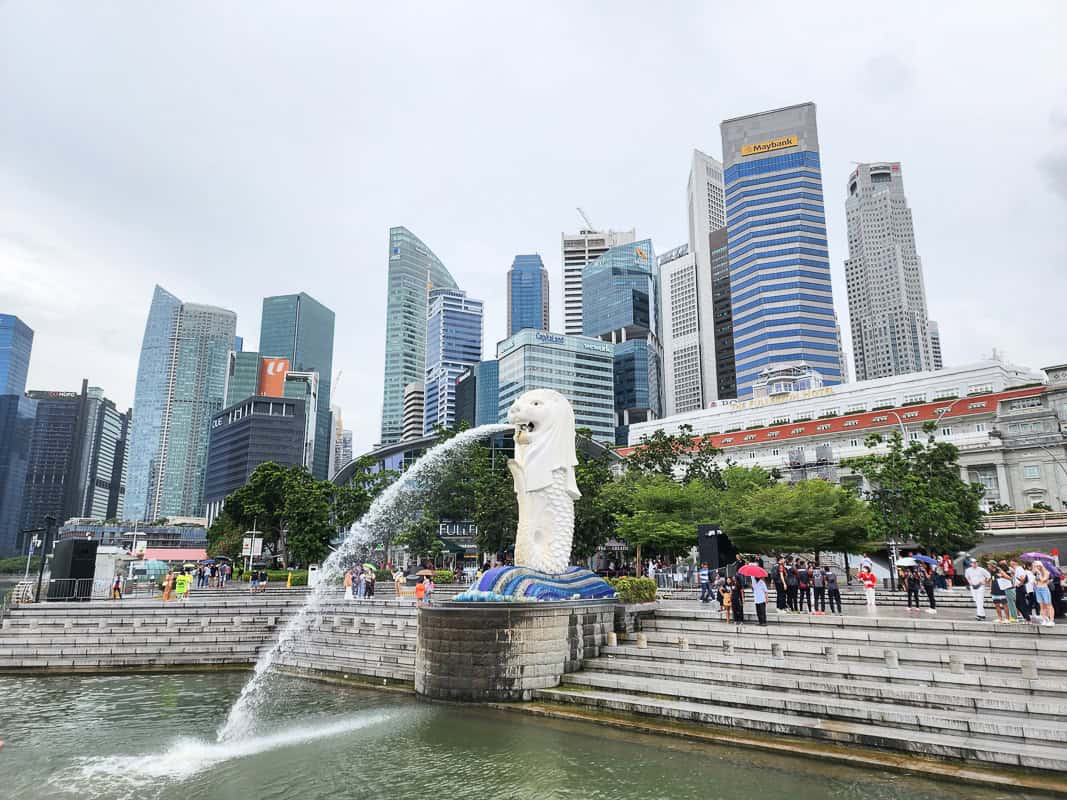
What Should You Avoid When Booking a Hotel in Singapore?
- Ignoring the “Plus-Plus” (++) Surcharges: Nearly all advertised hotel rates in Singapore exclude the mandatory 10% service charge and 9% Goods and Services Tax (GST). Always factor in an additional 19% to 20% on top of your quoted baseline room rate when budgeting.
- Booking Far from an MRT Station: While Singapore taxis and Grab rides are reliable, Singapore’s equatorial heat and sudden afternoon downpours make long outdoor walks exhausting. Ensure your chosen hotel is within a 3- to 5-minute walk of an MRT station.
- Assuming Historic Shophouse Hotels Have Large Windows: Singapore’s traditional Peranakan shophouse boutique hotels (common throughout Chinatown, Little India, and Joo Chiat) possess incredible architectural charm, but many interior-facing rooms have small windows or no natural exterior light due to heritage building restrictions. Check floor plans carefully before booking.
- Staying Too Far East or West for Short Trips: Unless you have a specific reason to stay in Sentosa (beach resort focus) or Jurong (business parks), stick to the central districts. Basing yourself outside the urban core adds unnecessary commuting time to your daily sightseeing.
Frequently Asked Questions: Where to Stay in Singapore
Which Area of Singapore Is Best for First-Time Visitors?
Marina Bay and the adjacent Civic District are the best areas for first-time travelers. The neighborhood offers sweeping waterfront views, flat pedestrian promenades, Gardens by the Bay, and easy access to both colonial heritage landmarks and the MRT network. Although it is one of the more expensive Singapore neighborhood.
Is It Better to Stay in Orchard Road or Marina Bay?
Stay on Orchard Road if you prefer spacious five-star hotel towers, executive club lounges, luxury shopping mall concourses, and central transit connectivity. Stay in Marina Bay if you prioritize iconic skyline views, milestone luxury heritage properties like Raffles or The Fullerton, and waterfront evening strolls. We prefer Orchard Road to be centrally located to transport and food.
How Much Does a Good Hotel in Singapore Cost per Night?
For upscale four- and five-star boutique properties and full-service brand towers, expect to pay between 320 SGD and 600 SGD (approximately 240 to 450 USD) per night. Ultra-luxury heritage properties like Raffles typically start above 1,100 SGD per night.
What Is the Safest Neighborhood to Stay in Singapore?
Singapore is consistently ranked among the safest cities in the world, and violent crime is virtually nonexistent. Central tourist and business neighborhoods—including Orchard, Marina Bay, Chinatown, and Clarke Quay—are exceptionally safe, well-lit, and comfortable to walk through at any time of night.
Can You Easily Walk Between Neighborhoods in Singapore?
While Singapore’s central districts are geographically close, the tropical heat and high humidity can make walking long distances between neighborhoods uncomfortable. It is best to explore one district thoroughly on foot, then take the air-conditioned MRT or a quick Grab taxi to your next destination.