Staying hydrated in Singapore is both an essential survival tactic and one of the most rewarding culinary adventures on the island. Over more than a dozen visits spanning the last fifteen years, Eric and I have learned that what you drink in Singapore is just as culturally significant as what you eat. Whether escaping the equatorial midday humidity inside an air-conditioned mall or relaxing under hawker centre ceiling fans with an icy glass mug, the country’s beverage scene is a direct reflection of its rich multi-ethnic heritage.
However, understanding what to drink—and how to order it—can initially feel intimidating. Local coffee shops run on a rapid-fire linguistic shorthand blending Malay, Hokkien, and Cantonese dialects. Meanwhile, Singapore’s strict governmental regulations, substantial “sin taxes,” and diverse religious landscape create a drinking environment unlike anywhere else in Southeast Asia. From mastering the kopitiam ordering code to sipping fresh tropical fruit juices and navigating evening beer culture, here is our comprehensive first-hand guide to drinks in Singapore.
*This post contains compensated links. Find more info in my DISCLAIMER. As an Amazon Associate, I earn from qualifying purchases.
Quick Facts: Singapore Drinks and Alcohol Regulations
| Category | Key Detail / Local Regulation | Practical Foodie Takeaway |
| Kopitiam Hot Beverage Cost | 1.40–2.20 SGD (~1.05–1.65 USD) | Standard price for traditional hot coffee (Kopi) or tea (Teh) at neighborhood stalls. |
| Fresh Hawker Juices | 2.50–4.50 SGD (~1.90–3.40 USD) | Covers cold-pressed sugarcane juice, whole fresh coconuts, and iced calamansi lime. |
| Hawker Centre Big Beer (640ml) | 7.50–9.50 SGD (~5.60–7.15 USD) | Large sharing bottles of Tiger, Heineken, or Carlsberg poured into ice-filled mugs. |
| Cocktail Bar / Hotel Lounge Price | 24.00–35.00+ SGD (~18.00–26.25+ USD) | Standard cocktail baseline before adding mandatory 10% service charge and 9% GST (“++”). |
| Public Drinking Ban Hours | 10:30 PM to 7:00 AM Daily | Drinking alcohol in public spaces (parks, sidewalks, beaches) is strictly illegal across the island. |
| Retail Alcohol Sales Curfew | 10:30 PM Sharp | Supermarkets and 7-Eleven stores lock retail beer coolers; cashiers cannot scan alcohol after 10:30 PM. |
| Liquor Control Zones (LCZ) | Little India & Geylang | Stricter public drinking bans apply on weekends (Saturday 7:00 PM to Monday 7:00 AM) and public holidays. |
| Halal & Muslim Dietary Norms | MUIS Halal-Certified Venues | Malay and Indian-Muslim stalls strictly avoid alcohol and pork; do not bring outside alcoholic drinks to halal tables. |
Table of Contents
Singapore Drinking Culture: Taxes, Laws, and Religious Harmony
Before diving into specific beverages, it helps to understand a few practical realities about how drinking works in Singapore. Unlike neighboring Southeast Asian destinations such as Vietnam or Cambodia where drinks are dirt cheap, Singapore levies substantial excise taxes on alcohol.
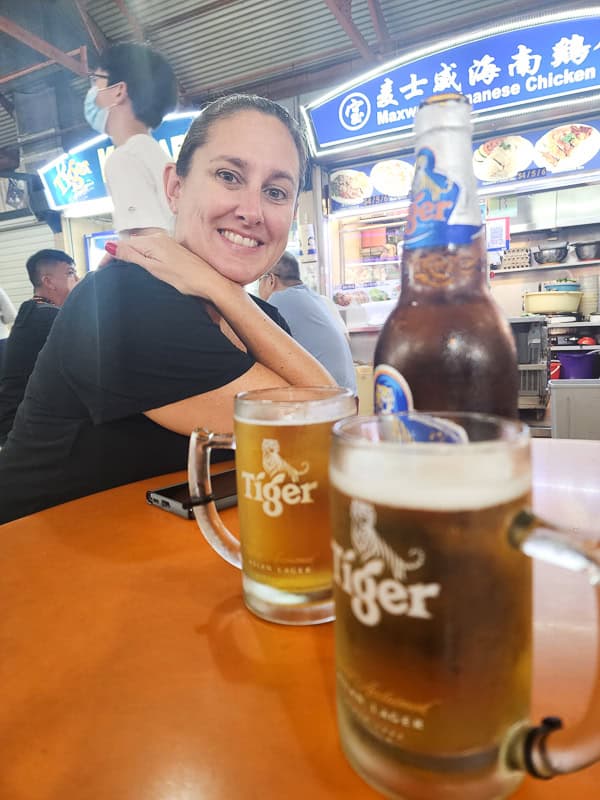
Prices feel much closer to what you’d pay in Hong Kong, London, or New York. A mid-tier craft cocktail or glass of wine in a hotel lounge or sit-down bar easily runs 28 to 35 SGD (~22 to 28 USD) once the mandatory 10% service charge and 9% GST are added to your bill. If you want a more casual, budget-friendly drink, stick to hawker centres, where sharing a large 640ml bottle of cold Tiger Beer costs around 7.50 to 9.50 SGD (~6 to 7.50 USD).
Local laws around alcohol are also clear and strictly enforced. Retail shops and convenience stores like 7-Eleven legally stop selling alcohol at 10:30 PM sharp, and drinking in outdoor public spaces—such as parks, beaches, or city benches—is prohibited between 10:30 PM and 7:00 AM. If you want to enjoy a late-night drink past 10:30 PM, simply do so inside a licensed establishment, such as a cocktail lounge, restaurant, pub, or back in your own hotel room.
Finally, Singapore has a large Muslim population, and Islamic dietary practices shape a major portion of the culinary landscape. Traditional Malay eateries, Indian-Muslim mamak stalls, and halal-certified coffee shops do not sell or permit alcohol. When dining at these stalls—especially around neighborhoods like Kampong Glam—it’s customary to be mindful of that separation and skip bringing outside beers to their dining tables.
Traveling to Singapore? Check out our Singapore Travel Guide to get our insider tips!
How to Order Traditional Coffee and Tea (The Kopitiam Code)
Long before specialty flat whites and cold brews arrived on the island, Singapore ran entirely on kopi and teh. Coffee shop culture here stretches back to the late 19th and early 20th centuries, when Hainanese immigrants found work in British colonial kitchens and maritime hotels.
As they opened their own neighborhood kopitiams (from the Malay word for coffee and the Hokkien word for shop), they tailored European coffee habits to local tastes and budgets. Instead of costly Arabica, they roasted cheaper Robusta beans in cast-iron drums with butter or lard and sugar. This caramelized the exterior of the bean, taking the edge off the natural bitterness and yielding a pitch-black, deeply aromatic brew with rich chocolate and molasses notes.
Today, that ritual remains central to everyday Singaporean life. Rather than machines, hawkers use tall stainless-steel pitchers to steep the dark grounds, pouring the hot liquid back and forth through a long, cylindrical cotton cloth sock filter that softens the body while keeping the flavor intensely bold.
Stepping up to a traditional drinks stall can feel intimidating at first, because kopitiams run on a rapid-fire linguistic shorthand that blends Malay, Hokkien, and Cantonese dialects. Once you understand the base terms and the modifiers, cracking the code is remarkably straightforward:
- Kopi: Coffee (Malay)
- Teh: Tea (Hokkien)
- Peng: Iced (Hokkien)
- Kosong: Plain / zero sugar or milk (Malay)
- Dai: Sweetness level (Hokkien)
Learn more about eating in Singapore with our Singapore Food Guide – What and Where to Eat.
The Essential Kopi Glossary
- Kopi: Coffee served with sweet condensed milk and evaporated milk (the default order).
- Kopi O: Black coffee brewed with sugar only (no milk).
- Kopi C: Coffee made with unsweetened evaporated milk and sugar (resembling a standard Western drip coffee with milk).
- Kopi Kosong: Black coffee with neither milk nor sugar.
- Kopi C Kosong: Coffee with evaporated milk and zero sugar.
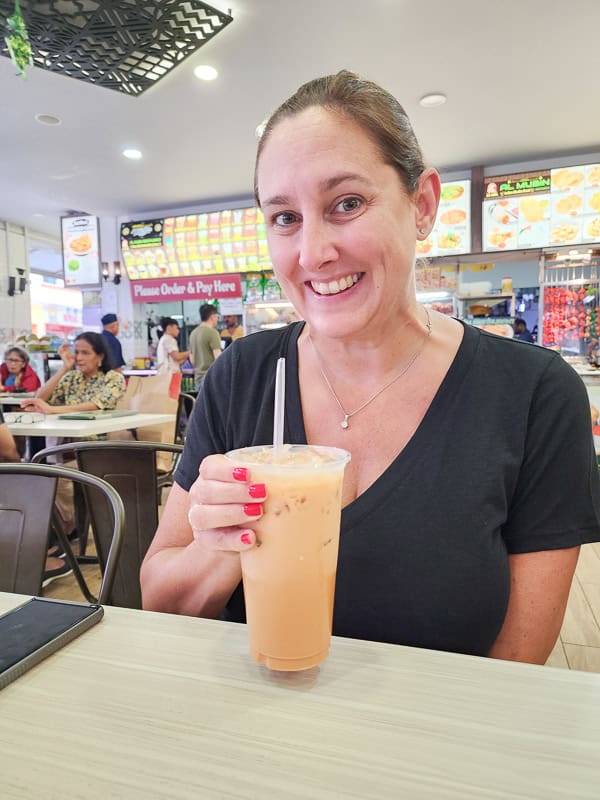
- Kopi Peng: Iced coffee with sweet condensed milk (served over a tall cup of crushed ice).
- Kopi Siew Dai: Coffee with less condensed milk (reduced sweetness).
- Kopi Ga Dai: Coffee with extra condensed milk (sweeter).
- Kopi Po: Thinner, lighter coffee brew (diluted with hot water).
- Kopi Gao: A rich, concentrated, extra-strong brew.
- Kopi Di Lo: Straight, undiluted coffee concentrate with zero added water.
The Essential Teh Glossary
The exact same modifiers apply if you prefer black Ceylon-style tea instead of coffee:
- Teh: Strong black tea with sweet condensed milk.
- Teh O: Black tea with sugar, no milk.
- Teh C: Black tea with evaporated milk and sugar.
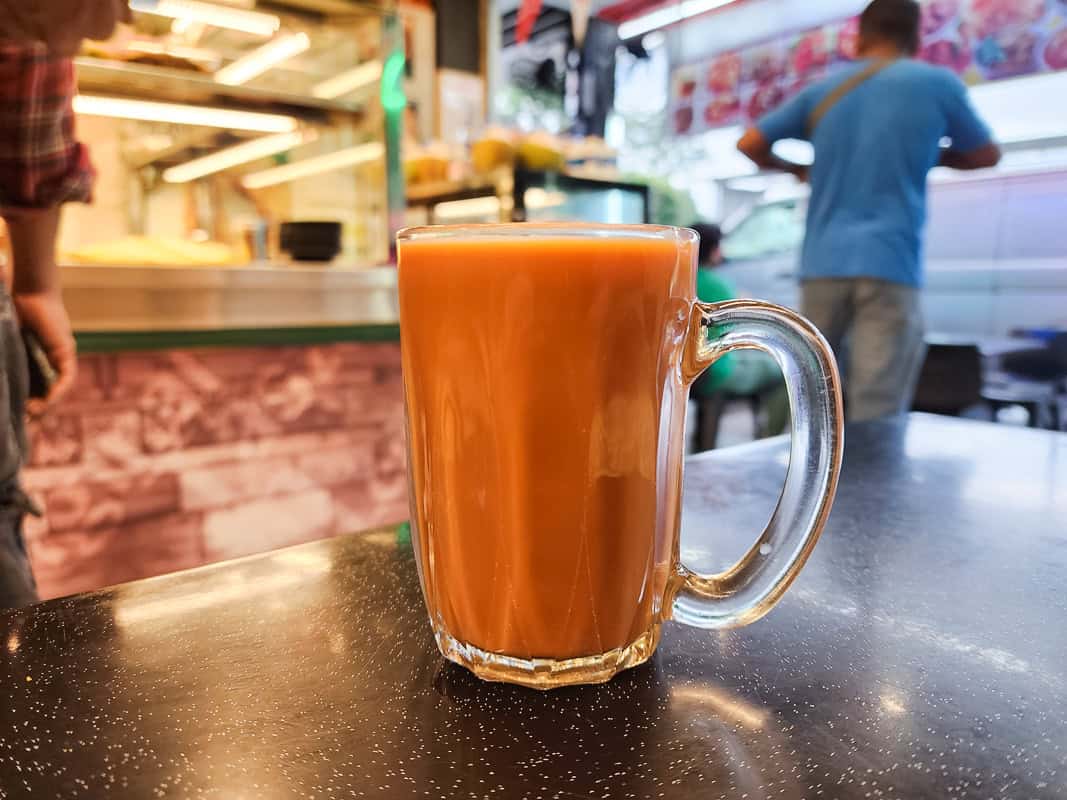
- Teh Tarik: “Pulled tea”—piping-hot black tea and condensed milk tossed back and forth between two metal pitchers from arm’s length until a thick, frothy crown develops on top. This is one of our favorites and a trip to Singapore isn’t complete without a teh tarik!
- Teh Peng: Refreshing iced sweet milk tea served over crushed ice.
Refreshing Non-Alcoholic Hawker Drinks
When the afternoon heat peaks, Singapore’s hawker centres offer an incredible array of fresh, cold non-alcoholic coolers pressed, scooped, and brewed to order, often with a quick snack.
Navigating drinks in a hawker centre is quite different from dining in a standard restaurant because food and beverage stalls operate as completely independent businesses. You will rarely find a cook selling noodles or chicken rice who also serves drinks. Instead, the perimeter aisles are lined with dedicated beverage stalls, each specializing in fresh-pressed tropical juices, iced teas, or cut fruit. While many of these kiosks stock large bottles of cold beer in their display cases, some focus exclusively on coffee, tea, and non-alcoholic refreshments.
The universal routine is simple: chope your table, order your meal from your chosen food stall, and then step over to a separate drinks vendor to grab an icy beverage to carry back to your seat.
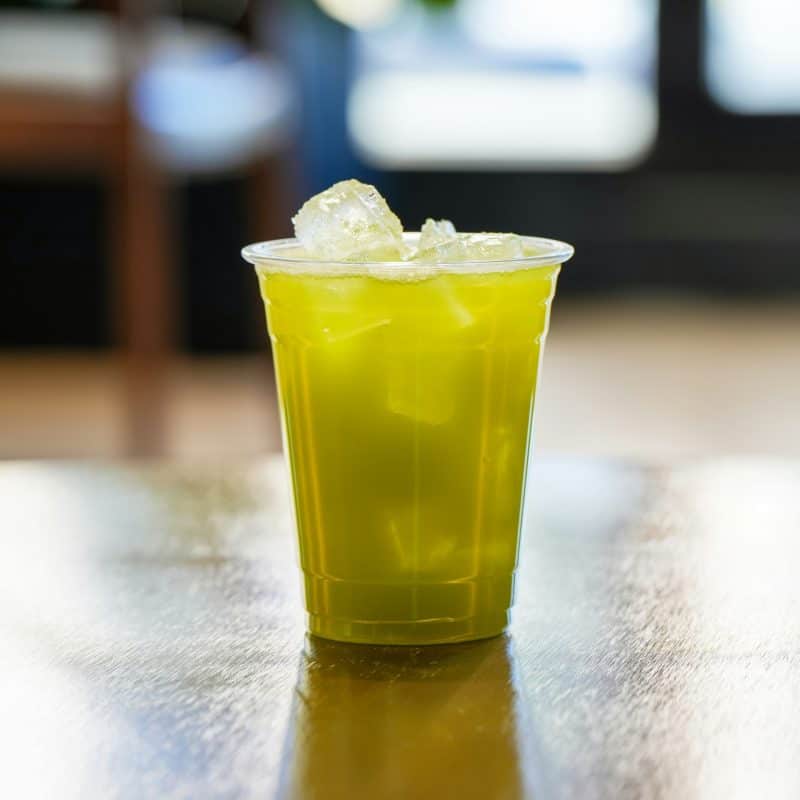
Fresh Sugarcane Juice (Gau Zhe Zhi)
Look for hawker stalls with motorized stainless-steel rollers crushing long stalks of fresh green sugarcane right before your eyes. The grassy, sweet juice is pressed over ice, and locals almost universally request a fresh calamansi lime (limau) or a sliver of sour plum squeezed into the press to cut the sweetness with bright acidity.
Calamansi Lime Juice (Limau Peng)
Calamansi limes are miniature, fragrant citrus fruits native to Southeast Asia that pack a punch somewhere between a key lime and a sour mandarin orange. Fresh calamansi juice mixed with water, sugar syrup, and crushed ice is arguably the single best thirst-quencher to pair with spicy bowls of curry laksa or sambal stingray.
This is one of Eric’s favorites! It’s a great alternative to a cold beer on a hot day at a hawker center.
Bandung
An unmistakable, vibrant neon-pink beverage deeply rooted in Malay and Indian-Muslim food culture. Bandung is made by mixing concentrated rose cordial syrup with rich evaporated or condensed milk and ice. It is sweet, floral, and deeply nostalgic, making it a classic pairing with a spicy plate of nasi lemak or mutton murtabak.
Now, we are not fans of rose flavored drinks, or super sweet drinks, so this is not on a regular rotation. But, we’ve tried it, and if you like that sort of thing go for it!
Fresh Young Coconut
Hawker drink vendors stack chilled young green coconuts high on ice. When you order, the vendor hacks off the crown with a cleaver, drops in a straw, and hands it over with a metal spoon so you can scrape the tender, gelatinous coconut flesh from the interior walls after drinking the electrolyte-rich water.
This is one of my favorite things to drink in Thailand too, and across Southeast Asia.
Michael Jackson (Soya Bean with Grass Jelly)
Named playfully after the pop star’s hit song “Black or White,” this popular drink blends fresh, chilled white soy milk with slippery, shredded strands of herbal black grass jelly (chin chow). You sip it through an extra-wide boba straw, getting a soothing contrast of mild sweetness and cooling herbal jelly.
Barley Water
A comforting, traditional Chinese home remedy brewed by gently simmering pearl barley grains with water, rock sugar, and fresh pandan leaves. Served warm or chilled, it has a pleasant, slightly viscous texture and is consumed locally to “dispel heatiness” from the body during humid weather.
Singapore Beer and Alcohol Culture
Despite strict laws and high taxes, Singapore enjoys a passionate, sophisticated beer and cocktail culture. It’s easy enough to grab a cold beer with most meals, it’s just on the pricier side.
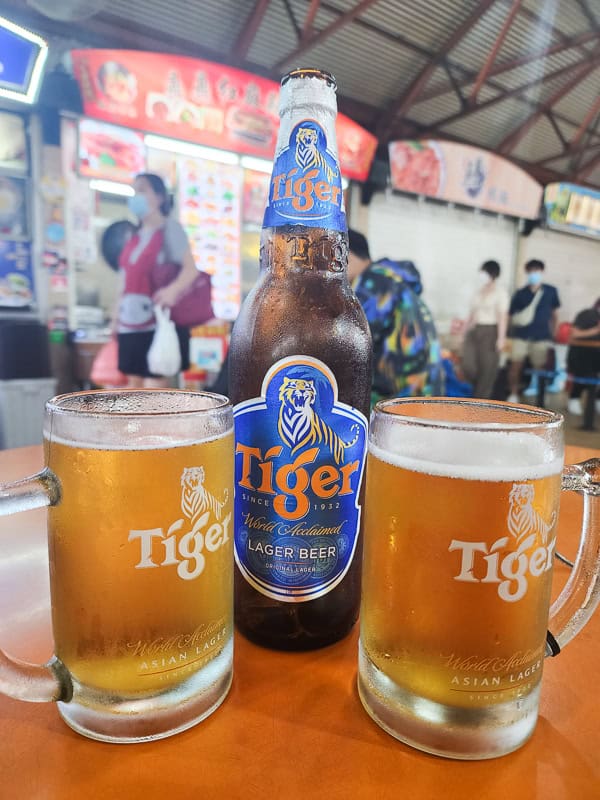
The Hawker Centre Tiger Beer Ritual
There is no more classic Singaporean evening ritual than sitting at a breezy, communal hawker table with a shared green bottle of Tiger Beer. First brewed in Singapore in 1932, Tiger is a crisp, clean tropical lager tailored specifically for hot weather and spicy food.
Drink stalls sell large 640ml bottles chilled to near-freezing, served with small plastic or glass mugs filled with ice cubes to keep every pour icy cold.
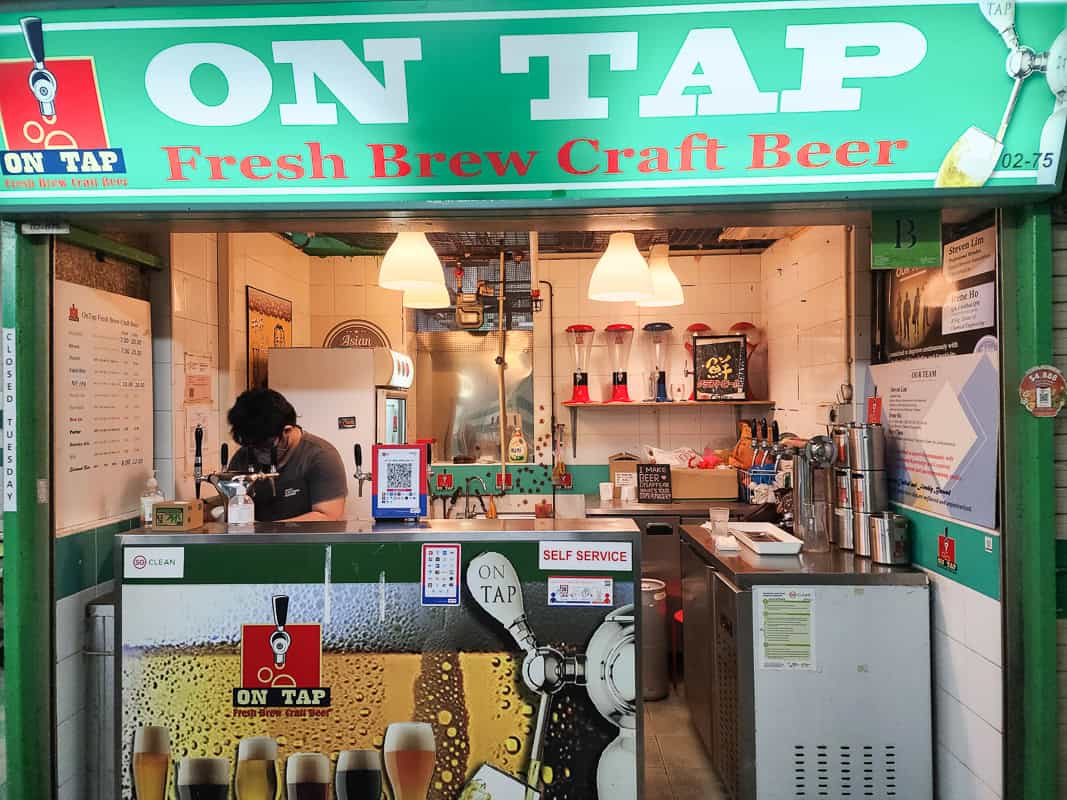
Hawker Craft Beer on Tap
While industrial lagers dominate most hawker centres, Singapore has pioneered craft beer inside open-air food halls. Pioneering stalls like On Tap Fresh Brew Craft Beer (Stall #02-75 inside Chinatown Complex) brew and pour small-batch wheat beers, pale ales, and dark stouts directly from draft taps at a fraction of standard hotel bar prices.
The first time we started to see craft beer in Singapore, we were a little surprised, but now it is becoming a more regular thing.
The Historic Singapore Sling at Raffles Hotel
Created around 1915 by bartender Ngiam Tong Boon at the Long Bar inside Raffles Hotel, the Singapore Sling was originally designed as an elegant, pink, fruit-forward cocktail that allowed women to discreetly consume alcohol in colonial public spaces.
Blending gin, cherry brandy, Cointreau, Bénédictine, pineapple juice, lime juice, and grenadine, it remains a bucket-list experience. Visiting the restored Long Bar—where patrons still throw roasted peanut shells onto the polished timber floors—is expensive, but it remains an iconic slice of living cocktail history.
We’ve only had the Singapore Sling once! I am not one for doing these sorts of touristy things, and it’s not a cheap drink. But, years ago, a lawyer friend I used to work with wanted to go to Raffles for the Sling, and he picked up the tab. We tried it. It’s way more sweet than the drinks we typically like, but the atmosphere at the historic bar and hotel can’t be beat.
Singapore’s World-Class Craft Cocktail Vanguard
Over the last decade, Singapore has transformed into one of the indisputable cocktail capitals of the world, consistently dominating global industry awards. Rather than chasing fleeting trends, the city’s top bars are celebrated for obsessive technical precision, deep hospitality, and inventive storytelling that weaves Southeast Asian ingredients—like pandan, sour plum, torch ginger, and laksa leaves—into elevated cocktail formats.
If you want to experience Singapore’s cocktail vanguard, book a seat at these world-ranked institutions well in advance:
- Jigger & Pony (Tanjong Pagar): Located inside the Amara Hotel, this perennial powerhouse regularly places in the global top ten on The World’s 50 Best Bars. Celebrated for its convivial living-room warmth and thoughtful, magazine-style concept menus, it is the gold standard for modernized classics like the espresso martini and refined gin punches.
- Nutmeg & Clove (Purvis Street): A proudly Singaporean cocktail haven that translates local history, street nostalgia, and hawker flavors into progressive drinks. From playful presentations referencing neighborhood mama shops to cocktails infused with regional spices, it offers an authentic taste of Singapore’s heritage in a glass.
- Atlas (Bugis): Housed inside Parkview Square (famously dubbed Singapore’s “Gotham Building”), Atlas boasts an awe-inspiring, multi-story Art Deco lobby anchored by a towering 15-meter gin tower holding over 1,000 vintage and craft bottles. Ordering a classic dry martini here is an essential Singapore luxury experience.
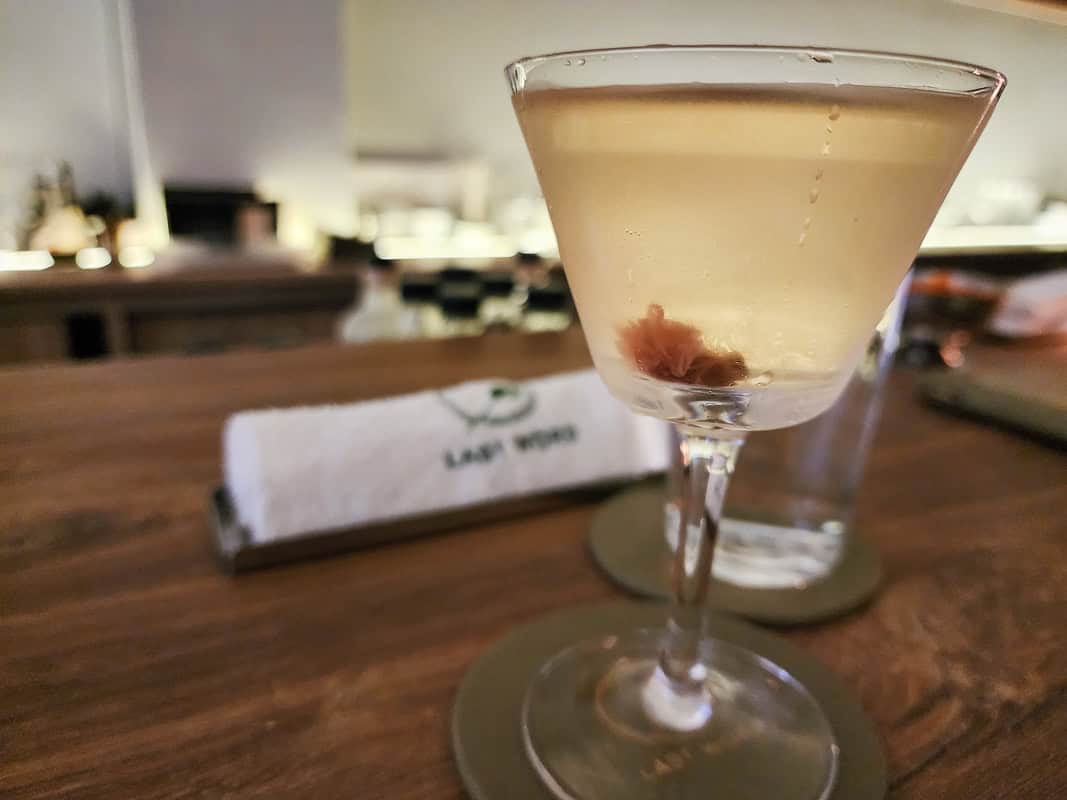
While Eric and I haven’t made it through the entire global awards roster, we fell hard for the understated brilliance of Last Word on Purvis Street. Tucked on the second floor above Nutmeg & Clove, this intimate, Japanese-influenced cocktail salon is owned and operated by the very same hospitality powerhouse—Colin Chia and the Nutmeg & Clove hospitality group.
The room trades high-energy buzz for minimalist timber counters, warm ambient lighting, and obsessive attention to detail, starting with a warm oshibori towel as soon as you sit down. Sipping one of their pristine, crystal-clear martinis garnished with a delicate salted sakura blossom was a masterclass in balance and restrained elegance, proving why Singapore’s cocktail scene deserves every bit of its international acclaim.
Frequently Asked Questions: Drinking in Singapore
What Is the Difference Between Kopi, Kopi O, and Kopi C?
Kopi is black coffee mixed with sweetened condensed milk. Kopi O is black coffee sweetened with sugar only, containing no milk. Kopi C is brewed with unsweetened evaporated milk and sugar, resembling a standard Western white coffee.
Why Is Alcohol So Expensive in Singapore?
The Singapore government levies heavy excise “sin taxes” on alcohol to discourage overconsumption. Excise taxes are charged based on alcohol volume (currently 88 SGD per liter of pure alcohol for wine and spirits, and 60 SGD for beer), on top of which a 9% Goods and Services Tax (GST) and restaurant service charges apply.
Can You Drink Alcohol on the Street in Singapore?
You cannot drink alcohol in public spaces (including sidewalks, parks, beaches, and public housing grounds) between 10:30 PM and 7:00 AM daily. Violating the Liquor Control Act carries fines up to 1,000 SGD. During restricted hours, drinking is permitted only within private residences or licensed premises such as bars, restaurants, and hotels.
What Is the Most Popular Non-Alcoholic Drink at Singapore Hawker Centres?
Fresh cold-pressed sugarcane juice (often paired with a squeeze of fresh calamansi lime) and iced calamansi lime juice are the two most popular non-alcoholic hawker staples for cooling down against the tropical heat.
Why Are Singapore’s Cocktail Bars Ranked Among the Best in the World?
Singapore serves as Asia’s leading cocktail capital due to its exceptional hospitality talent, boundary-pushing mixology, and high concentration of venues on The World’s 50 Best Bars and Asia’s 50 Best Bars lists (such as Jigger & Pony, Nutmeg & Clove, and Atlas). Bartenders here combine world-class technique with regional Southeast Asian botanicals, spices, and tea-blending traditions.
Can You Bring Outside Alcohol into Halal Restaurants in Singapore?
No. Halal-certified establishments in Singapore adhere strictly to Islamic dietary guidelines monitored by the Islamic Religious Council of Singapore (MUIS). Bringing outside alcoholic beverages onto halal-certified premises is disrespectful and violates their certification rules.