If you are planning a trip to Japan, here is our realistic breakdown of what food and drink actually cost in Japan, what to budget per day, and how far your money will go across different styles of dining. Our budget for Japan has evolved over time as we have explored more of the country on each of our trips.
On average, travelers should budget between ¥5,000 and ¥8,000 (roughly $33 to $53 USD) per day for food and drink in Japan. This mid-range daily budget comfortably covers a quick morning convenience store breakfast, a hot teishoku set lunch or ramen bowl, an afternoon street snack, and an unhurried dinner with draft beers at a local izakaya. You do not need an unlimited bankroll to eat well here; while you can easily spend ¥15,000+ ($100+ USD) on high-end counter sushi, everyday casual dining in Japan offers some of the best culinary value in the world.
*This post contains compensated links. Find more info in my DISCLAIMER. As an Amazon Associate, I earn from qualifying purchases.
Budgeting For Travel To Japan
When we first landed in Japan back in 2009, we were traveling between careers and stressed over every single yen. We kept a tight rein on our daily spending, carefully doing the currency math before sitting down at any restaurant. Over multiple return visits—from eating our way through Osaka, Tokyo, and Kyoto to regional food trips in Sapporo and Wakayama—our travel style evolved. We were working while on the road, but no longer pulling a corporate attorney salary, meaning we remained very conscious of our daily outlay.
What we quickly realized is that accommodation is almost always the heaviest hit to your travel budget in Japan. By leveraging credit card points and free night certificates on our hotels, we free up our cash for what truly matters to us: eating and drinking exceptionally well. You don’t need an unlimited bankroll to eat brilliantly here. While we always budget for one or two memorable sushi splurges on counter omakase, we have never felt the need to book multi-course kaiseki banquets or Michelin-starred dining rooms—simply because everyday Japanese cooking is already executed to an extraordinarily high standard.
Quick Facts: Food & Drink Prices in Japan
| Dining Style / Meal Tier | Cost Range (JPY) | Approx. USD Equivalent | What You Get |
| Convenience Store (Konbini) | ¥350 – ¥800 | $2.30 – $5.30 | Quick breakfast or snack: 2 onigiri, egg salad sandwich, or hot fried chicken plus canned coffee. |
| Fast-Casual Counter (Gyudon / Soba) | ¥500 – ¥900 | $3.30 – $6.00 | Hearty beef bowl (gyudon) or quick dashi soba/udon bowl at train station standing counters. |
| Ramen & Noodle Shops | ¥850 – ¥1,400 | $5.60 – $9.30 | Full steaming bowl of tonkotsu, miso, or shoyu ramen with chashu pork, seasoned egg, and bamboo shoots. |
| Teishoku (Lunch Set Meal) | ¥1,000 – ¥1,600 | $6.60 – $10.60 | Traditional set tray: grilled fish or pork tonkatsu, steamed rice, miso soup, and house pickles. |
| Conveyor-Belt Sushi (Kaitenzushi) | ¥1,500 – ¥2,800 | $10.00 – $18.60 | 7 to 10 color-coded plates at casual chains (Sushiro, Kura Sushi) or local market conveyor spots. |
| Casual Izakaya Dinner | ¥3,000 – ¥4,500 | $20.00 – $30.00 | 3–4 shared savory dishes (yakitori skewers, karaage, edamame) plus 2 draft beers or highballs. |
| High-End Sushi Counter (Splurge) | ¥8,000 – ¥18,000+ | $53.00 – $120.00+ | Premium multi-piece nigiri set or seasonal counter omakase showcasing pristine seasonal seafood. |
Table of Contents
Traveling to Japan? How long do you have? Check out our 7 Day Japan itinerary for a quick trip, or our 14 day itinerary if you have a bit longer. All of our itineraries are focused on food travel!
Realistic Daily Food Budgets for Japan
We focus most of our budget on food and drink in Japan, after accommodation, which eats up the largest part of any travel budget. After all, we are visiting Japan to eat, not to sleep!
Your overall daily spend largely depends on where you fall across three common dining approaches:
- The Value / Budget Traveler (¥2,500 – ¥3,500 / ~$16 – $23 USD per day):
Grab a quick onigiri or bakery pastry with hot canned coffee from 7-Eleven for breakfast, sit at a fast-casual counter or ramen bar for lunch, and enjoy a supermarket depachika evening bento box or a quick beef bowl for dinner. - The Mid-Range Food Lover (¥5,000 – ¥8,000 / ~$33 – $53 USD per day):
This is how we spend the majority of our travel days. A light café or bakery breakfast, a hearty midday teishoku set lunch, an afternoon street food snack (like takoyaki or kushiage in Osaka), and a lively evening at a casual neighborhood izakaya with draft beers, yakitori, and seasonal dishes. - The Splurge Day (¥12,000 – ¥22,000+ / ~$80 – $145+ USD per day):
Reserved for days when you sit down at an intimate wooden counter for a dedicated sushi lunch or dinner feast, complemented by premium sake carafes or craft beer bars.
We tend to do most of these options in any given trip. We will do a budget day focused on ramen, Japanese snacks, and conveyor belt sushi. But, we often also do a splurge day or two depending on the city.

What Does Breakfast, Lunch, and Dinner Cost in Japan?
We don’t often include the breakfast with our hotel room. When planning a trip, we noticed a hotel would charge us about $30 for both of us to have breakfast in the hotel, and I would rather spend that money on sushi and ramen! It does sometimes mean we end up with a more savory morning meal, to set us up for a day of eating in Japan!
Convenience Stores (Konbini): The Ultimate Morning Value
Japanese convenience stores—principally 7-Eleven, Lawson, and FamilyMart—offer exceptional culinary quality at low prices, making them the standard go-to for quick morning breakfasts and on-the-go snacks.
Rather than paying for overpriced hotel breakfast buffets, we alternate between two morning styles: quick konbini grabs and market visits. On busy transit days, we hit the local convenience store for freshly wrapped triangular rice balls (onigiri) filled with tuna mayo or savory grilled pork for ¥140 to ¥220. On slower mornings, we head straight to the local food markets to knock back fresh morning sushi sets, tamagoyaki skewers, and steaming bowls of miso soup.
The legendary egg salad sandwiches on crusty-less milk bread run ¥250 to ¥320, while hot cabinet staples like FamilyMart’s FamiChiki or Lawson’s Karaage-kun fried chicken nuggets cost ¥220 to ¥260. Paired with a hot canned coffee from the heated shelf (¥120 to ¥160), you can easily eat breakfast for under ¥600 ($4.00 USD). Yes, eating at a convience store in Japan is a must-do!
Fast-Casual Counters & Noodle Shops
For quick lunches, fast-casual counter chains and ticket-vending noodle shops provide massive portions of comforting Japanese staples for well under ¥1,000 (about $6.50 USD).
- Gyudon Beef Bowls: Major chains like Yoshinoya, Matsuya, and Sukiya serve thinly sliced simmered beef and sweet onions over rice for ¥450 to ¥750 ($3.00 to $5.00 USD), with sets including miso soup and raw egg adding roughly ¥150 ($1.00 USD).
- Ramen: A standard bowl of ramen at a neighborhood counter runs between ¥850 and ¥1,100 ($5.50 to $7.25 USD). If you opt for an all-topping bowl (extra chashu pork slices, soft-boiled ajitsuke tamago egg, and nori), expect to pay ¥1,200 to ¥1,450 ($8.00 to $9.50 USD).
- Station Udon & Soba: Standing noodle counters inside train stations remain one of Japan’s great culinary bargains, serving simple hot dashi broth with noodles starting at ¥350 to ¥550 ($2.30 to $3.60 USD), with fried vegetable or shrimp tempura patties adding ¥150 to ¥200 ($1.00 to $1.30 USD).

Teishoku (Set Meals): The Midday Sweet Spot
Teishoku set meals are the single best value in sit-down Japanese dining, delivering a nutritionally balanced tray of a main protein, steaming rice, miso soup, and small seasonal side dishes for ¥1,000 to ¥1,600.
Offered primarily during lunch hours at traditional neighborhood diners and chains like Ootoya or Yayoi-ken, a freshly grilled mackerel (saba shioyaki) or crispy breaded pork cutlet (tonkatsu) set rarely exceeds ¥1,400 (~$9 USD). Because dinner menus at the same establishments often cost 30% to 50% more for similar portions, scheduling your largest hot meals for lunchtime is an effortless way to keep your food spend controlled.

How Much Does Sushi Cost in Japan?
Sushi in Japan spans every tier imaginable—from ¥150 conveyor-belt plates to multi-hundred-dollar Ginza omakase—allowing travelers to tailor the experience to their specific budget.
Conveyor-Belt Sushi (Kaitenzushi)
For a casual, fun lunch, conveyor-belt chains like Sushiro, Kura Sushi, or Uobei are surprisingly good. Color-coded plates loaded with two pieces of salmon, tuna, or yellowtail start at ¥130 to ¥220, with premium cuts like fatty tuna (otoro) or sea urchin (uni) topping out around ¥350 to ¥500. An average diner walking away stuffed after 7 to 10 plates will generally spend ¥1,500 to ¥2,500 ($10 to $17 USD).

Mid-Range & Counter Sushi Splurges
We love setting aside money for a dedicated, sit-down counter experience. Many reputable sushi shops offer incredible lunchtime nigiri sets (8 to 10 pristine pieces served with miso soup) for ¥2,500 to ¥4,500. If you visit for an unhurried evening dinner featuring seasonal sashimi, grilled fish, and a multi-course nigiri lineup, expect bills between ¥8,000 and ¥15,000 ($53 to $100 USD) per person.
Compared to eating equivalent-grade fish in London or New York, having sushi in Japan remains an astonishing value for the quality. Whenever we are in Osaka, we always hit the tiny sushi restaruant behidn the St. Regis and sit at their counter (it’s Sushi Hayata, which moved locations!). It’s a splurge, but worth it. And, we would rather spend our budget on eating behind the St. Regis than staying at the St. Regis.

Street Food & Regional Snacks
Casual street food snacks offer some of the most memorable eating across Japan, particularly in culinary hubs like Osaka where grazing from stall to stall is a cultural pastime.
Osaka is renowned as Japan’s undisputed street food capital, packed with counter-service staples like takoyaki (piping-hot octopus balls) and okonomiyaki (savory cabbage pancakes). For deep-fried skewers on a stick (kushikatsu), casual institutions like Kushikatsu Daruma are a must visit. It’s instantly recognizable across Dotonbori and Shinsekai by its giant, scowling “angry chef” mascot. They serve skewers straight from the fryer for ¥120 to ¥300 ($0.80 to $2.00 USD) each.
Beyond Osaka, it is just as easy to track down affordable midday snacks across Japan, particularly inside covered market arcades like Tokyo’s Tsukiji Outer Market or Kyoto’s Nishiki Market.
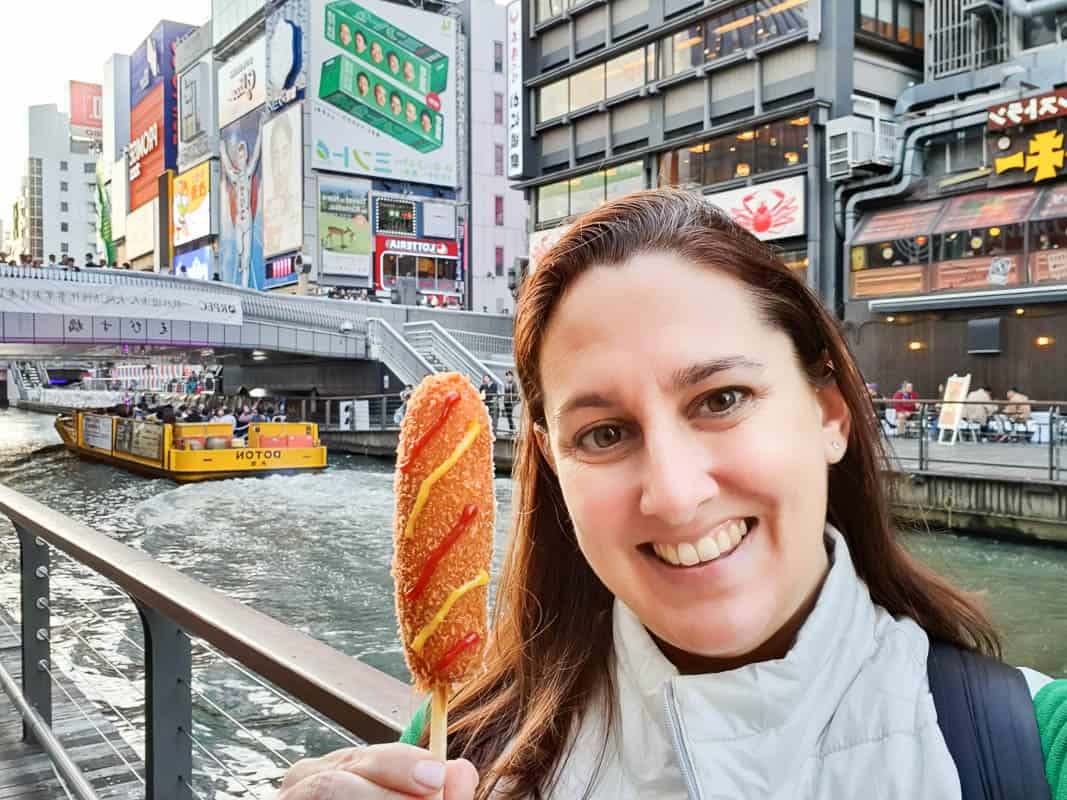
- Takoyaki (Octopus Balls): A boat of 6 to 8 piping-hot takoyaki brushed with savory brown sauce, Japanese mayo, and dancing bonito flakes averages ¥500 to ¥750.
- Kushikatsu (Deep-Fried Skewers): Osaka’s signature skewered meat and vegetables dipped in communal sauce cost between ¥120 and ¥300 per stick, with lotus root and quail eggs on the lower end and beef or prawns at the top.
- Okonomiyaki (Savory Cabbage Pancakes): A hearty, griddled cabbage and pork pancake runs between ¥800 and ¥1,300, making a filling meal in itself.

What Do Drinks, Beer, and Alcohol Cost in Japan?
Sipping local drinks in Japan is remarkably affordable, especially if you embrace neighborhood standing bars (tachinomi) and casual after-work taverns.
To dive deeper into the wide world of Japanese beverages, check out our guide on traditional Japanese drinks to try in Japan.
| Drink Item | Serving Style / Setting | Average Cost (JPY) | Approx. USD |
| Draft Beer (Nama-biiru) | Medium mug (Asahi/Suntory/Sapporo) at an izakaya | ¥450 – ¥700 | $3.00 – $4.60 |
| Whisky Highball | Standard Suntory Kaku highball with soda & lemon | ¥400 – ¥650 | $2.60 – $4.30 |
| Lemon Sour / Chuhai | Shochu mixed with carbonated water and fresh citrus | ¥380 – ¥550 | $2.50 – $3.60 |
| Sake (Nihonshu) | 180ml carafe (tokkuri) or glass poured to overflowing | ¥550 – ¥1,100 | $3.60 – $7.30 |
| Shochu | Distilled barley/sweet potato spirit on the rocks | ¥400 – ¥600 | $2.60 – $4.00 |
| Japanese Craft Beer | Pint at a specialized craft taproom | ¥900 – ¥1,500 | $6.00 – $10.00 |
| Craft Cocktails | Upscale cocktail or speakeasy lounge | ¥1,500 – ¥2,500+ | $10.00 – $16.50+ |
| Vending Machine Drinks | Hot/cold green teas, water, or Boss canned coffee | ¥120 – ¥180 | $0.80 – $1.20 |
Izakayas and Standing Bars (Tachinomi)
The best way to drink in Japan is alongside food at an izakaya or a standing bar (tachinomi). Standing bars in particular are fantastic for budget-conscious travelers: because they cut down on overhead and encourage quick turnaround, draft beers and highballs frequently cost as little as ¥350 to ¥450, with small plates of edamame, sashimi, or stewed beef tendon (doteyaki) running ¥250 to ¥400.
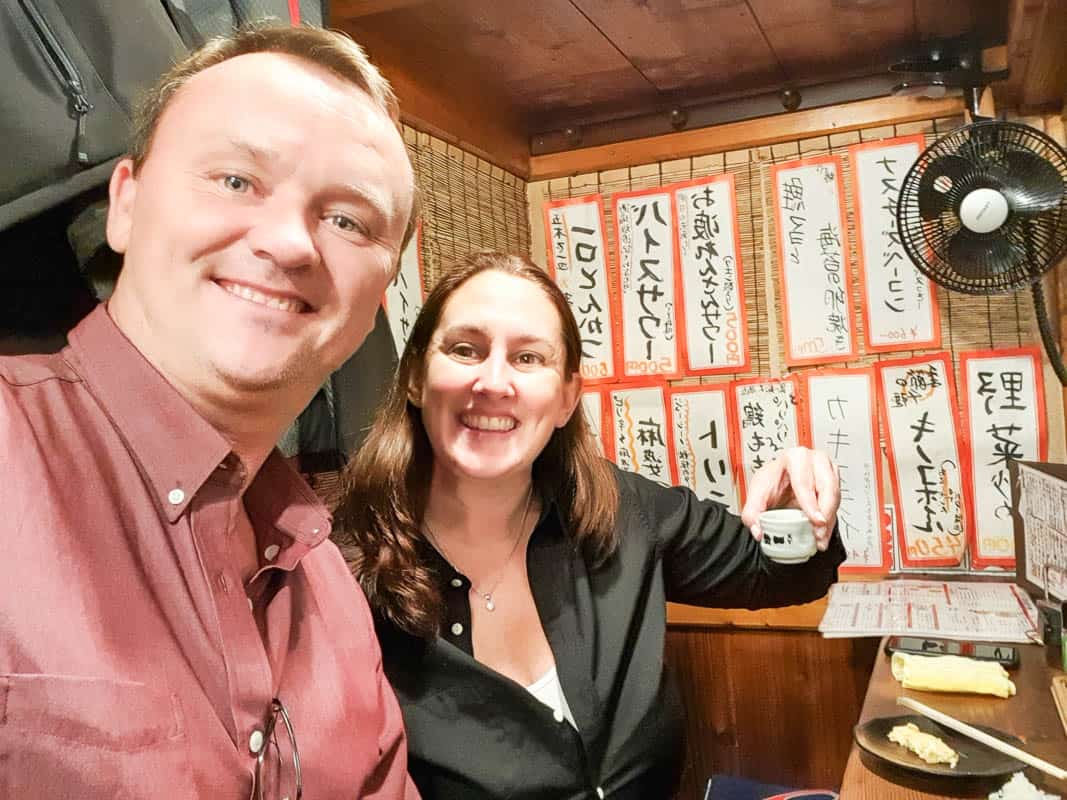
We’ve had some of our most fun nights in Japan finding little standing bars and drinking with the locals! Even if they are petite and Eric feels like a giant in them!
If you’re a beer enthusiast looking beyond commercial lagers, Japan’s microbrewery scene has grown significantly. While an imported or local craft IPA at a dedicated taproom costs ¥1,000 to ¥1,400, it offers a great look into local brewing culture—check out our Osaka craft beer guide for our favorite local taproom recommendations.

Regional Price Differences: Golden Triangle vs. Regional Japan
While menu prices for national fast-casual chains remain uniform across the country, where you travel impacts your overall food spend:
- Tokyo, Kyoto & Central Osaka: As the most touristed corridors, dining in high-foot-traffic neighborhoods (like Shinjuku, Gion, or Dotonbori) naturally carries a premium, particularly for evening sit-down dining and international bars.
- Northern Japan (Sapporo & Hokkaido): Hokkaido is an agricultural and seafood wonderland. In Sapporo, a rich bowl of authentic butter-corn miso ramen at the famous Ramen Alley runs a modest ¥900 to ¥1,200, and expansive seafood bowls (kaisendon) loaded with fresh sea urchin and salmon roe offer unmatched value compared to Tokyo fish markets.
- Kansai Beyond Osaka (Wakayama): Venturing outside the primary metro hubs stretches your food budget considerably. In coastal prefectures like Wakayama, famous for its rich soy-sauce tonkotsu ramen (Wakayama chuka soba), an outstanding bowl costs just ¥700 to ¥850.
- Sea of Japan Coastal Hubs (Kanazawa & Toyama): Renowned throughout Japan for pristine cold-water fish, regional seafood markets here serve sweet white shrimp (shiro-ebi), firefly squid, and yellowtail at prices that undercut major metropolitan sushi counters by 20% to 30%.

4 Essential Rules for Saving Money on Food in Japan
- Embrace the Zero-Tipping Rule: Tipping does not exist in Japan. What you see on the menu or register is the final price. Leaving extra cash on the table will only result in a polite server chasing you down the street to return your forgotten money. We have seen this with tourists who are not as familiar with the tipping rules in Japan!
- Understand the Otōshi (Izakaya Table Charge): When you sit down at an izakaya, you will almost always be served a tiny, unprompted appetizer (like seasoned seaweed, cold eggplant, or potato salad). This is the otōshi, which is a mandatory seating/table fee that typically adds ¥300 to ¥600 per person to the bill. I don’t know that we paid as much attention to this in earlier trips, but I definitely noticed it on more recent trips.
- Master the Ticket Vending Machine (Shokkenki): Many fast-casual ramen, soba, and katsu restaurants operate via coin- and cash-operated vending machines at the entrance. Insert your yen first, press the button for your dish, and hand the printed ticket to the chef behind the counter.
- Raid Department Store Basements (Depachika) at 7:00 PM: The basement floors of major department stores (like Daimaru, Takashimaya, or Isetan) house sprawling gourmet food halls. Starting around 6:30 PM or 7:00 PM, vendors mark down premium bento boxes, sashimi platters, and yakitori by 20% to 50% to clear evening inventory.
Frequently Asked Questions About Food Costs in Japan
Is food expensive in Japan?
No, everyday food in Japan is surprisingly affordable, especially compared to major North American or European cities. Excellent ramen, hearty set meals, and fresh sushi are readily available for $5 to $12 USD, and the lack of tipping makes dining out very cost-effective.
How much should I budget per day for food in Japan?
A comfortable, realistic daily food budget for most travelers is between ¥5,000 and ¥8,000 ($33 to $53 USD) per day. This covers a quick convenience store breakfast, a sit-down set lunch (teishoku), midday snacks, and a full evening dinner with drinks at a neighborhood izakaya.
Can you pay for food with credit cards in Japan?
Major convenience stores, department stores, and modern sit-down restaurants accept international credit cards. However, many smaller ramen shops, ticket-vending machines, market stalls, and traditional standing bars remain cash-only or rely on contactless IC transit cards (like Suica or Pasmo). Always carry physical yen with you.
What is the cheapest way to eat in Japan?
The cheapest ways to eat well are convenience stores (konbini like 7-Eleven and Lawson), beef bowl chains (Yoshinoya, Matsuya), standing train-station noodle counters, and buying discounted gourmet bento boxes from department store basements (depachika) during evening markdowns.
Why is lunch cheaper than dinner in Japan?
Many mid-range and higher-end Japanese restaurants offer subsidized lunch specials (teishoku or lunch nigiri sets) to draw daytime office workers. These lunch menus frequently feature the same premium ingredients as dinner services, but at a 30% to 50% discount.