Hong Kong is one of the world’s most dynamic vertical food capitals, defined by historic multi-story dim sum teahouses, open-air street stalls (dai pai dongs), and charcoal-roasted meats. Unlike the spicy, chili-heavy cooking of inland provinces like Sichuan or Hunan, Hong Kong food is rooted in Cantonese cuisine, emphasizing fresh ingredients, aromatic broths, and subtle master sauces balanced with soy, sugar, ginger, and scallions.
For a complete food trip, four distinct dining experiences define the city: traditional morning push-cart Yum Cha, rich roast goose (Siu Ngo), quick cha chaan teng tea breakfasts, and late-night claypot rice or street skewers.
*This post contains compensated links. Find more info in my DISCLAIMER. As an Amazon Associate, I earn from qualifying purchases.
Quick Bites: What Are The Must-try Foods in Hong Kong?
| Dish Name | Cantonese & Local Script | Flavor Profile & Key Ingredients | Where to Eat in Hong Kong | Typical Price (HKD / USD) |
| Dim Sum | Yum Cha (飲茶) | Steamed dumplings, buns, and rice rolls paired with hot tea. | Lin Heung Lau (Sheung Wan) / Maxim’s Palace (Central) | 35–65 HKD (~4.50–8.35 USD) per basket |
| Roast Goose | Siu Ngo (燒鵝) | Crisp, mahogany skin with succulent dark meat and plum sauce. | Yung Kee (Central) / Dynasty (Wan Chai) | 280–360 HKD (~36–46 USD) lower quarter |
| Char Siu | Char Siu (叉燒) | Sweet, honey-glazed caramelized roasted pork shoulder/belly. | Joy Hing (Wan Chai) / Dynasty (Wan Chai) | 45–60 HKD (~5.75–7.70 USD) with rice |
| Wonton Noodles | Wan Tan Meen (雲吞麵) | Springy duck-egg noodles with whole-prawn wontons in flounder broth. | Mak’s Noodle (Central) | 50–65 HKD (~6.40–8.35 USD) |
| Beef Brisket Noodles | Ngau Lam Meen (牛腩麵) | Tender braised brisket and tendon in clear or curry broth. | Kau Kee (Central) / Man Kee (Sham Shui Po) | 55–80 HKD (~7.05–10.25 USD) |
| Bamboo-Pressed Noodles | Juk Sing Meen (竹昇麵) | Firm, springy egg noodles topped with dried shrimp roe. | Lau Sum Kee (Sham Shui Po) | 48–62 HKD (~6.15–7.95 USD) |
| Cheong Fun | Cheong Fun (腸粉) | Silky steamed rice sheets tossed in sesame, sweet, and chili sauces. | Hop Yik Tai (Sham Shui Po) | 16–22 HKD (~2.05–2.80 USD) |
| Claypot Rice | Bao Zai Fan (煲仔飯) | Charcoal-crisped rice topped with Chinese sausage and minced beef. | Four Seasons Claypot Rice (Yau Ma Tei) | 70–95 HKD (~8.95–12.15 USD) |
| Pineapple Bun | Bo Lo Yau (菠蘿油) | Warm sweet bun with crumbly crust melting a slab of cold butter. | Kam Wah Cafe (Mong Kok) | 14–18 HKD (~1.80–2.30 USD) |
| Egg Tart | Daan Tat (蛋撻) | Flaky or shortcrust pastry filled with warm, silky egg custard. | Tai Cheong Bakery (Central) | 12–15 HKD (~1.55–1.90 USD) |
| Hong Kong Milk Tea | Dong Lai Cha (凍奶茶) | Strong Ceylon black tea filtered through cloth with evaporated milk. | Lan Fong Yuen (Central) | 22–28 HKD (~2.80–3.60 USD) |
| Egg Waffles | Gai Daan Tsai (雞蛋仔) | Griddled spherical honeycomb waffles with crisp, airy bubbles. | Mammy Pancake (Mong Kok / Causeway Bay) | 24–34 HKD (~3.10–4.35 USD) |
* I researched the Cantonese for the food names to be helpful, but please don’t rely 100% on it!
Table of Contents
Check out our complete Guide to Hong Kong Travel to learn more.
The Best Food To Eat in Hong Kong
Amber and I have made countless trips to Hong Kong. It’s easily one of our favorite cities in the world for food. Just the thought of eating in Hong Kong makes us want to get on a long flight. Throughout this guide, we share just some of our favorite dishes we’ve discovered while eating in Hong Kong.
By no means is this comprehensive list. It’s one of the best things about Hong Kong. These’s so much great food. But these dishes are not to be missed.
One note about eating in Hong Kong. Yes, the langauge can be issue. However, between picture menus, pointing out what others are eating, and Google Translate, you’ll be fine. And as always, if you see a restaurant or tea house with a lot of people inside, odds are the food is amazing. So go.
Need a little bit more advice on where to start? Check out our three-day Hong Kong itinerary, specifically tailored to food lovers.
Looking for ideas on where to stay? Check out our recommendations for the best neighborhoods for travelers to Hong Kong.
Planning a Food Trip to Hong Kong?
Hong Kong is one of the world’s greatest dining capitals, from Michelin-starred dim sum to late-night dai pai dongs and roast goose. Staying near a central MTR line makes hopping between food hubs seamless:
- Central & Sheung Wan: Ideal for high-end dining, trendy wine bars, and heritage dim sum halls. In Central, we recommend the Four Seasons Hotel Hong Kong or the stylish The Murray, Hong Kong, a Niccolo Hotel. (Browse all Central & Sheung Wan Hotels on Booking.com)
- Tsim Sha Tsui (Kowloon): Perfect for iconic Victoria Harbour views, buzzing night markets, and street food. In TST, we recommend the Sheraton Hong Kong Hotel & Towers right along Nathan Road. (Browse all Tsim Sha Tsui Hotels on Booking.com)
- Wan Chai & Causeway Bay: A haven for local roast goose, wonton noodle shops, and traditional cha chaan teng cafes. In Wan Chai, we recommend the waterfront Renaissance Hong Kong Harbour View Hotel. (Browse all Wan Chai Accommodations on Booking.com)

Traditional Dim Sum (Yum Cha / 飲茶)
Dim sum is a traditional Cantonese morning ritual of sharing tea alongside bamboo steamer baskets of dumplings, buns, and savory bites. Dim sum has to be one of the top things that Hong Kong is famous for!
Across our dozens of trips to Hong Kong, morning dim sum is our daily religion. Our absolute favorite experience remains Lin Heung Lau in Sheung Wan—not because the food is delicate or polished, but because the room is pure, unfiltered energy. If you want the best baskets of fresh Har Gow and Ju Geen Siu Mai (steamed pork liver dumplings), you can’t be timid; Eric has routinely been elbowed aside by 90-year-old local grannies while hunting down fresh steamers as the push-carts roll out of the kitchen.
For a grander, chandelier-lit banquet experience with Victoria Harbour views, we always make a point to line up early at Maxim’s Palace at City Hall.
However, this famous Hong Kong food staple doesn’t end there. In addition to savory dim sum dishes, you’ll find sweet (dessert) dim sum including Cantonese Sponge Cake (a personal favorite) and Hong Kong Egg Tarts, Amber’s favorite and similar to Pastel de Nata Portugal.
- Where to get it (Historic Push-Cart Chaos): Lin Heung Lau, Tung Ning Building, 249–253 Des Voeux Road Central Hong Kong, Sheung Wan. Open daily 9:00 AM – 11:00 PM.
- Where to get it (Grand Banquet Trolleys): Maxim’s Palace at City Hall, 2/F, City Hall Low Block, Central. Open daily from 11:00 AM weekdays (9:00 AM Sundays). Get there early!
- Price: 35–65 HKD (~4.50–8.35 USD) per basket as of August 2026; tea charge (Cha Wai) is approx. 15–25 HKD per person.
- How to order: At Lin Heung, grab an open seat at any communal round table, take your stamp card, and head straight to the carts when you see steam rising. At City Hall, arrive 20 minutes before opening to grab a ticket for a harbour-facing table.
- For teahouse etiquette and ordering rules, read our full guide to the Best Dim Sum in Hong Kong.

Roast Goose (Siu Ngo / 燒鵝)
Siu ngo is whole goose basted in maltose (malt sugar) and five-spice, roasted in high-heat ovens until the skin renders mahogany-crisp while the meat stays exceptionally juicy.
While roast goose hangs in restaurant windows across every district, sitting down for a proper quarter goose is an essential Hong Kong ritual. We’ve eaten our way through the city’s top roast meat houses over the years, from bustling counter shops to luxury dining rooms.
Visiting the multi-story Yung Kee on Wellington Street during quiet hours let us appreciate the depth of their charcoal smoke without the standard tourist frenzy, while Dynasty inside the Renaissance Harbour View proves that upscale hotel kitchens can deliver some of the most consistent, crackling skin and delicate plum sauce in the city.
- Where to get it (Central Landmark): Yung Kee Restaurant, 32-40 Wellington Street, Central. Open daily 11:30 AM – 11:00 PM.
- Where to get it (Waterfront Dining): Dynasty Restaurant, 3/F, Renaissance Hong Kong Harbour View Hotel, 1 Harbour Road, Wan Chai. Open daily 11:30 AM – 3:00 PM & 6:00 PM – 10:00 PM.
- Price: 280–360 HKD (~36–46 USD) for a lower quarter portion (Jor Tei) as of August 2026.
- How to order: Always specify the lower quarter (Jor Tei)—this cut includes the drumstick and has a higher fat-to-meat ratio that keeps the goose succulent when dipped in sweet-sour plum sauce.

Check out our complete guide on the Cost of Eating and Drinking in Hong Kong.
Wonton Noodles & Bamboo-Pressed Dough (Wan Tan Meen & Juk Sing Meen)
Cantonese wonton noodles consist of springy, thin alkaline egg noodles served in a piping-hot, clear broth made from dried flounder, shrimp roe, and pork bones, topped with whole-prawn dumplings. The hallmark of a great bowl is the “bite” (al dente snap) of the noodles.
At Mak’s Noodle on Wellington Street, the bowls are intentionally small so the noodles don’t turn soft in the hot soup before you finish them. If you want to see the old-world craft in action, head over to Lau Sum Kee in Sham Shui Po, where the master still rides a heavy bamboo log like a seesaw to knead the dough without excess moisture, finishing the dry noodles with a heavy blanket of roasted shrimp roe (Ha Ji).
- Where to get it (Prawn Wonton Classic): Mak’s Noodle, G/F, 77 Wellington Street, Central. Open daily 11:00 AM – 8:30 PM.
- Where to get it (Bamboo-Pressed with Shrimp Roe): Lau Sum Kee Noodle, G/F, 48 Fuk Wing Street, Sham Shui Po. Open daily 11:30 AM – 9:30 PM.
- Price: 48–65 HKD (~6.15–8.35 USD) per bowl as of August 2026.
- How to order: Eat the noodles immediately upon arrival. Spoon up a small splash of red vinegar and chili oil into the broth to cut through the alkaline bite of the duck-egg noodles.

Beef Brisket Noodle Soup (Ngau Lam Meen / 牛腩麵)
Beef brisket noodles are a staple Cantonese comfort food made from beef flank and gelatinous tendon braised slowly in chu hou paste, star anise, and rock sugar until fall-apart tender.
We first fell in love with beef brisket noodles during a food tour in Taipei years ago, and hunting down the best bowls in Hong Kong has been an obsession ever since. The standard-bearer on Hong Kong Island is Kau Kee on Gough Street—the broth is deeply concentrated and fragrant with spices, though you should expect a line during peak lunch hours. Over in Kowloon, Man Kee Cart Noodles lets you customize a massive bowl with tender brisket, daikon radish, and rich chili broth.
- Where to get it (Central Landmark): Kau Kee Restaurant, G/F, 21 Gough Street, Central. Open Monday to Saturday 12:30 PM – 10:30 PM (Closed Sunday).
- Where to get it (Custom Cart Bowls): Man Kee Cart Noodles, G/F, 121 Fuk Wing Street, Sham Shui Po. Open daily 11:00 AM – 10:30 PM.
- Price: 55–80 HKD (~7.05–10.25 USD) per bowl as of August 2026.
- How to order: At Kau Kee, choose between the clear broth beef brisket flat rice noodles (Kwai Teow) or the rich, thick curry beef tendon over e-fu noodles.

Char Siu – Cantonese Roast Pork (叉燒)
Char siu is pork shoulder or pork belly marinated in soy sauce, Shaoxing wine, honey, and fermented red bean curd, roasted over open fire until caramelized and lightly charred.
An all-time favorite of Eric’s, char siu is hanging in almost every neighborhood roast meat window in Hong Kong. We love the contrast between fast-casual market shops and refined dining rooms. For a quick, satisfying working-class lunch, Joy Hing in Wan Chai serves classic char siu over steamed rice with a drizzle of sweet master sauce right at your table. For something truly extraordinary, Dynasty inside the Renaissance Harbour View uses premium Iberico pork, delivering charred, melt-in-your-mouth edges with unbeatable sweetness.
- Where to get it (Historic Wan Chai Shop): Joy Hing Roasted Meat, G/F, 265-267 Hennessy Road, Wan Chai. Open Monday to Saturday 10:00 AM – 10:00 PM (Closed Sunday).
- Where to get it (Upscale Pork): Dynasty Restaurant, 3/F, Renaissance Hong Kong Harbour View Hotel, 1 Harbour Road, Wan Chai. Open daily for lunch and dinner.
- Price: 45–60 HKD (~5.75–7.70 USD) over rice at casual shops; 220–320 HKD (~28–41 USD) at fine-dining venues as of August 2026.
- How to order: Ask for “half-fat, half-lean” (Boon Fei Sau)—this cut gives you the perfect balance of tender, juicy meat and crispy caramelized fat.
Steamed Rice Rolls (Cheong Fun / 腸粉)
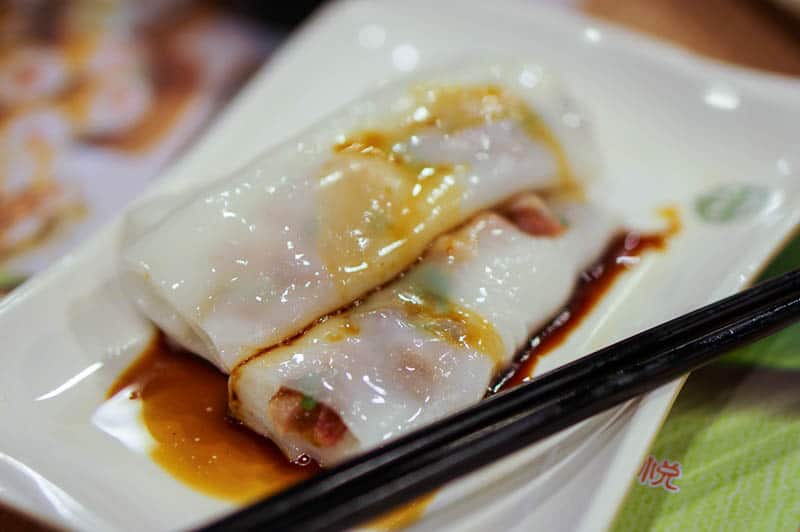
Cheong fun are silky, delicate rolls made from steamed rice-flour batter, chopped into bite-sized segments and served hot with savory and sweet sauces.
While you can order dim sum versions stuffed with shrimp or barbecued pork, our favorite way to eat cheong fun is straight from the street window at Hop Yik Tai in Sham Shui Po. Standing in the narrow alleyway with a plastic plate and a pair of wooden toothpicks is one of our favorite street food rituals in Hong Kong. The texture is impossibly smooth, and watching the kitchen steam sheets of rice batter in rapid succession is mesmerizing.
- Where to get it (Michelin Bib Gourmand): Hop Yik Tai, G/F, 121 Kweilin Street, Sham Shui Po. Open daily 6:30 AM – 8:00 PM.
- Price: 16–22 HKD (~2.05–2.80 USD) per portion as of August 2026.
- How to order: Order at the street window and ask for “mixed sauces” (Ma Cheung sesame peanut paste, sweet sauce, and spicy chili sauce) finished with a generous dusting of toasted white sesame seeds.
- For more local market bites, check out our guide on What to Eat in Sham Shui Po.
Charcoal Claypot Rice (Bao Zai Fan / 煲仔飯)
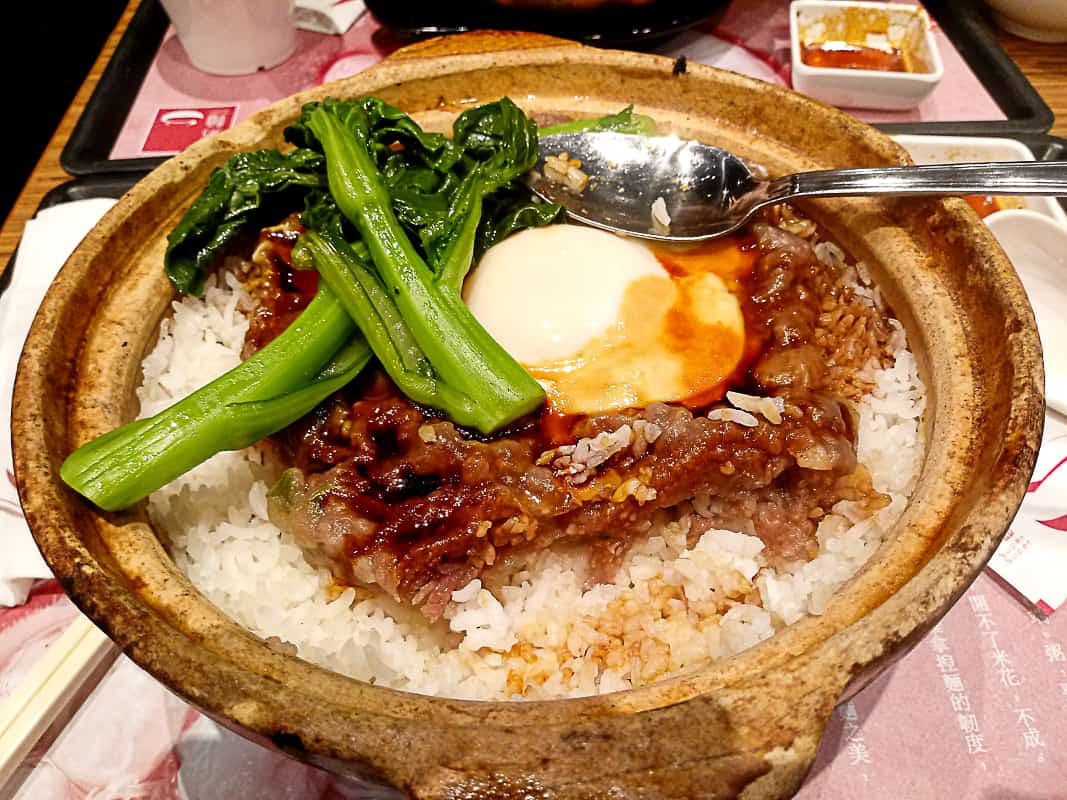
Claypot rice is seasoned jasmine rice cooked over glowing charcoal burners in earthenware pots, creating a sizzling, crunchy layer of golden-brown rice (faan ziu) along the bottom.
We’ve eaten claypot rice across Southeast Asia, from Singapore to Penang, but Hong Kong’s late-night winter versions cooked over open charcoal are unbeatable. Hitting up the evening market stalls around Temple Street and Yau Ma Tei is our go-to night food adventure. Four Seasons Claypot Rice serves bubbling earthenware pots loaded with cured Chinese sausage (lap cheong) and seasoned beef.
- Where to get it (Night Market Classic): Four Seasons Claypot Rice, 46-58 Arthur Street, Yau Ma Tei / Mong Kok Night Market. Open daily 4:30 PM – 12:30 AM.
- Price: 70–95 HKD (~8.95–12.15 USD) per pot as of August 2026.
- How to order: As soon as the bubbling claypot arrives, lift the lid, drizzle the seasoned sweet soy sauce over the rice, replace the lid for 60 seconds to let the sauce steam into the grains, then scrape up the crispy bottom crust.

Pineapple Bun with Butter (Bo Lo Yau / 菠蘿油)
A pineapple bun is a sweet, warm yeast roll baked with a crumbly, sugary cookie crust on top that cracks in the oven to resemble pineapple skin, sliced open to hold a thick slab of cold salted butter.
Despite the name, there is no actual pineapple in the recipe. The secret to a perfect Bo Lo Yau is the contrast in temperature: the bun must be piping hot from the bakery oven so that the cold slab of butter melts slowly as you bite into the crunchy cookie crust. Kam Wah Cafe in Mong Kok bakes them fresh all day long, making it our favorite mid-afternoon snack stop paired with a hot milk tea.
- Where to get it (Mong Kok Institution): Kam Wah Cafe & Bakery, G/F, 47 Bute Street, Mong Kok. Open daily 6:30 AM – 9:00 PM.
- Price: 14–18 HKD (~1.80–2.30 USD) each as of August 2026.
- How to order: Ask for a “Bo Lo Yau” (with butter) rather than a plain “Bo Lo Bao” (without butter); eat it immediately at the table while the bun is warm.
- Explore more street snacks in our dedicated guide on What to Eat in Mong Kok.
Hong Kong Egg Custard Tarts (Daan Tat / 蛋撻)
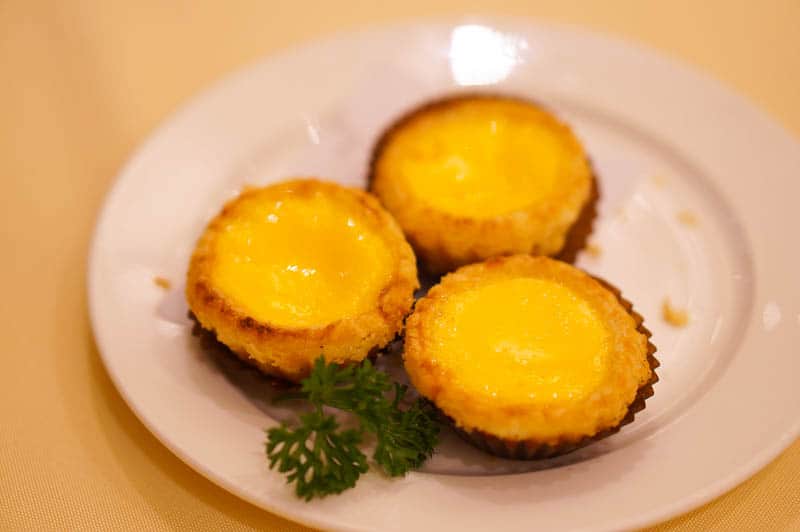
A daan tat is a handheld pastry featuring a glossy, warm yellow egg custard baked inside either a flaky puff-pastry shell or a crumbly, buttery shortcrust cookie base.
Amber is an absolute egg tart devotee—having tracked down Pastéis de Nata across Portugal, Hong Kong’s British-Cantonese hybrid version is an essential daily stop. While you will find both puff pastry and shortcrust shells across the city, Tai Cheong Bakery on Lyndhurst Terrace in Central is famous for perfecting the cookie-crust style with a velvety, rich egg filling.
- Where to get it (Central Cookie Crust): Tai Cheong Bakery, 35 Lyndhurst Terrace, Central. Open daily 9:30 AM – 7:30 PM.
- Where to get it (Flaky Puff Crust): Kam Wah Cafe & Bakery, 47 Bute Street, Mong Kok. Open daily 6:30 AM – 9:00 PM.
- Price: 12–15 HKD (~1.55–1.90 USD) each as of August 2026.
- How to order: Buy them hot directly from the bakery display counter and eat them immediately on the sidewalk while the pastry is warm and crumbly.
Learn about other tasty snacks to eat in Hong Kong.
Hong Kong Silk Stocking Milk Tea (Dong Lai Cha / 凍奶茶)
Hong Kong milk tea is a strong, full-bodied beverage brewed from a proprietary blend of black Ceylon tea leaves filtered through a fine cloth sack and blended with sweet evaporated milk.
The nickname “silk stocking milk tea” comes from the long cloth filter sack, which stains tea-brown over repeated brews and resembles a silk stocking. The result is a bold, velvety tea with noticeable tannins balanced by creamy evaporated milk. Lan Fong Yuen in Central claims to have invented the technique in the 1950s, operating out of a historic street stall on Gage Street.
- Where to get it (Historic Stall): Lan Fong Yuen, 2 Gage Street, Central. Open Monday to Saturday 7:30 AM – 6:00 PM (Closed Sunday).
- Price: 22–28 HKD (~2.80–3.60 USD) per glass as of August 2026.
- How to order: Ask for “Dong Lai Cha” for iced milk tea, or request “Siu Tim” if you prefer reduced sweetness.
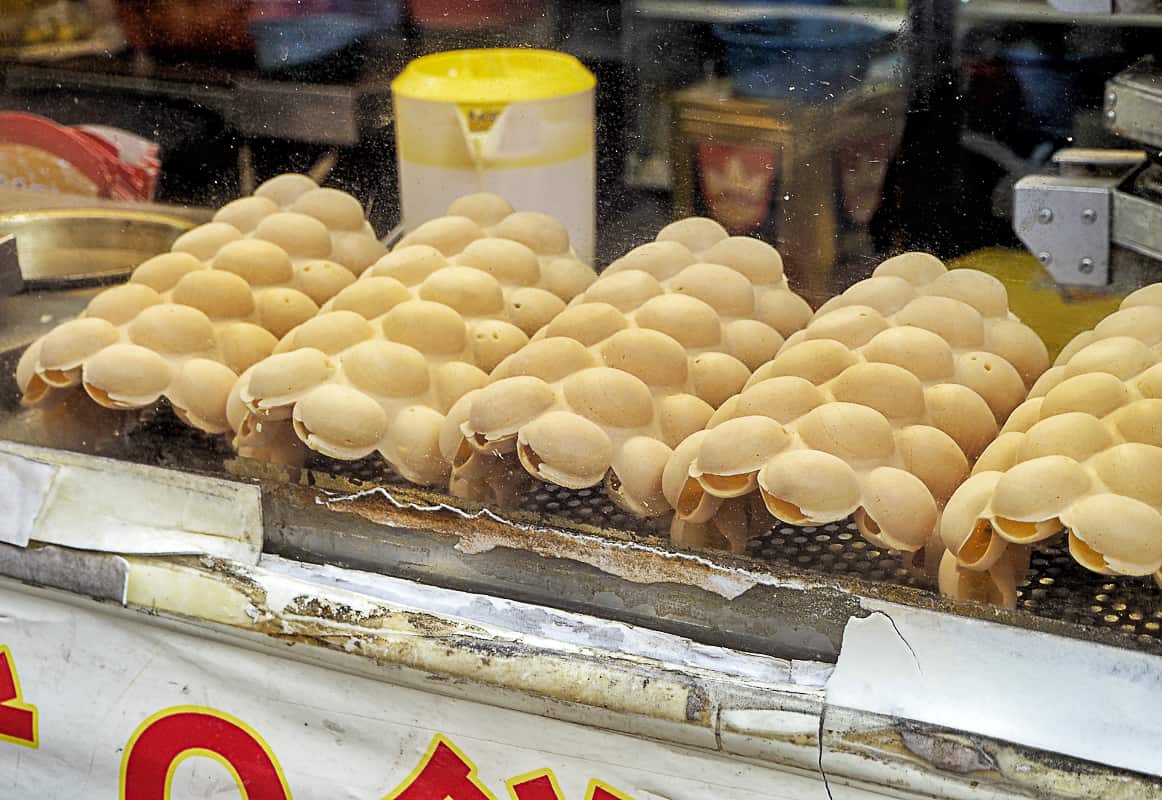
Hong Kong Bubble Egg Waffles (Gai Daan Tsai / 雞蛋仔)
Gai daan tsai are golden street waffles prepared by pouring sweet egg batter into a spherical honeycomb iron mold, producing a sheet of crisp, tear-apart puffed bubbles with soft, cakey centers.
According to local lore, egg waffles were invented by post-war shopkeepers who didn’t want to waste broken eggs, mixing them with flour and sugar to create a cheap street snack. Today, vendors like Mammy Pancake have elevated the classic waffle with modern flavors like chocolate chip, matcha, and salted egg yolk, while keeping the exterior shatteringly crisp.
- Where to get it (Michelin Street Snack): Mammy Pancake, 219 Tung Choi Street, Mong Kok (also in Causeway Bay and Tsim Sha Tsui). Open daily 12:00 PM – 10:30 PM.
- Price: 24–34 HKD (~3.10–4.35 USD) as of August 2026.
- How to order: Order the classic original egg flavor first; let it rest in the paper bag for 30 seconds to let the steam escape, ensuring the outer bubble shells stay crisp.
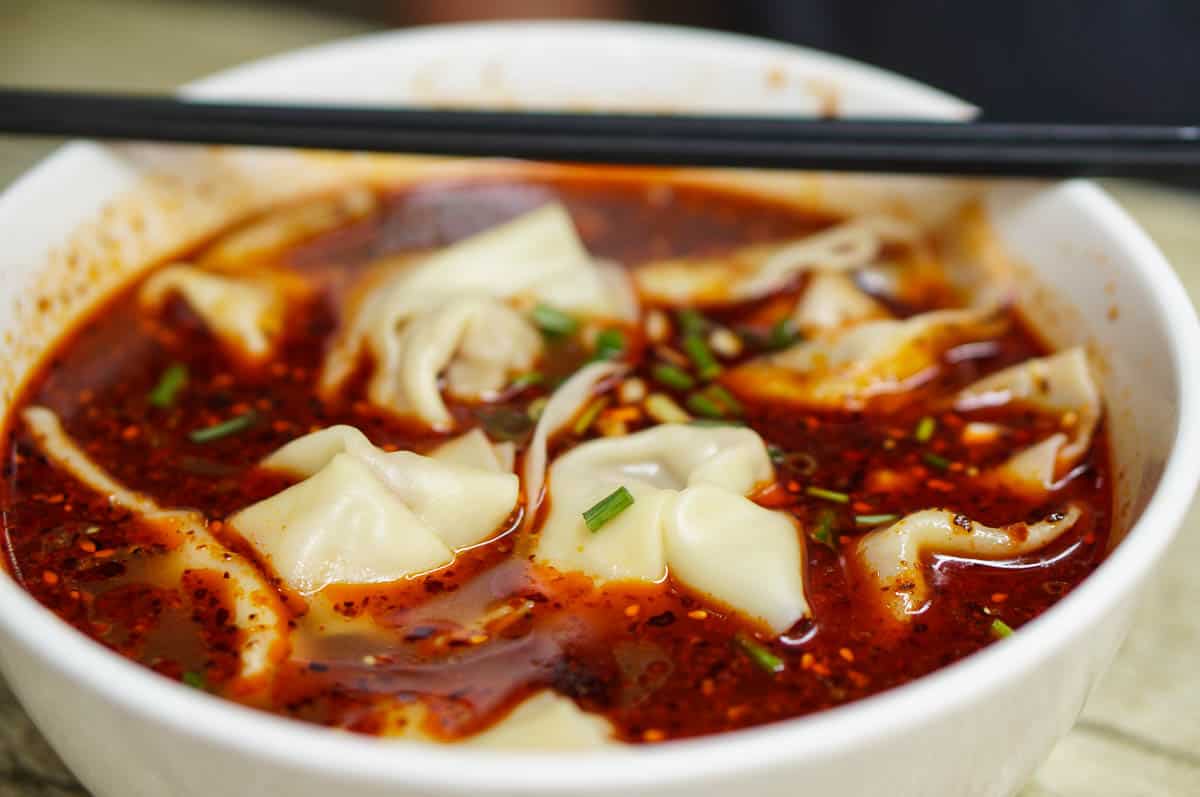
Sichuan Spicy Noodles & Regional Dining (Suan La Fen / 酸辣粉)
While Hong Kong is defined primarily by Cantonese cuisine, its culinary landscape includes incredible regional Chinese specialties—particularly spicy Sichuan cooking.
Unlike mild Cantonese dishes that prioritize fresh sweetness and subtle broth, Sichuan cooking is pure fire, built around toasted chilies and the tingling, tongue-numbing Sichuan peppercorn. Having traveled through Chengdu, we’re always looking for authentic Sichuan spots when we want a break from delicate dim sum. SiJie Sichuan Restaurant in Wan Chai and neighborhood noodle spots across Sham Shui Po serve fiery bowls of sour and spicy sweet potato noodles (Suan La Fen) loaded with chili oil, aged black vinegar, and crushed peanuts.
- Where to get it (Wan Chai Specialist): SiJie Sichuan Restaurant, 10/F, Bartlock Centre, 3 Yiu Wa Street, Causeway Bay / Wan Chai. Open daily for lunch and dinner.
- Price: 45–65 HKD (~5.75–8.35 USD) for noodle bowls; 180–300 HKD (~23–38 USD) for family-style Sichuan dishes as of August 2026.
- How to order: Specify your spice level—ask for “Siu Lat” (mild spice) if you are sensitive to chili heat, or “Jung Lat” (medium spice) for full Sichuan peppercorn numbness.
What is the Difference Between Cantonese and Sichuan Cuisine in Hong Kong?
Cantonese cuisine forms the culinary foundation of Hong Kong, while Sichuan cuisine represents one of the city’s most popular regional imports. Understanding the contrast between them comes down to core flavor profiles, heat sources, and cooking techniques:
- Cantonese Cuisine (Yue Cai / 粵菜): Originating in neighboring Guangdong Province, Cantonese cooking prioritizes the natural freshness of ingredients, subtle aromatic stocks, and minimal masking. Flavors lean mild, savory, and lightly sweet, utilizing ginger, scallions, soy sauce, rice wine, and sesame oil. Signature techniques include steaming delicate dumplings at morning Yum Cha, slow-simmering herbal broths, and high-heat wok tossing (Wok Hei).
- Sichuan Cuisine (Chuan Cai / 川菜): Originating in southwestern China’s Sichuan Province, Sichuan cooking centers on bold, layered heat and intense aromatics. Its defining characteristic is Ma La (麻辣)—a sensation combining fiery chili heat with the tingling, tongue-numbing effect of the red Sichuan peppercorn. Having traveled through Chengdu, we love seeking out Hong Kong’s specialized Sichuan kitchens when craving fiery bowls of sour-spicy noodles (Suan La Fen), Mapo Tofu, or boiled fish in chili oil (Shui Zhu Yu).
While everyday dining in Hong Kong is predominantly Cantonese, finding dedicated Sichuan dining rooms in districts like Wan Chai and Causeway Bay offers a fiery, tongue-numbing counterpoint to delicate dim sum and roast meats.
Looking for some place to stay where there are great Hong Kong eats? Check out our recommendation for the best Hong Kong neighborhoods for food lovers!
Where to Stay in Hong Kong
Our go-to places to stay in Hong Kong across different travel styles and budgets:
- Renaissance Hong Kong Harbour View Hotel (Wan Chai – Waterfront & Business): While it caters exceptionally well to business travelers with direct covered access to the convention center, it makes exploring the entire city effortless. The Wan Chai Star Ferry pier sits right out front for fast scenic harbour crossings to Kowloon, the top-floor Executive Lounge offers panoramic skyline views, and the on-site Dynasty Restaurant serves some of the best Cantonese roast meats and dim sum in the city.
- Holiday Inn Golden Mile (Tsim Sha Tsui – Value & Transit Hub): The ultimate convenient, budget-friendly base in Kowloon. The hotel sits directly on lower Nathan Road with direct MTR subway entrances right outside the lobby, making it our top choice for quick layovers, overnight stopovers, and maximizing food crawls across both sides of the harbour.
- The Pottinger Hong Kong (Central – Boutique Stay for Food Lovers): An elegant heritage-inspired boutique hotel situated right on Stanley Street along the historic stone-slab steps of Pottinger Street. It places food lovers literally steps away from Wellington and Stanley streets—putting iconic culinary institutions like Yung Kee (roast goose), Mak’s Noodle, Luk Yu Tea House, and Tai Cheong Bakery right outside your front door.
FAQs – Hong Kong Food Guide – What To Eat In Hong Kong
What is the national dish of Hong Kong?
While Hong Kong is an autonomous Special Administrative Region rather than an independent nation, Charcoal Roast Goose (Siu Ngo) and Dim Sum (Yum Cha) are widely considered Hong Kong’s signature culinary emblems. Roast goose is celebrated for its crisp lacquered skin and tender meat served with sour plum sauce, while dim sum represents the quintessential Cantonese social dining ritual.
Is Hong Kong food spicy?
No, traditional Hong Kong food is based on Cantonese cuisine, which prioritizes fresh natural flavors, aromatic stocks, and subtle seasoning rather than intense chili heat. However, condiments like chili oil (Lau Gan Ma style) and spicy Chiu Chow chili sauce are provided on every tabletop for diners who prefer extra heat.
Do Hong Kong street food stalls and noodle shops take credit cards?
No, the vast majority of traditional noodle shops, wet market stalls, and street kiosks operate strictly on physical cash or the contactless Octopus Card. Always carry small banknotes (20, 50, and 100 HKD) and coins when embarking on street food crawls.
How much does an average meal cost in Hong Kong?
Street food & cha chaan teng meals: 35–65 HKD (~4.50–8.35 USD) per person.
Heritage push-cart dim sum & roast goose plates: 120–280 HKD (~15.00–36.00 USD) per person.
High-end Cantonese & Michelin dining: 450–1,200+ HKD (~58.00–155.00+ USD) per person.
What is the best way to plan a 3-day food itinerary in Hong Kong?
Dedicate Day 1 to teahouses and roast goose in Central and Sheung Wan, Day 2 to bamboo noodles and night markets in Sham Shui Po and Mong Kok, and Day 3 to Wan Chai wet markets, Ding Ding tram rides, and Victoria Peak. Follow our step-by-step route in 3 Days in Hong Kong: A Food Lover’s Itinerary.