
Amber and I have been traveling to Portugal for over well over 15 years. In that time, we’ve eaten our fair share of great Portuguese food, especially the wide array of petiscos and street snacks found in corner tascas and pastelarias.
Whether you’re craving something salty like a warm bifana dripping with pan juices, crisp pastéis de bacalhau, or sweet street doughnuts like bolas de berlim, snacking is an essential part of daily life across the country. Below is our curated guide to our favorite Portuguese snacks, where to find them, and what to expect to pay.
*This post contains compensated links. Find more info in my DISCLAIMER. As an Amazon Associate, I earn from qualifying purchases.
Quick Facts: Snacking in Portugal
| Detail | What to Know |
| Local Term for Snacks | Petiscos (savory small plates) or Salgados (fried/baked pastries) |
| Where to Buy | Pastelarias (bakeries), Tascas (traditional taverns), Cervejarias (beer halls) |
| Typical Cost | €1.00 – €2.50 for pastries/petiscos; €3.00 – €5.00 for sandwiches |
| Best Drink Pairings | Vinho Verde, draft beer (imperial or fino), or an espresso (bica) |
| Must-Try Street Food | Bifana (pork cutlet sandwich) & Pastéis de Bacalhau (cod cakes) |
Table of Contents

Snacks in Portugal: The Petiscos Culture
In our two plus decades of traveling the world for food, Portuguese food has been one of our best discoveries. Overshadowed by Spanish food, Portuguese food ranges from simple sandwiches to Michelin Star haute cuisine. Much like their Spanish neighbors, the Portuguese love to eat. And they love to snack.
Having lived in Spain for 3 years, Amber and I were used to snacking during the day. In the mornings as we did our shopping, we’d pop into a cafe for a small sandwich or pastry.
This would be accompanied by a coffee or a small glass of beer or wine, depending on how the day was going. The same is true when we’d visit Portugal.
As we explored Portugal, it became apparent that the Portuguese love to snack. And while the Spanish have tapas and pintxos, the Portuguese have petiscos. Petiscos are simple snack food meant to be eaten in between meals.
Much like tapas, petiscos are found at cafes and bars. They range from a simple plate of olives to cod (bacalhau) or ham croquetas. For us, petiscos are enjoyed best with a small glass of Portuguese wine like Vinho Verde or beer.
You will find petiscos and salgados (savory fried pastries) lining the glass counters of pastelarias, cafes, and traditional tascas across Lisbon, Porto, and beyond.
Traveling to Portugal? Check out our comprehensive Portuguese Food Guide, with a list of the 28 traditional Portuguese dishes you must try!

Authentic Portuguese Snacks
Building off our many, many trips to Portugal, we’ve put together our list of must try snacks in Portugal. There are certainly plenty more Portuguese snacks to add to this list.
But these are the snacks in Portugal we love to eat. Most of these snacks cost only a couple of Euros. They are easily found thought-out Portugal.

Pastel de Nata (Portuguese Custard Tart)
A pastel de nata is an iconic Portuguese puff-pastry tart filled with rich, caramelized egg custard and dusted with cinnamon.
No list of Portuguese snacks is complete without the famous pastel de nata. Created before the 18th century by Catholic monks at the Jerónimos Monastery in Belém, these palm-sized tarts feature ultra-flaky, laminated pastry cups baked at blisteringly high heat until the custard blisters and caramelizes on top.
They are eaten warm throughout the day with an espresso (bica). While the historic Pastéis de Belém bakery remains the gold standard, you can find incredible warm tarts across every city in Portugal.
- Where to try it: In Lisbon, visit Pastéis de Belém or Manteigaria. In Porto, head to Fábrica da Nata. Read our full guide on Where to Find the Best Custard Tarts in Lisbon.
- Typical Cost: €1.20 – €1.60 each.

Pastéis de Bacalhau (Portuguese Salt Cod Cakes)
Pastéis de bacalhau are golden, deep-fried fritters made with shredded salt cod, mashed potatoes, onion, parsley, and egg.
Also known to some as “codfish cakes,” these popular Portuguese appetizers can be found in many bars and restaurants all over Portugal.
Pastéis de Bacalhau is a combination of deep-fried potato mixed with cod (Bacalhau). Cook right, Pastéis de Bacalhau can be as light as air, with the most delicious crunch you’ll ever enjoy.
Served in bite-size pieces, Pastéis de Bacalhau is a great snack to eat while exploring Portugal.
If you are in Porto, we highly recommend you try the Pastéis de Bacalhau from A Cozinha do Manel. Recommended to us by a local, these are hands down the best Pastéis de Bacalhau we’ve ever eaten.

Rissóis (Half-Moon Fried Turnovers)
Rissóis are breaded, half-moon fried pastries stuffed with savory fillings like minced shrimp, creamy chicken, or seasoned beef.
Rissóis are stuffed packets of tastiness that we’ve only recently discovered. Similar to a turnover or Italian ravioli, rissóis are the perfect Portuguese snack.
Rissóis are stuffed with a variety of fillings including chicken, prawn, or duck.
If you are vegetarian, fear not, you’ll find vegetarian rissóis stuffed with spinach, mushroom, or cheese. The half-moon-shaped rissóis are breaded and deep-fried.
Rissóis are commonly found in bars and cafes across Portugal. We discovered rissóis in Porto at a restaurant called Oficina dos Rissóis.
Can you guess what they specialize in making? We ordered a half dozen of mixed rissóis. Each rissóis cost between 1.50 and 2.00 Euros. This makes them the perfect Portuguese snack.

Milho Frito (Madeiran Fried Cornmeal Polenta)
Milho frito is a traditional Madeiran snack consisting of seasoned cornmeal cooked with lard and cabbage, cooled into cubes, and deep-fried.
Milho Frito is a traditional Portuguese side dish. It’s commonly served alongside rich and heavy main dishes.
However, Milho Frito can also be found as a snacking dish. Milho Frito is a fried bread made by cooking cornmeal in chicken stock and salt.
After cooking in the boiling stock, the Milho Frito stands for two hours to firm up. It’s then sliced into cubes and deep-fried.
After cooking, herbs and seasonings are added for flavor. The result is crunchy and tasty Portuguese snack food.
Filhós (Traditional Spiced Fried Dough)
Filhós are deep-fried Portuguese pastry fritters dusted in cinnamon sugar, flavored with orange zest and aguardente liquor.
Deep fried dough covered in cinnamon and sugar? That sounds exactly like my kind of Portuguese snack. While many consider filhós to be more of a dessert, for us their a snack.
Similar in texture to doughnuts, filhós are our favorite late-afternoon snack in Portugal. Originally a Christmas tradition, you can now enjoy filhós all year round.

Bolas de Berlim (Portuguese Custard Doughnuts)
A Bola de Berlim is a sugar-coated fried yeast doughnut sliced open and generously filled with sweet Portuguese egg custard (doce de ovos).
If you want to start your day of sightseeing in Portugal off right, find yourself a Bolas de Berlim. One of our all-time favorite things to eat in Portugal, there’s simply nothing like a Bolas de Berlim.
Stuffed with creamy, egg-based custard and sprinkled with sugar, Bolas de Berlim is a light and delicious Portuguese doughnut. You’ll find Bolas de Berlim in bakeries and cafes in Lisbon and across Portugal.
Have it for breakfast in Portugal or have it as a sweet Portuguese snack. Just make sure you have one…or two.

Bifana (Portuguese Garlic Pork Sandwich)
A bifana is Portugal’s national street food sandwich, consisting of thinly sliced pork simmered in white wine, garlic, and lard on a crusty roll.
What else can I say about the bifana that we haven’t already said in our How To Find The Best Bifana In Lisbon post? We first learned about the bifana from the late, great Anthony Bourdain and the Lisbon episode of No Reservations.
From this, Amber and I couldn’t wait to get our hands on a bifana and we’ve never looked back. The bifana is a Portuguese pork sandwich. What makes this Portuguese snack unique, is how the bifana is cooked.
The pork is cooked slowly over a low flame with paprika, chili, garlic, bay leaves, and Portuguese white wine.
Served on a fresh roll, it’s typically to add spicy yellow mustard and (or) chili oil. If you eat only one thing in Portugal it has to be a bifana.

Prego no Pão (Portuguese Steak Sandwich)
A Prego is a classic sandwich featuring thinly pounded beef steak seared in garlic butter, served warm inside a soft crusty bread roll.
The Prego, or Prego no Pão, is a delicious steak sandwich that is near the top of our must-eat Portuguese snacks list. It is most popular in Sintra, which is where it is believed to have originated from.
The Prego is usually served on a soft white roll and is stuffed with fried slices of beefsteak and garlic. It’s a straightforward dish and is recommended to be eaten with a scraping of mustard.

Our all-time favorite place to eat a Prego is at Cervejaria Ramiro in Lisbon. One of the best seafood restaurants in Portugal, it’s tradition to finish your meal with a Prego for dessert.
That’s right, a meaty and delicious beef sandwich for dessert. We were skeptical of this during our first trip to Cervejaria Ramiro but it’s 100% true.

Bolo de Arroz (Portuguese Rice Flour Muffin)
Bolo de arroz is a traditional Portuguese bakery muffin made with rice flour and wheat flour, featuring a citrus hint and a crackly sugar crust.
This traditional Portuguese dessert snack is a staple all over the country. It is a light and airy rice cake that is recognized for its subtle sweetness and zesty lemon flavor.
Bolo de Arroz is similar to a muffin or cupcake. It’s made using wheat and rice flour, milk, butter, and eggs, before sprinkling with sugar and baking. Even better with a great cup of coffee, a Bolo de Arroz is the perfect late morning snack in Portugal.

Tosta Mista (Portuguese Toasted Ham & Cheese)
A tosta mista is a large pressed sandwich layered with melted cheese and ham on buttered, toasted bread.
Tosta Mista is so simple yet so good, they are easily one of our favorite snacks in Portugal. Easily one of Portugal’s most popular sandwiches, tosta mista is commonly called a “toastie” outside of Portugal.
You’ll find tosta mista nearly everywhere in Portugal. Cafes, coffee shops, you name it. Best of all, they are also cheap. A tosta mista only costs €2-3.
Across Portugal, you’ll find different varieties of tosta mista. The main difference with these is the cheese used in the tosta mista. Some versions use mild or creamy cheeses, while others use bitter, strong cheeses.
My personal favorite is the tosta mista made with a softer mild cheese. It melts better and gets nice and gooey.

Tremoços (Brined Lupin Beans)
Tremoços are salted, brined lupin beans eaten as a finger food alongside cold draft beer.
To be fair, these are not my favorite Portuguese snacks. That said, for many, lupin beans are the perfect beer snack and a signature snack in Portugal. They can even pair well with Portuguese cocktails.
Lupin beans are simple and tasty finger food. Across bars and cafes around Portugal, you’ll see people enjoying tremolos with a cold glass of Portuguese beer.
Tremolos are very simple. In terms of preparing tremolos, the cooking method takes some time. They are made by soaking the beans overnight in water. Next, the lupin beans are boiled for around 2-3 hours.
After boiling, they are drained, rinsed, and soaked in hot water repeatedly for about 4-6 hours. This is done over 2 or 3 days.
This process removes the bitter taste from the beans. Once the washing process is complete, they are stored in salt water in jars for another couple of days before serving.
If you are in Porto, you can find these authentic Portuguese appetizers at Baobab – Craft Beer Pub
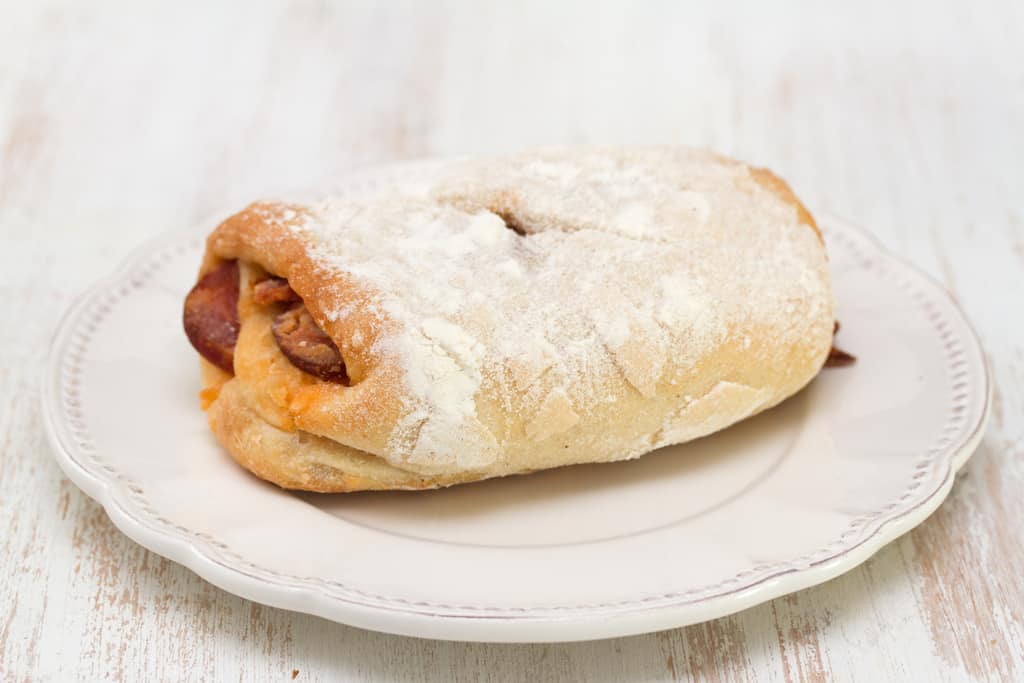
Pão com Chouriço (Warm Bread Baked with Chouriço)
Pão com chouriço is a yeasted bread roll stuffed with sliced Portuguese smoked chouriço and baked in a wood-fired clay oven.
This traditional Portuguese snack consists of yeasted dough balls filled with Chouriço (a famous Portuguese sausage similar to Spanish chorizo.)
Pão com Chouriço takes the form of a sausage roll. The dough is prepared before the sausage is enclosed and rolled inside.
They are then baked until golden and crispy. Pão com Chouriço is simple and delicious, especially if you like spicy sausage. They are perfect if you want something to tide you over between meals.
You’ll easily find Pão com Chouriço at many cafes and bakeries across Portugal.

Empadinhas de Galinha (Savory Chicken Pot Pies)
Empadinhas de galinha are small, shortcrust pastry tartlets filled with shredded, seasoned chicken stew.
The simple way to describe Empadinhas de Galinha is “chicken pie.” These are a staple in all bakeries around Portugal.
Although they are mainly found with a chicken filling, Empadinhas de Galinha can also be made using tuna or vegetables.
Empadinhas de Galinha is made the same way as a traditional meat pie. You’ll also find Empadinhas de Galinha in various shapes and sizes.
While mainly considered a Portuguese snack, Empadinhas de Galinha can be served as a main meal.
Pastel de Feijão (Traditional Almond & White Bean Tart)
Pastel de feijão is a historic 19th-century Portuguese pastry filled with a sweet almond, white bean, and egg yolk puree.
Pastel de Feijão is a Portuguese bean tart and traditional snack that originated in Torres Vedras. Dating back to the 19th century Pastel de Feijão is a staple in Portuguese snacking cuisine.
Pastel de Feijão is a small pastry filled with cream made using ground almonds and white beans. It’s often topped with powdered sugar.
Rumor has it that the original recipe for Pastel de Feijão remains a secret. However, bakers across Portugal do their best to recreate this tasty sweet treat.
Planning a Culinary Trip to Portugal?
If you are eager to travel to Portugal for food, this can help! From fresh seafood petiscos and bifanas in Lisbon to port wine cellars in Porto, staying centrally allows you to walk to historic tascas, pastelarias, and wine bars:
- Lisbon (Baixa, Chiado & Bairro Alto): Stay in the historic center within walking distance of Time Out Market, traditional tascas, and wine bars. In Lisbon, we recommend the boutique Bairro Alto Hotel or the centrally located Corpo Santo Lisbon Historical Hotel. (Browse all Lisbon Accommodations on Booking.com)
- Porto (Ribeira & Baixa): The heart of francesinhas, northern petiscos, and riverfront dining across from the Vila Nova de Gaia port lodges. In Porto, we recommend the riverside Pestana Vintage Porto Hotel or the elegant The Yeatman in Gaia. (Browse all Porto Accommodations on Booking.com)
- Algarve & Southern Coast: Ideal for coastal cataplana seafood stews, fresh grilled sardines, and regional oranges. (Browse Algarve Hotels on Booking.com)
- Complete Guides: Explore our dedicated culinary itineraries with our guides on What to Eat in Lisbon and What to Eat in Porto.
Where To Eat Portuguese Snacks
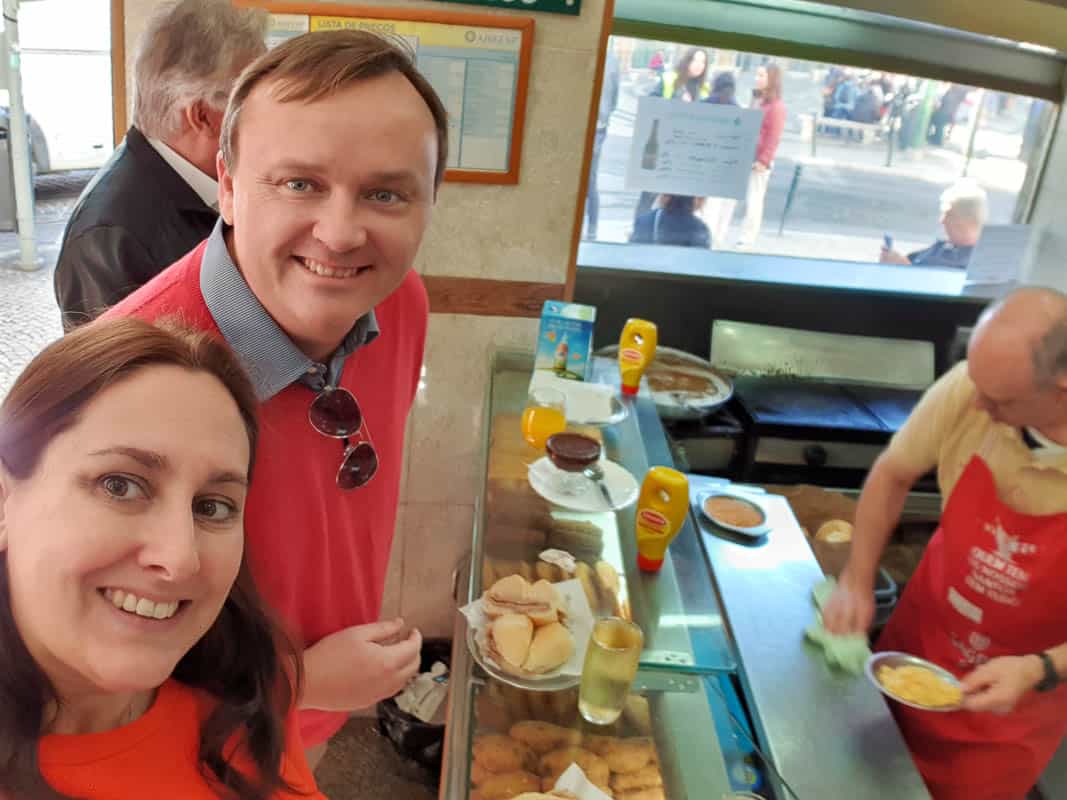
Now that we know what snacks to eat in Portugal, the next question is where do we find them? This is an easy question to answer; everywhere. Regardless if it is Lisbon or Porto, cities and towns in Portugal are packed with places to eat food.
Cafes, bakeries, and bars are the most common places to eat snacks in Portugal. You’ll easily find a cafe, bakery, or bar on every street corner in Portugal. Inside, you’ll find snacks on display ready for you to order.
If you’re not sure what’s on display don’t be afraid to ask. And don’t be afraid to point. The Portuguese are very friendly and very proud of their amazing snacks. These are some of the best places for Portuguese snacks:
- Pastelarias & Padarias: Ideal for morning pastries (bolos), rissóis, empadas, and coffee.
- Tascas: Traditional mom-and-pop taverns specializing in savory petiscos, draft beer, and house wine.
- Cervejarias: Beer halls and seafood temples that excel at savory sandwiches like the prego.
FAQs – Authentic Portuguese Snacks To Eat In Portugal
What is the difference between petiscos and Spanish tapas?
If you are traveling in Portugal and want a snack, don’t ask for tapas or pintxos. These are Spanish snacks. Instead, ask for petisco. Petisco is the Portuguese word for snacks. Similar to Spanish tapas, petisco are little bites of food usually enjoyed with a small glass of beer or wine.
What are salgados in Portugal?
Salgados are traditional savory pastries, typically deep-fried or baked, found in nearly every Portuguese pastelaria and snack bar. Common varieties include rissóis (half-moon turnovers), pastéis de bacalhau (salt cod fritters), croquetes de carne (beef croquettes), and empadas (small chicken or meat pies).
How much do snacks and petiscos cost in Portugal?
Snacking in Portugal is very budget-friendly. Individual bakery pastries and salgados typically cost between €1.20 and €2.20, while sandwiches like a bifana or prego no pão range from €3.00 to €5.50. Full petisco sharing plates in a sit-down tasca generally run between €4.00 and €8.00.
What is the best drink to pair with Portuguese snacks?
For savory fried snacks and sandwiches, locals typically order a crisp draft beer (an imperial in Lisbon or a fino in Porto) or a lightly effervescent glass of chilled white Vinho Verde. If you are having sweet morning snacks like bolas de berlim or bolo de arroz, pair them with a bica (espresso) or um galão (espresso with steamed milk in a tall glass).
Do you tip for coffee and snacks in Portuguese cafes?
Tipping is not required or expected for casual counter service or snacks in Portugal. For sit-down service at cafes and tascas, it is customary to round up to the nearest euro or leave small change (around €0.50 to €1.00) if the service was friendly. Unlike in the US, servers in Portugal are paid a living wage and are not paid entirely via tips.
Wonderful article on Portuguese snacks! Thank you! I’m learning Portuguese and planning a trip to Lisbon in May. Can’t wait to taste what you wrote about!