
Portugal has quietly established itself as one of the world’s greatest dining destinations. With a coastline spanning hundreds of miles along the wild Atlantic and rugged interior plains dotted with olive groves, oak forests, and vineyard terraces, Portuguese cuisine is deeply anchored in exceptional ingredients, regional tradition, and zero pretension.
Having traveled across Portugal regularly for over 15 years—from extended weeks living in neighborhood apartments in Lisbon and Porto to road-tripping through the cork-oak plains of the Alentejo, the green valleys of Minho, and the Silver Coast—we have experienced the sheer breadth of this country’s gastronomy. Portuguese food is hearty, rustic, and soulful. It balances pristine seafood pulled fresh from Atlantic harbors with slow-roasted suckling pig, rich convent pastries, and acorn-fed Iberian pork.
Whether you are dining at a no-frills neighborhood tasca where the daily specials are scribbled on paper tablecloths or settling in for a feast at a regional country tavern, here is our ultimate, tested guide on what to eat in Portugal.
*This post contains compensated links. Find more info in my DISCLAIMER. As an Amazon Associate, I earn from qualifying purchases.
Quick Facts: Dining in Portugal
| Detail | What to Know |
| National Ingredient | Bacalhau (salted cod), famously said to have 365 recipes—one for every day of the year |
| The Table Bread & Bites | The Couvert (bread, butter, olives, cheese placed on the table upon arrival; you only pay for what you consume) |
| Typical Dining Hours | Lunch: 12:30 PM – 3:00 PM; Dinner: 7:30 PM – 10:30 PM |
| Everyday Value | Prato do dia (daily lunch special, often €8–€12 including soup, bread, main dish, drink, and espresso) |
| Tipping Etiquette | Strictly optional; rounding up loose change at casual tascas is normal, 5% for great sit-down dinner service |
| Regional Highlights | North: Pork, alheira, roasted goat, Francesinha; Center/Silver Coast: Leitão, grilled sardines; Alentejo: Porco preto, bread soups (açordas); Algarve: Cataplana seafood stews |
Table of Contents
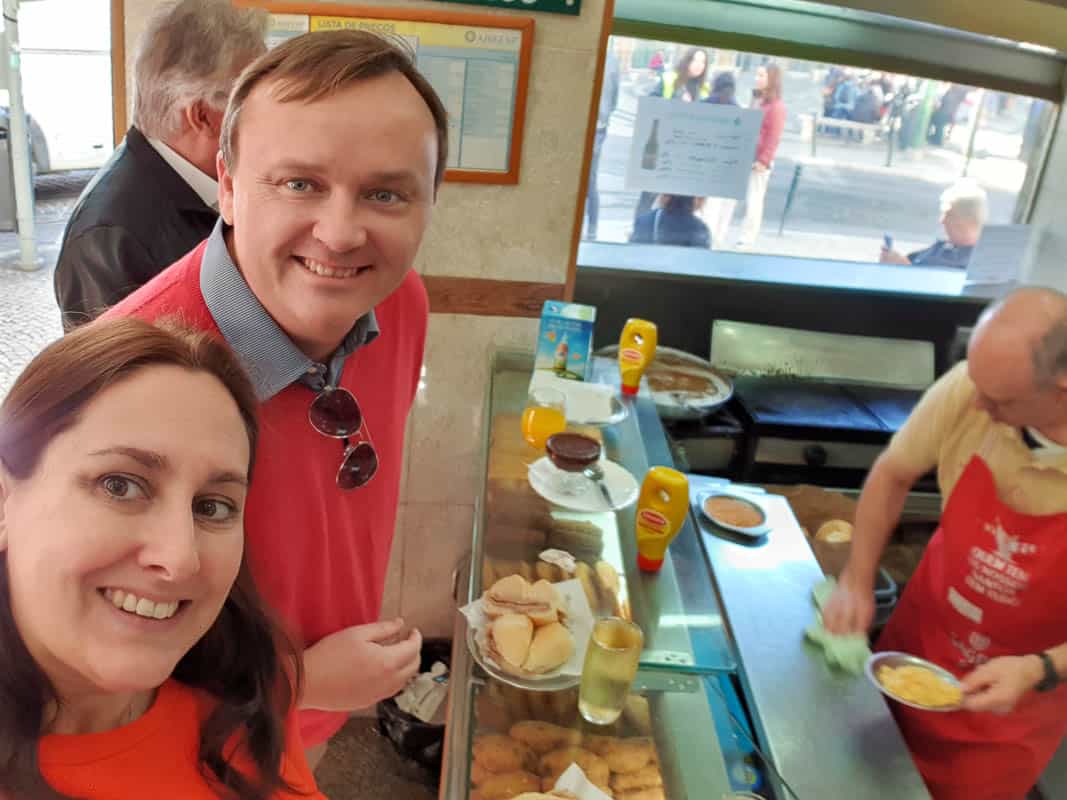
How We’ve Eaten Our Way Across Portugal for 15+ Years
When Eric and I first visited Portugal in 2009, we traveled like most first-timers—hunting down custard tarts in Lisbon, taking the tram to Belém, and following Anthony Bourdain’s footsteps to Cervejaria Ramiro. But over the last 15 years, our travels transformed from quick city breaks into deep culinary road trips and extended stays.
We’ve rented neighborhood apartments for weeks at a time in Lisbon and spent six full weeks living in Porto over a summer, shopping at Mercado do Bolhão and finding our favorite neighborhood tascas. Beyond the two big cities, we’ve driven through the cork-oak country of the Alentejo hunting down acorn-fed Iberian pork and clay-amphora talha wines, explored the lush green valleys of the Minho sipping crisp Alvarinho, followed the rugged Silver Coast for morning-catch sardines, and relaxed on the beaches of the Algarve.
What makes eating in Portugal so special to us isn’t white-tablecloth fine dining—it’s the authenticity of the neighborhood tasca, the ritual of the morning bica and warm buttered torrada at the counter, and the generous hospitality of multi-generational family kitchens.
Planning a trip to Portugal? Check out our comprhensive Lisbon Food Guide and Porto Food Guide.
The Salt Cod Tradition (Bacalhau)
No food guide to Portugal can begin anywhere other than with bacalhau. The Portuguese have been curing and salting codfish since the Age of Discovery in the 15th century, preserving North Atlantic catches from Newfoundland for the long voyage home.
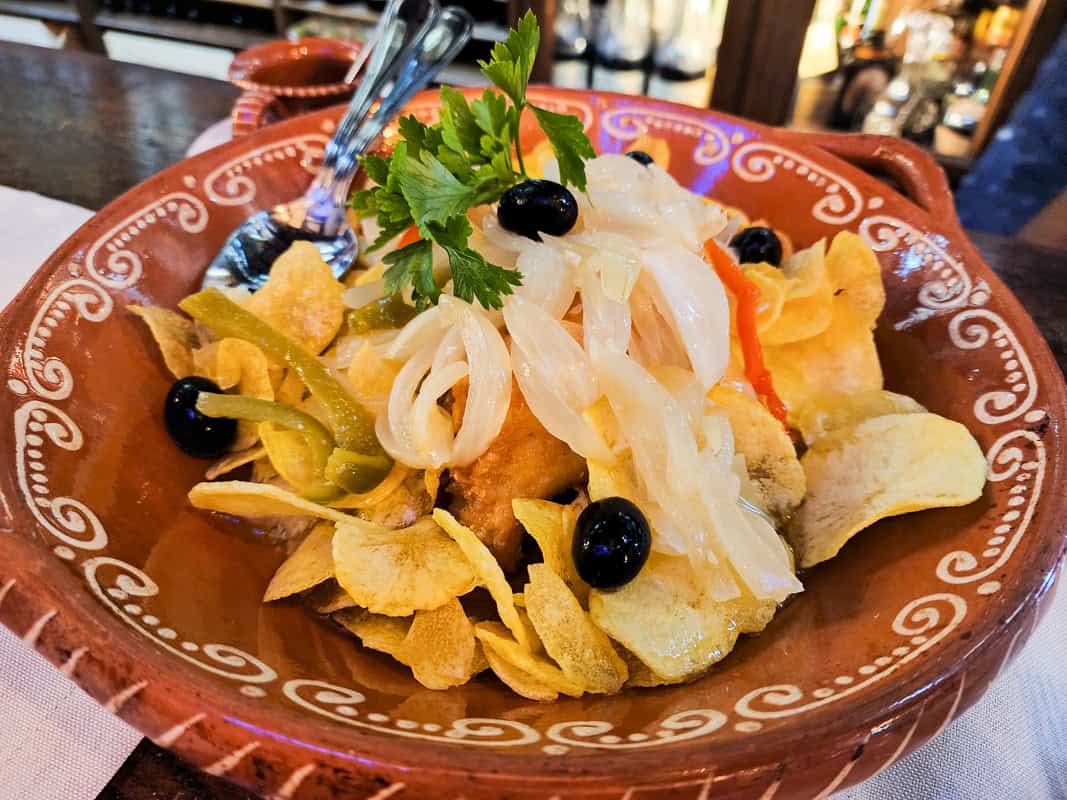
Bacalhau à Gomes de Sá (Salt Cod Casserole with Potatoes & Onions)
Bacalhau à Gomes de Sá is a baked casserole of shredded salt cod, thinly sliced potatoes, caramelized onions, hard-boiled eggs, and black olives drizzled with olive oil.
Originating in the northern city of Porto and created by a 19th-century cod merchant named José Luís Gomes de Sá, this is one of Portugal’s most beloved and approachable cod dishes.
The salt cod is gently poached in milk to soften its saltiness and flaked apart, then layered with tender potatoes and sweet stewed onions.
Baked until fragrant and piping hot in a rustic earthenware dish, it is garnished with hard-boiled eggs, briny black olives, and flat-leaf parsley. We ordered this classic version served in a traditional hand-painted terracotta bowl during our summer in Porto at A Cozinha do Manel, and it remains one of our absolute favorite cod dishes in the country.
Traveling to Portugal? Check out our recommended 10-day Portugal itinerary for food and wine.

Pataniscas de Bacalhau (Crisp Salt Cod Fritters)
Pataniscas de bacalhau are flat, golden fritters made from shredded salt cod folded into an egg-and-flour batter seasoned with chopped onion and parsley.
Unlike spherical pastéis de bacalhau (which are blended with mashed potatoes), traditional pataniscas are flat, irregular, and batter-based, fried until crisp on the edges with a tender interior.
They are an indispensable fixture across Lisbon and northern Portugal. You can eat them cold as a mid-afternoon bar snack (petisco) with a cold draft beer, or enjoy them hot as a main meal accompanied by a steaming bowl of arroz de feijão (tomato-bean rice) or arroz de tomate.
At contemporary tascas and wine bars across the country, you will also see modern interpretations of cod fritters served on artisan pottery, topped with saffron aioli, herb oil, or sauteed greens.

Filetes de Bacalhau / Polvo com Arroz (Crispy Fried Fillets with Herb Rice)
Filetes de bacalhau are long, boneless loins of salt cod lightly breaded and pan-fried until golden, typically paired with a side of seasoned rice.
If you prefer clean, intact cuts of fish rather than shredded bakes, order filetes.
The cod loins are desalted, lightly coated, and fried so the exterior is crisp while the white flakes remain juicy and tender. Northern tascas often serve them draped across absorbent paper lining alongside lemon wedges and a side bowl of fragrant herb rice or arroz malandro (a loose, saucy rice cooked with greens, beans, or octopus).
Bacalhau à Brás (Shredded Cod with Eggs & Straw Potatoes)
Bacalhau à Brás is a comforting Lisbon classic made of shredded salt cod tossed with matchstick straw potatoes, sweet onions, and gently scrambled eggs.
Created by a tavern owner named Senhor Brás in Lisbon’s Bairro Alto, this is Portugal’s most approachable everyday cod dish.
The cod is cooked with sweet sliced onions, folded into beaten eggs until creamy and velvety, and tossed with crispy straw potatoes (batata palha). Finished with black olives and flat-leaf parsley, it delivers the perfect balance of savory fish, rich egg curd, and crunch.
Sandwiches & Tasca Staples

Bifana (Portuguese Marinated Pork Sandwich)
A bifana is Portugal’s national pork sandwich, featuring thin ribbons of pork simmered in white wine, garlic, and lard stuffed inside a crusty bread roll.
The bifana is an everyday obsession across Portugal. In Lisbon and the south, pork cutlets are gently simmered in a simmering bath of white wine, garlic, and lard, then scooped into a warm crusty papo-seco roll and squirted with yellow mustard or piri-piri oil.
In Porto and the north, the pork is sliced into thin ribbons and cooked in a spicy, bubbling beer-and-tomato pan sauce. Read our full guide on Where to Find the Best Bifanas in Lisbon.

Prego no Pão (Garlic Beefsteak Sandwich)
A prego no pão is a thin beef steak pounded flat, seared with garlic butter, and served inside a warm bread roll.
While the bifana rules the daytime counter, the prego is the undisputed king of the cervejaria. Lightly seasoned and quickly seared so the beef stays tender, it is tucked into a roll coated with savory pan juices and yellow mustard. In seafood temples like Cervejaria Ramiro, locals famously order a prego as the savory “dessert” to round out a shellfish feast.

Francesinha (Porto’s Legendary Beer-Cheese Sandwich)
A francesinha is an indulgent sandwich packed with wet-cured ham, linguiça, fresh sausage, and steak, smothered in melted cheese and drenched in a spiced beer-and-tomato gravy.
Created in Porto in the 1950s by an emigrant inspired by the French croque monsieur, the francesinha (“little French girl”) is a towering culinary monster.
Constructed between thick white bread slices, it is coated in melted cheese, baked until bubbly, and submerged in a bowl of fiery, orange beer-and-tomato gravy, usually crowned with a fried egg and surrounded by fries for dipping. During our six weeks based in Porto, trying different neighborhood variations became a weekly ritual.
During our six weeks based in Porto in the summer of 2022, exploring the city’s francesinha culture became a weekly ritual. It is heavy, fiery, and deeply satisfying—especially when washed down with a cold draft beer (um fino in northern slang) to cut through the spiced beer-and-cheese gravy. That said, we often shared one! They can be filling.
Coastal Atlantic Seafood & Fish
With cold Atlantic currents sweeping its shores, Portugal produces some of the freshest, sweetest seafood in Europe.

Gambas al Ajillo (Sizzling Garlic Shrimp)
Gambas al ajillo are plump sweet prawns sizzled in a terracotta dish of olive oil, sliced garlic, and mild piri-piri chili.
A staple across cervejarias and marisqueiras from Lisbon to the Algarve, sizzling garlic shrimp are all about the sweet pan juices. The shrimp remain crisp and succulent, but the main event is using warm bread to mop up every drop of the garlicky, chili-flecked oil at the bottom of the dish.

Sardinhas Assadas (Charcoal-Grilled Atlantic Sardines)
Sardinhas assadas are whole fresh Atlantic sardines seasoned with coarse sea salt and grilled over glowing charcoal embers.
Grilled sardines are Portugal’s national summer obsession. While canned sardines are famous year-round, fresh sardines peak between June and October when they are plump, oily, and intensely flavorful.
The traditional way to eat them is straight off the grill: you place the whole sizzling sardine directly onto a thick slice of rustic crusty bread (broa or country loaf), allowing the savory fish oils to soak into the crumb. You eat the tender meat away with your fingers or a fork, discarding the bones, and finish by eating the oil-soaked toast.

Amêijoas à Bulhão Pato (Clams in Garlic & White Wine)
Amêijoas à Bulhão Pato are sweet Atlantic clams steamed open in olive oil, dry white wine, garlic, and fresh coriander.
Named after 19th-century poet and epicure Raimundo António de Bulhão Pato, this simple dish captures the coastal soul of Portugal. Fresh clams steam open gently in their own briny liquor, enriched with white wine, gentle garlic, and heaps of cilantro. It is the ultimate afternoon appetizer paired with a cold glass of Vinho Verde.

Petingas Fritas (Crispy Fried Baby Sardines)
Petingas fritas are small, young sardines dusted in flour and flash-fried whole until crunchy enough to eat head-to-tail.
When sardines are small, the Portuguese call them petingas. Rather than grilling them over charcoal, taverns lightly flour and fry them in clean oil until crisp.
Served with a lemon wedge and a cold glass of Vinho Verde, they make the ultimate savory Portuguese snack. Because they are tiny and fried so crisply, the bones soften completely—you simply pick them up by the tail and eat the entire fish in one or two bites.

Peixe Grelhado & Lulas Grelhadas (Grilled Fresh Catch & Whole Squid)
Peixe grelhado is whole Atlantic fresh fish butterflied and grilled over charcoal with coarse salt and olive oil.
Along the fishing ports of the Silver Coast (such as Nazaré, Peniche, and Ericeira) and the southern Algarve, seafood dining is beautifully simple. Restaurants often showcase the daily catch on a bed of crushed ice at the front door: sea bass (robalo), sea bream (dourada), and whole tender squid (lulas).
The cook butterflies the fish, cooks it over open hardwood coals, and dresses it with nothing more than top-grade Portuguese olive oil, boiled potatoes, and a crisp tomato salad. The combination of sweet, pristine fish meat and charred, smoky skin is unforgettable.
Polvo à Lagareiro (Roasted Octopus with Garlic & Olive Oil)
Polvo à Lagareiro is whole tender Atlantic octopus baked with cracked baby potatoes and submerged in a pool of hot garlic-infused olive oil.
Named after the lagareiro (an olive oil mill operator), this dish celebrates the extraordinary quality of Portuguese olive oil.
The octopus is first boiled until fork-tender, then transferred to a hot oven with whole skin-on new potatoes that have been “punched” open (batatas a murro). Everything is roasted under high heat until golden and swimming in bubbling, garlic-drenched virgin olive oil.

Feijoada de Marisco (Portuguese Seafood & White Bean Stew)
Feijoada de marisco is a rich, aromatic coastal stew of white butter beans, whole prawns, mussels, squid, and clams in a spiced tomato broth.
While mountain regions make their feijoadas with pork cuts and cured sausages, coastal fishing communities swap the meat for an abundance of Atlantic shellfish.
Large white beans are simmered slowly in a broth enriched with garlic, white wine, sweet tomatoes, and fresh coriander, absorbing the briny sweetness of whole prawns and shellfish. Served steaming hot with a platter of white rice to soak up the sauce, it is one of the most hearty coastal meals you can order.
Hearty Specialties of the Alentejo
Covering nearly a third of southern Portugal, the sun-baked Alentejo region is Portugal’s culinary breadbasket, celebrated for heritage Iberian pork, rustic bread dishes, and aromatic herbs like coriander and pennyroyal.

Carne de Porco à Alentejana (Pork with Clams)
Carne de Porco à Alentejana is a classic surf-and-turf dish combining marinated pork cubes and sweet clams simmered in white wine, garlic, and sweet red pepper paste.
This is easily one of Portugal’s most famous signature dishes. Tender chunks of pork are marinated in dry white wine, garlic, and massa de pimentão (fermented sweet red pepper paste), then browned and simmered together with fresh Atlantic clams until the shells steam open.
Traditionally prepared and presented in a hinged copper cataplana pan, the savory pork juices blend with the briny clam liquor to create an irresistible sauce. The entire pan is tossed with cubed fried potatoes and showered with fresh chopped coriander.

Porco Preto com Migas de Espargos (Iberian Pork with Asparagus Bread Mash)
Porco preto com migas pairs grilled slices of acorn-fed black Iberian pork with a traditional savory pan-fried bread mash seasoned with wild green asparagus.
The Alentejo is the native home of the porco preto (the black Iberian pig that feeds on acorns across the oak forests). The meat is extraordinarily marbled, tender, and nutty.
Here, grilled cuts of pork are plated alongside migas—a staple Alentejano dish created by thrifty rural cooks to repurpose stale bread. Day-old crusty country bread is soaked in broth, pan-fried in olive oil and garlic with wild asparagus shoots until it forms a soft, golden mash, and served alongside the pan-seared pork slices.

Secretos & Plumas de Porco Preto (Grilled Iberian Pork Cuts)
Secretos and plumas are specialty butcher cuts of acorn-fed black pig known for exceptional intramuscular fat that crisps beautifully over a hot grill.
If you see secretos (“hidden” butcher cuts behind the shoulder) or plumas (“feathers”) on a menu, order them immediately.
Because of the rich fat marbling in the acorn-fed pork, these cuts require nothing more than coarse sea salt and high heat. The exterior chars crisp while the interior stays tender and juicy. In true Portuguese tavern fashion, a sizzling plate of grilled pork is almost always accompanied by the classic “double carb” pairing: a generous scoop of white rice, hand-cut french fries, and a fresh salad.
Having lived in Spain’s Costa Brava and cooked with Iberian pork for years, we consider porco preto some of the finest meat on the planet. The acorn diet (bolota) gives the fat a nutty, melt-in-your-mouth richness that tastes completely different from standard commercial pork. When road-tripping through the Alentejo, stopping at a small roadside grill for charred plumas or secretos sprinkled with sea salt is an absolute must.

Gaspacho Alentejano (Chilled Summer Tomato & Herb Soup)
Gaspacho Alentejano is a rustic cold soup made with hand-chopped ripe tomatoes, bell peppers, garlic, olive oil, and day-old bread steeped in ice-cold water.
Unlike Spanish gazpacho, which is smooth and pureed, traditional gaspacho alentejano is a chunky, refreshing peasant soup designed to beat the blazing heat of Alentejo summers.
Vegetables are finely hand-diced rather than blended, tossed with garlic, regional olive oil, white wine vinegar, dried oregano, and chunks of crusty bread that soften in chilled water. Elevated iterations in modern restaurants add herb oils and toasted sliced almonds for added texture.
Northern & Central Comfort Braises
As you travel north into the Douro Valley, Bairrada, and the mountainous Trás-os-Montes region, Portuguese cuisine leans into wood-fired ovens, clay-pot braises, and celebrated sausages.

Leitão Assado à Bairrada (Roast Suckling Pig)
Leitão à Bairrada is spit-roasted suckling pig famous for its paper-thin, crackling crisp skin and tender, pepper-rubbed meat.
Hailing from the Bairrada region just south of Porto, leitão is one of the true pinnacles of Portuguese roasting. Young pigs are rubbed with a seasoned paste of pork lard, garlic, and abundant cracked black pepper, then slow-roasted on spits inside wood-fired brick ovens.
The finished pig is cleaved into bite-sized pieces with kitchen shears. The skin is extraordinarily brittle and glass-like, while the meat beneath remains meltingly tender. It is traditionally served with its spicy, peppery pan drippings, thick potato crisps, orange slices, and a glass of local sparkling Bairrada wine (espumante).

Alheira de Mirandela com Ovo Estrelado (Pan-Fried Alheira with Fried Egg)
An alheira is a historic smoked poultry-and-bread sausage served pan-fried in a horseshoe shape with a fried egg and fries.
The alheira has one of the most fascinating histories in European culinary tradition. Created in the 15th century by Portuguese Jews facing the Inquisition, the sausage was made using chicken, duck, game, garlic, and breadcrumbs rather than pork. By hanging these sausages in their smokehouses, Jewish families successfully avoided persecution by pretending they were making traditional pork sausages.
Today, Alheira de Mirandela is a protected national specialty. It is pan-fried or grilled until the skin is blistered and crisp while the savory bread-and-meat filling turns soft and creamy inside. It is traditionally crowned with a sunny-side-up fried egg whose runny yolk mixes with the sausage.

Arroz de Pato (Portuguese Baked Duck Rice)
Arroz de Pato is an oven-baked casserole of aromatic long-grain rice cooked in rich duck broth, layered with tender shredded duck and topped with cured chouriço.
Arroz de pato is a cornerstone of Portuguese Sunday family lunches. Whole ducks are poached in water with onions, garlic, and chouriço sausage until the meat falls off the bone.
The fragrant duck broth is then used to cook the rice, infusing every grain with deep savory flavor. The shredded duck is folded into the rice, topped with sliced chouriço and occasionally melted cheese, and baked in the oven until a crisp crust forms on top. It is traditionally finished with fresh orange slices to balance the richness.
In northern taverns, arroz de pato is often baked in individual earthenware dishes under a hot broiler with strips of bacon and melted cheese until bubbly and caramelized.

Chanfana & Anho Assado (Wine-Braised Goat / Roasted Lamb)
Chanfana is an ancient central Portuguese stew of old goat or lamb slow-braised for hours in red wine and herbs inside an unglazed black clay pot.
Rooted in the Beira Litoral region around Coimbra, chanfana was traditionally cooked in wood-burning bread ovens using mature goat meat that became fork-tender during a long, gentle braise in local red wine, garlic, and bay leaves.
In the north and the Douro Valley, you will frequently see Anho Assado (roasted kid goat or lamb), where joints of meat are roasted with baby potatoes in seasoned red wine pans garnished with fresh rosemary and citrus.

Feijoada à Transmontana & Sopa da Pedra (Hearty Mountain Bean Stews)
Feijoada à Transmontana is a rich northern mountain stew of red kidney or white beans simmered with assorted pork cuts, cabbage, and smoked sausages.
From the rugged granite mountains of Trás-os-Montes, this hearty stew is built to warm workers after a day in the winter cold. Slow-simmered in an enamel pot with regional sausages (chouriço, morcela, farinheira), carrots, and seasonal greens, it is thick, deeply savory, and often crowned with fresh sprigs of mint to brighten the rich broth.

Pica-Pau de Porco (Portuguese Tavern Braised Meat Bites)
Pica-pau consists of tender bite-sized cubes of pork or beef tossed in a savory white wine, garlic, and mustard pan sauce, served with pickles.
Translating literally to “woodpecker,” pica-pau is one of the most popular shared bar plates in Portugal, traditionally eaten by skewering the meat chunks with small wooden toothpicks.
Cooked quickly in a skillet with garlic butter, beer or white wine, and pickled vegetables, taverns frequently serve it as a casual main plate accompanied by french fries, rice, and crisp lettuce.
Cooked quickly in a skillet with garlic butter, beer or white wine, and pickled vegetables, taverns frequently serve it as a casual main plate. One of our favorite quirks of Portuguese tasca dining that we noticed early on is the unapologetic ‘double carb’ plating: almost every meat dish arrives accompanied by both a generous scoop of seasoned white rice and a mountain of hot, hand-cut french fries.

Costelinhas de Porco / Entrecosto Assado (Slow-Roasted Pork Ribs)
Costelinhas are meaty pork ribs seasoned with garlic, sweet paprika, and herbs, slow-roasted until tender and glazed in their own pan juices.
Found on wooden cutting boards at rustic grills and tascas across the country, slow-roasted ribs show off the everyday mastery of Portuguese wood-fired cooking. The exterior is sticky and caramelized, seasoned with garlic, regional olive oil, and herbs.

Empada de Pato / Torta de Caça (Traditional Game & Duck Pies)
An empada is an individual savory pastry made with a buttery crust encasing a rich, slow-simmered filling of shredded duck or wild game.
While Portugal is famous for its sweet pastries, its savory pastry heritage is equally impressive. In central and southern regions with strong hunting traditions (like the Ribatejo and Alentejo), bakeries and taverns bake individual empadas de pato (duck pies) with rich pan gravy, served alongside fresh citrus salads to cut the richness of the pastry.
Cheeses, Breads & Classic Sweets

Queijo Serra da Estrela & Queijo de Azeitão (Raw Sheep’s Milk Cheeses)
Queijo Serra da Estrela is an ancient raw sheep’s milk cheese coagulated using thistle flower, famous for an unctuous, spoonable center.
Hailing from mainland Portugal’s highest mountain range, Serra da Estrela is Portugal’s most revered cheese. Made strictly from raw sheep’s milk curdled with wild cardoon thistle, young wheels have an ivory, semi-liquid interior with a wonderfully complex, grassy, and sheepy flavor.
To serve it like a local, you slice off the thin top rind like a lid, using a small wooden knife or spoon to scoop the warm, buttery paste directly onto crusty bread. When we ordered this at A Cozinha do Manel in Porto (served on their signature stamped wooden board alongside glasses of Douro red), it was so rich and spoonable that it felt more like a savory fondue than a sliced cheese.
To serve it like a local, you slice off the thin top rind like a lid, using a small wooden knife or spoon to scoop the warm, buttery paste directly onto crusty bread. A smaller, equally luscious counterpart produced south of Lisbon is Queijo de Azeitão.

Torrada em Pão de Forma (Thick Portuguese Toast with Salted Butter)
A torrada consists of thick slabs of soft bakery bread toasted crisp on both sides and heavily soaked with melting Portuguese salted butter.
If you step into any neighborhood pastelaria at 8:00 AM, you will hear the rhythmic clatter of long stainless tongs pulling giant slabs of bread from electric toast presses.
Cut into four thick blocks and glistening with melted salted butter, a warm torrada dipped into a hot galão (milky coffee) or eaten alongside fresh orange juice is the quintessential Portuguese morning comfort food.
Pastel de Nata (Portuguese Custard Tart)
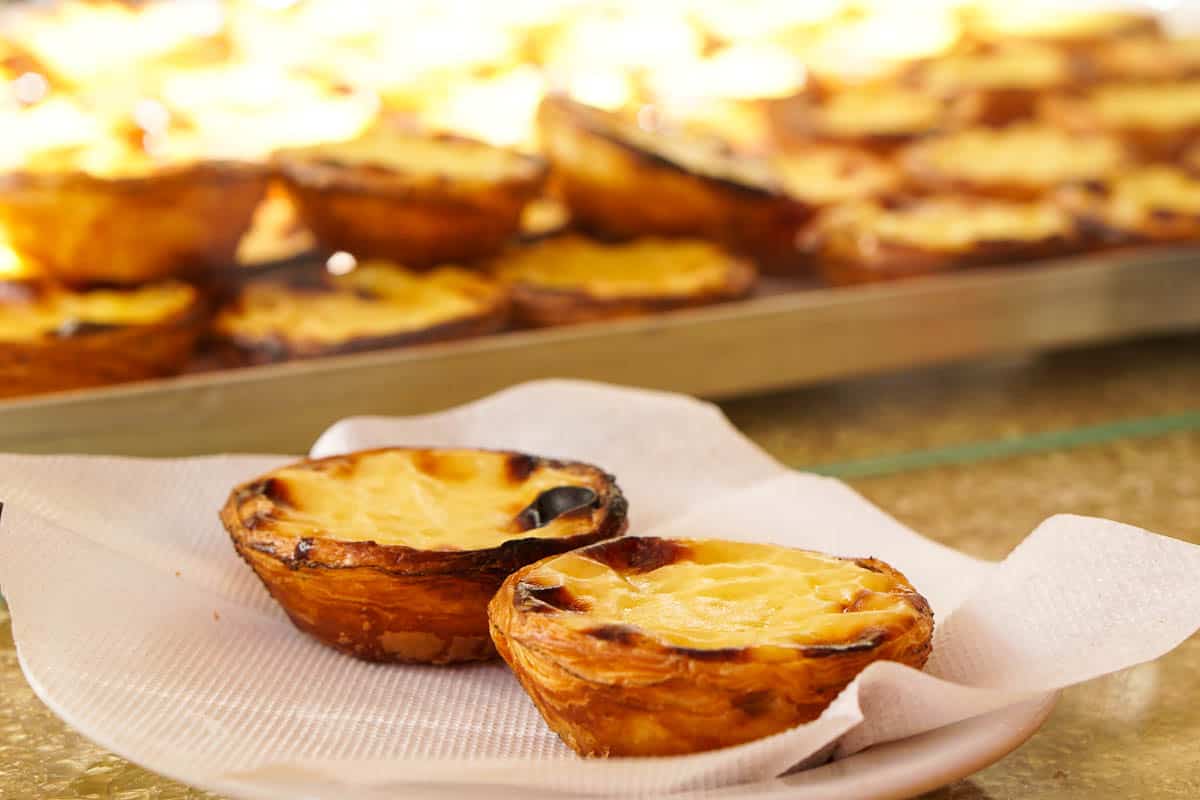
A pastel de nata is an iconic puff pastry tart filled with rich, caramelized egg custard and dusted with cinnamon.
No culinary exploration of Portugal is complete without warm pastéis de nata. Born centuries ago inside Catholic convents where egg whites were used to starch clergy robes, thrifty monks used the surplus yolks to create sweet custards.
The contrast between the whisper-thin, blistered pastry cup and the soft, molten center is magic—especially when enjoyed warm from the oven at the counter with an espresso (bica). Read our dedicated guide on Where to Find the Best Custard Tarts in Lisbon.
Regional Pastries & Bolo Tradicional
Save room for Portugal’s convent sweets (doces conventuais). In addition to the iconic Pastel de Nata (read our tested guide on Where to Find the Best Custard Tarts in Lisbon), explore dense, spiced regional cakes like Bolo de Mel, made with dark sugarcane molasses, warming cinnamon, and cloves.
Planning a Culinary Trip to Portugal?
If you are eager to travel to Portugal for food, this can help! From fresh seafood petiscos and bifanas in Lisbon to port wine cellars in Porto, staying centrally allows you to walk to historic tascas, pastelarias, and wine bars:
- Lisbon (Baixa, Chiado & Bairro Alto): Stay in the historic center within walking distance of Time Out Market, traditional tascas, and wine bars. In Lisbon, we recommend the boutique Bairro Alto Hotel or the centrally located Corpo Santo Lisbon Historical Hotel. (Browse all Lisbon Accommodations on Booking.com)
- Porto (Ribeira & Baixa): The heart of francesinhas, northern petiscos, and riverfront dining across from the Vila Nova de Gaia port lodges. In Porto, we recommend the riverside Pestana Vintage Porto Hotel or the elegant The Yeatman in Gaia. (Browse all Porto Accommodations on Booking.com)
- Algarve & Southern Coast: Ideal for coastal cataplana seafood stews, fresh grilled sardines, and regional oranges. (Browse Algarve Hotels on Booking.com)
- Complete Guides: Explore our dedicated culinary itineraries with our guides on What to Eat in Lisbon and What to Eat in Porto.
Frequently Asked Questions About Portuguese Food
What is the couvert in Portuguese restaurants, and do I have to pay for it?
The couvert is the assortment of bread, butter, olives, cheeses, or pâtés that servers place on your table when you first sit down. It is not a free gift. Under Portuguese law, restaurants can only charge you for items you actually touch or consume. If you do not want it, politely say “não, obrigado” and the server will remove it, or simply leave it untouched on the edge of the table.
What is the national dish of Portugal?
While there is no single official national dish, Bacalhau (salted codfish) is universally considered Portugal’s culinary soul. The Portuguese claim to have more than 365 different ways to cook bacalhau—from Bacalhau à Brás (scrambled with eggs and thin matchstick potatoes) to baked Bacalhau à Gomes de Sá.
What is a prato do dia?
The prato do dia (dish of the day) is a staple lunch tradition at Portuguese taverns and tascas. It offers an incredible value: usually costing between €8 and €12, it typically includes the house soup, a basket of fresh bread, a generous portion of meat or fresh fish, a beverage (such as a small carafe of house wine or an imperial draft beer), and an espresso.
Is Portuguese food spicy?
No. Traditional Portuguese cuisine is comforting, herb-driven, and relies on garlic, olive oil, bay leaves, onions, and fresh coriander rather than spicy heat. However, spicy piri-piri chili oil is commonly kept at tables or available upon request to add to grilled meats and seafood.
How do I find authentic food in Portugal?
Look for family-run neighborhood tascas and traditional cervejarias. Indicators of authentic spots include handwritten menus on paper tablecloths, bustling dining rooms filled with multi-generational local families at 1:00 PM, an open charcoal grill (grelha) near the front, and seasonal prato do dia boards posted outside.
Do you need to tip in restaurants in Portugal?
No. Tipping is not part of traditional Portuguese dining culture, and restaurant workers are paid a fair wage rather than relying on tips. While tourist-heavy restaurants in central Lisbon and Porto have begun adapting to American tipping habits, locals do not tip. At casual tascas, cafes, and pastelarias, leaving loose change or rounding up to the nearest euro is completely standard. At nice sit-down dinners with attentive service, leaving a 5% tip is a generous gesture for exceptional hospitality, never an obligation.