Hong Kong’s dim sum culture spans a massive spectrum, from chaotic century-old teahouses rolling stainless-steel push carts to serene, multi-Michelin-starred dining rooms overlooking Victoria Harbour. Across more than a dozen visits to Hong Kong—often eating dim sum every single morning of a multi-week stay—we’ve found that the “best” dim sum depends entirely on the experience you want.
For raw, unscripted heritage energy where you hunt down carts at shared communal tables, historic spots like Lin Heung Lau in Sheung Wan deliver an authentic morning ritual for 35–48 HKD (~4.50–6.15 USD) per basket. For grand chandelier banquet halls with rolling trolleys, Maxim’s Palace at City Hall remains an essential classic, while landmark hotel dining rooms like Lung King Heen and Dynasty elevate classic Cantonese recipes with modern precision.
Here’s our guide on how to find the best dim sum in Hong Kong!
*This post contains compensated links. Find more info in my DISCLAIMER. As an Amazon Associate, I earn from qualifying purchases.
What Are The 10 Most Common Dim Sum Dishes to Order in Hong Kong?
Dim sum refers to a vast Cantonese culinary tradition of bite-sized savory and sweet delicacies served in bamboo steaming baskets, small porcelain plates, or shallow bowls, paired with hot Chinese tea.
| Dish Name (English) | Cantonese Romanisation & Chinese Script | Traditional Preparation & Description | Typical Price (Teahouse vs. Fine Dining) |
| Steamed Shrimp Dumplings | Har Gow (蝦餃) | Translucent pleated wheat-starch skin packed with whole crunchy prawns and pork fat. | 38–48 HKD (~5–6 USD) / 90–140 HKD (~12–18 USD) |
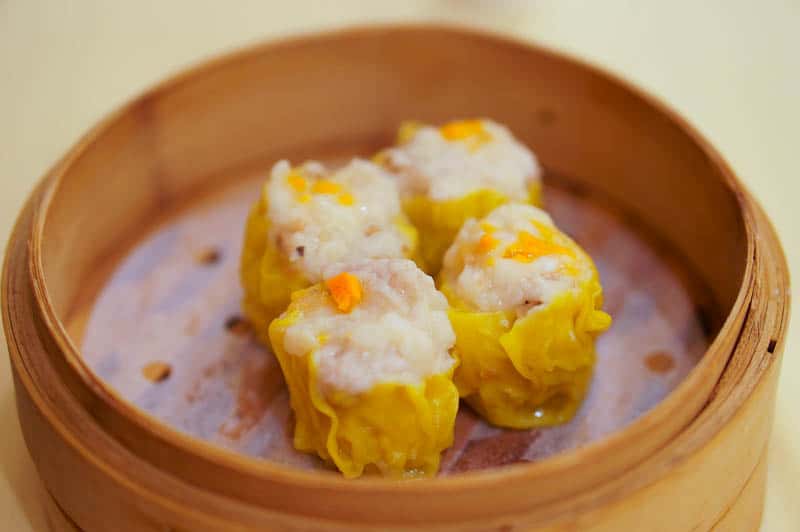
| Pork & Shrimp Dumplings | Siu Mai (燒賣) | Open-topped yellow wonton skin cup packed with minced pork, shrimp, and crab roe or tobiko. | 35–45 HKD (~4.50–5.75 USD) / 85–130 HKD (~11–17 USD) |
| Steamed BBQ Pork Buns | Char Siu Bao (叉燒包) | Fluffy, cloud-like split yeast buns stuffed with sweet, caramelized Cantonese roast pork. | 28–38 HKD (~3.60–4.85 USD) / 75–110 HKD (~9.60–14 USD) |
| Steamed Rice Noodle Rolls | Cheong Fun (腸粉) | Silky steamed rice sheets rolled around prawns, beef, or char siu, dressed in seasoned sweet soy sauce. | 32–45 HKD (~4.10–5.75 USD) / 85–125 HKD (~11–16 USD) |
| Steamed Spare Ribs in Black Bean Sauce | Pai Gwat (豉汁蒸排骨) | Bite-sized pork riblets marinated in fermented black beans, garlic, Shaoxing wine, and chili. | 30–40 HKD (~3.85–5.10 USD) / 70–100 HKD (~9.00–12.80 USD) |
| Braised Chicken Feet | Fung Jao (鳳爪) | Deep-fried, simmered, and braised chicken feet in a rich, gelatinous black bean and five-spice sauce. | 28–38 HKD (~3.60–4.85 USD) / 65–95 HKD (~8.35–12.15 USD) |
| Pan-Fried Turnip / Radish Cake | Lo Bak Go (煎蘿蔔糕) | Shredded daikon radish and rice flour batter studded with cured sausage and dried shrimp, griddled crisp. | 28–38 HKD (~3.60–4.85 USD) / 70–105 HKD (~9.00–13.45 USD) |
| Steamed Sticky Rice in Lotus Leaf | Lo Mai Gai (糯米雞) | Glutinous rice stuffed with chicken, Chinese sausage, shiitake mushrooms, and salted egg yolk, steamed in lotus leaf. | 40–55 HKD (~5.10–7.05 USD) / 95–140 HKD (~12.15–17.90 USD) |
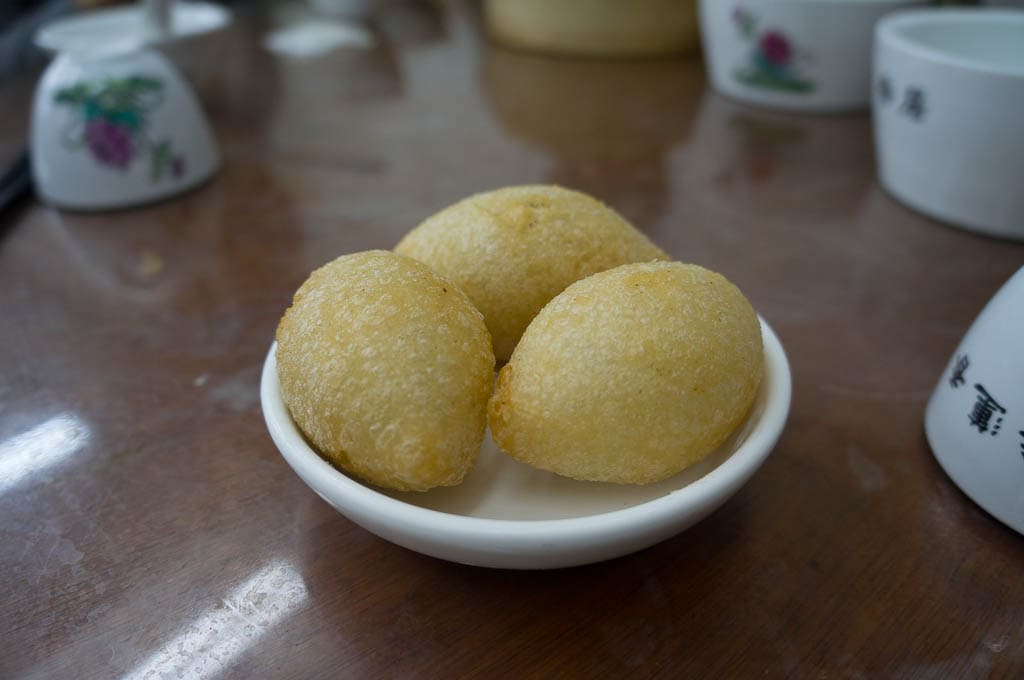
| Deep-Fried Taro Puffs | Wu Gok (蜂巢炸芋角) | Mashed taro croquettes stuffed with minced pork and gravy, fried into a delicate, lacy honeycomb exterior. | 32–42 HKD (~4.10–5.35 USD) / 75–115 HKD (~9.60–14.70 USD) |
| Baked Egg Custard Tarts | Daan Tat (蛋撻) | Flaky puff pastry or buttery shortcrust cups filled with silky, glossy, warm yellow egg custard. | 24–36 HKD (~3.10–4.60 USD) / 65–95 HKD (~8.35–12.15 USD) |
*I researched the Cantonese names, but please don’t rely on my Cantonese 100%!
To prepare for your trip to Hong Kong, check out our complete Hong Kong Travel Guide.
Table of Contents
What is Traditional Dim Sum Etiquette And What Should You Expect?
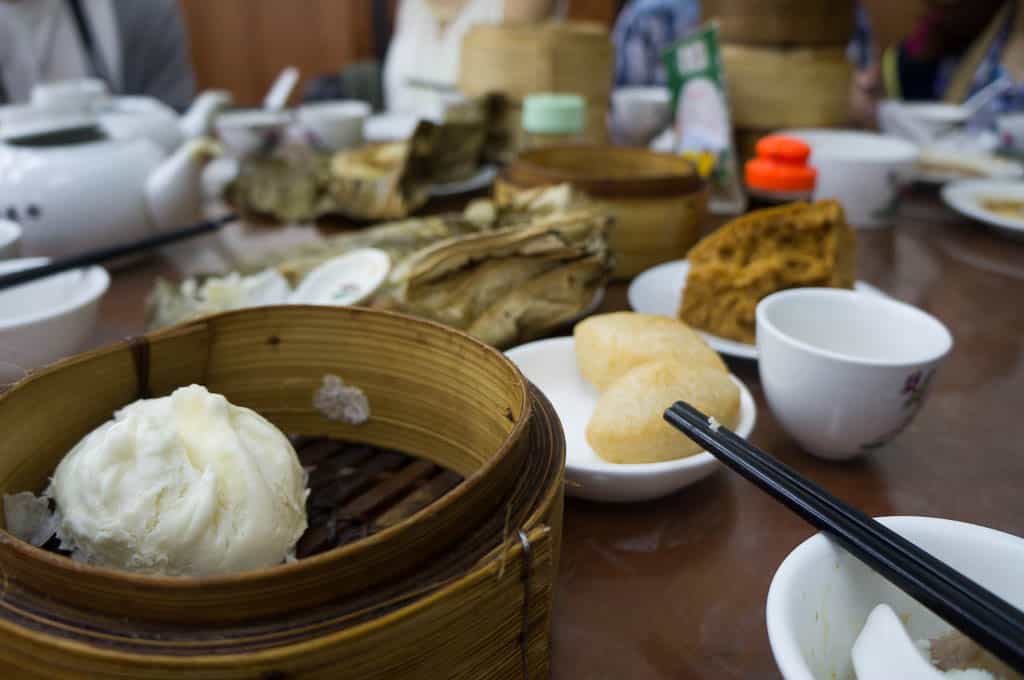
Yum cha is the Cantonese phrase literally translating to “drink tea,” representing the cultural social ritual of dining over dim sum. Navigating a busy Hong Kong teahouse requires understanding several non-verbal customs and dining conventions.
Although dim sum is traditionally eaten in the morning or into lunch hours, it’s not the only option for breakfast in Hong Kong.
The Tableware Washing Ritual (Sai Bei / 洗杯)
When seated at traditional teahouses, staff place a large plastic or porcelain bowl in the center of your table alongside a pot of boiling water or light tea. Diners use this first hot pour to rinse their chopsticks, porcelain spoons, and teacups inside the bowl before dining. Empty the water into the wash bowl, which staff will clear away once the meal begins.
The Two-Finger Tap for “Thank You” (Kow Tau / 叩頭)
When someone refills your teacup at the table, do not verbally interrupt the conversation. Instead, tap your index and middle fingertips lightly on the tabletop twice. This gesture originated during the Qing Dynasty as a discreet sign of imperial bowing and remains the universal Cantonese gesture for silent gratitude.
The Open Teapot Lid Signal for Water Refills
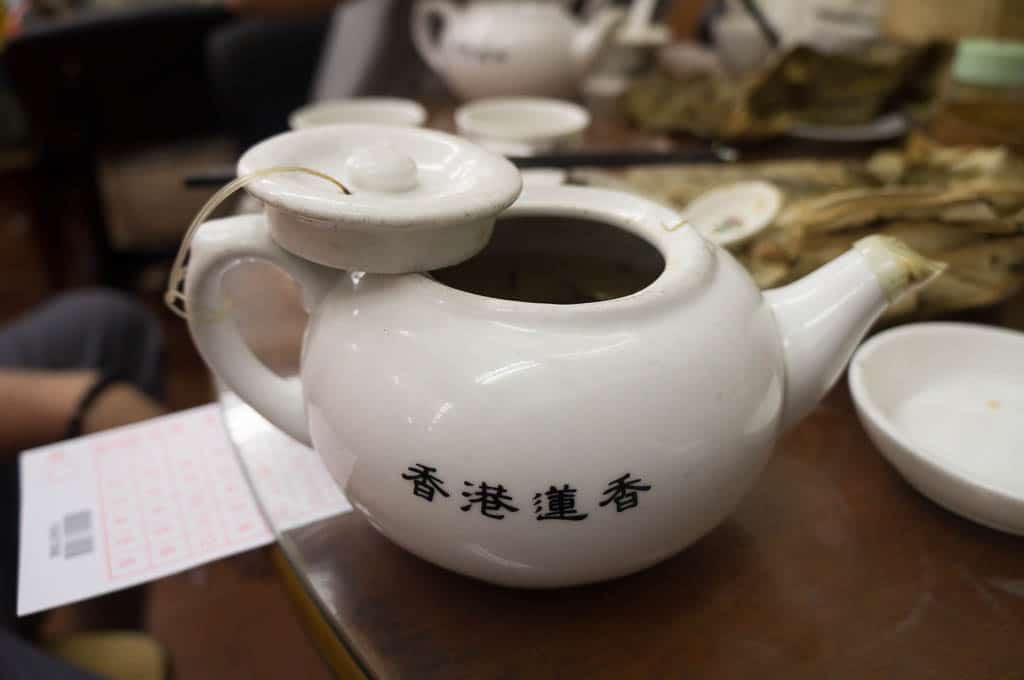
When your teapot runs out of hot water, do not wave down servers or shout across the room. Simply flip the teapot lid upside down or prop it open against the rim of the pot. Floor staff will immediately spot the open lid and bring a kettle of boiling water to replenish it.
Traditional Push Carts vs. Modern Ordering Slips
- Push-Cart Teahouses (Lin Heung Lau, Maxim’s Palace): You receive a paper card stamped with your table number upon seating. When cart aunties wheel heated trolleys past, approach the cart, point to the bamboo steamers you want, and hand over your card to be stamped under Small, Medium, Large, or Special tier boxes.
- Modern / High-End Restaurants (Tim Ho Wan, Dynasty, Lung King Heen): You order directly from a paper checklist or an à la carte menu, and kitchen runners deliver freshly steamed baskets to your table individually.
To learn more about what to eat in Hong Kong, check out our comprehensive Hong Kong Food Guide.
And, see our complete guide on What Hong Kong is Famous For.
Planning a Food Trip to Hong Kong?
Hong Kong is one of the world’s greatest dining capitals, from Michelin-starred dim sum to late-night dai pai dongs and roast goose. Staying near a central MTR line makes hopping between food hubs seamless:
- Central & Sheung Wan: Ideal for high-end dining, trendy wine bars, and heritage dim sum halls. In Central, we recommend the Four Seasons Hotel Hong Kong or the stylish The Murray, Hong Kong, a Niccolo Hotel. (Browse all Central & Sheung Wan Hotels on Booking.com)
- Tsim Sha Tsui (Kowloon): Perfect for iconic Victoria Harbour views, buzzing night markets, and street food. In TST, we recommend the Sheraton Hong Kong Hotel & Towers right along Nathan Road. (Browse all Tsim Sha Tsui Hotels on Booking.com)
- Wan Chai & Causeway Bay: A haven for local roast goose, wonton noodle shops, and traditional cha chaan teng cafes. In Wan Chai, we recommend the waterfront Renaissance Hong Kong Harbour View Hotel. (Browse all Wan Chai Accommodations on Booking.com)
Where Are The Best Traditional And Heritage Teahouses in Hong Kong?
Lin Heung Lau: High-Energy Push Carts and Historic Teahouse Chaos
A traditional cha lau is an old-style multi-level Cantonese teahouse featuring unreserved communal seating, hanging birdcages, and roaming steamer carts. Lin Heung Lau is Hong Kong’s most famous heritage teahouse, celebrated for its raw energy, authentic atmosphere, and classic recipes.
- District: Sheung Wan (Tung Ning Building, 249–253 Des Voeux Road Central)
- Dish to Order: Steamed Pork Liver Siu Mai (Ju Geen Siu Mai) and Whole Stuffed Duck.
- Price: 35–48 HKD (~4.50–6.15 USD) per dim sum basket as of August 2026.
- Hours: Daily 9:00 AM – 11:00 PM.
- How to eat here: Walk straight into the dining room, scout for empty chairs at shared round tables, claim your seat, and be prepared to step up to the push carts immediately when fresh batches emerge from the kitchen.
This is our absolute favorite place for dim sum in Hong Kong. It’s loud. It’s bustling. It’s packed all the time. Our first visit we were totally intimidated, like deer in headlights. But, we found two seats at a shared table and tried to watch what others did. We learn something more each time we visit!
Looking for more options for tasty dim sum? Check out our guide on What to Eat in Central Hong Kong, which has more recommendations.
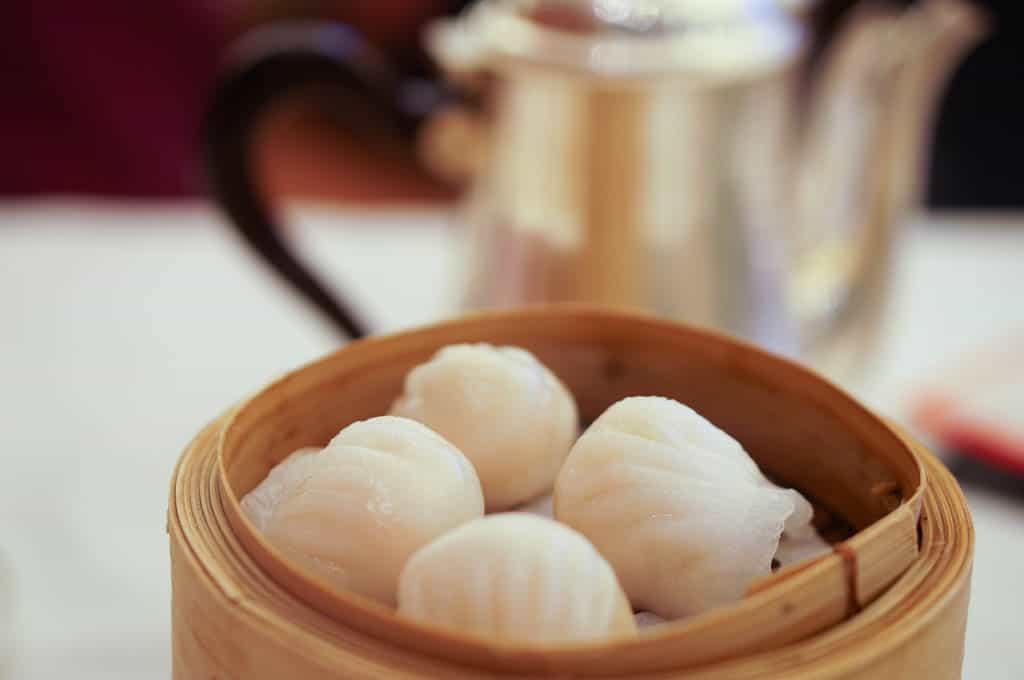
Maxim’s Palace at City Hall: Grand Chandelier Banquet Dining with Harbour Views
Maxim’s Palace is Hong Kong’s premier grand-hall dim sum institution, set in an expansive, white-tablecloth ballroom overlooking Victoria Harbour with rolling push-trolleys.
- District: Central (2/F, City Hall Low Block)
- Dish to Order: Steamed Har Gow (Shrimp Dumplings) and Crispy Fried Taro Puffs (Wu Gok).
- Price: 45–65 HKD (~5.75–8.35 USD) per dim sum plate as of August 2026.
- Hours: Monday to Saturday 11:00 AM – 3:00 PM & 5:30 PM – 10:30 PM; Sunday 9:00 AM – 3:00 PM & 5:30 PM – 10:30 PM.
- How to eat here: Arrive 15 to 20 minutes before opening time to take a queue ticket at the podium, avoiding 60-minute peak lunch lines.
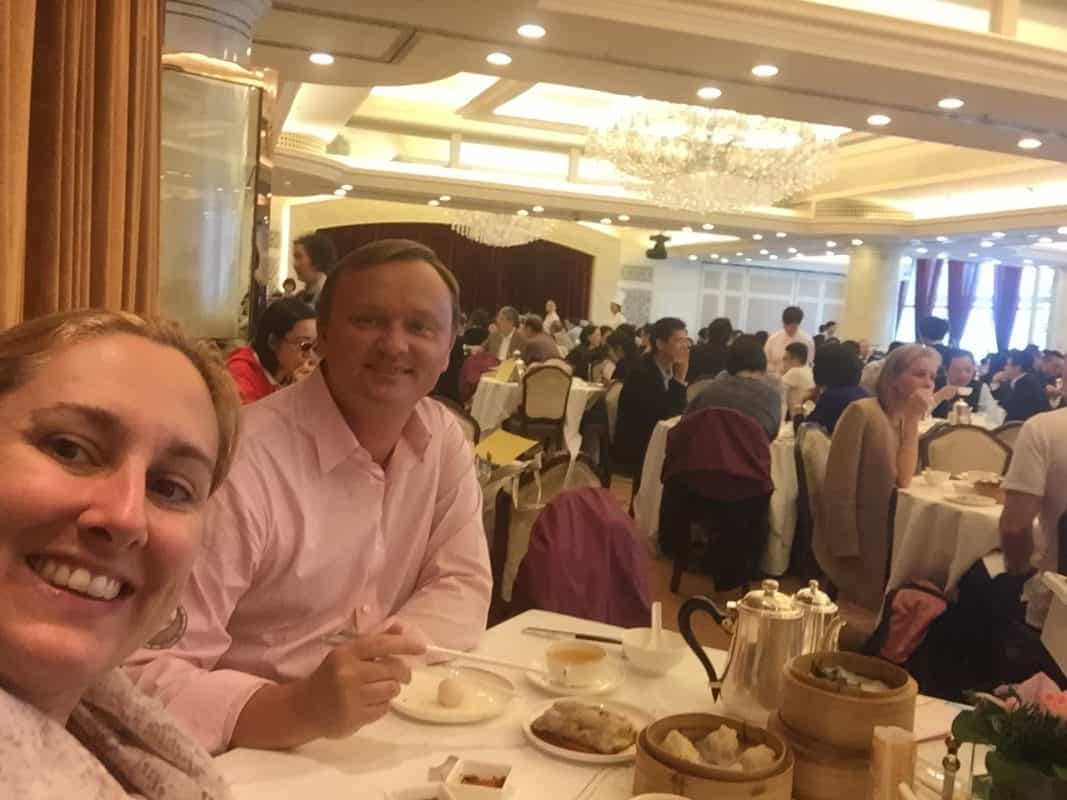
Maxim’s definitely takes things up a notch, with silver tea pots and white table cloths, but still very accessible. The pricing is good, considering its surroundings. It can be a little difficult to find, as its up a flight of stairs. Get there early!
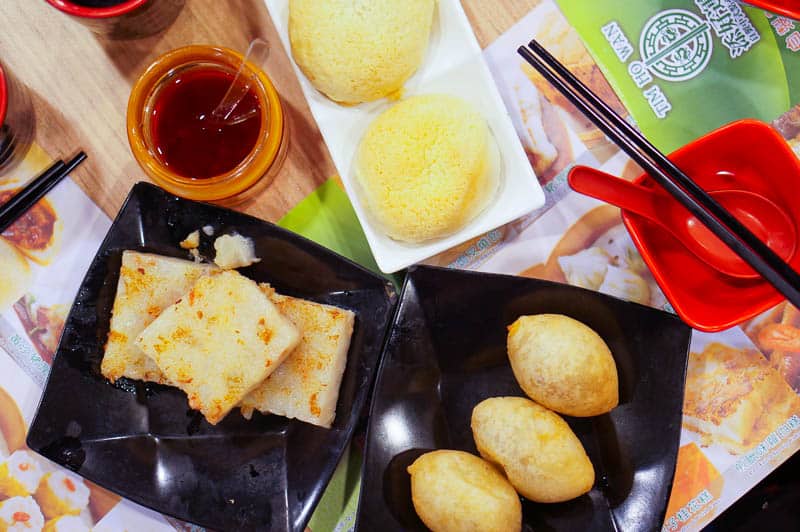
Tim Ho Wan: Budget-Friendly Baked BBQ Pork Buns
Tim Ho Wan is a globally recognized dim sum specialist famous for democratizing Michelin-caliber dim sum at fast-casual street prices.
- District: Sham Shui Po (G/F, 9-11 Fuk Wing Street) & Central (Hong Kong Station)
- Dish to Order: Baked BBQ Pork Buns (Char Siu Bao) with sugary, crumbly cookie crusts.
- Price: 32–42 HKD (~4.10–5.35 USD) per basket as of August 2026.
- Hours: Daily 10:00 AM – 9:30 PM.
- How to eat here: Mark your selections on the paper slip while waiting in line outside; turnover is fast, but expect a quick, transactional dining pace rather than a lingering tea experience.
To be fair, this is not our favorite dim sum in Hong Kong, but it is reliable and with locations everywhere, it’s easy to find!
Where Are The Best Luxury and Michelin-starred Dim Sum Restaurants in Hong Kong?
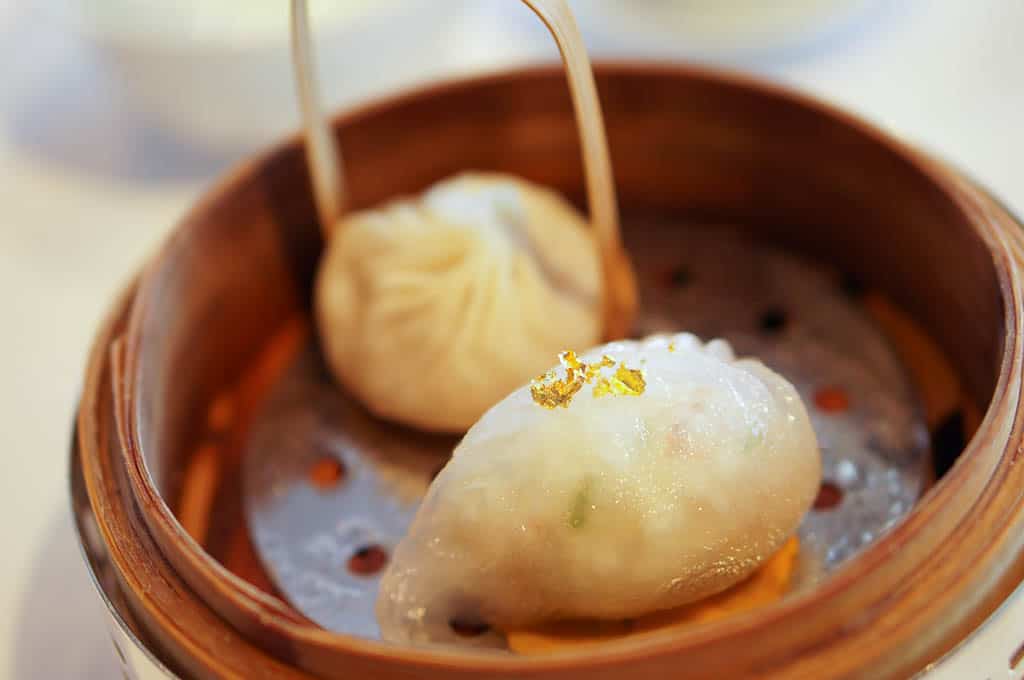
Lung King Heen: World-Class Precision at the Four Seasons
Lung King Heen is an internationally acclaimed Cantonese dining room at the Four Seasons Hotel, recognized as the world’s first Chinese restaurant to be awarded three Michelin stars under Master Chef Chan Yan-tak, who we were privileged to meet during our visit!
- District: Central (4/F, Four Seasons Hotel Hong Kong, 8 Finance Street)
- Dish to Order: Baked Whole Abalone Puff with Diced Chicken (Bo Lo Bao Abalone) and Steamed Lobster Dumplings.
- Price: Dim sum dishes range from 90–160 HKD (~11.50–20.50 USD) each; minimum lunch spend is approximately 700 HKD (~90 USD) per person plus 10% service charge as of August 2026.
- Hours: Lunch Monday to Friday 12:00 PM – 2:30 PM; Saturday, Sunday & Public Holidays 11:30 AM – 3:00 PM.
- Booking Rule: Bookings open up to 90 days in advance; request a window table for panoramic Victoria Harbour views.
You can’t go wrong with dim sum topped with gold leaf. Everything we ate was prepared with such a level of detail, it was unlike any dim sum we’ve ever eaten in Hong Kong. If it is within your budget, it’s worth a splurge!
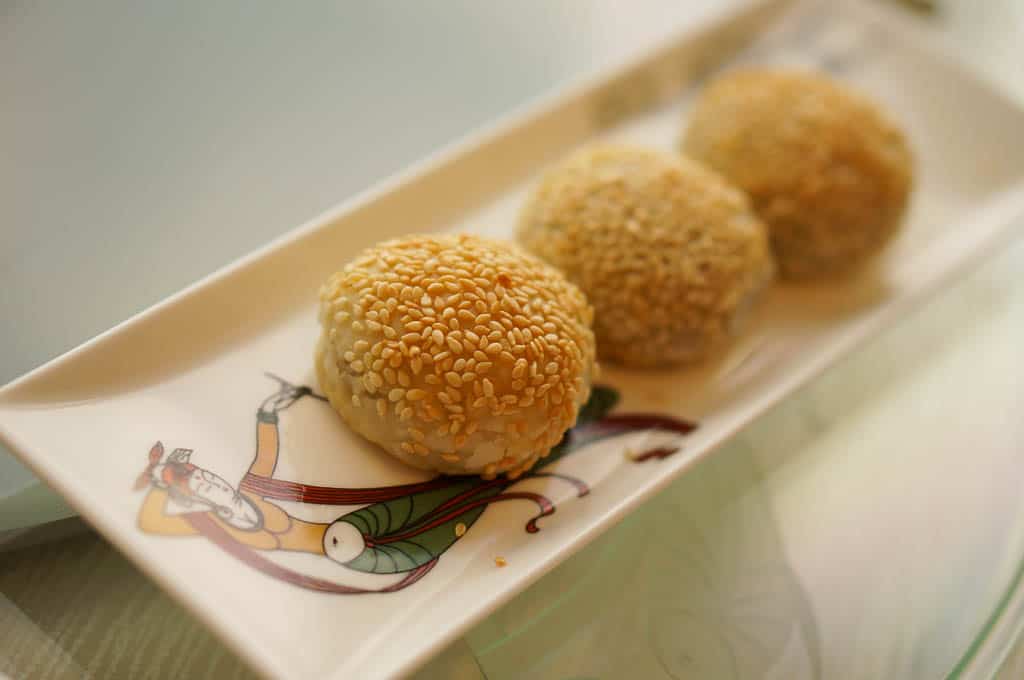
Dynasty Restaurant: Refined Cantonese at the Renaissance Harbour View
Dynasty Restaurant is a sophisticated Cantonese institution located on the third floor of the Renaissance Hong Kong Harbour View Hotel, renowned for impeccable roasted meats and artisanal dim sum.
- District: Wan Chai (3/F, Renaissance Hong Kong Harbour View Hotel, 1 Harbour Road)
- Dish to Order: Barbecued Iberico Pork Char Siu, Steamed Crab Meat Dumplings, and Crispy Spring Rolls.
- Price: Dim sum dishes range from 75–120 HKD (~9.60–15.40 USD) each; average lunch spend is approximately 400–600 HKD (~51–77 USD) per person as of August 2026.
- Hours: Lunch daily 11:30 AM – 3:00 PM; Dinner 6:00 PM – 10:00 PM.
- Why it earns a place: Offers a serene, white-tablecloth atmosphere overlooking the convention gardens and Victoria Harbour, without the severe booking hurdles of other hotel flagships.
Spring Moon: Heritage Elegance & Legendary XO Sauce at The Peninsula
Spring Moon is the Michelin-starred Cantonese jewel of The Peninsula Hong Kong, designed in the style of a 1920s Shanghainese Art Deco dining salon, famed as the birthplace of commercial XO sauce.
- District: Tsim Sha Tsui (1/F, The Peninsula Hong Kong, Salisbury Road)
- Dish to Order: Steamed Scallop and Shrimp Dumplings with XO Sauce, and Baked Barbecue Pork Puffs.
- Price: Dim sum selections range from 85–140 HKD (~10.90–17.90 USD) each; tasting menus from 650–900 HKD (~83–115 USD) per person as of August 2026.
- Hours: Lunch Monday to Saturday 11:30 AM – 2:30 PM; Sunday 11:00 AM – 2:30 PM.
- Why it earns a place: Unmatched vintage elegance, white-glove tea pairing service, and house-blended XO sauce crafted from dried scallops, Jinhua ham, and chilies.
Traditional vs. Contemporary Dim Sum: Which Teahouses Are Worth the Queue?
| Restaurant Name | Style & Atmosphere | District | Average Cost Per Person | Typical Wait Time | Ordering Style |
| Lin Heung Lau | Traditional Heritage Teahouse | Sheung Wan | 100–160 HKD (~13–20 USD) | 15–35 min (Communal hunt) | Rolling Push Carts |
| Maxim’s Palace | Grand Ballroom Banquet Hall | Central | 180–280 HKD (~23–36 USD) | 30–60 min (Queue ticket) | Rolling Push Carts |
| Tim Ho Wan | Fast-Casual Budget Specialist | Sham Shui Po | 80–130 HKD (~10–17 USD) | 15–30 min | Paper Checklist |
| Lung King Heen | 2/3-Star Michelin Luxury | Central | 700–1,100 HKD (~90–140 USD) | Advance Booking Required | Fine Dining À La Carte |
| Dynasty | Upscale Hotel Cantonese | Wan Chai | 400–600 HKD (~51–77 USD) | 5–15 min / Reservations | Fine Dining À La Carte |
| Spring Moon | 1-Star Michelin Heritage Salon | Tsim Sha Tsui | 500–800 HKD (~64–102 USD) | Advance Booking Recommended | Fine Dining À La Carte |
How Much Should You Expect to Pay for Dim Sum in Hong Kong?
Dim sum pricing in Hong Kong falls into three distinct tiers, making it accessible across every travel budget:
- Budget Stalls & Fast-Casual (60–130 HKD / ~8–17 USD per person): Compact neighborhood shops like Tim Ho Wan or street-level takeout counters charging 25–40 HKD per steamer basket.
- Mid-Range Heritage Teahouses (120–280 HKD / ~15–36 USD per person): Classic multi-story institutions like Lin Heung Lau or Maxim’s Palace at City Hall where diners order 3 to 4 baskets alongside premium hot Chinese tea (Cha Wai tea charge: 15–28 HKD per person).
- High-End Luxury & Michelin Fine Dining (450–1,100+ HKD / ~58–140+ USD per person):Hotel flagships like Lung King Heen, Dynasty, and Spring Moon, featuring abalone, bird’s nest, lobster, tableside tea masters, and a mandatory 10% service charge.
Check out our complete guide on the Cost of Eating and Drinking in Hong Kong.
Where to Stay in Hong Kong
Our go-to places to stay in Hong Kong across different travel styles and budgets:
- Renaissance Hong Kong Harbour View Hotel (Wan Chai – Waterfront & Business): While it caters exceptionally well to business travelers with direct covered access to the convention center, it makes exploring the entire city effortless. The Wan Chai Star Ferry pier sits right out front for fast scenic harbour crossings to Kowloon, the top-floor Executive Lounge offers panoramic skyline views, and the on-site Dynasty Restaurant serves some of the best Cantonese roast meats and dim sum in the city.
- Holiday Inn Golden Mile (Tsim Sha Tsui – Value & Transit Hub): The ultimate convenient, budget-friendly base in Kowloon. The hotel sits directly on lower Nathan Road with direct MTR subway entrances right outside the lobby, making it our top choice for quick layovers, overnight stopovers, and maximizing food crawls across both sides of the harbour.
- The Pottinger Hong Kong (Central – Boutique Stay for Food Lovers): An elegant heritage-inspired boutique hotel situated right on Stanley Street along the historic stone-slab steps of Pottinger Street. It places food lovers literally steps away from Wellington and Stanley streets—putting iconic culinary institutions like Yung Kee (roast goose), Mak’s Noodle, Luk Yu Tea House, and Tai Cheong Bakery right outside your front door.
Frequently Asked Questions: Eating Dim Sum in Hong Kong
What is the best time of day to eat dim sum in Hong Kong?
The best time for dim sum is morning tea between 9:00 AM and 11:30 AM, when dumpling skins are freshly steamed and teahouses are lively with local morning diners. Visiting during the weekday afternoon tea window (2:00 PM to 4:30 PM) often provides discounted menu pricing (Ha Ng Cha).
What is the “Cha Wai” fee on your dim sum bill?
Cha Wai (茶位) is a mandatory per-person tea seating charge applied across virtually all Hong Kong teahouses and dim sum restaurants (ranging from 12–25 HKD at casual teahouses to 40–60 HKD at luxury hotels). It covers unlimited hot tea refills throughout your meal.
Which tea should you order with dim sum?
The four standard Chinese teas ordered at yum cha are:
Pu’er (Bo Lei / 普洱): A rich, earthy fermented black tea that aids in digesting rich fried dishes and barbecued meats.
Jasmine (Heung Pin / 香片): A fragrant, floral green tea.
Tieguanyin (Tit Goon Yum / 鐵觀音): A robust, roasted Oolong tea.
Chrysanthemum (Guk Fa / 菊花): A light, naturally caffeine-free herbal floral tea.
How do you get a seat at traditional communal teahouses?
At heritage spots like Lin Heung Lau, there are no reservation hosts. Walk directly into the dining room, identify tables where diners are finishing their tea, ask “Yau Mo Wai?” (Is there space here?), and sit down as soon as chairs open up.
Do dim sum restaurants in Hong Kong cater to vegetarians?
Traditional Cantonese dim sum relies heavily on minced pork, pork lard, dried shrimp, and oyster sauce even in vegetable dumplings. For strictly vegetarian or vegan dim sum, visit specialized Buddhist vegetarian restaurants such as LockCha Tea House inside Hong Kong Park.