What is Hong Kong famous for? Where to start? Dim sum teahouses, the Star Ferry, one of the world’s best skylines, and the Big Buddha.
Situated on China’s southern coast across Victoria Harbour, the city bridges ancient Cantonese traditions with British colonial heritage. The territory is globally recognized for culinary staples like push-cart Yum Cha, silk stocking milk tea, and roast goose; landmark experiences including the 1888 Peak Tram and the historic Star Ferry; and a 24-hour urban lifestyle powered by the contactless Octopus card.
For travelers, Hong Kong represents one of the world’s great food capitals, packing Michelin-starred fine dining and open-air street stalls into a walkable harbourfront grid.
*This post contains compensated links. Find more info in my DISCLAIMER. As an Amazon Associate, I earn from qualifying purchases.
Quick Facts: What Hong Kong Is Most Famous For
| Category | Iconic Hong Kong Highlight | Geographic Hub / Origin | Cultural & Culinary Significance |
| Culinary Heritage | Push-Cart Dim Sum (Yum Cha) | Central & Sheung Wan | Historic morning tea ritual featuring steamed dumplings rolled on heated trolleys. |
| Roast Meats (Siu Mei) | Charcoal-Roast Goose & Char Siu | Central & Wan Chai | Whole roasted meats with crispy lacquered skin, five-spice marinades, and plum sauce. |
| Cafe Culture | Cha Chaan Teng & Milk Tea | Citywide (Lan Fong Yuen) | Post-war tea restaurants serving British-Cantonese comfort food and filtered Ceylon milk tea. |
| Handheld Pastries | Egg Tarts & Pineapple Buns | Central & Mong Kok | Flaky custard tarts (Daan Tat) and warm crumbly cookie-topped yeast buns (Bo Lo Yau). |
| Street Gastronomy | Curry Fish Balls & Cart Noodles | Mong Kok & Sham Shui Po | Springy fish paste in spiced curry sauce and customizable post-war cart noodle bowls. |
| Harbour Heritage | The Historic Star Ferry | Victoria Harbour (TST to Central) | Operational since 1888; panoramic skyline crossings across Victoria Harbour for under 1 USD. |
| Historic Transit | The Peak Tram & Ding Ding Trams | Hong Kong Island (1888 / 1904) | Funicular railway ascending Victoria Peak and double-decker narrow street tramcars. |
| Urban Topography | High-Density Vertical Skylines | Central & Victoria Harbour | World’s highest concentration of skyscrapers set against dramatic volcanic mountain peaks. |
| Spiritual Landmarks | Tian Tan Buddha (Big Buddha) | Lantau Island (Po Lin Monastery) | 34-meter bronze outdoor seated Buddha surrounded by lush subtropical mountain peaks. |
| Traditional Engineering | Bamboo Scaffolding Architecture | Citywide Construction Sites | Ancient Cantonese building technique using lashed bamboo poles for skyscraper construction. |
| Maritime Cuisine | Typhoon Shelter Crab & Seafood | Causeway Bay & Sai Kung | Wok-fried mud crab buried in crispy fried garlic, fermented black beans, and red chilies. |
| Urban Infrastructure | Contactless Octopus Card System | Citywide Transit & Retail | Pioneering 1997 contactless smart card used for all public transit, ferries, and casual dining. |
Table of Contents
Check out our comprehensive Hong Kong Travel Guide and our three-day itinerary to Hong Kong, specifically written for people who love food.
Or, wondering about the best neighborhood to stay in? Check out our guide to the best neighborhoods in Hong Kong.
What Food And Drink is Hong Kong Most Famous For?
Push-Cart Dim Sum and Morning Yum Cha (飲茶)
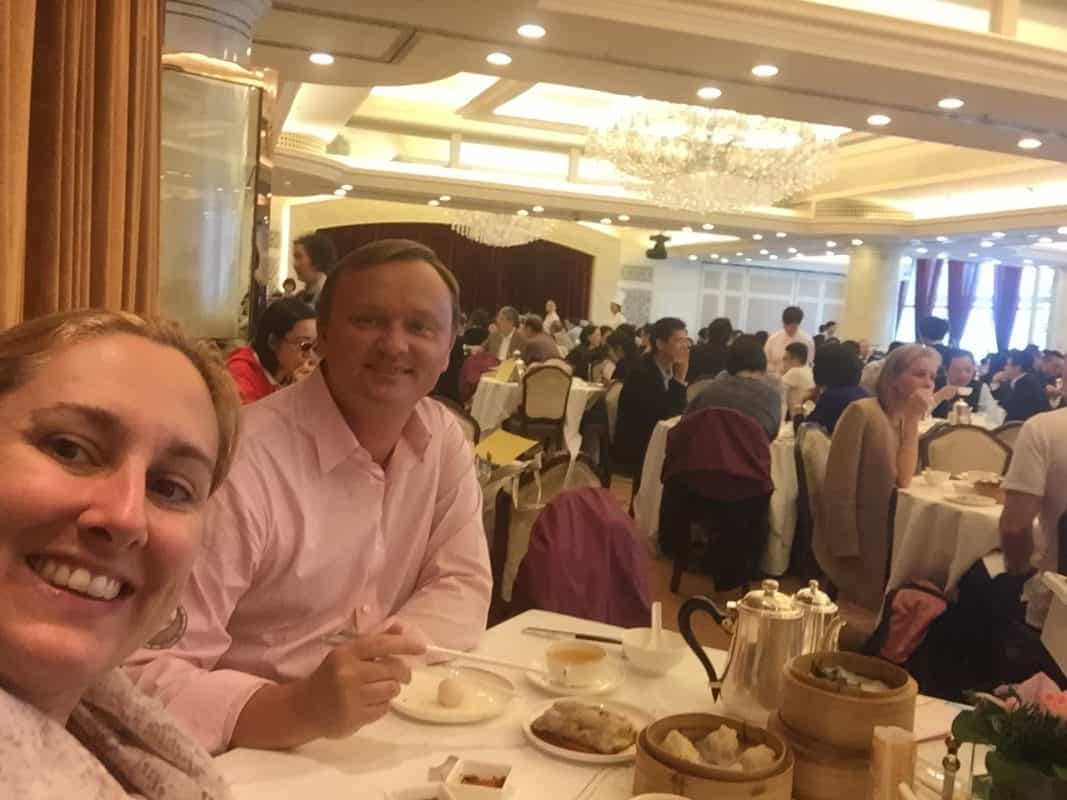
Yum cha is the traditional Cantonese social ritual of drinking hot Chinese tea paired with bite-sized steamer baskets of savory and sweet dim sum. Hong Kong perfected the push-cart teahouse experience, where dining room aunties wheel heated metal carts between shared round tables laden with translucent prawn dumplings (Har Gow), pork and shrimp dumplings (Siu Mai), and barbecue pork buns (Char Siu Bao). Key venues include Lin Heung Lau in Sheung Wan and Maxim’s Palace at City Hall in Central Hong Kong.
Lin Heung Lau and Maxim’s Palace at City Hall couldn’t be more different and yet two of our favorite dim sum restaurants in Hong Kong. Lin Heung Lau is a traditional old-school dim sum restaurant in a “rustic” and less than refined setting. Maxim’s is more upscale and certainly refined dim sum experience. Both feature delicious dim sum including har gow (Shrimp Dumplings), Siu Mai (Pork and Shrimp Dumplings), Char Siu Bao (Barbecue Pork Buns), one of our favorites, and Lo Mai Gai (Sticky Rice in Lotus Leaf).
If you’re making your first trip to Hong Kong, start with Maxim’s. It’s more organized and will give you a better sense of how dim sum in Hong Kong differs from dim sum in the US. Or if you want to jump into the deep end like we did, head over to Lin Heung Lau to get a sense of old-school dim sum.
Check out our guide to The Best Dim Sum in Hong Kong.
Planning a Food Trip to Hong Kong?
Hong Kong is one of the world’s greatest dining capitals, from Michelin-starred dim sum to late-night dai pai dongs and roast goose. Staying near a central MTR line makes hopping between food hubs seamless:
- Central & Sheung Wan: Ideal for high-end dining, trendy wine bars, and heritage dim sum halls. In Central, we recommend the Four Seasons Hotel Hong Kong or the stylish The Murray, Hong Kong, a Niccolo Hotel. (Browse all Central & Sheung Wan Hotels on Booking.com)
- Tsim Sha Tsui (Kowloon): Perfect for iconic Victoria Harbour views, buzzing night markets, and street food. In TST, we recommend the Sheraton Hong Kong Hotel & Towers right along Nathan Road. (Browse all Tsim Sha Tsui Hotels on Booking.com)
- Wan Chai & Causeway Bay: A haven for local roast goose, wonton noodle shops, and traditional cha chaan teng cafes. In Wan Chai, we recommend the waterfront Renaissance Hong Kong Harbour View Hotel. (Browse all Wan Chai Accommodations on Booking.com)
Cantonese Roast Meats (Siu Mei / 燒味)
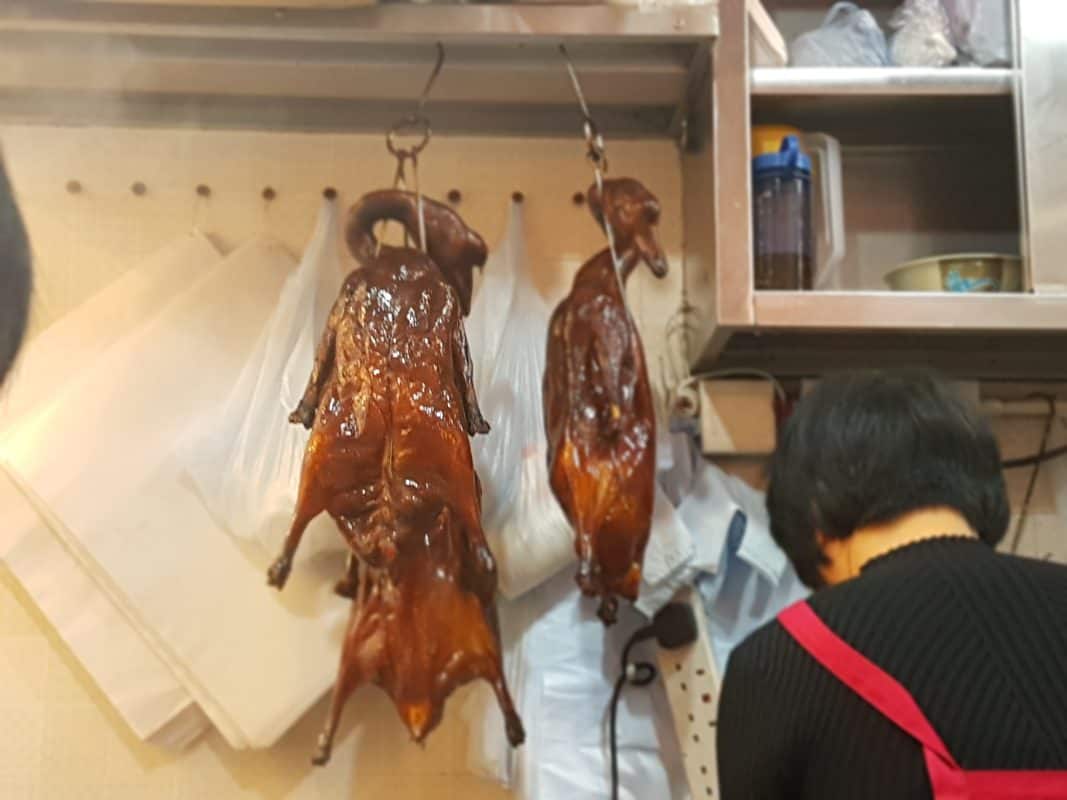
Siu Mei refers to a celebrated category of Cantonese barbecued meats roasted over open fire or gas-fired cylindrical ovens. Hong Kong is world-renowned for mahogany-skinned Roast Goose (Siu Ngo) basted in five-spice and maltose, glossy Barbecue Pork (Char Siu) caramelized with honey and fermented red bean curd, and Crispy Roast Pork Belly (Siu Yuk) featuring crackling blistered skin. Classic institutions include Yung Kee and Yat Lok in Central, and Joy Hing Roasted Meat in Wan Chai.
Cha Chaan Teng Comfort Food and Silk Stocking Milk Tea
A cha chaan teng is a Hong Kong tea restaurant that emerged after World War II to serve affordable, localized adaptations of Western dishes alongside strong tea. Hong Kong Milk Tea (Dong Lai Cha) is brewed from concentrated black Ceylon tea leaves filtered repeatedly through a fine cloth sack and blended with evaporated milk. Signature dishes include condensed milk French toast (Sai Do Si), macaroni in broth with ham, and corned beef egg sandwiches. Historic venues include Lan Fong Yuen in Central and Kam Wah Cafe in Mong Kok.
Handheld Bakery Classics: Egg Tarts and Pineapple Buns
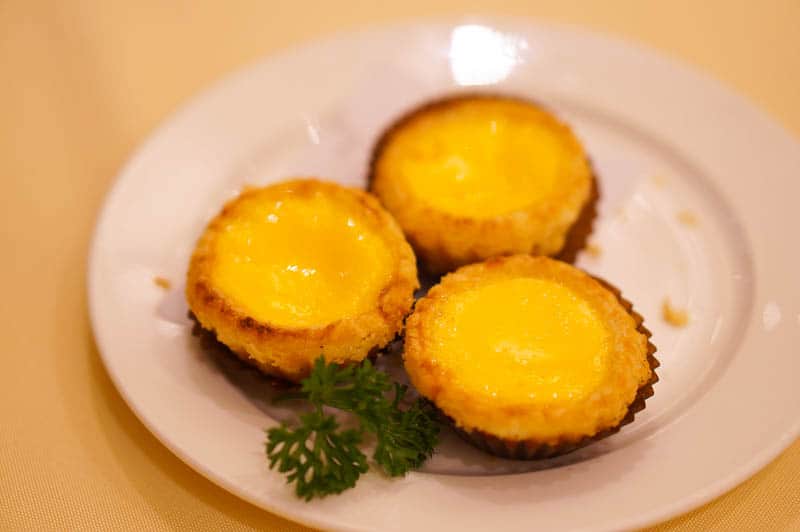
Hong Kong’s bakery culture combines British pastry traditions with Cantonese baking techniques. The Hong Kong Egg Tart (Daan Tat) features a silky, glossy yellow egg custard baked inside either a flaky puff pastry or crumbly shortcrust shell, popularized by Tai Cheong Bakery in Central. The Pineapple Bun (Bo Lo Bao) contains no pineapple; it is a soft sweet yeast bun baked with a crumbly cookie crust, served warm with a thick slab of melting salted butter inserted inside (Bo Lo Yau).
To be fair, I think I prefer the pastel de nata in Portugal because the crust is a little less dense, but the Hong Kong egg tart remains one of my favorite snacks to eat in Hong Kong!
Late-Night Street Food Skewers and Cart Noodles
Hong Kong street food snacking (Siu Chaat) centers on open-front corner stalls equipped with bubbling stainless steel vats of spiced sauces. Iconic street snacks include springy Curry Fish Balls (Ga Lei Yue Dan), steamed fish paste Siu Mai skewers, fried Stuffed Three Treasures, and custom Cart Noodles (Che Zai Meen). Vibrant street food hubs include Dundas Street in Mong Kok and Fuk Wing Street in Sham Shui Po.
Coastal Seafood and Typhoon Shelter Crab
Typhoon shelter cuisine originated among Hong Kong’s historic boat-dwelling Tanka fishing communities who sheltered in coastal bays during tropical storms. The signature dish is Typhoon Shelter Fried Crab (Bei Fung Tong Hai), where whole mud crabs are chopped and flash-fried in fiery woks with heaps of golden crispy garlic, fermented black beans, scallions, and red bird’s eye chilies. Key venues include specialized seafood restaurants in Causeway Bay and the open-air coastal tanks of Sai Kung and Lei Yue Mun.
Check out our full guide on What to Eat in Hong Kong (and where!).
Which Iconic Landmarks and Transit Systems is Hong Kong Famous for?
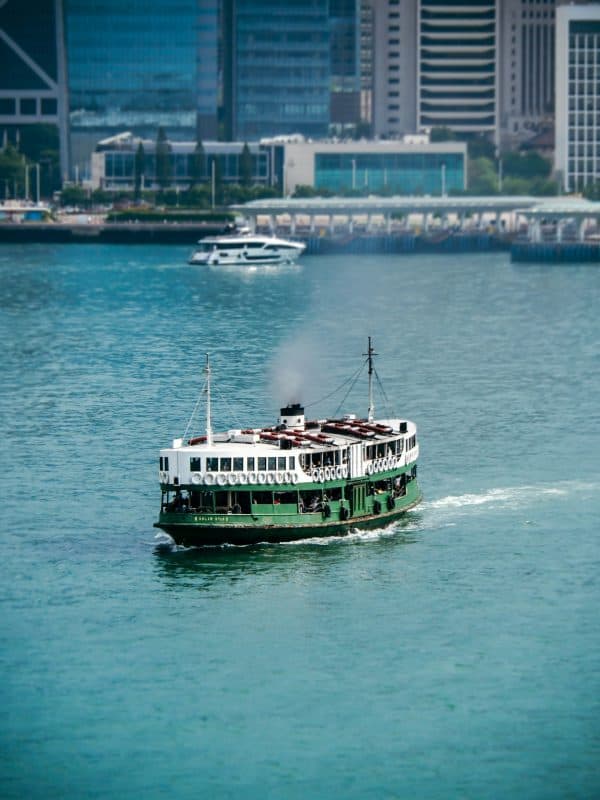
Victoria Harbour and the Historic Star Ferry
Victoria Harbour is the deepwater natural harbour separating Hong Kong Island from the Kowloon Peninsula, serving as the commercial and scenic anchor of the territory. Operational since 1888, the Star Ferry operates a fleet of green-and-white double-ended passenger ferries crossing the harbour between Tsim Sha Tsui, Central, and Wan Chai. Providing panoramic skyline views for approximately 5.00–6.50 HKD (~0.65–0.85 USD as of August 2026), it remains one of the world’s most iconic and affordable urban boat journeys.
For us, a visit to Hong Kong doesn’t start until we ride the ferry! It’s one of our favorite things to do. There were some rumors awhile back that they were going to discontinue them, but the outcry was enormous. So, the ferries continue to run!
Yes, it’s quicker to take the train underground across the Harbour, but this is the most fun way. This is also the most economical “tour” you can take of Hong Kong because you can see everything for less than a dollar!
Traveling to Hong Kong? Check out our complete guide on the Cost of Eating and Drinking in Hong Kong.
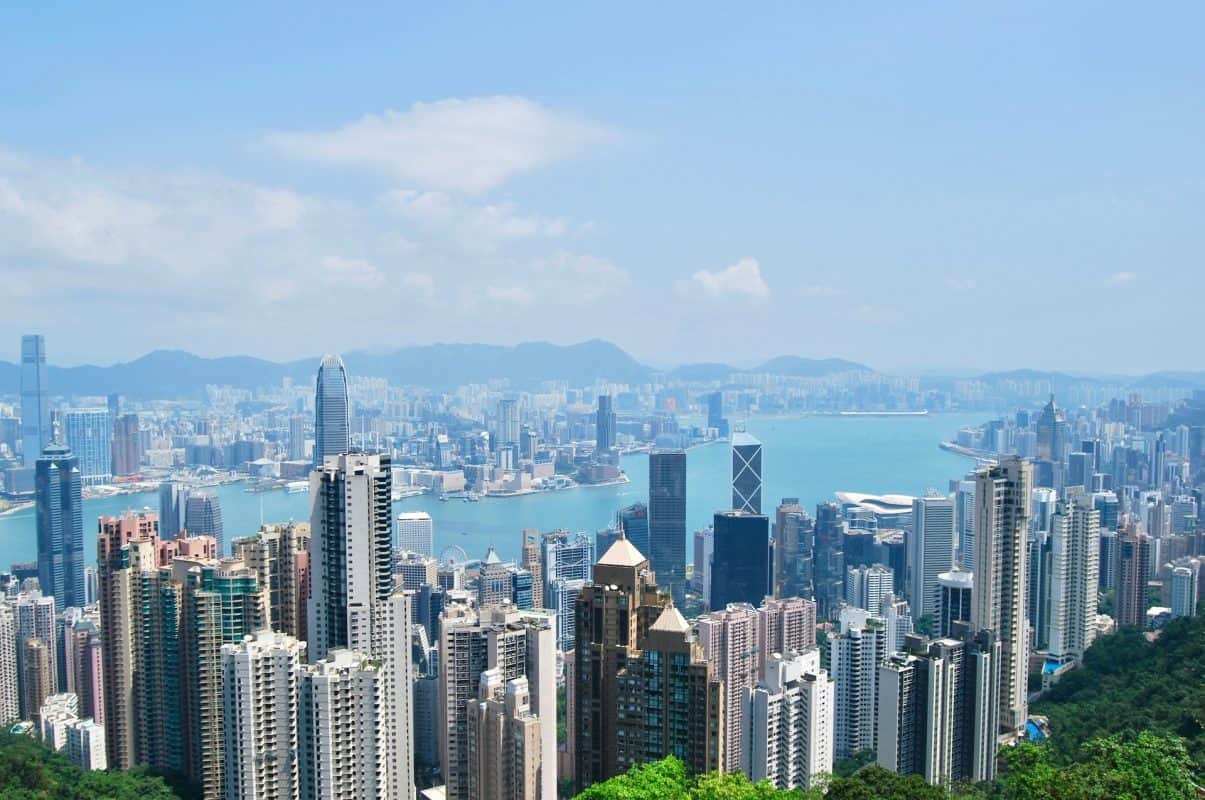
Victoria Peak and the Historic 1888 Peak Tram
Victoria Peak (Mount Austin) is the highest hill on Hong Kong Island, rising 552 meters (1,811 feet) above sea level to provide panoramic vistas of the harbour, Kowloon Peninsula, and South China Sea islands. The Peak Tram is a historic funicular railway opened in 1888 that hauls passenger carriages up steep 27-degree mountain slopes from Central to the Peak Tower in under ten minutes.
We took the Peak Tram during our first visit to Hong Kong, and although we don’t tend to go up for the view anymore, it’s definitely worth it for first-time travelers to Hong Kong.
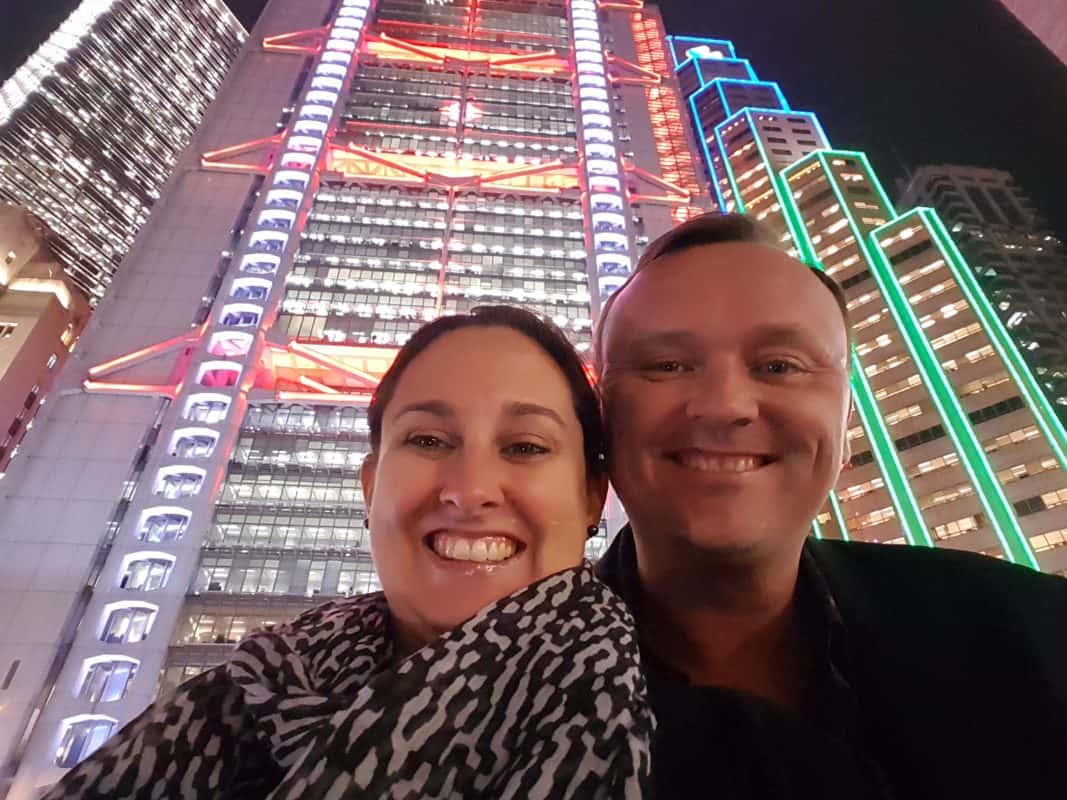
The World’s Most Vertical High-Rise Cityscape
Hong Kong contains over 550 skyscrapers exceeding 150 meters in height—more than any other city on earth. Hemmed in between steep granite mountain slopes and deep water, the city developed vertically, creating iconic architectural landmarks like I.M. Pei’s geometric Bank of China Tower, the high-tech HSBC Main Building by Norman Foster, and the 108-story International Commerce Centre (ICC) overlooking the harbour.
This is one of the reasons we love to stay at The Renaissance in Hong Kong. The view from both our room and the executive lounge is stunning. At night, all of the buildings are lit up on both sides of the Harbour. Another reason to take the Star Ferry, and plan to do it twice. Once during the day and once at night.
We’ve also visited Hong Kong over Christmas a couple of times, and a lot of the buildings go all out with their lighting displays for the holidays!
The Ding Ding Double-Decker Street Trams
The Hong Kong Tramways, affectionately known by locals as the “Ding Ding” after the sound of their warning bells, have operated along the northern corridor of Hong Kong Island since 1904. It is the world’s only fully double-decker electric tram fleet, offering a slow-paced, open-window vantage point across Western District, Central, Wan Chai, and Causeway Bay for a flat fare of 3.00 HKD (~0.38 USD as of August 2026).
Although we do tend to take the subway system the most to get around Hong Kong, we do often pop onto a street tram just for the adventure!
Tian Tan Buddha and Po Lin Monastery on Lantau Island
The Tian Tan Buddha (Big Buddha) is an imposing 34-meter (112-foot) outdoor bronze statue of Amoghasiddhi Buddha erected in 1993 on the mountain plateau of Ngong Ping on Lantau Island. Positioned adjacent to the historic 1906 Po Lin Monastery, visitors climb 268 stone steps to reach the lotus base or arrive via the 5.7-kilometer Ngong Ping 360 cable car soaring over mountain valleys and the South China Sea.
This is another famous landmark in Hong Kong we visited once, during our first visit. We actually took the cable car up, and I thought it would be a good idea to walk back down into the residential area at its base and take the train from there. This was in a time before Google Maps and I had no idea how long it would actually take. We didn’t plan for it, had no water, and it was July! To this day, Eric still calls it my “death march”. It’s definitely possible to take the walking path down, just be prepared!
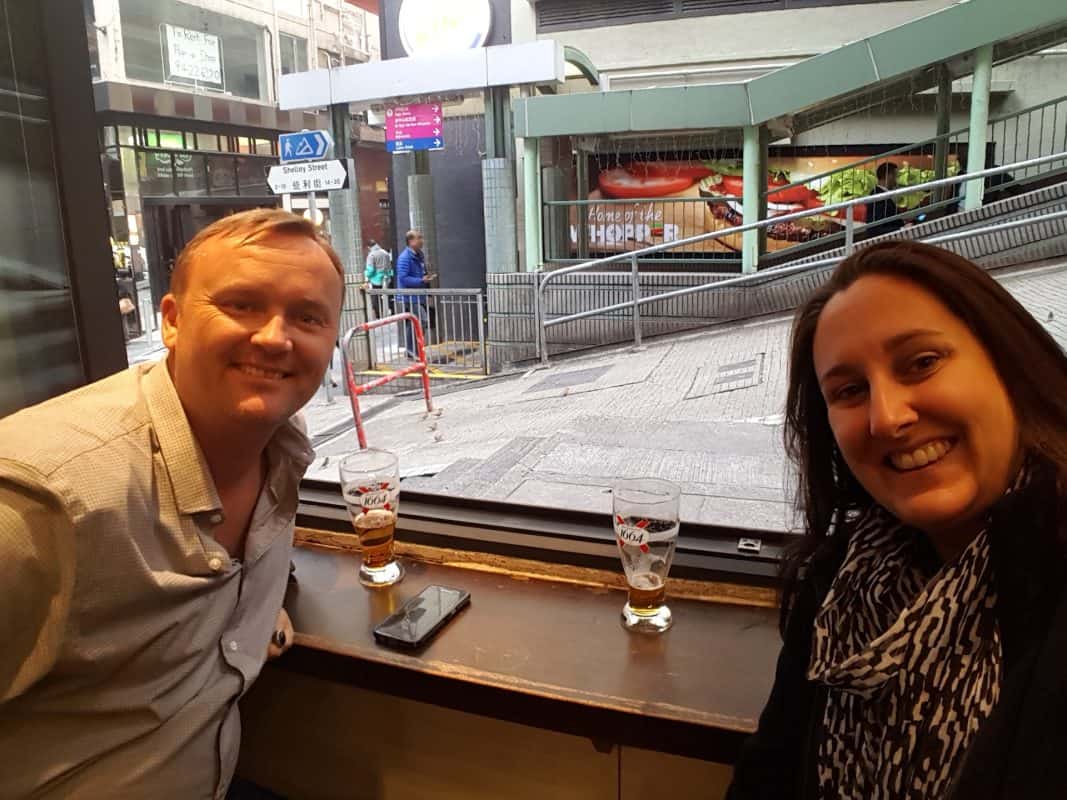
Central–Mid-Levels Escalator and Tai Kwun Heritage Compound
The Central–Mid-Levels Escalator is the world’s longest outdoor covered escalator and moving walkway system, spanning over 800 meters across hillside streets from Queen’s Road Central to Conduit Road. It passes directly beside Tai Kwun, the meticulously restored 19th-century Central Police Compound featuring colonial brick prison blocks, courtyards, and contemporary art galleries.
What Unique Cultural Traditions And Lifestyle is Hong Kong Famous for?
Feng Shui Architecture and Lashed Bamboo Scaffolding
Hong Kong’s modern construction industry continues to rely on ancient structural traditions. Bamboo scaffolding (Juk Paang) uses split green bamboo poles lashed together with nylon strips to construct lattice scaffolding for high-rise skyscrapers, valued for its tensile strength, lightweight portability, and hurricane resilience. Furthermore, modern architecture strictly incorporates Feng Shui principles, visible in the “dragon gates” (hollow voids cut through high-rise towers along the coast) designed to allow mountain spirits unobstructed flight paths to the sea.
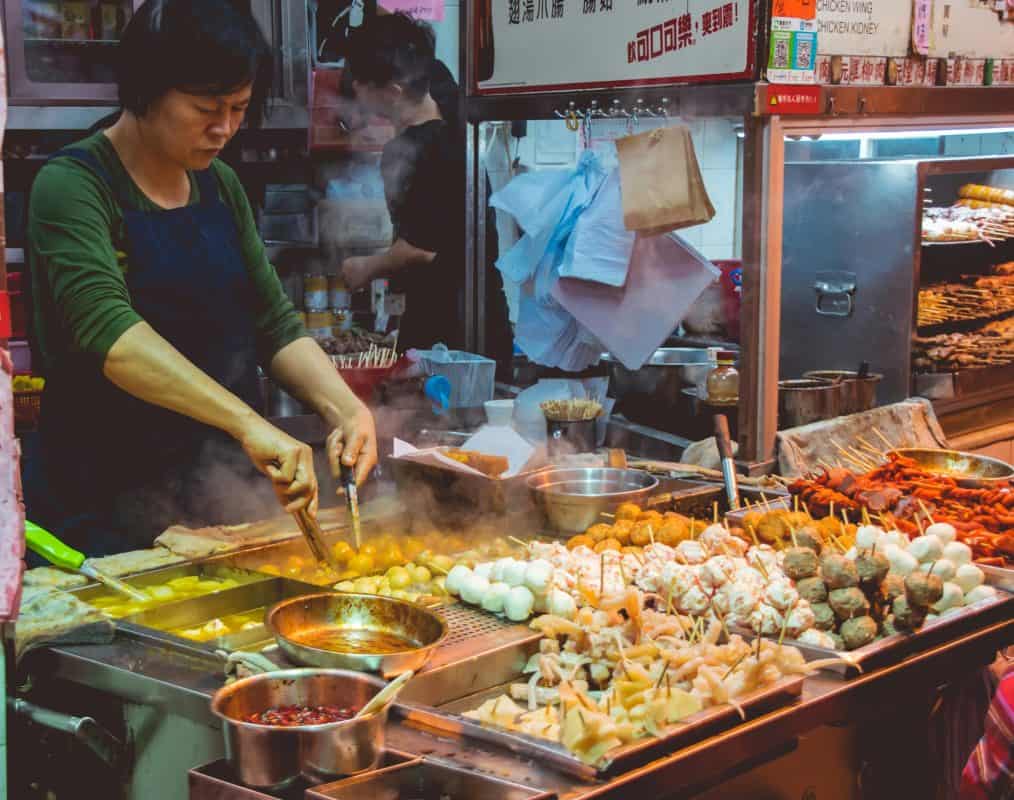
Vibrant Night Markets and Street Bazaars
Hong Kong’s evening commercial life is anchored by bustling open-air street markets. The Temple Street Night Market in Yau Ma Tei is famous for fortune tellers, Cantonese opera singers, claypot rice stalls, and trinkets; the Ladies’ Market along Tung Choi Street in Mong Kok packs over 100 stalls of clothing and souvenirs; and the historic Yau Ma Tei Fruit Market operates as a midnight wholesale bazaar for exotic seasonal tropical fruits.
The Pioneering Contactless Octopus Card System
Launched in 1997 as one of the world’s earliest contactless smart card systems, the Octopus Card (Baat Daa Tong) revolutionized urban cash-free transit. Beyond powering the MTR subway, buses, and Star Ferry, it functions as universal electronic currency accepted at convenience stores, bakeries, fast-food outlets, vending machines, and parking facilities across the territory.
We travel to Hong Kong so frequently, that we always have our Octopus Card (along with some Hong Kong dollars) in our travel wallet!
Traditional Cantonese Festivals and Intangible Cultural Heritage
Hong Kong preserves major Chinese calendar festivals with distinctive local traditions. Standouts include the Tai Hang Fire Dragon Dance during the Mid-Autumn Festival (where a 67-meter straw dragon studded with thousands of burning incense sticks is paraded through the streets), the Cheung Chau Bun Festival (featuring towering bamboo bun pyramids and children paraded on stilts), and the high-stakes Wednesday night horse races at the historic Happy Valley Racecourse.
That said, Hong Kong also embraces the western holidays as well, particularly Christmas where the city comes alive with shopping and kids taking photos with Santa. We once saw a particularly long line to see Santa at Cartier! That is very Hong Kong.
Frequently Asked Questions: What Is Hong Kong Famous For?
What is the single most famous food to eat in Hong Kong?
Dim sum (Yum Cha) and Roast Goose (Siu Ngo) are Hong Kong’s most famous culinary exports. Dim sum is traditionally eaten during morning tea hours from bamboo steamers, while roast goose is roasted in gas or charcoal ovens until the skin is mahogany-crisp and served with sour plum sauce.
What is Hong Kong’s most famous landmark?
Victoria Harbour and Victoria Peak are Hong Kong’s most famous landmarks. Victoria Peak offers panoramic views over the world’s densest high-rise skyline, accessible via the historic 1888 Peak Tram funicular railway.
Why is Hong Kong famous for shopping?
Hong Kong is a duty-free international trade port that levies no sales tax or Value Added Tax (VAT) on luxury goods, electronics, cosmetics, or clothing, making its sprawling shopping mega-malls and open-air street markets a major destination for international shoppers.
What is a cha chaan teng and why is it iconic in Hong Kong?
A cha chaan teng (literally “tea restaurant”) is an authentic Hong Kong cafe that serves localized, affordable Western-Cantonese comfort foods—such as milk tea, French toast with condensed milk, and egg sandwiches—originating in the post-WWII era.
How much does the Star Ferry cost across Victoria Harbour?
A standard lower-deck or upper-deck crossing on the historic Star Ferry between Tsim Sha Tsui and Central/Wan Chai costs approximately 5.00 to 6.50 HKD (~0.65 to 0.85 USD) as of August 2026, making it one of the cheapest and most scenic public transit rides in the world.
Where to Stay in Hong Kong
Our go-to places to stay in Hong Kong across different travel styles and budgets:
- Renaissance Hong Kong Harbour View Hotel (Wan Chai – Waterfront & Business): While it caters exceptionally well to business travelers with direct covered access to the convention center, it makes exploring the entire city effortless. The Wan Chai Star Ferry pier sits right out front for fast scenic harbour crossings to Kowloon, the top-floor Executive Lounge offers panoramic skyline views, and the on-site Dynasty Restaurant serves some of the best Cantonese roast meats and dim sum in the city.
- Holiday Inn Golden Mile (Tsim Sha Tsui – Value & Transit Hub): The ultimate convenient, budget-friendly base in Kowloon. The hotel sits directly on lower Nathan Road with direct MTR subway entrances right outside the lobby, making it our top choice for quick layovers, overnight stopovers, and maximizing food crawls across both sides of the harbour.
- The Pottinger Hong Kong (Central – Boutique Stay for Food Lovers): An elegant heritage-inspired boutique hotel situated right on Stanley Street along the historic stone-slab steps of Pottinger Street. It places food lovers literally steps away from Wellington and Stanley streets—putting iconic culinary institutions like Yung Kee (roast goose), Mak’s Noodle, Luk Yu Tea House, and Tai Cheong Bakery right outside your front door.