Understanding the realistic cost of food in Hong Kong is essential for planning a trip, with average daily budgets running between $300 HKD and $500 HKD (roughly $38 to $64 USD) per person. This mid-range daily budget easily covers a full day of eating across local neighborhoods.
Start with a silk-stocking milk tea and pineapple bun at a cha chaan teng, sit down for midday dim sum, grab roast goose over rice for dinner, and finish with local beers at an indoor food centre. While high-end hotel restaurants can easily run over $1,000 HKD ($128+ USD) a head, everyday eating across Kowloon and Hong Kong Island is surprisingly affordable.
*This post contains compensated links. Find more info in my DISCLAIMER. As an Amazon Associate, I earn from qualifying purchases.
When Eric and I first landed in Hong Kong back in 2009, we were constantly running currency conversions in our heads. We were wary of how quickly costs could pile up in one of Asia’s more expensive cities. Over multiple return trips while traveling full-time, our approach refined. We realized that accommodation takes up the lion’s share of any travel budget in Hong Kong. Food can be quite affordable!
By using credit card points and free night certificates to cover our hotel stays, we free up our cash for what truly matters to us: eating and drinking exceptionally well. You do not need to spend a fortune to eat brilliantly here. While we always budget for one or two memorable dining splurges, everyday neighborhood dining across Hong Kong delivers incredible quality at reasonable prices.
Quick Facts: Food & Drink Prices in Hong Kong
| Dining Style / Meal Tier | Cost Range (HKD) | Approx. USD Equivalent | What You Get |
| Cha Chaan Teng (Tea Restaurant) | $35 HKD – $65 HKD | $4.50 – $8.30 USD | Silk-stocking milk tea, pineapple bun with thick butter, or satay beef instant noodle soup. |
| Dim Sum Tea House | $120 HKD – $220 HKD | $15.00 – $28.00 USD | 4 to 6 shared bamboo steamer baskets (siu mai, har gow, sticky rice in lotus leaf) plus tea service fee. |
| Roast Meat Shop (Siu Mei) | $50 HKD – $95 HKD | $6.40 – $12.10 USD | Generous single or duo roast platter over rice (char siu, crispy pork, or roast duck) with green onion sauce. |
| Dai Pai Dong / Indoor Food Centre | $120 HKD – $250 HKD | $15.00 – $32.00 USD | Air-conditioned market food hall stir-fries (salt & pepper squid, garlic morning glory, black bean clams) shared family-style. |
| Local Noodle Bar | $40 HKD – $70 HKD | $5.10 – $9.00 USD | Steaming bowl of wonton egg noodles or tender braised beef brisket noodle soup. |
| Outlying Island Seafood Splurge | $350 HKD – $650 HKD | $45.00 – $83.00 USD | Boat trip to Lamma Island for live mantis shrimp, garlic razor clams, and steamed grouper at Lamma Rainbow. |
*I researched the Cantonese names, but please don’t rely on my Cantonese 100%!
Table of Contents
To prepare for your trip to Hong Kong, check out our complete Hong Kong Travel Guide.
Realistic Daily Food Budgets for Hong Kong
We channel the majority of our Hong Kong travel budget into dining and drinking after locking in accommodation. Your total daily outlay depends on how you balance neighborhood tea shops with sit-down Cantonese institutions.
- The Value / Budget Traveler ($180 HKD – $280 HKD / ~$23 – $36 USD per day): Grab a quick egg tart and iced milk tea from a bakery or 7-Eleven for breakfast, sit at a fast-turnover wonton noodle counter for lunch, and enjoy a single-item roast pork rice plate at a local siu mei shop for dinner.
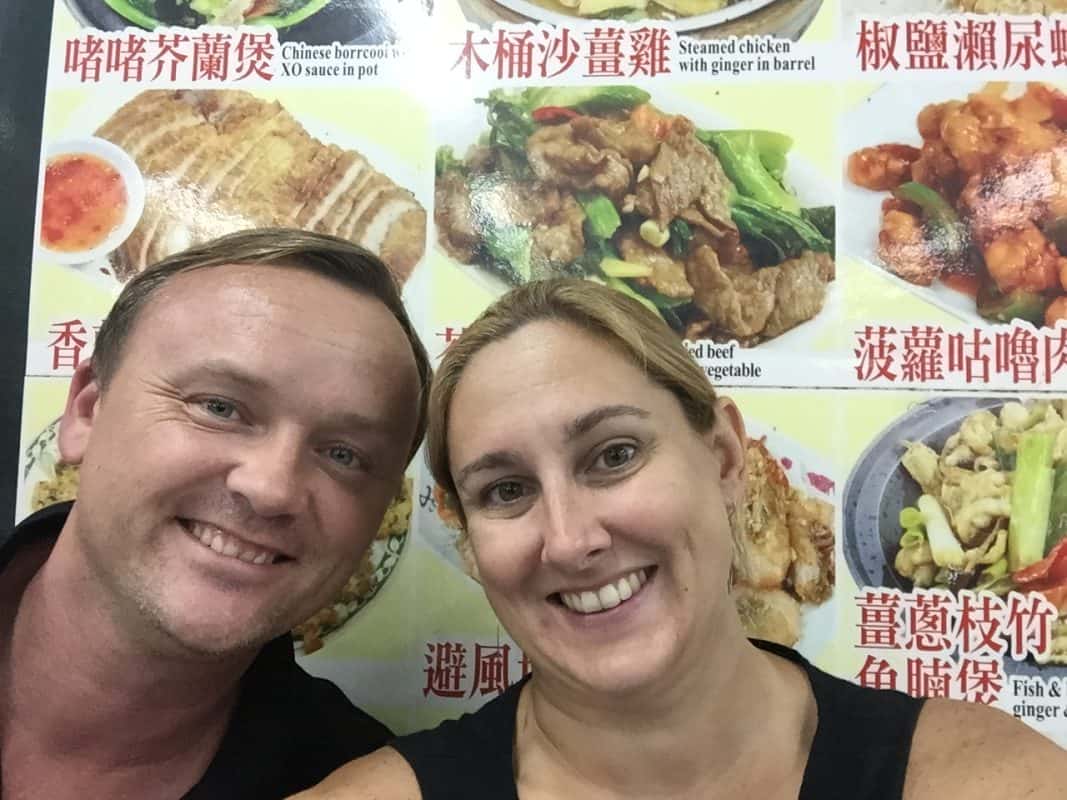
- The Mid-Range Food Lover ($300 HKD – $500 HKD / ~$38 – $64 USD per day): This is how Eric and I spend our travel days in Hong Kong. We kick off the morning with dim sum for breakfast, then hunt for roast goose, roast duck, char siu, or a quick noodle shop in the afternoon. For dinner, we seek out a Macanese restaurant or head up to an indoor public market food hall for family-style stir-fry dishes and cold beers.
- The Splurge Day ($750 HKD – $1,400+ HKD / ~$96 – $180+ USD per day): For us, a splurge day means getting out on the water. We take the ferry or restaurant shuttle boat out to Lamma Island to feast on live seafood at institutions like Lamma Rainbow Seafood Restaurant in Sok Kwu Wan, pairing fresh-caught mantis shrimp and lobster with cold beers by the harbor.
Traveling to Hong Kong? Check out our comprehensive Hong Kong Food Guide to learn what dishes to eat in Hong Kong.
What Does Breakfast, Lunch, and Dinner Cost in Hong Kong?
Eric and I rarely purchase a hotel breakfast package in Hong Kong. The only time we eat breakfast at our hotel is if we happen to have complimentary lounge access through our hotel status. Hotel breakfast buffets often run upwards of $250 HKD ($32 USD) per person, plus a standard 10% service charge and we would much rather spend that money out in the city eating dim sum for breakfast in Hong Kong.
Cha Chaan Tengs: The Morning Standard
A traditional Hong Kong breakfast set at a neighborhood cha chaan teng costs between $35 HKD and $65 HKD ($4.50 to $8.30 USD).
These iconic, fast-paced tea restaurants operate as the lifeblood of Hong Kong mornings. Order a signature pineapple bun sliced open with a cold slab of salted butter (boh loh yau) for $16 HKD to $24 HKD ($2.00 to $3.00 USD). Pair it with a piping-hot, concentrated silk-stocking milk tea for $20 HKD ($2.50 USD). Breakfast set combinations featuring satay beef noodles, fried eggs, and thick toast offer tremendous value for well under $50 HKD ($6.40 USD).

Wonton Noodles & Fast Counters
A steaming bowl of hand-wrapped wonton egg noodle soup averages $40 HKD to $65 HKD ($5.10 to $8.30 USD) at local counters.
For a rapid, deeply satisfying midday meal, local noodle shops deliver immense flavor with zero fuss. Expect plump prawn dumplings wrapped in thin skin floating in a rich dashi-and-flounder broth. Upgrading to a bowl of slow-braised beef brisket and tendon noodles (chu hou) costs between $50 HKD and $75 HKD ($6.40 to $9.60 USD). Sides of blanched gai lan (Chinese kale) drizzled with oyster sauce run an additional $20 HKD to $30 HKD ($2.50 to $3.80 USD).
Dim Sum Teahouses: The Midday Sweet Spot
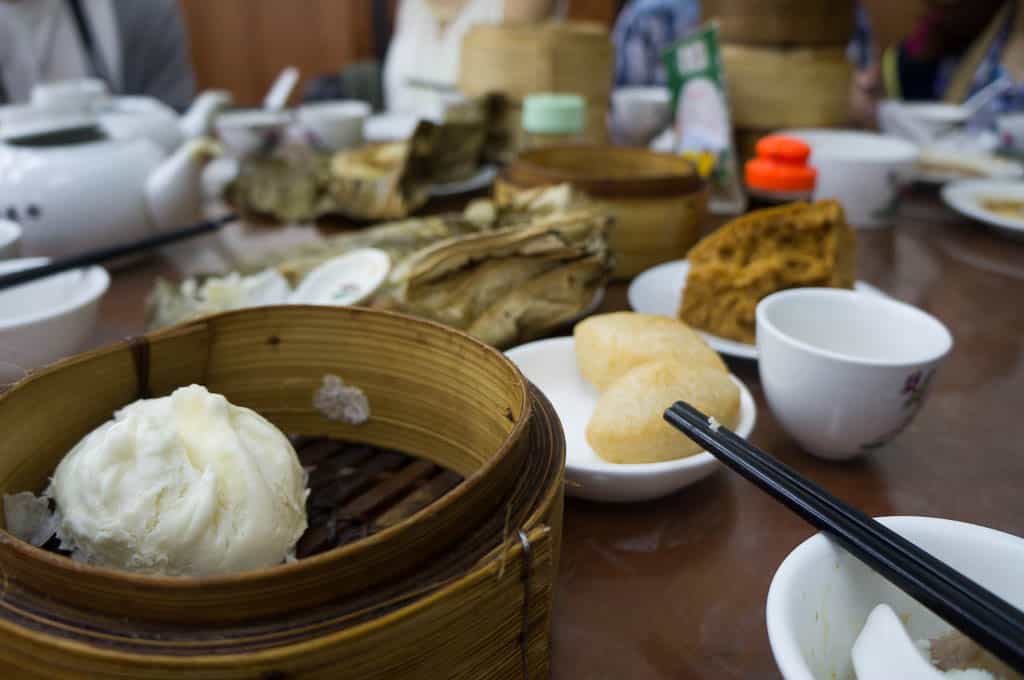
An authentic midday dim sum session averages $120 HKD to $220 HKD ($15.00 to $28.00 USD) per person for four to five shared baskets.
Our absolute favorite thing to eat is dim sum in Hong Kong. Historic spots like Lin Heung Lau and classic trolley halls like Maxim’s Palace at City Hall are mandatory stops for us. One of our all-time favorite items to order is sticky rice wrapped in lotus leaf (lo mai gai), packed with savory chicken, pork, and salted egg yolk. Pricing per steamer basket ranges from $28 HKD to $58 HKD, alongside a small per-person tea cover charge (cha fei) of $12 HKD to $22 HKD ($1.50 to $2.80 USD).

Siu Mei (Roast Meat Shops)
A generous single-protein roast meat plate over steamed rice costs $50 HKD to $85 HKD ($6.40 to $10.90 USD).
Eric has an absolute weakness for all the roasted meats in Hong Kong, and it is easily one of our favorite things to eat in the city. Recognizable by the glossy glazed ducks and pork strips hanging in front windows, local siu mei stalls serve pure comfort food. A dual-combo plate (seung pei) featuring sweet-salty char siu alongside crackling roast pork (siu yuk) with savory ginger-scallion sauce costs around $68 HKD ($8.70 USD). Sitting down for a quarter portion of crispy roast goose at established neighborhood spots like Yat Lok or Kam’s runs between $160 HKD and $240 HKD ($20.00 to $30.00 USD).
What Do Drinks, Beer, and Alcohol Cost in Hong Kong?
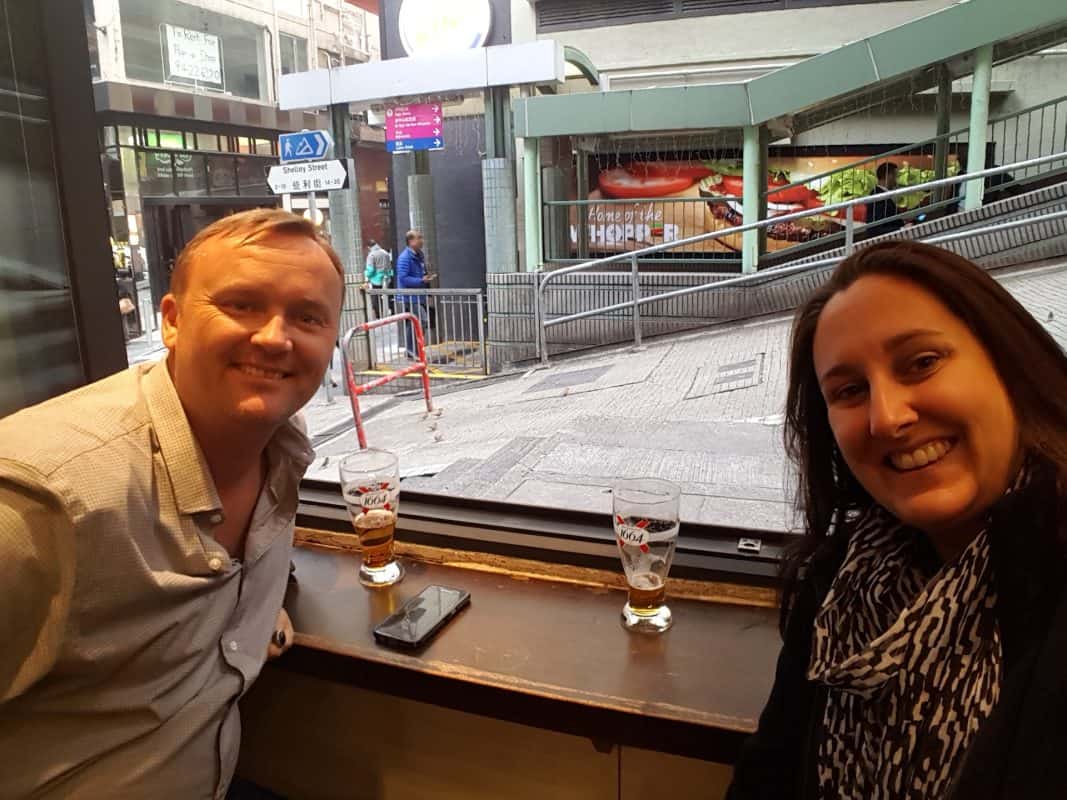
Because of the high cost of alcohol in Hong Kong bars and restaurants, many locals purchase cold beers from 7-Eleven and drink them right on the street outside. Locals affectionately refer to this budget ritual as hanging out at “Club 7-Eleven” or “Club 7.”
| Drink Item | Serving Style / Setting | Average Cost (HKD) | Approx. USD |
| Local Large Bottle Beer (Blue Girl / Tsingtao) | 640ml bottle at a Dai Pai Dong / Indoor Food Centre | $30 HKD – $48 HKD | $3.80 – $6.15 USD |
| Draft Pint (Standard Commercial) | Pint at a pub or casual restaurant in Wan Chai / Mong Kok | $55 HKD – $85 HKD | $7.00 – $10.90 USD |
| Standard Bar Cocktail (Gin & Tonic / Vodka Tonic) | Mid-range neighborhood bar or pub | $90 HKD – $140 HKD | $11.50 – $18.00 USD |
| Hong Kong Craft Beer | Draft pint at a specialized craft taproom | $80 HKD – $120 HKD | $10.20 – $15.30 USD |
| Starbucks Caffe Latte | Grande size at a standard city location | $42 HKD – $47 HKD | $5.40 – $6.00 USD |
| Iced Hong Kong Milk Tea / Lemon Tea | Cha Chaan Teng or takeaway tea stand | $20 HKD – $28 HKD | $2.50 – $3.60 USD |
| Fresh Mango / Tropical Fruit Shake | Night market juice stall | $25 HKD – $38 HKD | $3.20 – $4.85 USD |
| Convenience Store Beer (“Club 7-Eleven”) | 500ml can from 7-Eleven or Circle K | $15 HKD – $24 HKD | $1.90 – $3.00 USD |
Ordering a simple gin and tonic or vodka tonic at a mid-range bar in Central or Soho will easily set you back $90 HKD to $140 HKD ($11.50 to $18.00 USD). Upscale hotel lounges charge considerably more, making casual beer spots or neighborhood food halls a much better option for a casual drink.
If you need a familiar caffeine fix, a standard Grande Starbucks Caffe Latte runs between $42 HKD and $47 HKD ($5.40 to $6.00 USD). While it is easy to find a familiar green siren across the city, local cha chaan teng iced milk teas cost half the price and deliver double the local flavor.

3 Best Indoor Food Halls in Hong Kong to Visit
Some of the best budget eating in Hong Kong hides on the upper floors of municipal market buildings. These air-conditioned public food centres house dozens of competing stalls serving wok-fried stir-fries and cold beers at local prices.
1. Java Road Cooked Food Centre (North Point)
Located on the 2nd floor of the Java Road Municipal Services Building right by the North Point MTR station, this food hall remains a classic local neighborhood favorite.
- Hours of Operation: Daily from 6:00 AM to 2:00 AM.
- Tak Faat Seafood: A standout local seafood stall where you can pick live fish and shellfish cooked to order. Expect to spend around $150 HKD to $220 HKD ($19.00 to $28.00 USD) per person for a full seafood feast.
- Cheung Fat Restaurant: Excellent for quick lunch combos and classic Cantonese wok dishes like beef chow fun (flat rice noodles) for $55 HKD to $80 HKD ($7.00 to $10.20 USD).
- Wing Fat Restaurant: Famous for classic home-style Cantonese claypot dishes, braised pork belly, and salt-and-pepper squid for $65 HKD to $95 HKD ($8.30 to $12.10 USD).
2. Queen Street Cooked Food Market (Sheung Wan)
Tucked away on the 1/F of 38 Des Voeux Road West in Sheung Wan, this market hall was recently renovated and offers a cleaner, bright, and international stall setup.
- Hours of Operation: Daily from 6:00 AM to 2:00 AM.
- Traditional Beijing Dumpling House: Famous for handmade boiled and pan-fried dumplings starting at just $38 HKD to $55 HKD ($4.80 to $7.00 USD) for 10 pieces.
- Chautari Restaurant: A popular family-run stall serving genuine Nepalese and Indian curries, garlic naan, and chicken tikka for $65 HKD to $110 HKD ($8.30 to $14.00 USD) per dish.
- ABC Kitchen: A quirky Western “fine dining” stall inside a public market run by former hotel chefs. Enjoy roasted pork knuckle or duck breast sets for $180 HKD to $280 HKD ($23.00 to $36.00 USD).
3. Bowrington Road Cooked Food Centre (Wan Chai / Causeway Bay)
Sitting directly above the wet market between Wan Chai and Causeway Bay, this energetic hall gets packed at lunch with local workers and at night with groups drinking beer.
- Hours of Operation: Daily from 6:00 AM to 2:00 AM.
- Wai Kee: Legendary halal roast meat stall operating daily from 11:00 AM to 6:00 PM. Famous worldwide for its crisp-skinned roast duck over rice ($48 HKD / $6.15 USD) and rich mutton curry ($55 HKD / $7.00 USD).
- Wing Kee Produce & Seafood: A quintessential stall serving fiery stir-fried black bean clams ($88 HKD / $11.25 USD) and salt-and-pepper squid ($95 HKD / $12.10 USD).
- Kei Kee Noodles: Ideal for a cheap, rapid lunch of braised beef brisket noodle soup or wonton noodles for $35 HKD to $50 HKD ($4.50 to $6.40 USD).
Practical Reality & Cultural Rules for Eating in Hong Kong
- Octopus Card is Mandatory: Get a physical Octopus Card or digital version on your phone immediately upon arrival at HKIA. Beyond MTR transit, it is the primary payment method for cha chaan tengs, noodle shops, bakeries, and convenience stores.
- Tipping Customs & Service Charges: Tipping is not traditionally expected at local counters, noodle shops, or tea houses. However, hotel restaurants, bars, and sit-down dining outlets automatically add a standard 10% service charge to your final food and drink bill. Menu prices in hotel dining venues are typically listed as exclusive of this charge (indicated by “+10%” on the menu). Extra tipping on top of that 10% is entirely optional.
- Table Sharing (Dap Baug): Our very first experience with table sharing was at Lin Heung Lau. Sitting shoulder-to-shoulder at a round table with complete strangers feels strange to many Westerners at first, but if we had refused to share a table that morning, we never would have eaten. Space is tight across the city, so sit down, order efficiently, and enjoy the atmosphere.
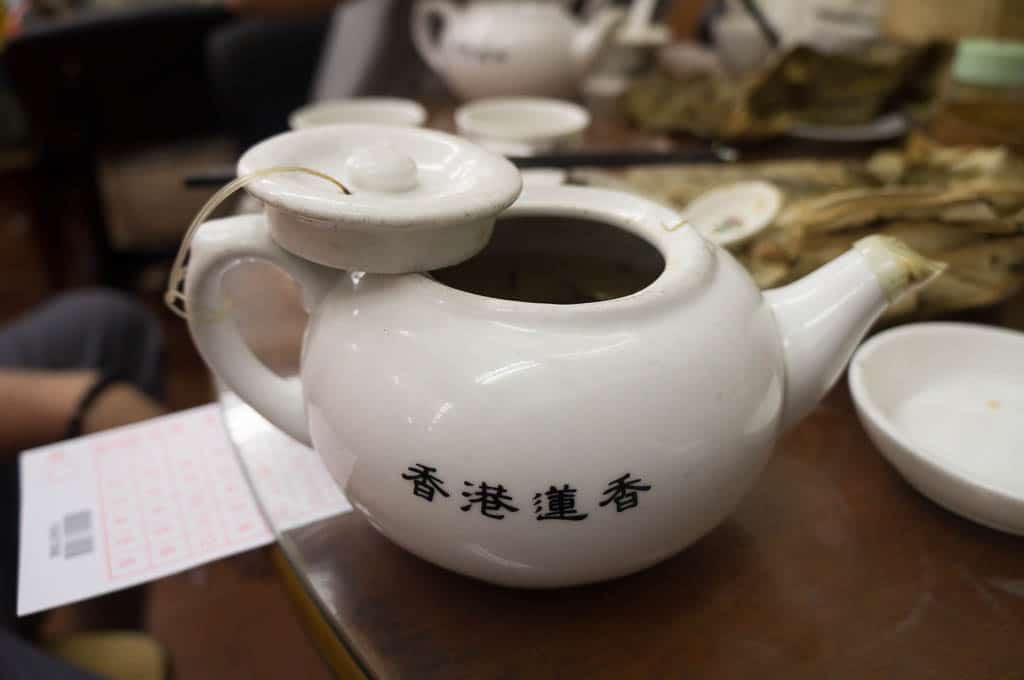
- Tea Cleaning Ritual: Our introduction to the hot tea cleaning ritual was also at Lin Heung Lau. The kindest little old lady showed us how to rinse our teacups, bowls, and chopsticks in hot tea at the table before eating. It is a warm memory that has stayed with us for nearly 20 years.
Frequently Asked Questions About Food Costs in Hong Kong
Is food expensive in Hong Kong?
Everyday local dining in Hong Kong is remarkably affordable given the city’s overall cost of living. While Western dining rooms and hotel restaurants are pricey, authentic local establishments like cha chaan tengs, wonton noodle stalls, and roast meat counters offer full, satisfying meals for $40 HKD to $80 HKD ($5.00 to $10.00 USD).
How much should I budget per day for food in Hong Kong?
A realistic daily food budget for a mid-range food lover is $300 HKD to $500 HKD ($38 to $64 USD) per person. This comfortably covers a traditional tea house breakfast, a sit-down dim sum or roast meat lunch, afternoon street snacks, and a full evening dinner with local beers.
Can you pay for food with credit cards in Hong Kong?
Major credit cards are widely accepted at hotels, department stores, and upscale dining establishments. However, many authentic local counters, market stalls, and neighborhood tea houses operate strictly on cash or Octopus Card payments. Always carry an Octopus Card loaded with funds and $200 HKD to $300 HKD in cash.
What is the cheapest way to eat well in Hong Kong?
The cheapest strategy is eating at the indoor food halls located on the upper floors of government public market buildings. These air-conditioned spaces house dozens of competing local stalls serving generous stir-fry portions, roast meats, and noodles at local neighborhood prices.
Why are lunch sets cheaper than dinner in Hong Kong?
Local eateries offer discounted set lunch menus (teishoku style or daily rice sets) between 11:30 AM and 2:30 PM to cater to nearby office workers. Dinner menus often transition to a la carte ordering with larger portion sizes intended for family-style sharing, raising the total cost per dish.
/