For culinary travelers, deciding where to stay in Hong Kong isn’t just about finding a comfortable bed—it dictates what you smell when you step out of your lobby in the morning and how far you have to waddle back after a late-night feast. In a city where a single day can involve racing after push-cart dim sum, slurping bamboo-kneaded noodles on a plastic stool, and finishing over sizzling claypot rice, choosing the wrong base means wasting prime eating hours sitting in transit.
Hong Kong Island and Kowloon offer two completely different culinary personalities. Basing yourself on Hong Kong Island in Central & Sheung Wan puts you on the doorstep of historic Cantonese roast goose institutions, hillside teahouses, and buzzing speakeasies along the Mid-Levels.
Across Victoria Harbour in Kowloon, neighborhoods like Sham Shui Po and Mong Kok & Jordan immerse you in raw, working-class street food culture, from morning Michelin Bib Gourmand rice rolls to open-air midnight wok markets. To help you plan your trip around your appetite, here is our breakdown of the 3 best Hong Kong neighborhoods for food lovers, along with the top culinary-focused hotels in each.
*This post contains compensated links. Find more info in my DISCLAIMER. As an Amazon Associate, I earn from qualifying purchases.
Quick Facts: Best Hong Kong Neighborhoods for Food Lovers
| Neighborhood | Best For Foodies | Rate From (Nightly Baseline) | Nearest Transit Hub | One Key Drawback |
| Central & Sheung Wan | Push-cart dim sum, roast goose, Michelin dining, historic tea houses. | 145 USD | Central MTR & Hong Kong Station (Airport Express) | Steep hills, outdoor stairs, and higher room rates. |
| Sham Shui Po | Bamboo wonton noodles, cart noodles, budget Michelin Bib Gourmand eats. | 80 USD | Sham Shui Po MTR (Tsuen Wan Line) | Limited upscale hotel inventory and compact rooms. |
| Mong Kok & Jordan | Late-night street skewers, pineapple buns, charcoal claypot rice, night markets. | 80 USD | Mong Kok MTR & Jordan MTR Stations | Heavy sidewalk congestion, 24-hour noise, and dense crowds. |
Table of Contents
Traveling to Hong Kong?
Check out our comprehensive Hong Kong Travel Guide, as well as our recommended 3 Day Hong Kong Itinerary for food lovers.
Which Hong Kong Neighborhood Is Best If You Are A Food Lover?
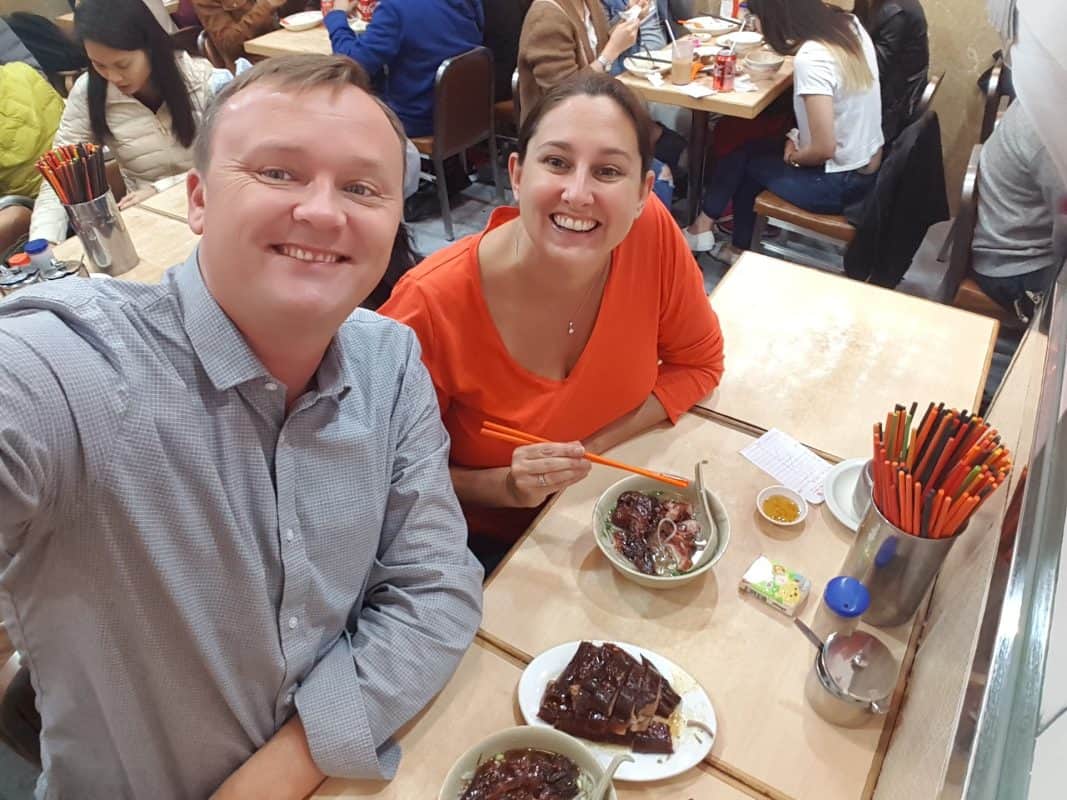
Whenever we plan a trip to Hong Kong, our hotel choice always comes down to what we want to eat the second we step out the front door. Over the last fifteen years and more than a dozen visits, Eric and I have stayed all over the territory—from quiet waterfront suites in Wan Chai to bustling mid-scale towers right on Nathan Road—and we’ve learned that your neighborhood completely dictates your daily dining rhythm.
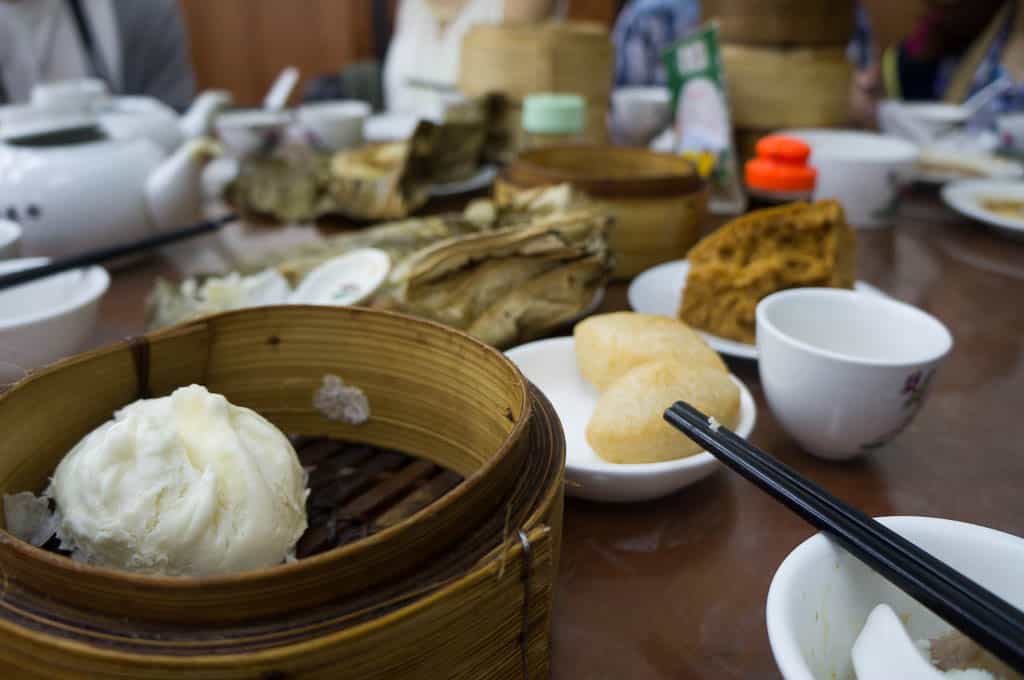
If we base ourselves on Hong Kong Island in Central or Sheung Wan, our mornings start with the wonderful chaos of push-cart dim sum at Lin Heung Lau and afternoons are spent hunting down egg tarts and wonton noodles along the Mid-Levels escalators. When we stay across the harbour in Kowloon, the trip takes on a much faster, grittier street-food energy, where we’re grazing on bamboo-pressed noodles in Sham Shui Po by day and scraping up crispy charcoal claypot rice along Temple Street late at night.
The Star Ferry and MTR make hopping between islands effortless, but choosing the right home base means our favorite meals are just a quick stroll away rather than a trek across town. Here is how our three favorite foodie neighborhoods stack up.
Check out our complete guide on the Cost of Eating and Drinking in Hong Kong.
Central & Sheung Wan: Best for Push-Cart Dim Sum, Roast Goose, and Heritage Teahouses
Central Hong Kong and neighboring Sheung Wan form the historic culinary epicenter of Hong Kong Island, defined by multi-story banquet dining rooms, open-air alleyway food stalls (dai pai dongs), and hillside cafe corridors. A dai pai dong is a licensed open-air street eatery featuring outdoor green metal stalls and high-heat wok burners.
It suits serious culinary travelers because multi-generational institutions like Yung Kee for roast goose, Mak’s Noodle for springy prawn wonton soup, Lin Heung Lau for push-cart dim sum, and Tai Cheong Bakery for hot egg tarts sit within a compact, walkable hillside grid.
The primary trade-off is higher baseline hotel rates and steep pedestrian staircases. Walking distance to core dining streets (Wellington Street, Stanley Street, Gage Street) is 2 to 5 minutes from central hotels.
- For full venue reviews and dish recommendations, read our complete guide to What to Eat in Central & Sheung Wan.
Sham Shui Po: Best For Traditional Noodle Masters And Budget Bib Gourmand Stalls
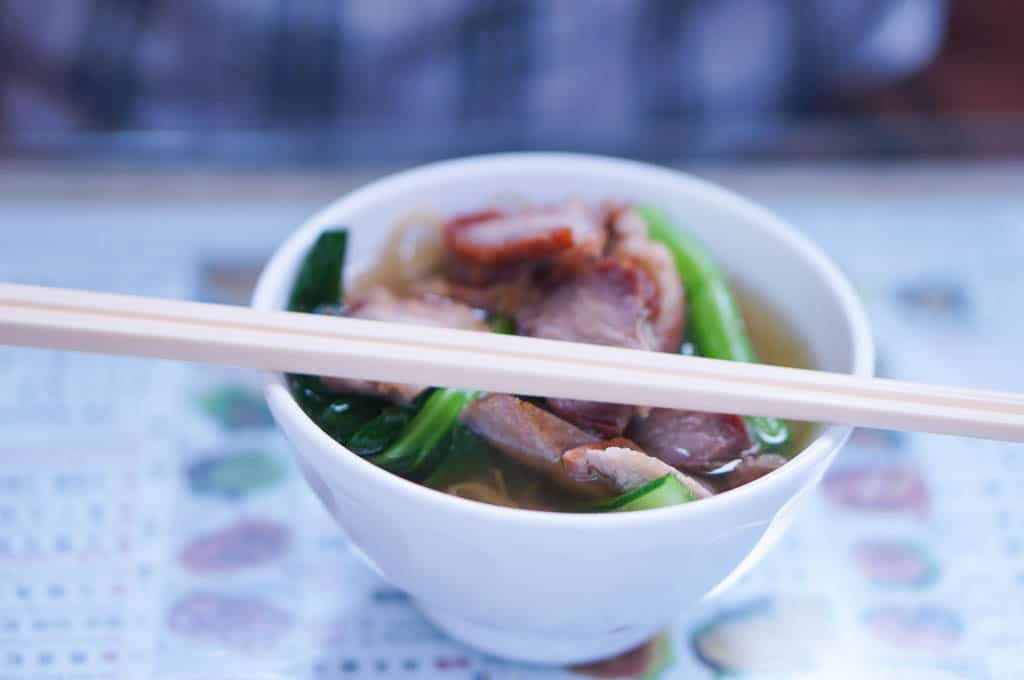
Sham Shui Po is a historic working-class neighborhood in northwest Kowloon famous for its bustling flea markets and Hong Kong’s highest density of budget-friendly Michelin Bib Gourmand food shops. It suits dedicated street food lovers because multi-generational family kitchens serve hand-pulled cheong fun (steamed rice noodle rolls) at Hop Yik Tai, bamboo-kneaded noodles at Lau Sum Kee, and custom brisket bowls at Man Kee Cart Noodles for just a few dollars.
The primary trade-off is the lack of luxury 5-star hotels and fewer English menus compared to Hong Kong Island. Walking distance to the main food market corridors along Fuk Wing Street, Kweilin Street, and Pei Ho Street is 1 to 3 minutes from local transit hotels.
- For stall maps and ordering tips, explore our detailed guide on What to Eat in Sham Shui Po.
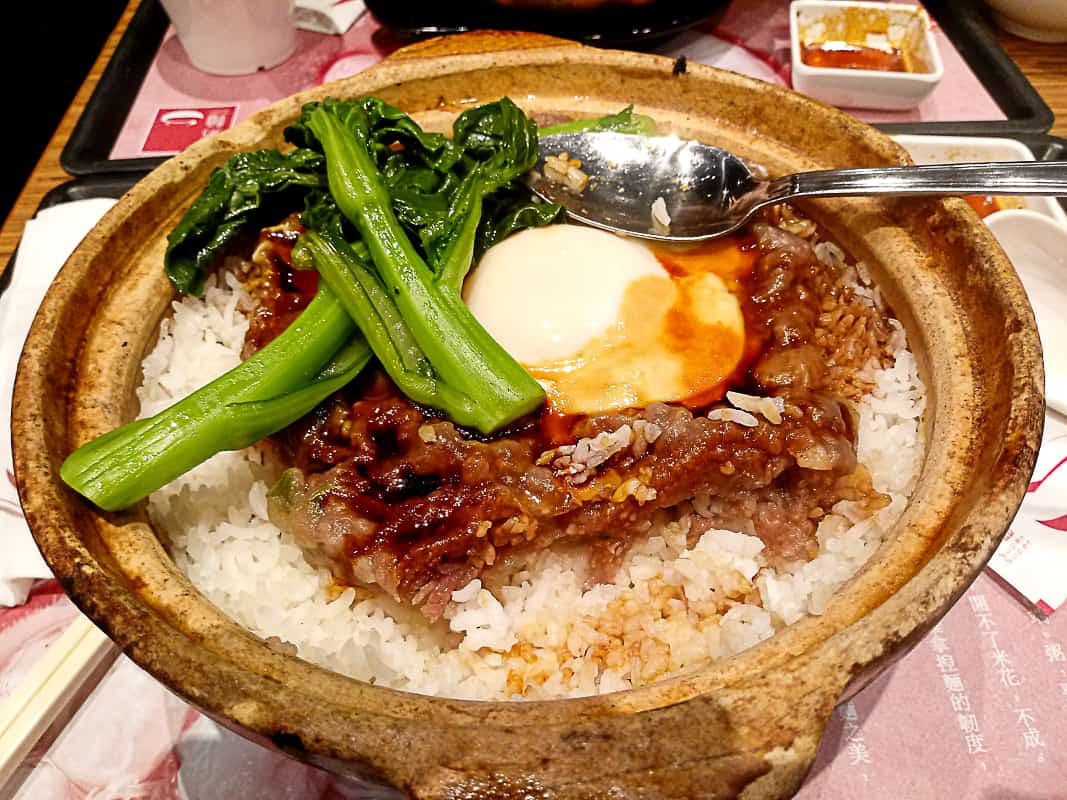
Mong Kok & Jordan: Best For Late-Night Street Snacking And Charcoal Claypot Rice
Mong Kok and neighboring Jordan represent the hyper-dense culinary engine of central Kowloon, packed with neon-lit street carts, open-air night markets, and 24-hour casual diners. It suits night-owl eaters and grazing foodies because legendary buttered pineapple buns (Bo Lo Yau) at Kam Wah Cafe, cold cuttlefish skewers at Fei Jie, and sizzling open-fire claypot rice along the Temple Street Night Market corridor operate continuously from afternoon until well past midnight.
The primary trade-off is intense street-level foot traffic, urban noise, and smaller average hotel room footprints. Walking distance to the core Dundas Street snack corridor and evening market stalls is under 4 minutes from neighborhood properties.
- Check out our complete dining itinerary in What to Eat in Mong Kok.
Which Hotels In Hong Kong Are Best For Food Lovers?
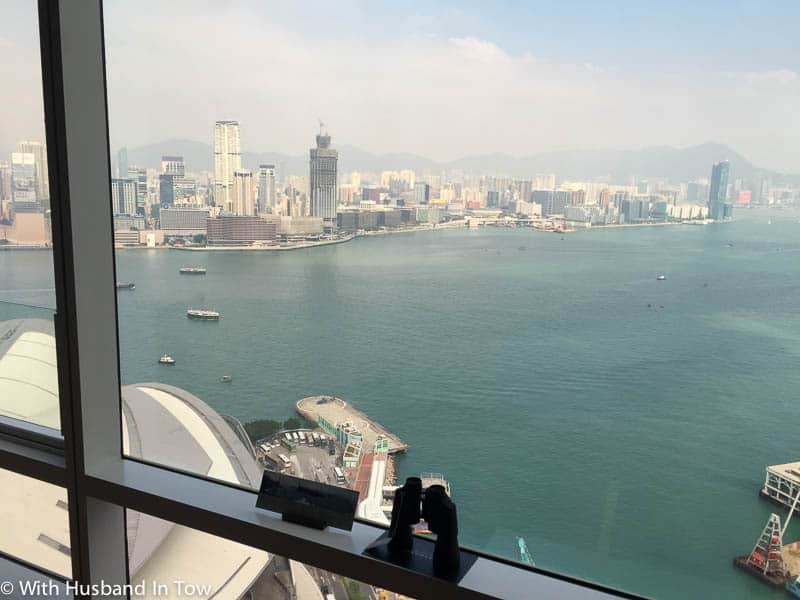
Renaissance Hong Kong Harbour View Hotel (Wan Chai / Central Border)
A waterfront property on northern Hong Kong Island offering panoramic Victoria Harbour views, direct convention connectivity, and refined on-site Cantonese dining.
- Nightly Rate From: 1,800 HKD (~230 USD) as of August 2026
- Why it earns a place: Houses the acclaimed Dynasty Restaurant (celebrated for premium barbecued meats and traditional dim sum) and sits less than a five-minute walk from Wan Chai’s Bowrington Road wet market and local roast meat shops.
- Room type worth booking: Harbour View King Room on upper Executive Club floors (approx. 2,600 HKD / ~335 USD as of August 2026) for exclusive access to the top-floor Executive Lounge with evening drinks and harbour views.
- One honest drawback: Hotel lobbies and elevators become congested during major trade exhibitions held at the adjacent convention center.
The Renaissance Hong Kong Harbour View has truly become our home away from home over the years, offering a peaceful, luxurious retreat from the city’s nonstop sensory overload without sacrificing transit convenience. Thanks to our Marriott Bonvoy Platinum Elite status, we always have access to their top-floor Executive Lounge, which pairs evening cocktails with some of the most spectacular, uninterrupted views over Victoria Harbour.
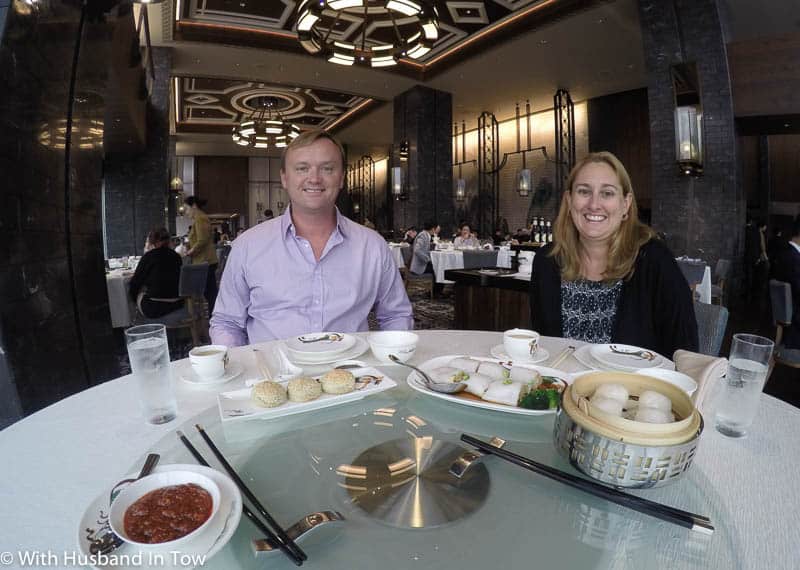
Best of all, we don’t even have to leave the property for world-class dining—their on-site restaurant, Dynasty, serves some of the absolute best high-end Cantonese roast char siu and traditional dim sum in the city.
Book here.
The Murray, Hong Kong (Central)
A luxury architectural preservation hotel occupying a converted modernist government tower along Cotton Tree Drive, blending heritage design with direct park access. The Murray Hong Kong was an incredible renovation from the Niccolo Hotel brand.
- Nightly Rate From: 2,800 HKD (~360 USD) as of August 2026
- Why it earns a place: Sits a seven-minute walk down to Wellington Street’s legendary food strip (Yung Kee, Mak’s Noodle, Tai Cheong Bakery) and houses upscale dining at The Tai Pan alongside panoramic skyline dining at Popinjays.
- Room type worth booking: N1 Deluxe Room (approx. 3,600 HKD / ~460 USD as of August 2026) featuring deep-set geometric recessed window bays.
- One honest drawback: Walking back to the hotel from central dining streets requires navigating steep uphill inclines along Garden Road.
Book here.
Cordis, Hong Kong (Mong Kok)
The Cordis Hong Kong is a sleek, modern 5-star hotel directly connected to the Langham Place shopping mall and Mong Kok MTR Station in central Kowloon.
- Nightly Rate From: 1,450 HKD (~185 USD) as of August 2026
- Why it earns a place: Houses the Michelin-starred Cantonese restaurant Ming Court on-site and places you a three-minute walk from Kam Wah Cafe’s pineapple buns and the street snack counters along Dundas Street.
- Room type worth booking: Club Deluxe Room (approx. 2,150 HKD / ~275 USD as of August 2026) for dedicated club lounge breakfast and evening tastings.
- One honest drawback: Stepping outside the shopping complex places you directly into Mong Kok’s densest, most crowded pedestrian thoroughfare.
Eaton HK (Jordan / Mong Kok Border)
A creative, design-forward lifestyle hotel positioned along Nathan Road between Jordan and Mong Kok, emphasizing local arts and dining culture.
- Nightly Rate From: 950 HKD (~120 USD) as of August 2026
- Why it earns a place: Houses the Michelin-starred Cantonese dining room Yat Tung Heen on-site and sits less than a four-minute walk from Temple Street Night Market claypot rice stalls.
- Room type worth booking: “Eat & Sleep” Cabin or Studio Room (approx. 1,400 HKD / ~180 USD as of August 2026) with access to the Food Hall and rooftop pool.
- One honest drawback: Standard entry-level rooms feature compact layouts typical of dense Kowloon residential zones.
Book here.
The Peninsula Hong Kong (Tsim Sha Tsui / Kowloon Transit Hub)
A world-famous 1928 heritage grand hotel located at the southern tip of Kowloon, renowned for its colonial architecture, impeccable service, and culinary traditions.
- Nightly Rate From: 4,800 HKD (~615 USD) as of August 2026
- Why it earns a place: Houses legendary culinary institutions including Spring Moon (acclaimed for Michelin-starred Cantonese dim sum and artisanal XO sauce) and sits steps from the Star Ferry for fast transit to Central teahouses.
- Room type worth booking: Grand Deluxe Harbour View Room (approx. 6,800 HKD / ~870 USD as of August 2026) for front-row views across Victoria Harbour to Hong Kong Island.
- One honest drawback: The ground-floor Lobby Lounge experiences heavy daily tourist queues for afternoon high tea, making the main lobby feel busy throughout the afternoon.
Book here.
Dorsett Wanchai (Wan Chai / Happy Valley Border)
A stylish, contemporary mid-scale hotel located directly opposite the historic Happy Valley Racecourse, bridging Wan Chai and Causeway Bay.
- Nightly Rate From: 850 HKD (~110 USD) as of August 2026
- Why it earns a place: Provides direct walking access to local street roast meat shops and neighborhood bakeries, supported by free hotel shuttle routes to Central and Causeway Bay food districts.
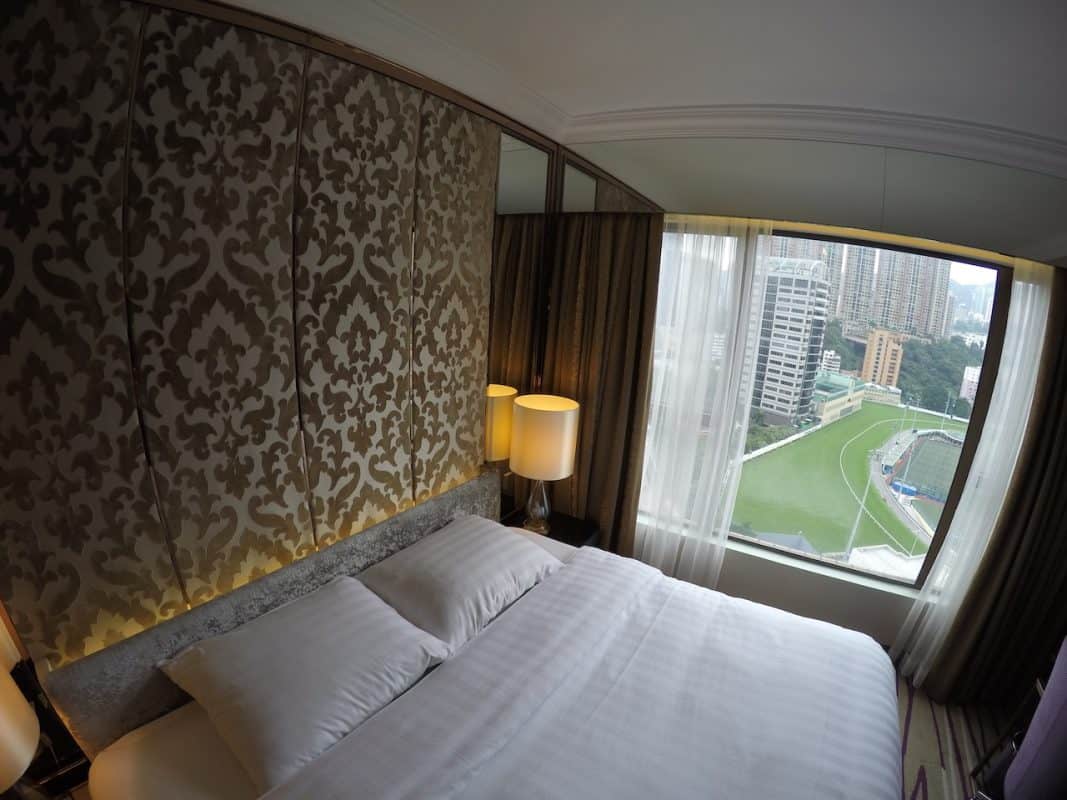
- Room type worth booking: Racecourse View Room (approx. 1,250 HKD / ~160 USD as of August 2026) for front-row views of live Wednesday evening racing.
- One honest drawback: It is roughly an eight-minute walk to the nearest MTR subway entrance, requiring guests to utilize city trams, buses, or hotel shuttles.
We stayed at the Dorsett Hong Kong during one trip to explore a different pocket of the island, and our room had front-row views over the race track. While it’s a bit further from the MTR than our usual waterfront spots, it’s a fun base if you want to hop on the historic Ding Ding tram directly into Causeway Bay’s shopping and food halls.
Book here.
What Should You Avoid When Booking A Hotel For A Hong Kong Food Trip?
- Booking in Outer Transit Suburbs (Tung Chung, Sha Tin, or Cyberport): While these hotels offer cheaper rates and larger room sizes, they require a 35-to-50-minute subway or bus ride each way, making morning dim sum runs or late-night street snacking impractical.
- Ignoring Incline Locations on Hong Kong Island: Properties situated in “Mid-Levels” or upper Sheung Wan often require walking up hundreds of outdoor concrete stairs; returning with heavy bellies after a multi-course dinner can be exhausting without hailing taxis.
- Overlooking Trade Exhibition Rate Surges: Hotel prices in Central, Wan Chai, and TST double or triple during major international convention dates (particularly April and October). Always check the convention calendar before finalizing your travel dates.
- Assuming All Hotels Have Large Room Footprints: In high-density food hubs like Mong Kok, Jordan, and Sham Shui Po, entry-level hotel rooms typically measure 12 to 18 square meters (130 to 195 sq ft); review room dimensions carefully if traveling with large suitcases.
How Much Should You Expect To Pay For A Hotel In Hong Kong?
Hotel pricing across Hong Kong’s primary culinary districts varies by season, with peak pricing during autumn (October to November) and spring (March to April), and discounted rates during the hot summer (June to August) and non-holiday winter periods. You can sort hotels by your budget on Booking.com.
- Budget & Entry-Level (65–110 USD / 500–850 HKD per night): Practical boutique properties and design-focused budget transit hotels (e.g., Eaton HK, Dorsett Wanchai, or Holiday Inn Express) offering clean, compact rooms near local MTR lines.
- Mid-Range & Full-Service (130–240 USD / 1,000–1,850 HKD per night): Established full-service business and lifestyle properties (e.g., Renaissance Harbour View or Cordis Hong Kong) featuring on-site dining, fitness centers, and rapid transit access.
- Luxury & Heritage 5-Star (350–700+ USD / 2,700–5,500+ HKD per night): World-renowned luxury flagships (e.g., The Murray or The Peninsula Hong Kong) featuring Michelin-starred restaurants, harbour views, and personalized service.
Frequently Asked Questions: Where to Stay in Hong Kong for Food
Which Hong Kong neighborhood has the best street food?
Sham Shui Po and Mong Kok in Kowloon offer the highest concentration of famous street food stalls and budget-friendly Michelin Bib Gourmand noodle shops, operating from early morning until after midnight.
Is it better to stay on Hong Kong Island or in Kowloon for a food trip?
For a complete culinary trip, Hong Kong Island (Central & Sheung Wan) is superior for historic push-cart dim sum, heritage teahouses, and upscale dining, while Kowloon (Mong Kok & Sham Shui Po) is unbeatable for fast-paced street snacks, cart noodles, and late-night markets.
What is the most walkable neighborhood for restaurants in Hong Kong?
Central and Sheung Wan offer the densest walkable concentration of eateries, where hundreds of historic noodle shops, bakeries, dai pai dongs, and modern wine bars are connected via pedestrian alleys and the Central–Mid-Levels Escalator.
How do you get from Hong Kong Airport to Central foodie hotels?
The fastest transit route is the Airport Express train, which reaches Kowloon Station in 22 minutes and Hong Kong Station (Central) in 24 minutes for 105–115 HKD (~13.40–14.70 USD). From either terminal, travelers connect via short taxi rides, MTR subway lines, or hotel shuttles.
Do Hong Kong hotels charge a service fee or accommodation tax?
Most Hong Kong hotels add a standard 10% service charge to the nightly room rate, along with the standard government Hotel Accommodation Tax (HAT) of 3% on accommodation charges. Always confirm whether quotes include taxes and service fees prior to booking.