
During our 3 years living in Spain, we fell in love with Spanish food. Spanish cuisine is regional, which means there are unique dishes to try in each region. These are some of our favorite food destinations in Spain, with must-visit cities, regions, and islands for food lovers. This Spain food guide focuses on what to eat in Spain, as soon as it is ready to welcome visitors once again.
Quick Facts About Eating in Spain
**This post contains compensated links. Find more info in my DISCLAIMER. As an Amazon Associate, I earn from qualifying purchases.
Spanish food is a regional mosaic defined by high-quality Mediterranean ingredients, pristine Atlantic seafood, heritage pork, and centuries-old culinary traditions spanning Basque pintxos, Valencian rice dishes, and Andalusian tapas. While staples like Jamón Ibérico and extra virgin olive oil unite the country, authentic Spanish dining is hyper-regional—from slow-simmered stews in Castile to wood-fired seafood on the northern and southern coasts.
| Iconic Spanish Dish | Region of Origin | Key Ingredients & Profile | How & When to Eat It |
| Jamón Ibérico de Bellota | Andalusia, Extremadura, Castile | Acorn-fed Iberian cured pork leg; nutty, melt-in-the-mouth, savory umami. | Sliced paper-thin at room temperature with crusty bread or picos. |
| Paella Valenciana | Valencia | Bomba rice, chicken, rabbit, green beans (bajoqueta), lima beans (garrofó), saffron, rosemary. | Eaten exclusively at lunch; scraped from the bottom for crispy socarrat. |
| Pintxos (e.g., Gilda) | Basque Country (San Sebastián) | Skewered olive, pickled guindilla pepper, and salted anchovy fillet. | Enjoyed standing at the bar counter with a glass of crisp Txakoli wine. |
| Bocadillo de Calamares | Madrid | Crisp, deep-fried fresh squid rings stuffed into a crusty white baguette. | Eaten hot from traditional bars around Plaza Mayor with garlic aioli. |
| Papas Arrugadas | Canary Islands | Small local potatoes boiled in sea salt until wrinkled; served with spicy red mojo sauce. | Served hot as a tapas dish or side to grilled Atlantic cherne and meats. |
| Flamenquín | Andalusia (Córdoba) | Rolled pork loin, Jamón Serrano, and cheese, breaded and deep-fried. | Served warm as a hearty lunch or ración with salmorejo and fries. |
| Cochino Negro | Canary Islands (Tenerife) | Heritage black pig roasted over open wood fires; exceptionally juicy and rich. | Ordered at traditional northern guachinches and rural bodegas. |
| Horchata y Fartons | Valencia (Alboraya) | Chilled milk beverage pressed from tiger nuts (chufas), paired with sweet glazed pastry. | Enjoyed during afternoon merienda at dedicated horchaterías. |
Table of Contents
Why Travel To Spain For Food
There’s one thing I can guarantee if you visit Spain, you are going to eat really well. It’s one of the reasons why we moved there and spent three years exploring its many foodie cities. For us, Spanish food is unmatched in terms of creativity, diversity, and regionality.
When answering the question, what is Spain famous for, in my eyes, there can only be one answer, its food.
From San Sebastian in the north to Seville and Malaga in the south, the range of dishes to eat is mind-blowing. While Spain has its fair share of Michelin-starred restaurants, it is the traditional dishes that have us missing Spain and counting down until our next visit.
It’s not just the actual food and drink in Spain that we look forward to experiencing again, but the passion the Spanish have for food.
Walk into any tapas bar or restaurant in Spain and you automatically feel a part of a small community. A community despite any language barrier shares in the common enjoyment of Spanish food.
Planning a Food & Wine Trip to Spain?
If you love cooking authentic Spanish dishes at home, nothing beats experiencing the tapas culture in person. From pintxos crawls in San Sebastián to historic tapas taverns in Madrid and Seville, here is where to start planning:
- Madrid: Stay in historic Centro or Salamanca near Mercado de San Miguel and top tapas bars. (Check Madrid Hotels on Booking.com)
- San Sebastián & Logroño: The epicenter of Basque pintxos and Rioja wine cellars. (Check Northern Spain Accommodations on Booking.com)
- Seville & Andalusia: Perfect for authentic jamón ibérico, sherry bars, and outdoor plazas. (Check Seville Hotels on Booking.com)
- Complete Guide: Read our curated guides to Pinchos on Calle Laurel in Logroño and the Best Tapas in Malaga.

Traditional Spanish Food: Regional Dishes You Must Try
Traditional Spanish cuisine is defined by its intense regional pride, where each autonomous community showcases distinct microclimates, local livestock, and coastal seafood traditions.
When it comes to what to eat in Spain, there are certain dishes in each city or region that are must-try dishes. While new travelers to Spain might think the entire country is filled with paella, sangria, and Jamon, that couldn’t be further from the truth.
Okay, you will find Jamon, the famous Spanish cured ham, pretty much everywhere.
But paella, for example, is a regional dish from Valencia, and not something that should be eaten in the north in the Basque Country, or in the Canary Islands. Paella is the most famous of Spanish rice dishes, but there’s so much more to eat in Spain than paella!
Here, we’ve come up with our list of famous foods in Spain, by region. It’s not likely you can plan a single trip to Spain to visit all of these regions.
That’s why repeat trips to explore the full country are necessary! That’s the only way to find all of the best food to eat in Spain.
Looking for more destinations for food lovers? Check out our roundup of the Best Destinations For Food Travelers.
Recipes For Famous Foods From Spain
While we’ve been away from Spain, we’ve had to satisfy our cravings for Spanish food by cooking our favorite dishes at home.
Included in our list below are some of our recipes for our favorite regional dishes, tapas, and desserts. This is the perfect way to keep Spain on your mind at home!
Check out our list of 14 of our favorite Spanish tapas recipes.

Papas Arrugadas with Mojo: Canarian Wrinkled Potatoes
Papas arrugadas are small heritage Canarian potatoes boiled whole in heavily salted sea water until dehydrated and coated in a fine salt crust, served with tangy red mojo picón.
While Gran Canaria might be known for sun, sand, and surf, it’s also one of Spain’s best culinary destinations. Located off the coast of Africa, the food of Gran Canaria has been greatly affected by outside influences for centuries.
One of the traditional Spanish dishes we discovered during our trip to Gran Canaria was papas arrugadas, often referred to as, “wrinkled potatoes.”
A mainstay in Gran Canaria cuisine, papas arrugadas can be found on nearly every restaurant menu and should definitely be ordered.
Unlike their more famous cousins, patatas bravas, papas arrugadas are boiled in salt water, not fried. They are traditionally served with Mojo Picon Rojo, a tangy red salsa made using peppers, garlic, and vinegar.
As with most Spanish dishes, the balance between the salty potatoes and tangy sauce is perfect.
Learn more and Spanish food in Gran Canaria:
Recipe for Papas Arrugadas – Canarian Wrinkled Potatoes

Cochino Negro: Roasted Canarian Black Pig
Cochino negro is an indigenous breed of black pig unique to the Canary Islands, prized for its tender marbling and succulent flavor when slow-roasted over wood embers.
Easily one of the most famous foods from Spain is pork.
One of the reasons why we love Spain so much and lived there for three years was because of the Spanish love (obsession) for pork. From Jamon Iberico to chorizo, the Spanish easily produce some of the best pork in the world.
On Tenerife in the Canary Islands, the tradition of producing amazing pork continues with cochino negro or black pig. If you are making a must-eat Spanish food list, cochino negro has to be on it.
Cochino negro is a protected special breed pig only found in the Canary Islands.
So much so, that only specific breeders can raise the pig and specific restaurants can offer it. To say it is juicy, tender, and delicious would be an understatement.
Learn more and Spanish food in Tenerife:

Flamenquín Cordobés: Andalusian Pork and Ham Roll
A flamenquín is a classic Andalusian specialty from Córdoba made by wrapping thin slices of pork loin around Serrano ham and cheese, then breading and deep-frying into a golden roll.
Traditional foods in Spain come in all shapes and sizes. One of the most eye-opening can be found in Córdoba down in Andalusia. Now, this isn’t exactly a healthy dish, but if you enjoy pork and love things deep-fried, then you are going to want to eat a flamenquín.
A regional dish, you will be hard-pressed to find a flamenquín outside of Córdoba. The dish itself consists of sliced pork loin, Jamon, and cheese.
Sliced thin, all three are rolled together, breaded, and deep-fried. Served alongside pickled vegetables and some salmorejo you’ll want to go for a short walk afterward.
Learn more and Spanish food in Cordoba:

Caracoles From Granada
Before traveling to and eventually calling Spain home, you wouldn’t get me within 100 miles of eating snails. Now, I long for them. I think that’s a compliment to Spanish cuisine and cooking. The ability to take an ingredient that might be off-putting and making it delicious.
Not the most famous Spanish food, snails are eaten everywhere in Spain. In Catalonia, we’d eat them in a black pepper sauce. Authentic Valencian paella includes snails. But for me, the best is found in Granada.
Typically eaten using a toothpick the snails are cooked in a simple sauce of almonds, olive oil, garlic, and other seasonings. They are easily one of the best Spanish tapas we’ve ever eaten. So simple. So good. And why I can’t wait to visit Granada again.
Learn more and Spanish food in Granada:
Granada Food Guide – The last city that still offers free tapas with drinks.

Boquerones and Salt-Cured Anchovies: Mediterranean Seafood Staples
In Spain, anchovies are celebrated in two distinct styles: anchoas en salazón (rich, brown, salt-cured fillets) and boquerones en vinagre (bright, delicate white fillets marinated in vinegar, garlic, and parsley).
Catalonia, Girona, was our home for three years. In that time we ate A LOT of great food. While Spain has miles and miles of coastline, if you ask us, the best for food is in Catalonia. Its cold deep waters produce outstanding seafood, especially fish.
For many travelers to Spain especially Americans, eating anchovies isn’t common. But if you go to Spain, you must try them. Anchovies and boquerones are some of the most popular foods in Spain to eat.
Visit any tapas bar in Spain and you’ll find them. Caught in the waters just off Spain, they are always fresh and best enjoyed with a cold caña (beer) or glass of vermouth.
In addition to eating them fresh, whole anchovies are eaten fried as well as in a simple preparation of vinegar and Spanish lemon. It still amazes me how many Spanish dishes incorporate only a couple of ingredients yet the flavors are so big.
Learn more and Spanish food in Catalonia:
What To Expect From El Celler De Can Roca In Girona

Albóndigas En Salsa De Almendras – From Malaga
This is a dish I have on my personal best tapas list. Albondigas Almendras, or meatballs with almond sauce, is a popular dish in Malaga and other parts of Andalucia. Why I have this on my list is not the meatballs, which are tender and juicy. It’s the sauce.
There are a lot of delicious sauces in Spanish cooking. One of our favorites is a Catalan salsa romesco. That said, there is just something about using almonds that sets this sauce apart. Almonds are extremely popular across Andalucia so it makes sense to use them in the sauce.
This particular sauce includes almonds, olive oil, garlic, bread, and white wine. The resulting sauce is mild yet flavorful. It seems to have a creamy, silky texture that is simply divine.
Learn more and Spanish food in Malaga:

Salmorejo: Rich Andalusian Chilled Tomato Soup
Salmorejo Cordobés is a thick, velvety chilled tomato and garlic purée from Córdoba, enriched with day-old rustic bread and Spanish extra virgin olive oil, and traditionally garnished with diced Jamón Serrano and hard-boiled egg.
While international visitors are often more familiar with Andalusian gazpacho, salmorejo is distinctly richer, creamier, and denser because it contains more bread and olive oil and omits cucumbers, peppers, and water.
Served in a wide shallow bowl, salmorejo is refreshing during hot southern Spanish summers and often doubles as a rich dipping sauce for dishes like fried eggplant (berenjenas con miel) and flamenquines.

Setas – Grilled Mushrooms From Logrono
Leave it to Spain to not only have incredible meats and fish but also vegetables. The northern city of Navarro is world-renowned for peppers as well as the Galician city of Padron. If mushrooms are your thing, then it’s time to head to La Rioja and its capital Logrono.
Toughed away on Calle Laurel, the main street for pintxos bars, you’ll find the juiciest and most amazing mushrooms ever.
Drizzled with olive oil, sprinkled with a pinch of salt, and topped with a small prawn, these mushrooms are arguably the best in Spain. And like most typical foods in Spain, so simple. A word of caution, they can be messy so watch out when you bite in.
Learn more and Spanish food in Logroño:
Logroño Food Guide – How to explore Calle Laurel for pinchos.

Montadito de Pringa From Sevilla
In the nine years, we’ve traveled for food, we’ve learned the best food discoveries have been accidental. And that’s the case with the Montadito de Pringa we discovered in Sevilla. A tapas we discovered when killing time and one that’s in my top 3 best tapas list.
Much like other typical Spanish food, the pringa is made using simple ingredients. In this case, it’s often made using leftover stew meat or blood sausage.
The meat which is already tender is heated and put on a small, fresh roll. Served with some potato chips and a cold beer, and you are set. It might not be glamorous but I assure you once you’ve eaten your first pringa, you’ll want another and another.
Learn more and Spanish food in Sevilla:

The Gilda: The Original Basque Country Pintxo
The Gilda—created in San Sebastián in the 1940s—is the quintessential Basque pintxo, combining a green Manzanilla olive, a salted Cantabrian anchovy, and a spicy-tart pickled guindilla pepper on a skewer.
Who would have thought that an olive, pickled pepper, and anchovy all on one stick, would start a food revolution? Well, it did and we have Bar Txepetxa in San Sebastian to thank.
Legend has it that a patron at Bar Txepetxa enjoyed the individual flavors of these three so he decided to put them together to see what they tasted like. As they say, the rest is history, and traveling to San Sebastian to go pintxos bar hopping is a right of passage for any true foodie.
Learn more and Spanish food in San Sebastian:
San Sebastian Burnt Cheesecake Recipe
Recipe for Tuna Stuffed Peppers – We ate this for the first time in San Sebastian

Paella Valenciana: Authentic Spanish Rice from Valencia
Authentic Paella Valenciana is a protected traditional rice dish originating from the Albufera region of Valencia, made with round Bomba rice, chicken, rabbit, green beans (bajoqueta), large white lima beans (garrofó), saffron, and fresh rosemary—never chorizo or mixed seafood.
Many travelers assume that any rice pan served in Spain is “paella,” but in Valencia—the birthplace of the dish—locals draw a strict line between genuine Paella Valenciana and other regional rice dishes (arroz negro, arroz a banda, or seafood fideuà). Authentic paella is traditionally cooked over open orange-wood fires in a wide, shallow, flat-bottomed pan called a paella (or paellera), which allows the rice to cook in a thin layer.
The hallmark of a great paella is the socarrat—the prized, caramelized, crispy crust of rice that forms along the bottom of the pan when cooked correctly. In Spain, paella is strictly a lunchtime meal eaten with family and friends, rather than a heavy dinner.

Horchata And Fartons From Valencia
Of course, every traveler to Valencia should eat paella. It’s the home of this famous dish. But, there’s something else to try that is uniquely Valencian.
When we first heard of horchata and fartons I have to admit, I was skeptical about drinking something made with tiger nuts.
After all, I’d never heard of tiger nuts and had no idea what they tasted like. But, living by my motto of, “try everything twice” I gave it a try, and much to my surprise, I really like it.
Horchata is a milk-like substance that has a slight chalkiness to it. While sweet, it isn’t overly sweet. Originating in Valencia, it dates back to the 13th Century which tells me, people, in Valencia, really enjoy it. Horchata is best enjoyed with a farton, a long, thin bread covered in sugar or frosting.
Learn more and Spanish food in Valencia:
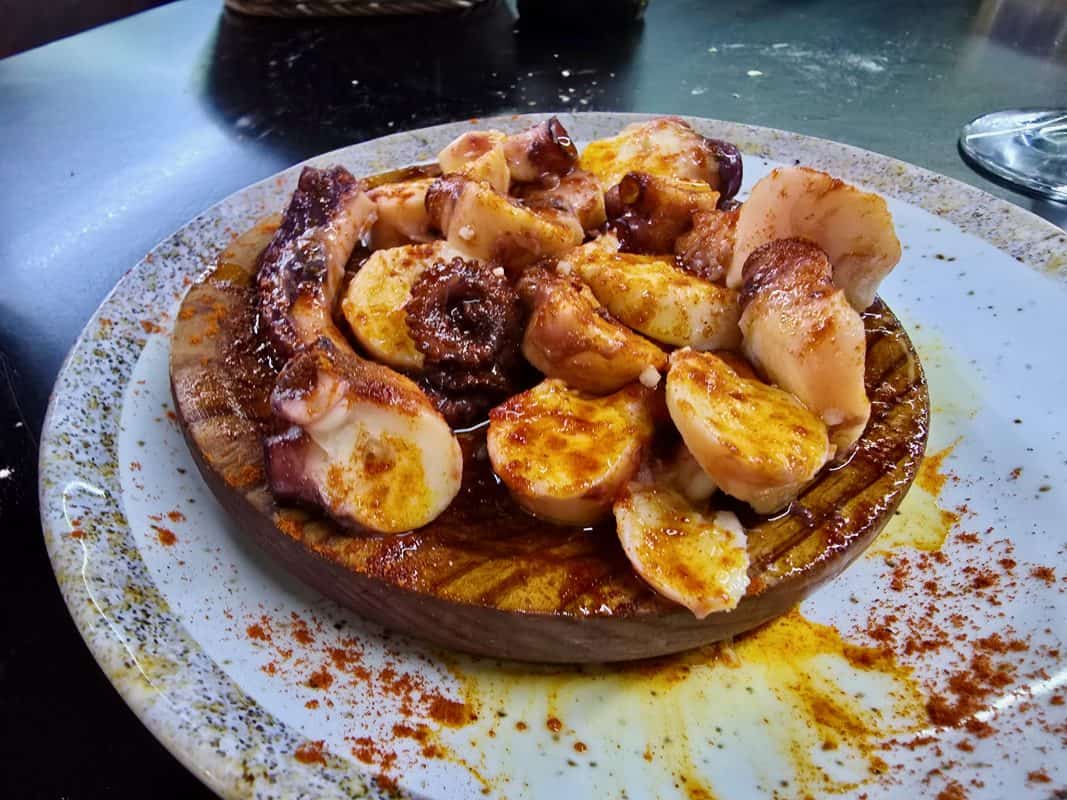
Pulpo a la Gallega: Galician Octopus with Paprika
Pulpo a la Gallega (known locally in Galicia as Polbo à Feira) is Spain’s premier seafood specialty, featuring tender boiled Atlantic octopus sliced into thick rounds, drizzled generously with extra virgin olive oil, and dusted with coarse sea salt and smoky Spanish pimentón.
Originating from traditional fairgrounds across the northwestern region of Galicia, the octopus is traditionally cooked whole in large copper cauldrons until tender. It is served warm on rustic round wooden plates over a bed of boiled potatoes (cachelos).
It is an essential order at Galician pulperías and tapas bars across Spain, best paired with a chilled ceramic bowl of crisp, mineral-driven Galician white wine like Albariño or Ribeiro.

Bocadillo de Calamares: Madrid’s Iconic Fried Squid Sandwich
The bocadillo de calamares is Madrid’s most famous street food, featuring a crusty baguette packed with freshly battered, crispy fried squid rings, often accented with garlic aioli or spicy brava sauce.
It’s strange recommending a seafood dish in a landlocked city, but a bocadillo de calamares, calamari sandwich, is too good not to.
We first enjoyed a bocadillo de calamares in San Sebastian and while we love everything about San Sebastian, the bocadillo de calamares we had in Madrid were better.
There’s no mistaking what goes into a bocadillo de calamares. Piles of freshly fried calamari are crammed into an equally fresh roll. Add on a spicy red sauce, similar to the sauce used with patatas brava and you are set.
If you don’t like spicy sauces, you can opt for a fresh aioli made with garlic and olive oil. You’ll find the best shops for bocadillo de calamares have a line. Don’t worry, just get in line and get ready to enjoy a classic Spanish sandwich.
Learn more and Spanish food in Madrid:
Recipe for Padron Peppers – Spanish Blistered Peppers
Where to Stay in Spain for Food Travelers
Since leaving the US over a decade ago, we’ve traveled to Spain numerous times. We’ve even lived in Spain for over three years. During these trips to Spain, we learned a few things about booking hotels in Spain. We’ve stayed at stunning luxury hotels like the Hotel Alfonso XIII in Seville and the W Barcelona. And sadly we have stayed in our fair share of not-so-great hotels in Spain.
When planning our trips to Spain, we use Booking.com for hotels in Spain. In addition to booking hotels, we’ve used them to book apartments in Spain for longer stays. When we’ve wanted something special, we’ve used Booking to find stunning villas in Spain. We’ve even found some charming and less expensive guest houses in Spain on Booking.com.
| Hotel Name | City & Region | Hotel Category | Culinary & Strategic Highlights |
| Hotel Maria Cristina (Luxury Collection) | San Sebastián (Basque Country) | 5-Star Luxury Landmark | Located steps from the Parte Vieja, the world capital of pintxos hopping. |
| Only YOU Boutique Hotel | Madrid (Chueca / Salesas) | Chic Design Boutique | Walkable to historic tapas bars along Calle de Cava Baja and the Mercado de San Antón. |
| Hotel Alfonso XIII (Luxury Collection) | Seville (Andalusia) | Historic Luxury Palace | Steps from legendary tapas bars and fried seafood taverns in the Santa Cruz district. |
| Mercer Hotel Barcelona | Barcelona (Catalonia) | Historic 5-Star Boutique | Set in the Gothic Quarter, walkable to tapas counters in El Born and the Barceloneta waterfront. |
FAQs – What To Eat In Spain
What is considered the national dish of Spain?
While Spain is famous for many regional foods, Paella Valenciana (traditional rice with chicken, rabbit, and beans) and Tortilla Española (Spanish potato and egg omelet) are widely regarded as the two quintessential national dishes of Spain.
What is a typical Spanish lunch like?
Lunch (la comida) is the main meal of the day in Spain, typically eaten between 2:00 PM and 4:00 PM. It is often a relaxed, multi-course meal featuring a starter (like soup or salad), a main course of fish or meat, bread, dessert, and wine or beer, commonly ordered as a set menú del día.
What do Spanish people eat for breakfast?
Breakfast (el desayuno) in Spain is typically light and simple. Locals commonly enjoy a café con leche paired with tostada con tomate y aceite (toasted bread with crushed tomato and olive oil), fresh orange juice, or a pastry like a croissant or churros.
What is the difference between tapas, pintxos, and raciones?
Tapas are small, shareable plates served throughout central and southern Spain; pintxos are individual bite-sized appetizers served on skewers or bread in the Basque Country and northern Spain; and raciones are full-sized portions of dishes designed for groups to share around the table.
What are the most popular traditional drinks to order in Spain?
In addition to world-class regional wines (such as Rioja, Ribera del Duero, and Priorat) and draft beer (cañas), popular traditional drinks include red vermouth on tap (vermut de grifo), dry cider in Asturias (sidra), sparkling Cava in Catalonia, and non-alcoholic Valencian horchata.
Spain has given the world iconic dishes such as paella and tapas. There is wide variety of flavors to savour for food enthusiasts. I have tried gazpacho, pincho, and Manchego and Cabrales, which are favorite cheese in Spain. The photos of yummy dishes are very tempting.