Hong Kong is one of the world’s premier food cities, built on Cantonese roast meats, multi-story dim sum teahouses, and British-influenced cafe culture. The city splits across Victoria Harbour into Hong Kong Island and Kowloon.
For eating, four districts matter most: Central for historic teahouses and modern dining, Wan Chai for dense neighborhood wet markets and cha chaan tengs, Sham Shui Po for budget street food stalls and noodle houses, and Tsim Sha Tsui for waterfront dining and access to Yau Ma Tei’s historic fruit market. The single most useful orienting fact: the Mass Transit Railway (MTR) connects nearly every culinary district directly, while the historic Star Ferry connects Hong Kong Island to Kowloon across Victoria Harbour for under 1 USD.
*This post contains compensated links. Find more info in my DISCLAIMER. As an Amazon Associate, I earn from qualifying purchases.
Quick Facts: Essential Hong Kong Travel Information
| Category | Key Detail / Local Fact | Practical Traveler Takeaway |
| Location & Geography | Southern coast of China, Pearl River Delta | Split across Victoria Harbour between Hong Kong Island and Kowloon Peninsula. |
| Primary Airport | Hong Kong International Airport (HKG) | Located on Chek Lap Kok Island; connected via 24-minute Airport Express train. |
| Local Currency | Hong Kong Dollar (HKD / $) | Pegged to USD at ~7.80 HKD = 1 USD; banknotes in 20, 50, 100, 500, and 1,000 HKD. |
| Essential Payment Tool | Contactless Octopus Card (Baat Daa Tong) | Mandatory for seamless transit on MTR, Star Ferry, trams, buses, and convenience stores. |
| Cash Requirements | Cash needed for traditional food stalls | Historic noodle houses, dai pai dongs, and wet markets remain strictly cash-only. |
| Primary Public Transit | MTR (Mass Transit Railway) | Clean, rapid multi-line subway network operating citywide from 06:00 to 01:00. |
| Historic Transit Icons | Star Ferry (1888) & Ding Ding Trams (1904) | Star Ferry crosses Victoria Harbour for ~0.80 USD; double-decker trams charge ~0.38 USD. |
| Language & Signs | Cantonese & English | English is an official language with bilingual street signs, transit audio, and menus. |
| Best Time to Visit | Autumn (October to December) | Mild temperatures (18°C–26°C / 64°F–79°F), low humidity, minimal rainfall, hairy crab season. |
| Service Charge & Tipping | 10% standard service charge on bills | Mid-range and upscale restaurants add 10% automatically; tipping at casual stalls is not expected. |
| Electrical Plug & Voltage | Type G plug (UK 3-pin rectangular) | 220V / 50Hz; standard UK adapters required for North American and European devices. |
| Tap Water Safety | Municipal water meets WHO standards | Safe at main supply, but private building pipes vary; boil before drinking or buy bottled water. |
Table of Contents
Why Trust Our Hong Kong Travel Advice?
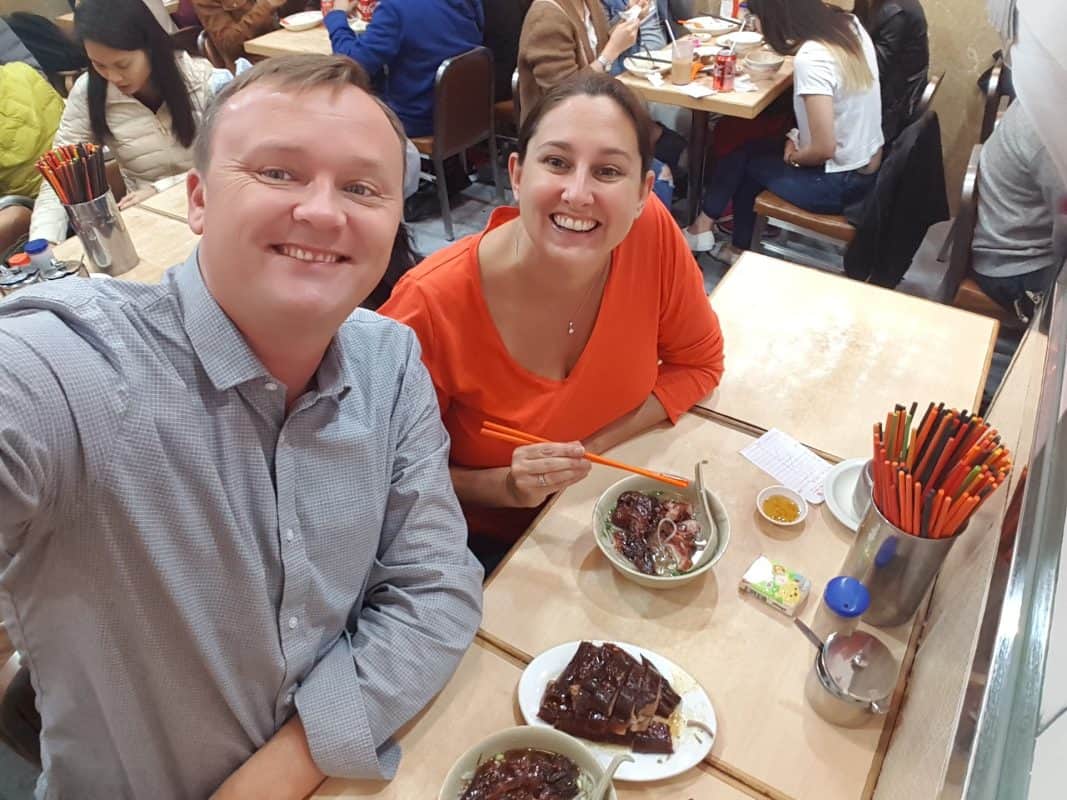
We have traveled to Hong Kong more than a dozen times over the last decade plus, with trips ranging from fast 24-hour layovers designed specifically to eat as much as possible to extended multi-week stays exploring deep into local neighborhoods.
Having lived across Europe and Asia and traveled to more than 70 countries in pursuit of food and wine, Hong Kong remains one of the absolute benchmarks we measure every other global food city against.
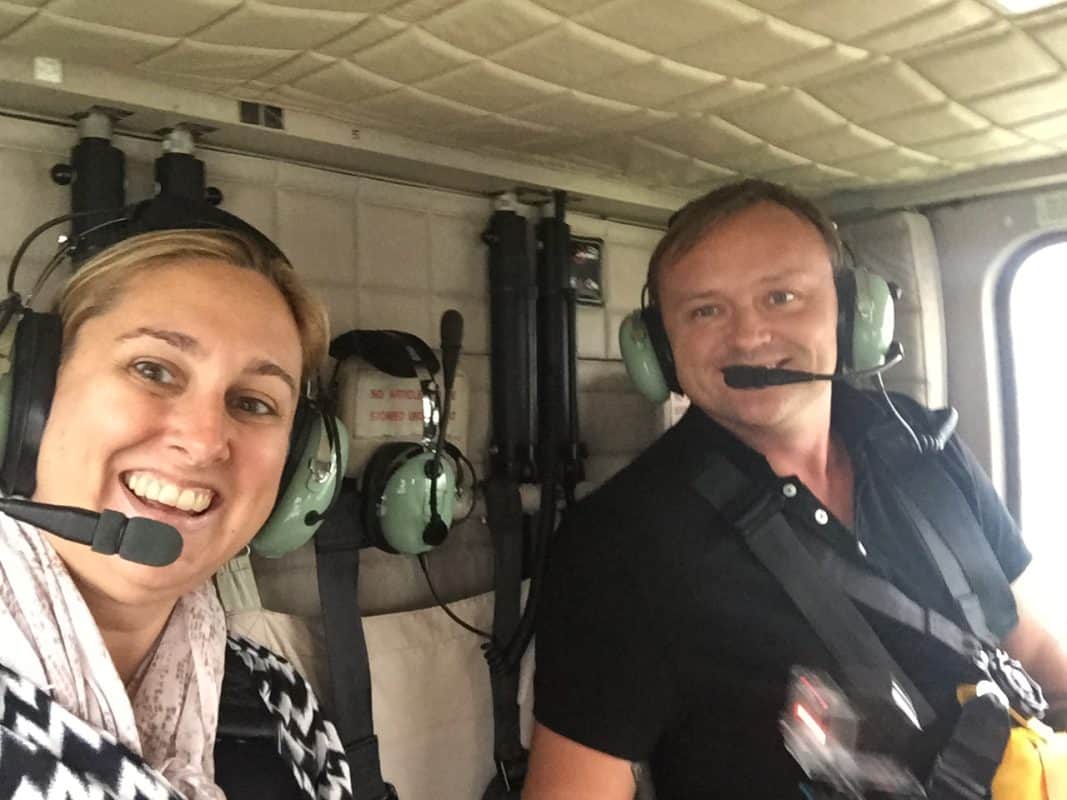
Our recommendations come from years of on-the-ground experience traveling around Hong Kong and hanging out with our friends who live there. We’ve stayed in nearly every major district—from luxury towers in Central and harbourfront suites in Wan Chai to transit hotels in Tsim Sha Tsui and boutique properties near Happy Valley. We’ve even housesat for friends in a typical Hong Kong highrise and taken a helicopter tour over the city!
We’ve experienced the city’s high-end gastronomy, meeting three-Michelin-starred Cantonese masters like Chef Chan Yan-tak at Lung King Heen, while routinely getting elbowed by local grannies over push-cart dim sum at Lin Heung Lau and tracking down bamboo-pressed wonton noodles in Sham Shui Po. We know which transit routes actually save you time, which wet markets are worth navigating on foot, and where you need physical cash versus an Octopus Card.
See our complete guide on What Hong Kong is Famous For.
And depending on how long you have in the city, check out our three-day itinerary for food travelers.
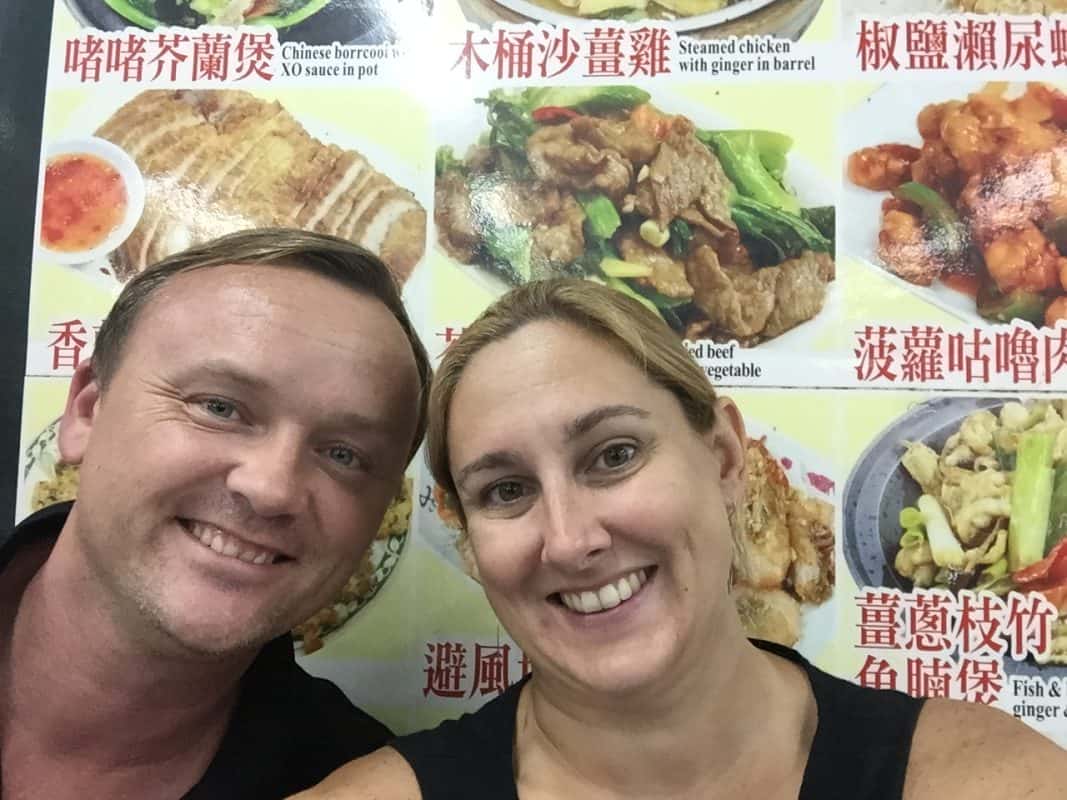
Check out our complete guide on the Cost of Eating and Drinking in Hong Kong.
Where Is Hong Kong And How Do You Get There?
Hong Kong is located on the southern coast of China, bordering Guangdong Province across the Shenzhen River, surrounded by the South China Sea and the Pearl River Delta. All commercial international flights arrive at Hong Kong International Airport (HKG) on Chek Lap Kok Island.
- Airport Express Train: Runs directly from HKG to Tsing Yi, Kowloon Station, and Hong Kong Station (Central). Journey time is 24 minutes to Central. Fare is 115 HKD (~14.70 USD) one-way as of August 2026. Lands passengers directly on northern Hong Kong Island or West Kowloon.
- Cityflyer Public Buses (A-Routes): Route A11 runs to Wan Chai and Causeway Bay (approx. 50–65 minutes, 41.90 HKD / ~5.35 USD as of August 2026). Route A21 runs down Nathan Road through Tsim Sha Tsui and Mong Kok in Kowloon (approx. 45–60 minutes, 34.60 HKD / ~4.40 USD as of August 2026).
- Urban Red Taxis: Operating from the airport ground transport centre to Hong Kong Island (approx. 350–420 HKD / ~45–54 USD including toll charges as of August 2026) and Kowloon (approx. 270–340 HKD / ~35–43 USD as of August 2026). Travel time is 30–45 minutes depending on tunnel traffic.
When Is The Best Time To Visit Hong Kong For Food?
Hong Kong has a subtropical climate with four distinct seasons. Autumn (October to December) offers the most comfortable walking temperatures, low humidity, and the start of seasonal specialties like Chinese claypot rice and hairy crab.
| Month / Season | Temperature Range | What to Eat & Seasonal Highlights | Major Food Festivals / Events |
| January – February (Winter) | 12°C – 19°C (54°F – 66°F) | Sizzling claypot rice (Bao Zai Fan), roasted chestnuts, winter melon soup, Cantonese hot pot. | Lunar New Year Feasts (Poon Choi banquets) (Jan/Feb) |
| March – April (Spring) | 18°C – 25°C (64°F – 77°F) | Spring bamboo shoots, seasonal dim sum, fresh steamed marine fish, mango desserts. | Hong Kong Arts & Culinary Pop-ups (March) |
| May – June (Early Summer) | 25°C – 31°C (77°F – 88°F) | Fresh lychees (Fei Tsz Siu), chilled mango sago pomelo, cold soy beancurd pudding. | Dragon Boat Festival (Zongzi rice dumplings) (May/June) |
| July – August (Mid Summer / Wet) | 27°C – 33°C (81°F – 91°F) | Iced milk tea, grass jelly bowls, fresh longans, indoor air-conditioned dim sum teahouses. | Hong Kong Food Expo (August) |
| September – October (Early Autumn) | 23°C – 30°C (73°F – 86°F) | Sweet pomelos, Cantonese mooncakes, roast goose, fresh persimmons. | Mid-Autumn Festival & HK Wine & Dine Festival (Oct) |
| November – December (Late Autumn / Dry) | 16°C – 24°C (61°F – 75°F) | Steamed Shanghainese hairy crab, snake soup (Se Gwan), cured lap cheong sausage, roast meats. | Winter Solstice Feasts (Tang Yuen dumplings) (Dec) |
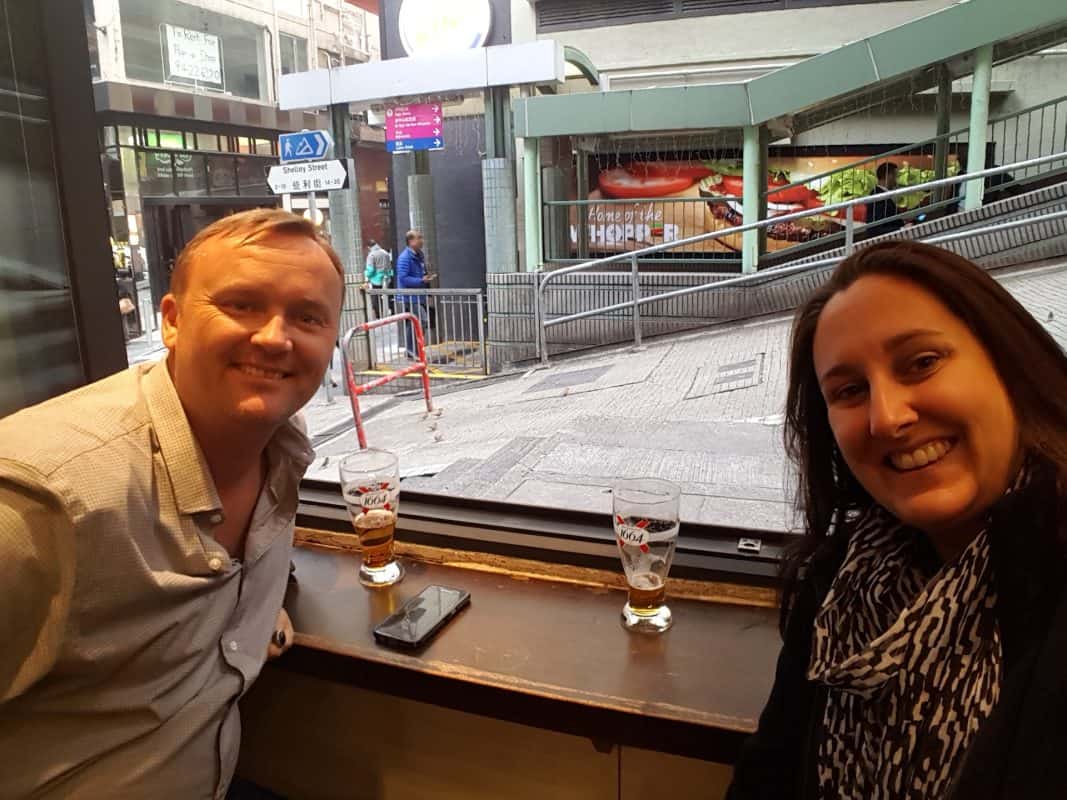
Looking for some place to stay where there are great Hong Kong eats? Check out our recommendation for the best Hong Kong neighborhoods for food lovers!
Which Neighborhoods Should You Know in Hong Kong?
Central: Historic Teahouses and Michelin Dining
Central is the financial and political core of Hong Kong Island, defined by steep hillside escalators, heritage colonial buildings, and multi-generational Cantonese dining institutions.
Central is known for roast goose emporiums, heritage tea shops along Stanley Street, and modern fine dining. Key venues include Yung Kee on Wellington Street for roast goose and Lin Heung Tea House for traditional push-cart dim sum. Central suits travelers who want luxury hotels, walkable nightlife around Soho, and instant access to classic dining institutions. Although Lin Heung Tea House has moved from its historic Wellington Street address to a new location near Sheung Wan MTR station it still is a must-visit for dim sum!
Learn more in our comprehensive Guide to Dim Sum in Hong Kong. Or, thinking about basing yourself in Central? Check out our guide on What to Eat in Central Hong Kong.
Wan Chai: Neighborhood Wet Markets and Cha Chaan Tengs
Wan Chai is a vibrant, densely packed commercial and residential district on Hong Kong Island that bridges traditional street-level Cantonese life with modern harbourfront developments.
A cha chaan teng is a Hong Kong tea restaurant that serves affordable Western-influenced comfort food and strong tea. Wan Chai is known for open-air market stalls along Bowrington Road, traditional roast meat shops, and daily afternoon tea culture. Key venues include Joy Hing Roasted Meat on Hennessy Road for char siu pork and Dynasty Restaurant inside the Renaissance Harbour View Hotel for refined Cantonese dining.
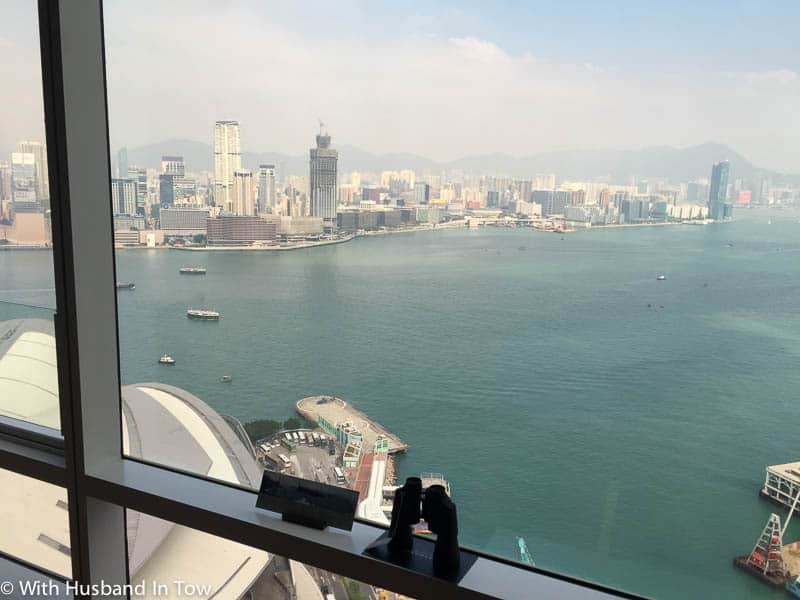
Wan Chai works for travelers looking for an authentic local neighborhood feel with direct MTR access and scenic harbour walking paths. We’ve stayed at the Renaissance more times than I can remember! It has direct access just outside to the Star Ferry, and their top floor lounge includes some of the best views of the harbour and the city!
Sham Shui Po: Working-Class Street Food and Heritage Noodles
Sham Shui Po is a historic working-class neighborhood in northwest Kowloon famous for its street markets, electronics bazaars, and concentrated density of budget-friendly Michelin Bib Gourmand food stalls.
Sham Shui Po is known for hand-rolled cheong fun (steamed rice noodle rolls), soy bean pudding, and traditional bamboo-pressed wonton noodles. Key venues include Hop Yik Tai on Kweilin Street for fresh cheong fun with peanut sauce and Kung Wo Beancurd Factory on Pei Ho Street for silky tofu pudding. It suits budget-conscious food travelers who want authentic street food away from tourist crowds.
Tsim Sha Tsui & Yau Ma Tei: Waterfront Dining and Night Markets
Tsim Sha Tsui occupies the southern tip of the Kowloon peninsula, offering panoramic views of the Victoria Harbour skyline alongside dense commercial dining avenues.
Just north, Yau Ma Tei preserves classic Kowloon street life with late-night food stalls and wholesale fruit trade. The area is known for seafood dining along Temple Street Night Market, historic bakeries, and wholesale seasonal fruit. Key venues include the historic Yau Ma Tei Fruit Market on Reclamation Street and Mido Cafe on Temple Street for retro cha chaan teng dining. It suits first-time visitors who want iconic skyline views, Star Ferry access, and late-night street food.
We stayed in Tsim Sha Tsui on our first trip to Hong Kong, and still love the hustle and bustle. We also stayed there when we had a simple overnight layover, so that we could quickly eat as much as possible in a short amount of time!
What Should You Eat in Hong Kong?
- Roast Goose (Siu Ngo / 燒鵝): Whole marinated goose roasted in charcoal or gas ovens until the skin is mahogany-crisp and the meat remains tender and rich. Available at Yat Lok (Central) for approximately 180–220 HKD (~23–28 USD) per lower quarter portion as of August 2026.
- Char Siu (Barbecue Pork / 叉燒): Pork shoulder or pork belly marinated in honey, five-spice, and fermented red bean curd, roasted over open fire with a sweet, glossy caramelized glaze. Available at Joy Hing Roasted Meat (Wan Chai) for 45–60 HKD (~5.75–7.70 USD) over steamed rice as of August 2026.
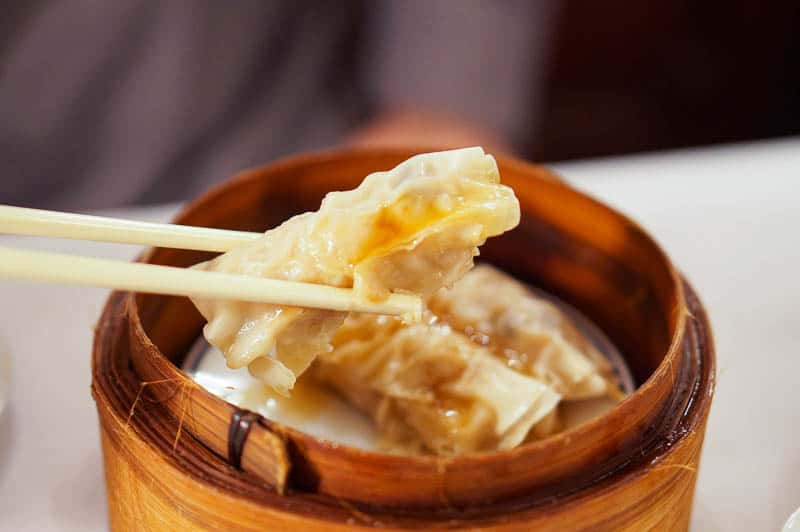
- Dim Sum: Har Gow & Siu Mai (蝦餃 & 燒賣): Translucent pleated dumplings filled with whole crunchy prawns, and open-topped steamed pork and shrimp dumplings garnished with crab roe. Available at Tim Ho Wan (Sham Shui Po) for 32–42 HKD (~4.10–5.35 USD) per steamer basket as of August 2026.
- Hong Kong Milk Tea (Dong Lai Cha / 凍奶茶): Strong black Ceylon tea brewed in a cloth filter sack, combined with evaporated milk and served hot or over ice. Available at Lan Fong Yuen (Central) for 24–28 HKD (~3.10–3.60 USD) as of August 2026.
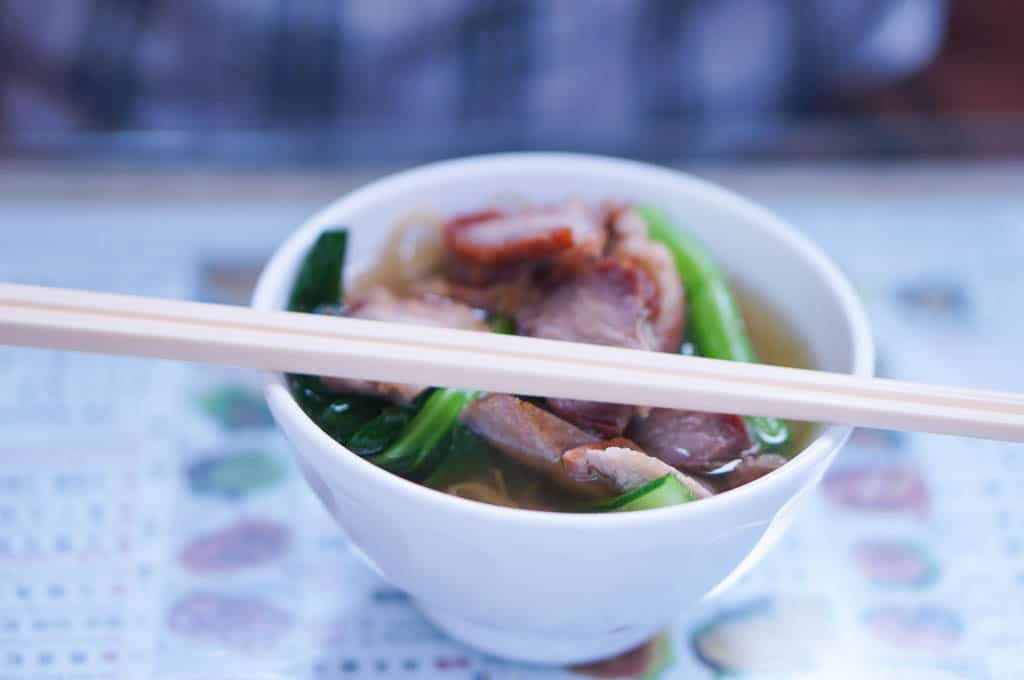
- Wonton Noodle Soup (Wan Tan Meen / 雲吞麵): Springy alkaline egg noodles served in a hot broth of dried flounder and shrimp, topped with whole-shrimp wontons. Available at Mak’s Noodle (Central) for 50–65 HKD (~6.40–8.30 USD) per bowl as of August 2026.
- Pineapple Bun with Cold Butter (Bo Lo Yau / 菠蘿油): A sweet, warm yeast roll topped with a crumbly, golden cookie crust, sliced open and served with a thick slab of melting salted butter. Available at Kam Wah Cafe (Mong Kok) for 14–18 HKD (~1.80–2.30 USD) as of August 2026.
- Steamed Rice Noodle Rolls (Cheong Fun / 腸粉): Silky sheets of freshly steamed rice flour rolled into cylinders and dressed with sweet soy sauce, sesame paste, and spicy chili sauce. Available at Hop Yik Tai (Sham Shui Po) for 16–22 HKD (~2.05–2.80 USD) for a snack portion as of August 2026.
- Claypot Rice (Bao Zai Fan / 煲仔飯): Fragrant jasmine rice cooked over open charcoal burners in earthenware pots, topped with Chinese lap cheong sausage, preserved pork belly, or minced beef with a crispy scorched rice base (faan ziu). Available at Four Seasons Claypot Rice (Yau Ma Tei) for 70–95 HKD (~9.00–12.15 USD) as of August 2026.
- Curry Fish Balls (Ga Lei Yue Dan / 咖喱魚蛋): Springy fish-paste spheres simmered in a thick, fragrant spiced Cantonese curry broth. Available at street food stalls across Mong Kok for 12–16 HKD (~1.50–2.05 USD) per skewer as of August 2026.
- Hong Kong Egg Tart (Daan Tat / 蛋撻): Flaky puff-pastry or crumbly shortcrust shell filled with a smooth, glossy, sweet yellow egg custard. Available at Tai Cheong Bakery (Central) for 12–15 HKD (~1.50–1.90 USD) per tart as of August 2026.
For detailed ordering tips and dietary breakdowns, read our complete guide to Must-Try Hong Kong Foods & Classic Dishes.
Where Should you Stay in Hong Kong?
Choosing where to stay in Hong Kong comes down to choosing your preferred side of Victoria Harbour. Hong Kong Island (Central, Wan Chai, Causeway Bay) offers upscale Hong Kong hotels, steep walkable hillsides, historic tram lines, and easy access to rooftop bars. Kowloon (Tsim Sha Tsui, Jordan, Mong Kok) places you in flat, bustling, high-density residential territory with night markets, street food stalls, and iconic harbour skyline views looking back at the island.
| District | Best For | Typical Nightly Rate (Entry / Mid / Luxury) | Nearest Transit Hub |
| Central & Soho (HK Island) | Nightlife, luxury boutique hotels, historic dining institutions, business connectivity. | From 140 USD / 240 USD / 550+ USD | Central MTR Station / Hong Kong Station (Airport Express) |
| Wan Chai (HK Island) | Convention center access, harbour views, wet markets, local cafe culture. | From 95 USD / 180 USD / 380+ USD | Wan Chai MTR Station & Exhibition Centre MTR Station |
| Tsim Sha Tsui (Kowloon) | First-time visitors, iconic Victoria Harbour skyline views, museums, shopping malls. | From 85 USD / 175 USD / 450+ USD | Tsim Sha Tsui MTR Station & Star Ferry Pier |
| Mong Kok & Jordan (Kowloon) | Budget travelers, night market street food, lively 24-hour urban atmosphere. | From 65 USD / 130 USD / 260+ USD | Mong Kok MTR Station & Jordan MTR Station |
| Causeway Bay (HK Island) | Department store shopping, late-night dining, green space near Victoria Park. | From 90 USD / 165 USD / 340+ USD | Causeway Bay MTR Station & Ding Ding Tram Lines |
How Many Days do you Need in Hong Kong?
- 1 Day in Hong Kong (Long Layover / Fast Stop): Focus entirely on the Central to Tsim Sha Tsui corridor. Take the Airport Express into Central, ride the Central-Mid-Levels Escalators, eat roast goose or dim sum on Wellington Street, cross Victoria Harbour on the Star Ferry to Tsim Sha Tsui, walk the Avenue of Stars for skyline views, and take the MTR back to the airport.
- 3 Days in Hong Kong (The Classic Weekend): Spend Day 1 exploring Central and Sheung Wan teahouses and antique streets. Dedicate Day 2 to Kowloon, grazing through Sham Shui Po street food, browsing the Yau Ma Tei Fruit Market, and dining at Temple Street Night Market. Spend Day 3 visiting Wan Chai wet markets, riding the historic Ding Ding tram to Causeway Bay, and taking the Peak Tram for sunset over Victoria Harbour.
- 5 Days in Hong Kong (In-Depth Exploration): Add day excursions beyond the urban core. Spend Day 4 taking the ferry to Lantau Island (Tai O Fishing Village for salted fish and charcoal-grilled street snacks) or Lamma Island for open-air seafood dining. Use Day 5 to explore the New Territories (Sha Tin and Tai Po wet markets) or take a day trip to Macau via the Hong Kong-Zhuhai-Macau Bridge.
What Should You Know Before You Go?
- Currency: Hong Kong Dollar (HKD), pegged to the US Dollar at approximately 7.80 HKD = 1 USD as of August 2026.
- Budget Meal Costs (Per Person): Street snacks and local bakeries cost 15–35 HKD (~2–4.50 USD); casual cha chaan teng sets and noodle bowls cost 45–80 HKD (~5.75–10.25 USD); mid-range sit-down Cantonese dim sum and roast meat dinners cost 150–350 HKD (~19–45 USD) as of August 2026.
- Alcohol Pricing: Alcohol in bars and restaurants is noticeably more expensive than in neighboring Southeast Asian hubs, with standard draft beers in expat districts running 65–95 HKD (~8.30–12.15 USD) and cocktails starting from 110–160 HKD (~14–20.50 USD) as of August 2026.
- Payment Methods: Purchase an Octopus Card immediately at HKG airport or load a digital card onto your mobile wallet. While convenience stores, MTR stations, and supermarkets take credit cards and Octopus, many traditional congee shops and street stalls remain cash-only or Octopus-only.
- Tipping Norm: Tipping is not traditionally expected at casual street stalls or cha chaan tengs. Mid-range and upscale sit-down restaurants automatically add a mandatory 10% service charge to the final bill.
- Tap Water Safety: Tap water in Hong Kong meets WHO standards at the municipal supply point, but older private building plumbing can degrade water quality; locals always boil tap water before drinking or purchase bottled spring water.
- Table Sharing Etiquette (Daap Toi / 搭檯): In busy cha chaan tengs and noodle shops during peak breakfast and lunch hours, sharing a table with complete strangers is the universal norm; sit where staff point, place your bags on your lap, and do not expect conversation.
- Tea Washing Ritual (Sai Bei / 洗杯): At traditional Cantonese dim sum teahouses, staff provide a large plastic or porcelain bowl alongside hot tea; use the first pour of hot tea or hot water to rinse your chopsticks, spoons, and teacups at the table before eating.
Frequently Asked Questions: Visiting Hong Kong
What is the best way to get from Hong Kong Airport to the city?
The fastest transit method is the Airport Express train, which reaches Kowloon Station in 22 minutes (105 HKD / ~13.40 USD) and Hong Kong Station in Central in 24 minutes (115 HKD / ~14.70 USD) as of August 2026. Alternatively, the Cityflyer public buses (A11 to Hong Kong Island or A21 down Nathan Road in Kowloon) offer a direct, budget-friendly ride for 34.60–41.90 HKD (~4.40–5.35 USD).
Do you need cash in Hong Kong or is an Octopus Card enough?
You need both an Octopus Card and physical cash. The contactless Octopus Card works on all public transit (MTR, buses, Star Ferry, trams) and at convenience stores and bakeries. However, many historic noodle shops, dai pai dong street stalls, and wet market counters operate strictly on physical Hong Kong Dollar (HKD) cash. Carry small banknotes (20, 50, and 100 HKD).
Is it better to stay on Hong Kong Island or in Kowloon?
Hong Kong Island (Central, Wan Chai, Causeway Bay): Best for business travelers, colonial history, vibrant nightlife along Soho, hillside escalators, and tram rides.
Kowloon (Tsim Sha Tsui, Mong Kok, Sham Shui Po): Best for iconic Victoria Harbour skyline views, dense open-air night markets, and working-class street food crawls.
How much does an average meal cost in Hong Kong?
Street food & cha chaan teng cafes: 35–65 HKD (~4.50–8.35 USD) per person.
Heritage push-cart dim sum & roast goose meals: 120–280 HKD (~15–36 USD) per person.
Upscale Cantonese & fine dining: 450–1,200+ HKD (~58–155+ USD) per person.
When is the best time of year to visit Hong Kong for walking and food?
The best time to visit is autumn (October through December), when temperatures range from 18°C to 26°C (64°F–79°F) with low humidity and minimal rainfall, coinciding with peak seasons for Shanghainese hairy crab and outdoor charcoal claypot rice.