When traveling in Italy, we don’t eat a big breakfast. We save our belly space for all of the big lunches and decadent dinners, and all of the gelato. It’s kind of the way the Italians do it as well. When it comes to what Italians eat for breakfast, it’s really just a small breakfast. Do as the locals do, skip the hotel buffet, and instead try one of these typical Italian breakfast foods.
Traditional Italian breakfast (la prima colazione) is a quick, sweet, and ritualistic affair centered around the local neighborhood bar or caffè. Unlike hearty Anglo-Saxon breakfasts with eggs and meats, morning dining in Italy is intentionally light—designed to be eaten standing up (al banco) in five minutes, pairing a fresh espresso or creamy cappuccino with a flaky pastry or crisp biscuit before saving room for a substantial regional lunch.
*This post contains compensated links. Find more info in my DISCLAIMER. As an Amazon Associate, I earn from qualifying purchases.
Quick Facts About Authentic Italian Breakfast Foods
| Iconic Breakfast Item | Category & Base | Flavor Profile & Key Ingredients | Traditional Serving Style & Etiquette |
| Cappuccino | Espresso & Steamed Milk | Creamy, bold, frothy espresso with equal parts steamed milk and foam. | Ordered strictly before 11:00 AM; never consumed after a heavy meal. |
| Cornetto (Brioche) | Laminated Morning Pastry | Sweet, flaky, crescent-shaped pastry; filled with custard (crema), pistachio, or jam. | Eaten standing at the bar while dipping into a cappuccino. |
| Sfogliatella (Riccia / Frolla) | Neapolitan Shell Pastry | Crisp, multi-layered ridges filled with sweet ricotta, candied citrus, and cinnamon. | Eaten warm straight from the bakery counter in Naples and Campania. |
| Cioccolata Calda | Thick Italian Hot Chocolate | Intensely rich, bittersweet, pudding-thick melted chocolate. | Spooned warm with a small spoon; famous in Turin and Piedmont. |
| Focaccia Genovese | Savory Olive Oil Flatbread | Golden, dimpled bread glistening with olive oil and crunchy sea salt flakes. | Dipped directly into morning cappuccino or caffe latte in Genoa/Liguria. |
| Maritozzo con la Panna | Sweet Yeasted Cream Bun | Soft, lightly sweetened brioche bun split and overflowing with fresh whipped cream. | Classic morning coffee pairing in Central Italy and Rome. |
| Pane, Burro e Marmellata | Rustic Bread with Butter & Jam | Simple, comforting crusty country bread spread with butter and fruit preserves. | The quintessential Italian home, B&B, and agriturismo breakfast. |
| Biscotti (Cantucci) | Twice-Baked Almond Cookies | Ultra-crunchy, dry, nutty almond biscuits. | Dunked briefly into hot espresso to soften the biscuit before eating. |
| Fette Biscottate | Crispy Rusks / Twice-Toasted Bread | Dry, crunchy, light toast slices spread with Nutella, honey, or jam. | Standard staple in Italian households for a fast, light morning bite. |
| Caffè Espresso (Un Caffè) | Pure Concentrated Coffee | Bold, rich, aromatic shot of dark-roasted espresso with natural crema. | Downed in one or two quick gulps standing at the bar counter. |
Eating Breakfast In Italy
Italy is one of the most famous tourist destinations in the world. In addition to tourist sites, the food is truly something special. Many people come to Italy for the sites, but the food is what they remember the most about their trip. And the best food in Italy starts with breakfast.
There are a lot of options and delicacies to try, and while you can’t try them all, there are some you have to try. While many countries have different foods to offer you on your visit, the Italians truly do it better. Here, we will take a look at some Italian breakfast foods you must try when you are in Italy.
Breakfast almost always includes a coffee. In fact, most of these breakfast foods are really meant to accompany the morning coffee. And, Italian coffee is serious business!
Learn more about drinking and eating in Italy:
How To Order Coffee In Italy – An Italian Coffee Menu Explained
The Best Italian Desserts – Recipes To Try At Home
Italian Breakfast Foods You Must Try

With breakfast being the most important meal of the day, you have to try Italian breakfast options. I dare say, you haven’t truly visited Italy till you have had some Italian breakfast foods. Breakfast in Italy is a fun activity and can even make it into your bucket list.
The Italy breakfast menu features many different options that you are sure to love. In addition to the breakfast foods, there are a lot of breakfast pastries to try. The best part about the pastries is that you can take them along with you and enjoy a taste of Italy in your hotel room.
Check out our packing list for Italy for travel tips, including what to pack for Italy and what you can leave at home.
What Do Italians Eat For Breakfast?
Like many of the Mediterranean countries, breakfast is small. A coffee, juice, and a pastry. There’s no big breakfast here like in Ireland, Scotland, or England.
In fact, during a recent trip to Modena, we heard a couple talking about passing up one of our favorite lunch places in Modena because they weren’t hungry after eating a big breakfast at the hotel. What a mistake! You can eat eggs at home! Eat a small breakfast at a local Italian cafe, and save the space for a big, luxurious Italian lunch.
When it comes to what to know before traveling to Italy, what to eat for breakfast should be on the top of your list.

Cappuccino: Italy’s Iconic Morning Coffee
A cappuccino is Italy’s quintessential morning coffee drink, made from a shot of rich espresso topped with equal parts steamed milk and velvety milk foam.
The cappuccino is one of the most popular breakfast options not just in Italy, but the entire world. The best part about a cappuccino is that it doesn’t require anything else and can stand on its own as a complete meal.
The cappuccino is a coffee drink made from espresso with both creamy and extra foamy milk. The mixture of all these ingredients makes the drink somewhat heavy and filling. This is one of the reasons why a cappuccino is reserved for the morning. Generally, in the afternoons, Italians will order an espresso or macchiato, which is an espresso with a dollop of warmed milk. This is because cappuccinos are dense and filling, and best in the morning.

Cornetto: The Italian Breakfast Pastry
A cornetto is a crescent-shaped breakfast pastry that is softer and sweeter than a French croissant, traditionally filled with pastry cream (crema pasticcera), apricot jam, chocolate, or pistachio.
The French have croissants and the Italian substitute or equivalent is the cornetto. TWhile industrial versions use margarine, authentic artisan bakery cornetti are laminated with high-quality butter, giving them a rich, golden, flaky crumb.
The cornetto is made with fillings that differ according to the chef. Common fillings for the cornetto include chocolate, jam, and custard cream but some cafés use other ingredients to give a special taste.
This breakfast treat gets its name from its appearance as it looks like a horn, and is named ‘little horn’. The name cornetto is the most popular name but not the only name it is called in Italy. The name cornetto is only used in the south and central regions of Italy.
For the best experience, add a cup of coffee along with your cornetto. One of the most traditional Italian breakfast options being served to this day, the cornetto holds a special place among breakfast foods in Italy.
Cioccolata Calda: Pudding-Thick Italian Hot Chocolate
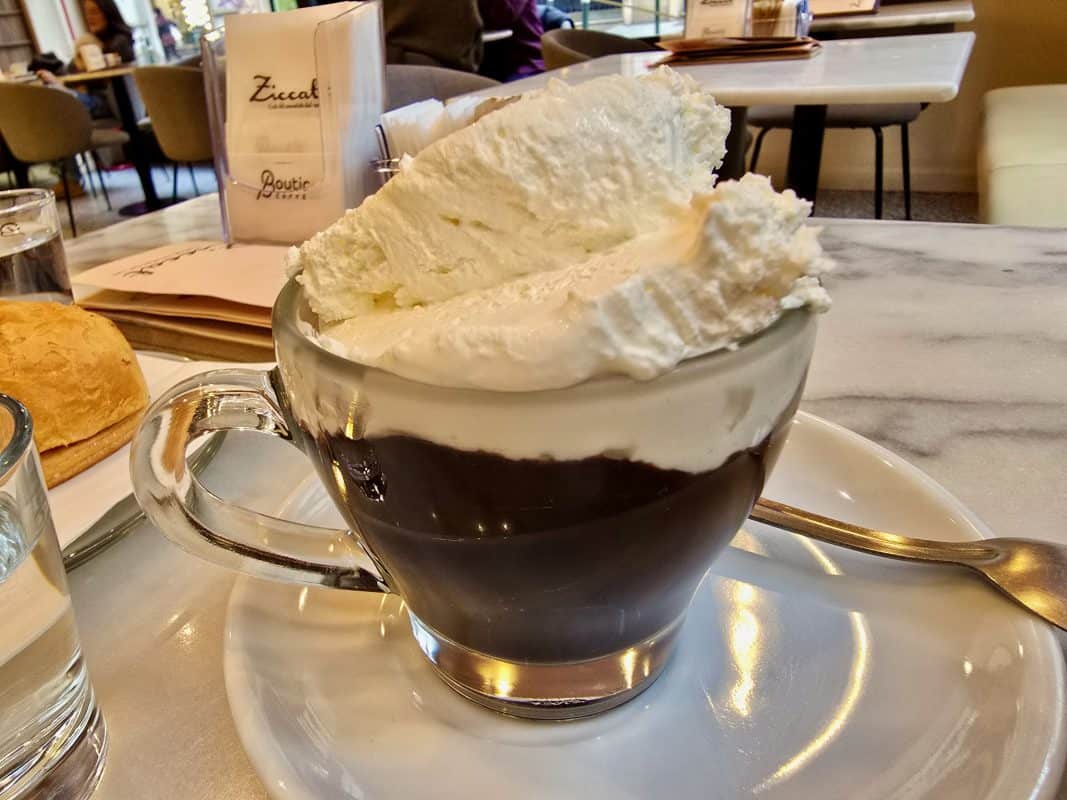
Cioccolata Calda is an ultra-dense, spoonable Italian hot chocolate made by melting dark chocolate with milk and a touch of starch until it achieves a velvety pudding-like consistency.
Hot chocolate is a popular choice mostly because it is a delicious chocolatey drink that will provide you with a caffeine boost. Unlike the normal hot chocolate that is simply instant powder, the Italian version is more like a pudding. Locally, the drink is referred to as cioccolata calda and it is both thick and creamy. Unlike normal hot chocolate, you won’t simply drink cioccolata calda but rather, you’ll need a spoon just like with yogurt.
Thick hot chocolate like this is most commonly found in Northern Italy, particularly in Piedmont. The city of Turin is famous for hot chocolate!
The best part about cioccolata calda is that it can also serve as a dessert option in multiple course meal. Chocolate pieces are used in the making of this meal and they are melted to create a custard adjacent meal.

Biscotti & Cantucci: Twice-Baked Dipping Cookies
Biscotti are crunchy, twice-baked almond cookies designed specifically to be dipped into a steaming cup of espresso or cappuccino to soften their crisp texture.
No doubt you’ve heard of the biscotti if you’re a fan of movies or novels. When you find yourself in a café looking for something to pair with your coffee, the biscotti is a perfect choice. Crunchy and delicious, just like the English counterpart (biscuits), dipping it in your coffee seems to unlock new flavors.
In many cases, the biscotti will prove to be the perfect flavoring for your espresso when you dip it in. The best part about biscotti is that it can be made with different fillings. Chocolate is the most common biscotti filling but other fillings are available including cream.
To improve the breakfast experience, almonds are mixed in when making the biscotti. This creates a crunchy treat that is both chocolatey flavored and a little nutty. Biscotti is a great option if you are looking for a breakfast on the go.

Brioche: Soft Regional Morning Bread
In Northern Italy, the word brioche is often used interchangeably with cornetto, describing soft, golden, egg-enriched sweet breads enjoyed plain or filled with jam.
The term brioche can also be used to describe a kind of bread that is both soft and sweet. Just as with any other type of bread, you can eat the brioche for breakfast by itself or with a drink. Many cafés serve them with jam or chocolate cream to increase the experience.
It’s also common to find brioche sliced in half and filled with gelato at a lot of gelato shops in Italy. We certainly won’t judge if you wanted to have this for breakfast in Italy, but it’s more common as an afternoon Italian snack.

Pane, Burro e Marmellata: Bread, Butter & Jam
Pane, Burro e Marmellata is the quintessential Italian home breakfast, consisting of slices of rustic artisan bread generously spread with fresh butter and fruit marmalade.
The name may have you thinking you are expecting something grand and while it is, the name simply translates to bread, marmalade, and butter.
Pane, burro e marmellata is a typical Italian breakfast option and in most cases, you get this meal along with a serving of coffee. You can however have Pane, burro e marmellata on its own and it is quite delicious. It is probably one of the most common options served at hotels and B&Bs for breakfast in Italy.
Unlike most other Italian breakfast foods that require time and effort to make, this option is different. Anyone can make it themselves and all you need is some fresh bread which you will top with both butter and marmalade. One popular derivative of this breakfast option is very popular has jam used in place of marmalade.
You get the same great taste and feel except jam offers different flavors giving you different taste options. It is simple yes, but for the true Italian feel, you may want to have this meal in a café.
Fette Biscottate: Crisp Breakfast Rusks
Fette biscottate are dry, crispy, twice-baked bread rusks found in every Italian supermarket and home pantry, typically topped with a smear of Nutella, honey, or fruit preserves.
Fette biscottate is like a common biscuit but it is hard and dry. Some cafes and restaurants even offer it as toast in a pre-packaged serving or as rusk. The dry and hard feel means that not everyone will like this traditional Italian breakfast. We are not huge fans ourselves.
If you are, however, willing to look past this, then you will be in for a delicious treat. To improve the experience, many cafés serve them with popular meal additives like Nutella and marmalade. It’s also another common option for breakfast at hotel buffets or at B&Bs.

Sfogliatella: Crisp Neapolitan Ricotta Pastry
Sfogliatella is an iconic Neapolitan morning pastry characterized by hundreds of paper-thin, crunchy ridges (riccia) stuffed with a warm filling of sweet ricotta, semolina, candied orange peel, and cinnamon.
While it is not as popular as the cannoli, this is still a very popular Italian pastry. Of the many different Italian breakfast pastries, you will want to try this one the most. The name alone is a mouthful, which is what you are sure to get from this pastry.
Depending on the region of Italy you are in, there is bound to be a different recipe for this pastry. Similar to the cannoli, the sfogliatella was once prepared by the nuns in the Santa rosa monastery. Today, however, this pastry has become most famous especially in and around Naples. The sfogliatella recipe in Naples is the most famous version and maybe the most delicious. This version is made with cream fillings and syrup-filled with black cherries.
There is no record of how this recipe came to the Neopolitan chief especially since the nuns couldn’t contact the outside world. However, the recipe made its way to the chief, who loved it and millions more have loved it since.
Focaccia Genovese Dipped in Cappuccino
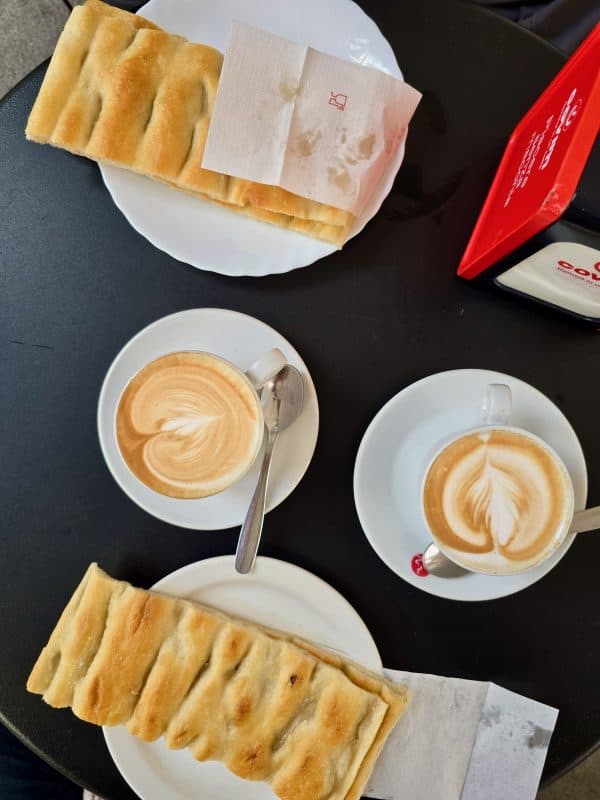
In Genoa and along the Ligurian coast, dipping a warm, olive-oil-drenched piece of salty Focaccia Genovese directly into a hot cappuccino is a cherished morning ritual. The combination of flaky sea salt, rich olive oil, and sweet foamy coffee delivers an addictive sweet-savory balance you won’t find anywhere else in Italy.
Maritozzo: Sweet Roman Cream Bun
A Maritozzo is a traditional sweet yeast bun scented with pine nuts or citrus, sliced open down the center and filled to overflowing with fresh, cloud-like whipped cream (panna montata). Enjoyed in historic bars across Rome and Lazio, it is the ultimate decadent treat to pair with a morning espresso.
There are so many great breakfast foods available in Italy. While some of these foods may require you to be in certain parts of the country, there are great general options. So when in Italy, you too can eat breakfast like an Italian. You will come for the sights, but will stay for the Italian breakfast foods.
Frequently Asked Questions About Italian Breakfast
What do Italians typically eat for breakfast?
Italians typically eat a sweet, light breakfast consisting of a cappuccino or espresso paired with a fresh pastry like a cornetto or sfogliatella, or simple bread and rusks with butter and jam at home.
Why do Italians only drink cappuccino in the morning?
In Italian food culture, heavy dairy and warm frothed milk are believed to impair digestion after substantial meals. As a result, Italians strictly enjoy cappuccinos before 11:00 AM and switch to straight espresso or caffè macchiato for the rest of the day.
Do Italians eat eggs or bacon for breakfast?
No, hot savory breakfasts featuring fried eggs, bacon, or sausages are not traditional in Italy. Eggs are reserved for lunch and dinner (such as in frittatas or fresh pasta dough), while breakfast remains predominantly sweet and light.
What is the difference between a French croissant and an Italian cornetto?
While both are crescent-shaped laminated pastries, an Italian cornetto contains eggs and more sugar in the dough, resulting in a softer, denser crumb that is frequently stuffed with pastry cream (crema), chocolate, or apricot jam. A French croissant is strictly all-butter, flakier, and rarely filled unless ordered as a pain au chocolat or almond croissant.
How do you order breakfast at a traditional Italian bar?
In traditional Italian cafes, you first go to the cash register (cassa) to order and pay for your coffee and pastry, take your receipt (scontrino) to the counter (banco), place it down with a small coin tip, and give your order to the barista.
Culinary Travel To Italy

Our Italy Travel Experience
Check out Food & Drink Destinations original founder Amber Hoffman’s book, the Food Traveler’s Guide To Emilia Romagna, which is available on Amazon. In addition to being a culinary travel guide to the region, it walks through how many of the typical Italian food products are made, like mortadella, prosciutto, and Parmigiano Reggiano.