
Italian cuisine is probably one of the most simple yet satisfying, and when it comes to Italian cakes and pastries, what’s more, straightforward than flour, sugar, eggs, butter, and milk? But it’s what Italians can do with such simple ingredients that makes Italian pastries so unique. So let’s explore some of the best pastries you must eat when traveling to Italy.
Italian pastry-making (pasticceria) is intensely regional, defined by centuries-old convent baking traditions, festive holiday rituals, and distinct local ingredients. From the flaky, citrus-scented layers of Neapolitan sfogliatella and cream-filled Tuscan bomboloni to holiday sweet breads like Milanese panettone and Genoa’s pandolce, Italian sweets are crafted to accompany morning espresso or serve as afternoon merenda treats.
*This post contains compensated links. Find more info in my DISCLAIMER. As an Amazon Associate, I earn from qualifying purchases.
Quick Facts About Authentic Italian Pastries
| Italian Pastry | Regional Origin | Pastry Base & Style | Key Fillings & Flavor Profile |
| Sfogliatella (Riccia / Frolla) | Campania (Naples) | Multi-layered flaky dough or shortcrust shell | Sweet sheep’s ricotta, semolina, candied orange peel, cinnamon. |
| Cannoli Siciliani | Sicily | Crisp, fried pastry tube with wine/cocoa | Sweetened sheep’s milk ricotta, dark chocolate chips, candied pistachio. |
| Babà al Rum | Campania (Naples) | Mushroom-shaped yeasted sponge cake | Saturated in citrus-rum sugar syrup; topped with pastry cream or cherries. |
| Pasticciotto Leccese | Puglia (Salento) | Lard-enriched golden shortcrust pastry | Warm vanilla egg custard (crema pasticcera) and black amarena cherry. |
| Bomboloni | Tuscany & Central Italy | Fluffy, fried yeast-dough doughnut | Rolled in granulated sugar; injected with vanilla cream, Nutella, or jam. |
| Zeppole di San Giuseppe | Lazio & Campania | Baked or fried choux pastry ring | Piped yellow custard cream, dusting of powdered sugar, sour amarena cherry. |
| Panettone | Lombardy (Milan) | Slow-fermented buttery sweet bread dome | Candied orange and citron peel, plump raisins, fragrant vanilla bean. |
| Pandolce Genovese | Liguria (Genoa) | Dense or leavened crumbly sweet cake | Pine nuts, raisins, candied pumpkin/citron, fennel seeds, and anise liqueur. |
| Biscotti (Cantucci) | Tuscany (Prato) | Twice-baked elongated almond biscuits | Whole unpeeled almonds; dunked into Vin Santo or espresso. |
| Fiocco di Neve | Campania (Naples) | Soft, pillowy mini brioche bun | Whipped ricotta, fresh milk cream, and light powdered sugar dusting. |
| Cassata Siciliana | Sicily | Sponge cake soaked in fruit liqueur | Sweet ricotta cream, almond marzipan crust, glossy candied fruit mosaic. |
| Struffoli | Campania (Naples) | Marble-sized deep-fried dough balls | Glazed warm in orange blossom honey, topped with colorful sprinkles (diavulilli). |
Table of Contents
Best Italian Pastries And Sweets You Must Try
When you’re traveling in Italy, take a look at all the delicious Italian cakes and pastries in the windows. With your mouth watering, how are you supposed to make your mind up about which one to choose? Our Italy travel advice includes, perhaps, eat them all!
I have put together this Italian pastries list to show you which are my favorite pastries in Italy. I will also be looking into the history of the treats, and learning about the Italian pastries names.
Because Italian cuisine is regional in nature, several of these pastries may only be available in particular areas. Although it is becoming a little more common to find some of the most famous pastries in every big city, many you will have to travel to eat.
So in no particular order, let’s take a look at my favorite Italian pastry types.

Cassata Siciliana
Cassata Siciliana is an opulent historic cake from Sicily made with liqueur-soaked sponge cake layered with sweetened sheep’s milk ricotta and encased in pastel-green almond marzipan and candied fruits.
The name Cassata originates from the Arabic qas’at, meaning “basin.” This is likely because of the rounded shape or the creamy ricotta filling. This Italian dessert dates back to the 9th century and is still a popular family favorite across Italy. Although the name implies its origin is from Sicily.
Cassata Siciliana is made using water, sugar, almond flour, and bright green food coloring, where it gets its statement appearance. It is baked by placing shortcrust pastry into a metal baking tray, then putting in the ricotta and chips, finishing with biscuits, and baking for around half an hour before cooling, turning upside down and finishing with powdered sugar.
It is a fun-looking, vibrant cake usually topped with fruit such as glace cherries and mandarin segments. For something a little more simple at home, try this Italian lemon cake recipe.
Cannoli
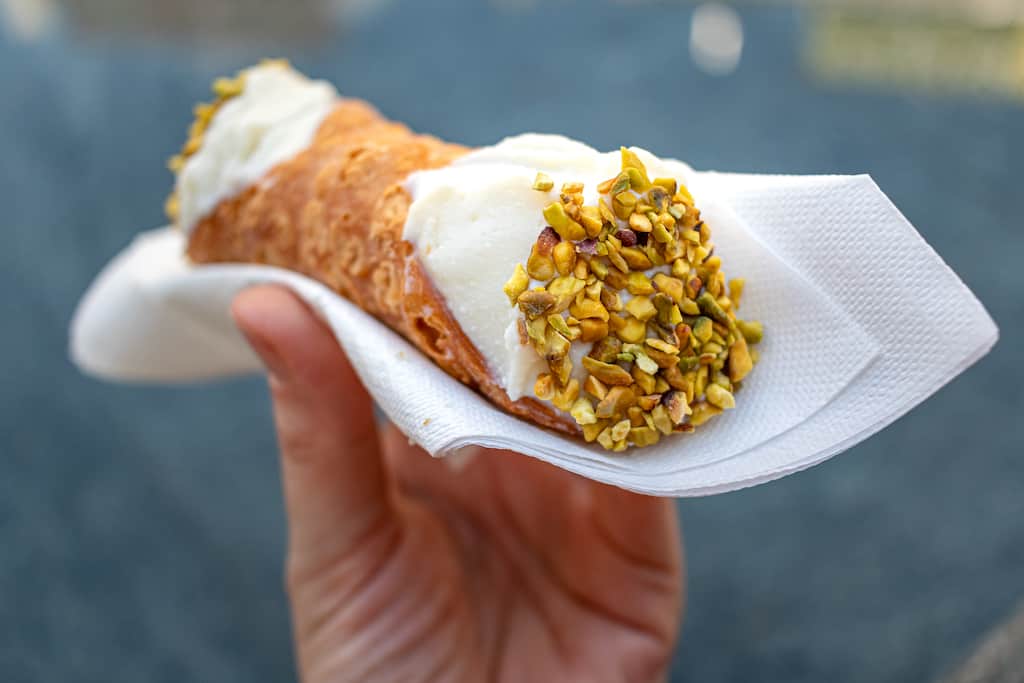
Cannoli are Sicily’s most famous pastry export, consisting of crisp, fried pastry tubes flavored with Marsala wine and cocoa, filled with fresh sweet sheep’s milk ricotta and chocolate chips.
These Italian filled pastries are a massive part of Italian cuisine and can be found in cafes, restaurants, and bakeries all over the country. They originally came from Sicily.
These tube-shaped sweet snacks are usually filled with sweet ricotta cheese, and the pastry is made from sugar, butter, flour, coffee, and cocoa.
They range in size and are often served on the side of a cup of Italian coffee or as an entire dessert.
And, when it comes to what food Italy is famous for, this is probably one of the most well-known Italian pastries. One I certainly grew up eating in NJ.

Pasticciotto
Pasticciotto Leccese is an iconic breakfast pastry from Salento in Puglia, featuring an oval, golden lard-crust shell filled with warm vanilla pastry cream.
This famous Italian-baked dessert was invented sometime during the 18th century. The chef who first created pasticciotto was called Andrea Ascalon. It’s a popular pastry from Italy and a typical Puglia food.
The traditional way to make this is using shortcrust pastry using lard, which makes it beautifully moist and crumbly. More often than not, they are filled with sweet ricotta cheese or egg custard.
These bite-size sweet treats are usually only about 1 inch thick, so they are perfect if you want to quickly cure a sweet craving. Generally, though, you will see them being served as an Italian breakfast pastry and are enjoyed fresh out of the oven.

Sfogliatella
Sfogliatella is a celebrated Neapolitan pastry known for its crunchy, ribbed layers of dough (riccia) stuffed with a fragrant filling of sweetened ricotta, semolina, and candied citrus peel.
These impressive Italian flakey pastries were traditionally seen around Italy during Easter. When eating in Naples, they are available year-round.
Sometimes they are referred to as lobster tails because of their shape; they are shaped like a curled shell, which is then filled with a sweet cream, which is more like the consistency of frosting rather than custard or whipped cream. If I was to compare them to anything, I would say they have a similar texture to that of a croissant.
Most places you visit in Italy that sell pastry like confectionery are likely to have these on sale, and quite often, they will differ in flavor and texture, though the concept will be the same. For example, some people use almond paste or custard with candied peel to fill their sfogliatella.

Zeppole
Zeppole di San Giuseppe are Italian cream puffs made from choux pastry, either fried or baked, crowned with a swirl of rich custard cream and a dark Amarena cherry.
Italian Zeppole is a staple in places such as Rome and Naples and is believed to have originated in Rome around the 18th century. As they have become more popular over the years, they can now be found all over Italy, especially Sicily and nearby Malta. To me, it’s equally likely to have a zeppole memory from the NJ shore as it is from a small Italian town.
This Italian pastry is what you would call a deep-fried dough ball. They can vary in size depending on where you get them from, but generally, they tend to be around 4 inches.
The recipe is relatively simple, consisting of flour, eggs, salt, sugar, baking powder, and vanilla extract, plus a filling of choice, which can vary from jam and custard to butter and honey.

Chiacchiere
Chiacchiere (also called crostoli, bugie, or angel wings) are ribbon-shaped sheets of fried pastry dough dusted in powdered sugar, traditionally enjoyed throughout Italy during Carnival season.
Also known as Angel Wings, Italian chiacciere is a pastry often enjoyed by locals during carnival times.
They are a sweet, light, and crispy snack that is made from dough that has been twisted into a ribbon-like shape. They are then dusted in powdered sugar and served as a tasty snack.
In some traditions, husbands are known to give their wives angel wings on Friday the 13th, so they don’t get any back luck.

Panettone
Panettone is a tall, dome-shaped artisan sweet bread originating in Milan, made through a multi-day sourdough fermentation enriched with butter, egg yolks, candied citrus, and raisins.
Italian Panettone is something you will often see across Italy during Christmas, though because it’s such a popular dessert, some places tend to sell it all year round. The first time we ate panettone was when spending Christmas along the Italian Riveria over 20 years ago. We’ve also visited Italy in December and had panettone in Bologna, one of the best food cities in Italy.
The flavors are subtle, it’s incredibly aromatic, and feels luxurious and indulgent to eat.
It is made using flour, yeast, water, butter, egg yolk, caster sugar, honey, vanilla, and sometimes added citrus, candied peel, or raisins.
It is quite a complex dish to make and takes many steps and a lot of time, so unless you have a lot of patience in the kitchen, I would highly recommend buying this from a restaurant.

Pandolce Alla Genovese
Pandolce Genovese is a historic holiday sweet bread from Genoa in Liguria, packed with Mediterranean pine nuts, raisins, candied fruit, and scented with anise seeds.
Although panettone is probably way more popular world-wide, there is another sweet bread that should be included in our list of sweet Italian breads and pastries. Pandolce alla Genovese is a sweet bread from Genoa. It’s one our top things to eat in Genoa, which is located in Liguria along the Italian coast.
The sweet bread is popular around the Christmas holidays, similar to panettone. It’s made with buts dried fruits, and anise. Sometimes you can find sweeter additions like hazelnuts or figs.
Biscotti
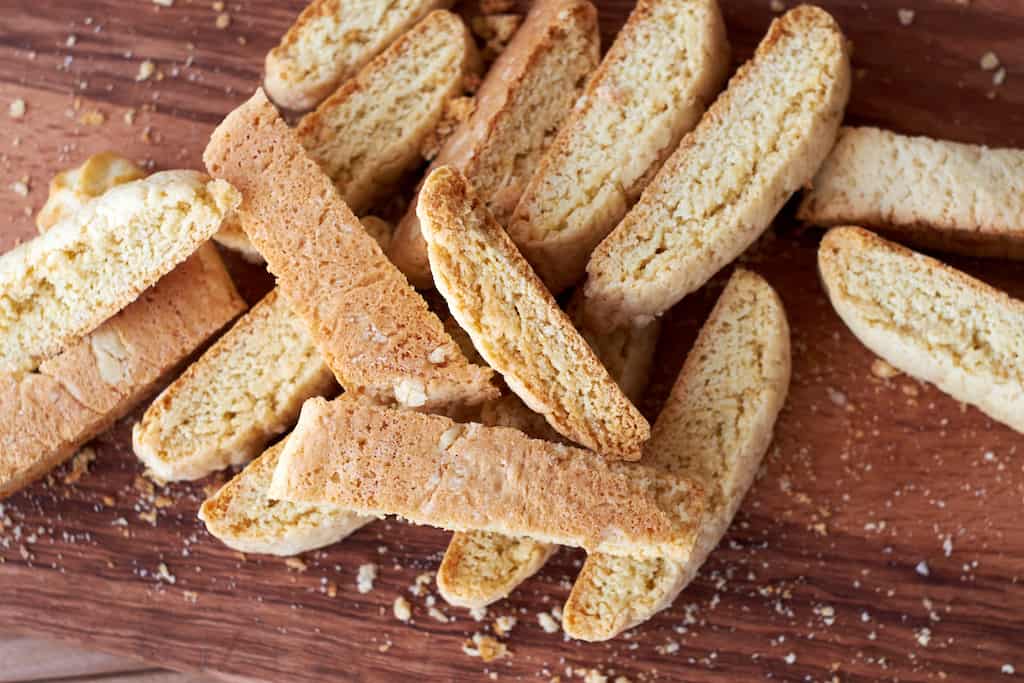
Biscotti (known in Italy as Cantuccini) are twice-baked almond biscuits from Tuscany, characterized by an ultra-dry crunch designed specifically for dipping into dessert wine or coffee.
Biscotti, which also goes by the name Cantuccini in some parts of Italy, is a traditional Italian baked dessert originating from towns in Tuscany.
Biscotti are a slightly sweet Italian snack. They are often served alongside a hot drink such as creamy Italian coffee, making the perfect dunker.
They are a kind of biscuit/cookie often jeweled with nuts or dried fruit. They are also twice baked, making them extremely dry and almost dehydrated, which means they can be made in advance and stored for long periods.
Fiocco di Neve
Fiocco di Neve (“Snowflake”) is a modern Neapolitan pastry sensation created in the Rione Sanità district, featuring a delicate brioche ball filled with a cloud-like cream of ricotta, milk, and sugar.
This one is a much more modern Italian pastry snack that is becoming widely popular across the country.
The other name for Fiocco di Neve is the snowflake cake. This is because they resemble snowballs in appearance. They are dusted with powdered sugar and filled with a creamy white center like sweet, thickened milk.
The pasty is similar to a brioche, so they are pretty dense, but when they’re served warm, they instantly melt in your mouth.

Krapfen Con Panna
Krapfen con panna is an Italian-adapted Austrian yeast doughnut, fried until golden, split open, and generously piped with sweetened whipped cream.
Another sweet Italian pastry hailing from Genoa is krapfen con panna. Not many food travelers to Italy make their way to Genoa, which is a big mistake. We loved the food in Genoa!
Krapfen is similar to a soft, fluffy donut. This might not be one of the more recognizable Italian pastry names, but it should be. The donut is sliced in half and loaded with sweet cream. We asked for ours to be covered in cocoa. Light and delicious.

Bomboloni
Bomboloni are Tuscan-style fried dough balls dusted in granulated sugar, famous for bursting with fillings of rich pastry cream (crema), chocolate, or fruit preserves when bitten into.
This Italian pastry is often referred to by tourists as the Italian version of a donut. They’re hugely popular all over the country and can be found in almost any Italian bakery, cafe, or pastry stall.
Bomboloni originally come from Toscana, central Italy, and are thought to have been invented sometime during the 19th century.
It won’t surprise you to learn that the word Bomboloni stems from the word “bomb,” This is because when you first bite into them, they explode with oozing cream.
The fillings are made with sugar, vanilla, lemon, and egg yolk but sometimes with other ingredients depending on where you go.
Babà al rum
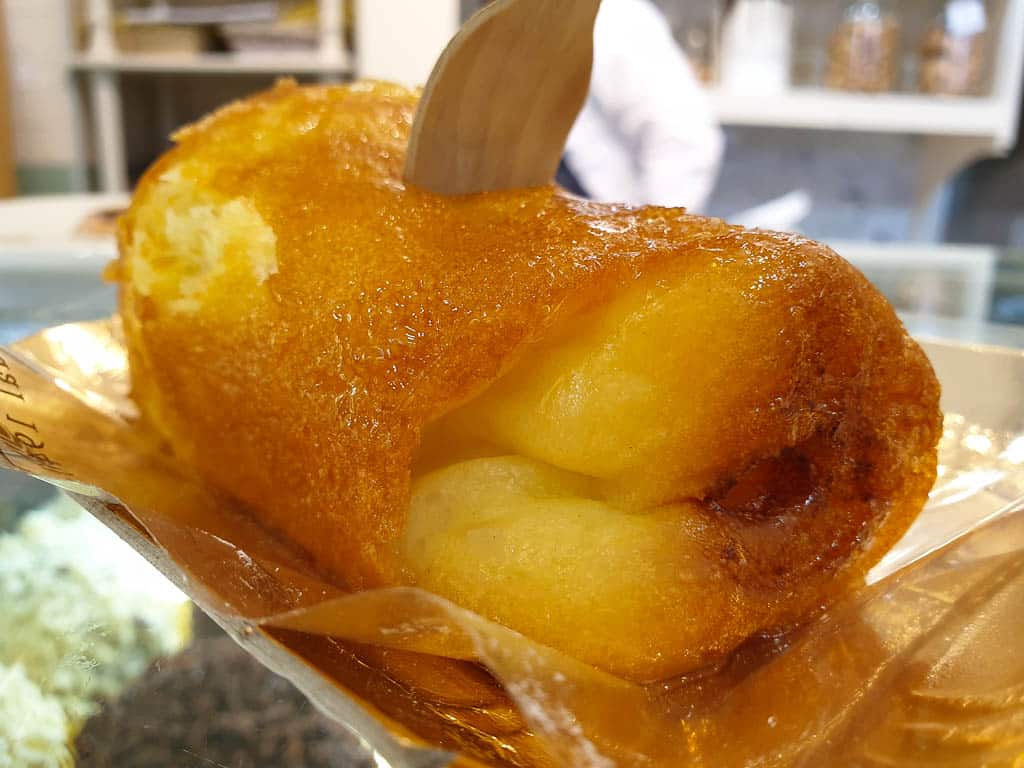
Babà al Rum is a beloved Neapolitan pastry institution featuring a mushroom-shaped yeasted sponge cake thoroughly saturated in sweet, citrus-scented rum syrup.
Babà al rum is a Neapolitan pastry in Italy that comes from Naples. It is a baked dough that is shaped a bit like a mushroom and then soaked in rum and syrup.
The name itself translates to rum-soaked grandmother. It has to be one of the more fun Italian pastry names. The name makes sense since when you’re eating this dessert, you can taste just how much rum has been used. It’s probably not one to feed the kids.

Cannoncino
A Cannoncino is a delicate horn of golden, flaky puff pastry (pasta sfoglia) rolled around a metal cylinder, baked until crisp, and filled with velvety pastry cream or chocolate.
These horn-shaped pasties are an indulgent treat that resembles the cannoli I discussed earlier. As you’ve probably noticed, they are even similar in name. The main difference is that the Italian Cannoncino is a bit smaller and fried.
You will come across these all over when traveling around Italy, and you will likely see them in a wide variety of flavors, such as pistachio, fruit, buttercream, chocolate, sweet wine cream, and almond paste.
It is usually served as a main dessert with fresh Italian fruit and whipped cream.
Torta Mele e Cannella
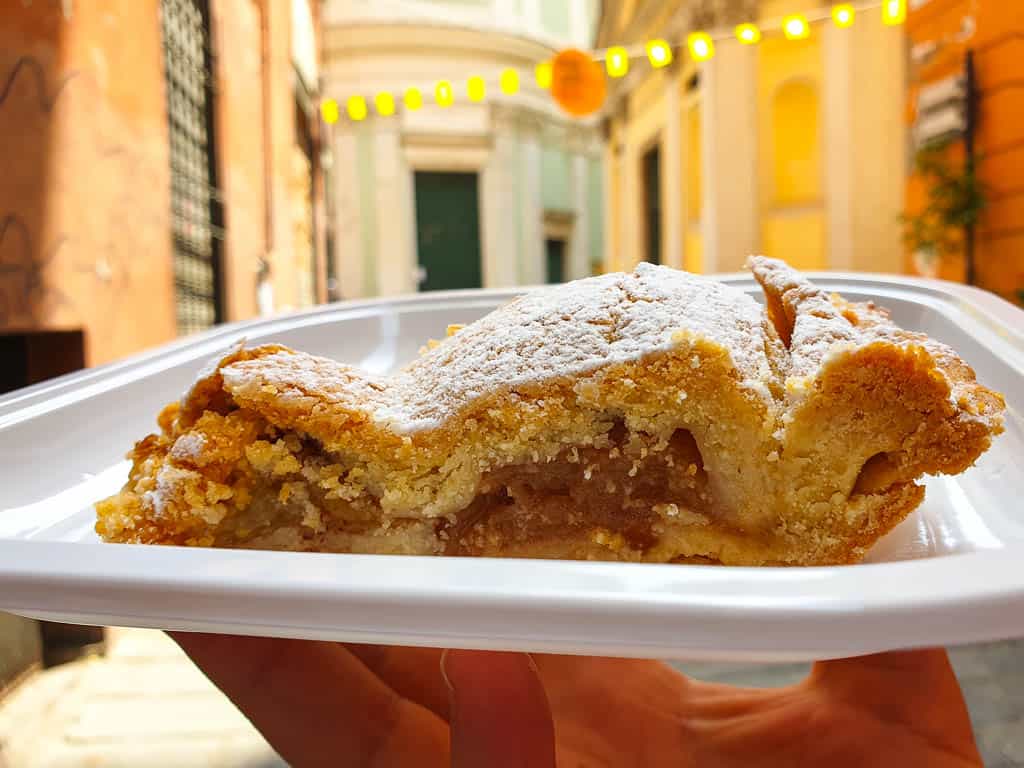
Torta Mele e Cannella is a rustic Italian apple and cinnamon cake popular in home kitchens and bakeries across Northern Italy, offering a dense, moist crumb packed with sliced fruit.
Although as an American I associate apple pie with all-things American. But, Genoa in Italy has its own version.
Torta mele e cannella is a tort made with apple and cinnamon. It’s different than it’s American version, with a more dense crust. And, it’s actually a little less sweet. It’s the perfect treat for breakfast or as a pastry snack.
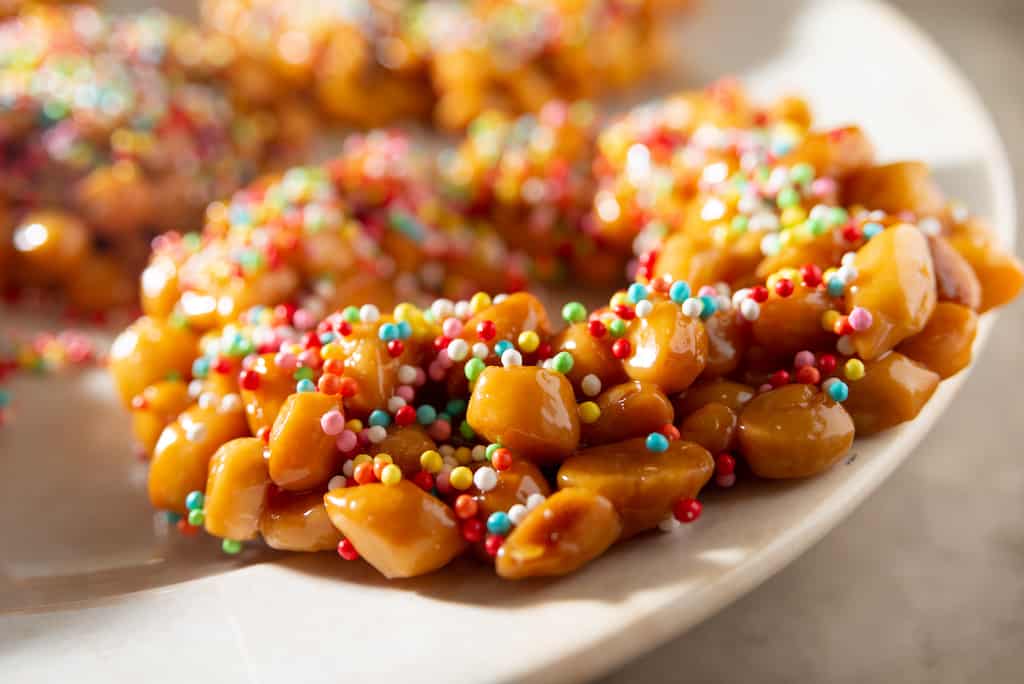
Struffoli
Struffoli are traditional Neapolitan Christmas sweets made of marble-sized dough balls deep-fried until golden, tossed in warm orange-blossom honey, and showered with festive candied peel and sprinkles.
Another dessert originating from Naples, and goes back hundreds of years, is the Struffoli. The name comes from the word Strongoulous, which is a Greek word meaning round in shape.
Struffoli is a fried honey ball similar to a donut, so you can imagine how good they taste.
It is a religious and essential tradition that the best quality Nepalese honey is used when preparing these deep-fried balls of goodness.
They are made using flour, butter, sugar, orange peel, and aniseed liquor which is then made into bitesize balls and deep-fried. Once they are crispy and golden brown, they are drenched in honey and often topped with candied fruit.
Summary of the Best Italian Pastries
So if you’re planning a trip to Italy for food anytime in the future and want to make a list of all things you want to try while you’re there, then these 16 amazing treats can be added to your list immediately. It’s almost like creating a packing list for Italy, but of the best foods to eat.
Hopefully, I have provided you with everything you need to know and given you some helpful information, including Italian pastry names and their background about where the pastries came from.
Frequently Asked Questions About Pastries in Italy
What is the most famous pastry in Italy?
While popularity varies by region, the Cannoli (from Sicily) and Sfogliatella (from Naples) are internationally recognized as Italy’s most famous filled pastries, alongside morning breakfast staples like the Cornetto and Bombolone.
What is the difference between Sfogliatella Riccia and Sfogliatella Frolla?
Sfogliatella Riccia features a crisp, laminated shell made of hundreds of paper-thin ridges of flaky dough. Sfogliatella Frolla uses the same ricotta, semolina, and candied orange filling, but encases it in a smooth, tender shortcrust pastry shell.
Do Italians eat pastries for dessert or breakfast?
In Italy, most filled pastries (like cornetti, pasticciotti, and bomboloni) are eaten in the morning for breakfast alongside coffee or as an afternoon snack (merenda). Formal dinners typically conclude with plated desserts like tiramisu, panna cotta, or fresh fruit rather than morning pastries.
What are the primary traditional Sicilian pastries?
Iconic Sicilian pastries include Cannoli Siciliani (fried shells with sweet sheep’s ricotta), Cassata Siciliana (sponge cake with marzipan and ricotta), Frutta Martorana (painted marzipan sweets), and Genovesi Ericine (custard-filled shortbread).
What is the difference between a Cannolo and a Cannoncino?
A Cannolo is a crisp, fried wine-dough tube filled with sweetened sheep’s milk ricotta originating in Sicily, whereas a Cannoncino is a horn of baked, flaky puff pastry (pasta sfoglia) filled with yellow egg custard (crema pasticcera) popular in Northern Italy.
Culinary Travel To Italy

Our Italy Travel Experience
Check out Food & Drink Destinations original founder Amber Hoffman’s book, the Food Traveler’s Guide To Emilia Romagna, which is available on Amazon. In addition to being a culinary travel guide to the region, it walks through how many of the typical Italian food products are made, like mortadella, prosciutto, and Parmigiano Reggiano.